Beyond ‘Civilizational Erasure’: How Trump’s Europe Warning Attempts to Redefine the West

Sarah Johnson
December 9, 2025
Brief
Analysis of the new White House roadmap warning of Europe’s potential “civilizational erasure,” unpacking the data, historical context, identity politics, and how it could reshape NATO and U.S. grand strategy.
Trump’s ‘Civilizational Erasure’ Warning on Europe: What’s Really at Stake in the New Security Roadmap
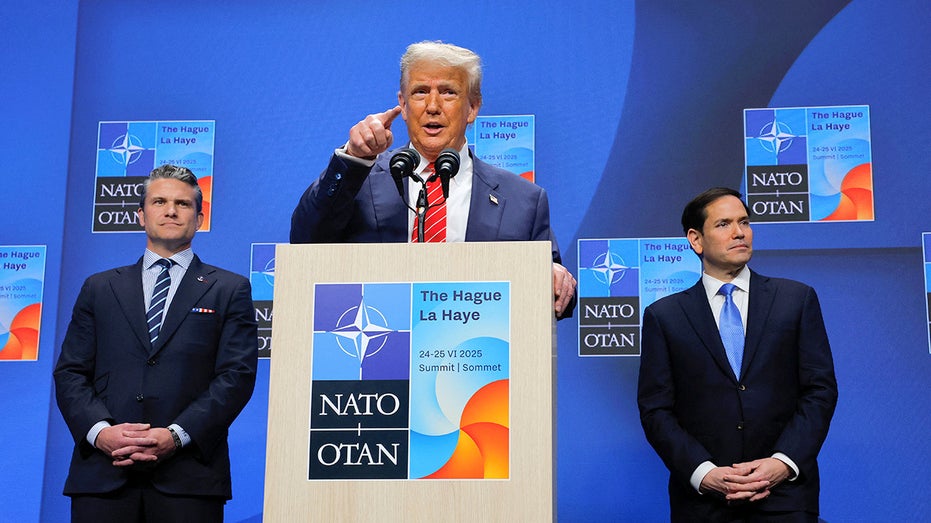
The new White House national security roadmap does something unusually stark for an official document: it warns that Europe could be “unrecognizable in 20 years or less” and speaks of the “real and more stark prospect” of “civilizational erasure.” Beneath this provocative language lies a much bigger story than migration statistics or NATO burden-sharing. This roadmap is effectively trying to redefine what the United States thinks it is defending in Europe—and who counts as a future ally.
It also ties Europe’s demographic future to a revived Monroe Doctrine, now recast as a “Trump Corollary,” suggesting a global strategic realignment: a Western Hemisphere-centric America skeptical of a changing Europe and more comfortable asserting its own civilizational identity at home.
How We Got Here: Migration, Identity, and the Long Arc of European Anxiety
The White House document taps into a decade of European upheaval around migration:
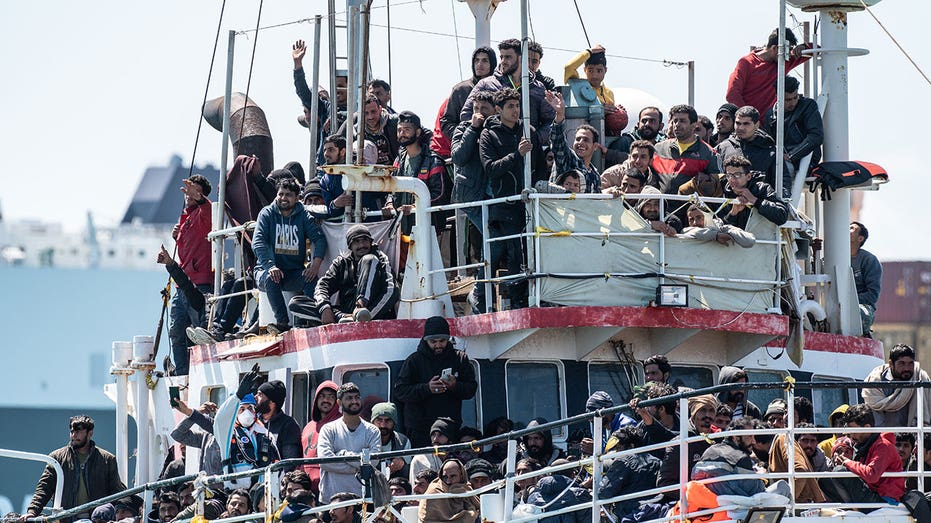
- 2015–2016 refugee crisis: Over 1 million asylum seekers, mainly from Syria, Iraq, and Afghanistan, arrived in the EU in 2015 alone, triggering political crises in Germany, Sweden, Hungary, Italy, and beyond.
- Rise of anti-immigration parties: Parties such as the AfD in Germany, National Rally in France, the Sweden Democrats, and Italy’s Brothers of Italy grew from the political margins to major or governing forces, often campaigning on migration and identity.
- 2016–2024 security shocks: Islamist-inspired attacks in Paris, Brussels, Berlin, Manchester, Vienna and elsewhere linked (directly or indirectly) to migration flows hardened public opinion and security policy.
But the rhetoric of “civilizational erasure” is new at this level in a U.S. official strategy document. Historically, American national security documents framed Europe as a cornerstone of liberal democracy, not as a beleaguered civilization. In the early Cold War, Washington worried about communism and economic reconstruction; in the post-Cold War era, about NATO enlargement and stability. Demography and cultural identity were rarely front and center.
The new roadmap merges three trends that have been building for years:
- Demographic anxiety: Europe’s population is aging and shrinking. EU fertility is around 1.5 children per woman—well below the replacement rate of 2.1. Migration is increasingly framed as both a demographic “solution” and a cultural “threat.”
- Culture-as-security doctrine: Right-leaning intellectuals and politicians in Europe and the U.S. have argued that cultural cohesion is a security asset, and that diversity—especially if poorly integrated—can be a vulnerability.
- Transactional view of alliances: The Trump-era shift from value-based alliances to burden-sharing metrics (“who pays, who fights”) is now extended to who we are. The roadmap questions whether future, more diverse European societies will see their interests as aligned with Washington’s.
What the Roadmap Is Really Doing: Redefining ‘Europe’ as an Ally
At its core, the document advances a controversial idea: that Europe’s reliability as a U.S. ally depends not only on its military spending and economic strength, but on its demographic and cultural composition. This is new territory for U.S. strategy.
There are several layers to this:
- From geography to identity: For 75 years, “Europe” for U.S. planners meant states west of Russia that shared institutions (NATO, EU) and broadly liberal values. The roadmap implies “Europe” also means majority ethnically or culturally “European” populations; if that changes, alliance cohesion is in question.
- Future NATO, future publics: The document explicitly worries that “certain NATO members will become majority non-European,” implying that future electorates might be less willing to support confrontational policies toward Russia or China, or less invested in transatlantic solidarity.
- Migration as strategic variable, not just domestic issue: Migration has long been treated as an internal European matter with spillover effects. This roadmap recasts it as a core determinant of U.S. strategy: who Europe admits now shapes who Washington can rely on later.
This is a significant break from classic alliance theory. Traditional scholarship—from Glenn Snyder to Stephen Walt—focuses on external threats, power balances, and institutional design. The roadmap adds a fourth factor: long-term identity alignment between populations, not just governments.
The Data Behind the Alarm—and What It Leaves Out
The roadmap cites several striking cost figures: high per-capita asylum-related costs in the Netherlands, billions in France for irregular migration, and disproportionate crime rates among some migrant groups in Denmark and Germany. These are real concerns in European policymaking, but they are a partial slice of a much more complex picture.
Key data points often missing in such narratives:
- Economic contribution over time: OECD studies show that migrants’ fiscal impact varies by country, skills, and integration policy. Many start as net recipients of public spending but become contributors as they integrate into labor markets, especially in aging societies with labor shortages.
- Crime and composition: Research in Germany, Sweden, and elsewhere often finds higher crime rates among certain young male migrant cohorts, but also notes powerful mediating factors: age, socio-economic status, exclusion from labor markets, and residence in marginalized districts. Aggregating this into a narrative of “civilizational erasure” is a political choice, not a statistical conclusion.
- Demographic arithmetic: Projections by Eurostat and independent demographers suggest that Europe’s population will diversify, but “majority non-European” scenarios within a few decades remain contested and heavily dependent on assumptions about fertility, migration volumes, and assimilation.
In other words, the document chooses a particular reading of the data—one that foregrounds cost, crime, and identity disruption, and downplays long-run economic integration or the possibility of evolving, plural European identities.
Expert Perspectives: Clash of Civilizations or Evolving West?
Experts are sharply divided on whether the roadmap’s framing is prescient or dangerously reductive.
Some security thinkers see a genuine strategic risk:
- They argue that public willingness to fight wars is culturally loaded. If future European electorates feel less historical responsibility toward NATO or the U.S., alliance commitments could erode.
- They note that Russia and other adversaries already weaponize identity, exploiting integration failures to foster radicalization, polarization, and distrust of pro-U.S. elites.
Others push back strongly:
- They contend that democratic identity is not racially or ethnically fixed. Past examples—from Irish and Italian immigration in the U.S. to post-colonial migration in Britain and France—show that “who belongs” can shift while core democratic norms endure.
- They warn that framing internal diversity as a security threat can become a self-fulfilling prophecy, marginalizing populations and making integration harder, not easier.
Crucially, many European security officials are focused less on “civilizational erasure” and more on state capacity: the ability to control borders, process asylum claims, and enforce laws evenly. To them, the real risk is not demographic change per se, but governance failure.
What’s Being Overlooked: Europe’s Own Strategic Agency
The roadmap portrays Europe largely as a passive space being reshaped by migration and regulation. That misses several emerging dynamics:
- Hardening borders: The EU has steadily moved from the 2015 “open” era toward tougher external border control, deals with transit states (like Tunisia and Turkey), and more selective pathways for legal migration.
- Shift to skills-based migration: Countries such as Germany are overhauling migration law to attract skilled workers while tightening irregular migration channels—reflecting demographic necessity rather than ideological openness.
- Europeanization of identity debates: From France’s laïcité debates to Denmark’s strict integration requirements, European states are actively renegotiating what national identity means, not simply abandoning it.
The roadmap also elides the fact that European publics themselves are driving these policy shifts. Far-right and center-right parties alike have moved migration to the center of their platforms. The question is less whether Europe sees a problem and more which balance it strikes between control, integration, and openness.
The ‘Trump Corollary’ to the Monroe Doctrine: Why It’s in the Same Document
Placing Europe’s “civilizational” future alongside a revived Monroe Doctrine is not accidental. It reveals a deeper strategic orientation: a United States that is simultaneously skeptical of a transforming Europe and more determined to assert primacy in its own hemisphere.
Historically, the Monroe Doctrine warned European powers to stay out of the Americas. The new “Trump Corollary” extends this logic to today’s adversaries—China, Russia, Iran—while signaling that:
- The Western Hemisphere, not Europe, is the primary arena for U.S. influence-building.
- Alliances will be judged not just on capability, but on cultural and political alignment with a more explicitly defined U.S. identity.
This has two major implications:
- Contingent commitment to Europe: If Europe is seen as drifting demographically and ideologically away from a shared “civilization,” Washington has more rhetorical room to deprioritize European security when trade-offs emerge.
- Identity-based grand strategy: U.S. foreign policy is being framed as the defense of a civilizational sphere—an implicitly Judeo-Christian, Western hemisphere-centric order—rather than a universalist liberal project.
Looking Ahead: What to Watch in the Next 5–20 Years
Several fault lines will determine whether the roadmap’s alarm about “civilizational erasure” becomes embedded U.S. doctrine or an outlier document.
- European electoral cycles: Elections in major states (Germany, France, Italy, Poland) will show whether publics double down on restrictive migration and identity politics or stabilize around a centrist approach balancing control with integration.
- NATO’s internal politics: Pay attention not just to 2% GDP defense targets, but to debates over Russia, China, and Middle East engagement. If diverse younger electorates are indeed less interventionist, NATO strategy could shift toward more regional defense and fewer out-of-area missions.
- Integration metrics: Language proficiency, employment rates, educational attainment, and civic participation among second- and third-generation migrants will be key indicators of whether Europe is facing fragmentation or gradual convergence.
- U.S. doctrine after Trump: Future administrations—of either party—will decide whether to retain, soften, or reverse the identity-based framing of Europe and the Monroe Doctrine corollary. That will tell us whether this is a lasting realignment or a political episode.
The Bottom Line
The new White House roadmap is not just a policy paper on migration. It’s a bid to reframe how the United States understands Europe—as a potentially diverging civilization rather than a permanent, like-minded partner. By tying demographic change to alliance reliability, it raises profound questions about what “the West” will mean in 20 or 30 years—and whether the U.S. is preparing to hedge against a Europe it no longer fully recognizes.
Whether the roadmap proves prescient or dangerously simplistic will hinge less on raw migrant numbers and more on political choices: how Europe manages integration, how the U.S. defines its own identity, and whether both sides can adapt their alliances to societies that are more diverse but still democratically aligned.
Topics
Editor's Comments
The most consequential move in this roadmap is not the incendiary phrase “civilizational erasure,” but the quiet shift in what counts as a strategic variable. For decades, U.S. planners judged alliances on capabilities and shared institutions; culture and demography were background conditions. This document brings them to the foreground and implies that a Europe which changes ethnically or culturally may no longer be ‘our’ Europe. That raises uncomfortable questions. If identity becomes a criterion, where does that leave diverse allies like Canada or Britain’s post-imperial society—or, for that matter, an increasingly diverse United States? It also risks encouraging adversaries’ narratives that the West is defined by bloodlines rather than political values. A more rigorous strategy would separate legitimate concerns about state capacity, border management, and integration from sweeping civilizational claims that cannot be measured and are easily weaponized. The policy danger here is that Washington might pre-emptively discount Europe’s long-term reliability based on contested demographic projections, instead of shaping outcomes through engagement, joint reforms, and support for inclusive but confident democratic identities on both sides of the Atlantic.
Like this article? Share it with your friends!
If you find this article interesting, feel free to share it with your friends!
Thank you for your support! Sharing is the greatest encouragement for us.