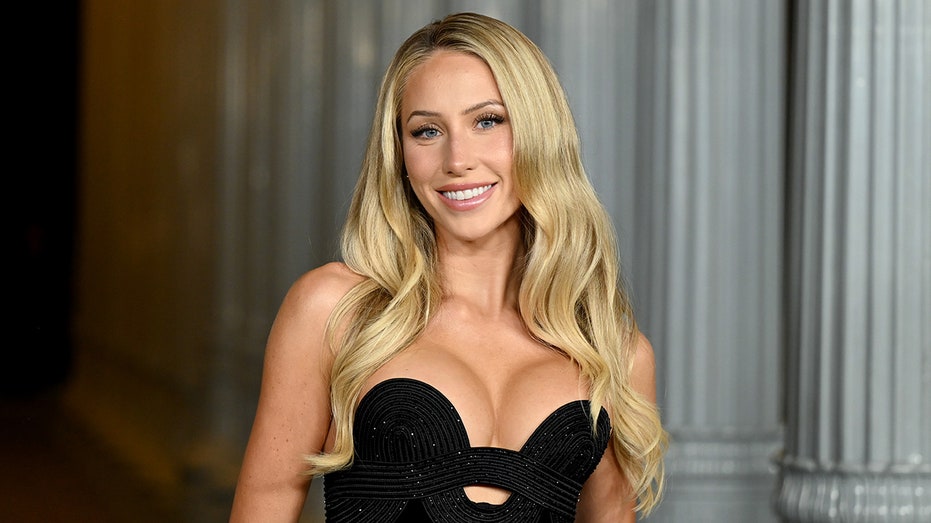
Beyond the Fake DM: What the Alix Earle–Jaxson Dart Rumor Reveals About Our Broken Gossip Economy

Sarah Johnson
December 9, 2025
Brief
Alix Earle’s denial of a fake Jaxson Dart DM exposes how fabricated screenshots, influencer culture, and NFL marketing collide to manufacture celebrity narratives that feel true long before they’re verified.
Alix Earle, Jaxson Dart, and the New Architecture of Manufactured Celebrity Rumors
On its face, the story is simple: social media star Alix Earle publicly shut down a romance rumor with New York Giants rookie quarterback Jaxson Dart, calling a viral Instagram DM “fake photoshopped.” But beneath the gossip is a revealing case study in how modern sports, influencer culture, and algorithm-driven platforms now manufacture celebrity narratives—often without the consent, or even the participation, of the people involved.
This episode isn’t really about who’s dating whom. It’s about who controls the story, how quickly a fabricated screenshot can become “truth” in the public imagination, and how the line between sports journalism, fan fantasy, and clout-chasing content has almost completely collapsed.
From Tabloid Whispers to Viral Receipts: How We Got Here
To understand why a single fake DM can dominate conversation around a rising NFL quarterback and a post–“Dancing with the Stars” influencer, it helps to step back and look at the evolution of celebrity coverage.
In the 1990s and early 2000s, celebrity gossip was mostly brokered by a handful of tabloids and TV shows. Rumors spread, but they moved more slowly and were filtered through editors who at least faced some legal and reputational risk. The power dynamic was: a few outlets chased scoops, and celebrities tried to manage damage.
The mid-2010s changed everything. Instagram became a public stage for relationship “soft launches” and breakups; Twitter (now X) made speculation instantaneous; TikTok layered in algorithmic amplification that doesn’t distinguish between fact, parody, or fabrication. Screenshots—real or fake—became the new tabloid covers.
Today, two structural shifts matter most:
- Platform incentives: Algorithms reward speed, emotion, and engagement over verification. A juicy fake DM between a heartbroken influencer and a rising NFL star is algorithmic gold.
- Decentralized gossip economy: Instead of a few tabloids, thousands of meme pages, fan accounts, and micro-influencers compete to be “first” with a new narrative, often with minimal fact-checking.
Alix Earle’s insistence—“That never happened… That wouldn’t be on my story”—is a reminder that even those who built their careers online are now struggling to distinguish their real digital footprint from fabricated ones.
Why This Particular Rumor Caught Fire
It’s not an accident that this rumor, among countless others, went viral. It sits at the intersection of three powerful attention engines:
- The NFL rookie narrative: Jaxson Dart, an Ole Miss product starting his professional journey with the New York Giants, is in the early stage of what leagues hope will be a long marketable career. Fans and media are primed to latch onto any story that makes him more “interesting.”
- Influencer heartbreak cycle: Alix Earle’s breakup with All-Pro special teams player Braxton Berrios came after a two-year relationship that had a public arc—posts, appearances, and, importantly, parasocial investment from millions of followers. Breakups for influencers are not just personal; they also function as story beats in a long-running serialized drama.
- Fan shipping culture: Online fandoms now routinely “ship” (pair) public figures, often creating elaborate narratives. A New Jersey–born influencer and a fresh-faced Giants quarterback is the kind of pairing that fits neatly into this fantasy logic.
Add a fabricated screenshot suggesting Dart reached out within hours of the breakup, and the narrative taps into a familiar trope: the opportunistic athlete sliding into DMs, the rebound romance, the messy love triangle. It’s a story archetype audiences already understand; the fake DM simply serves as a visual prop to legitimize it.
What This Says About Consent, Reputation, and Gendered Double Standards
On the surface, the rumor may seem harmless, even trivial. But the mechanics behind it raise deeper questions about digital consent and reputational harm.
First, there’s the issue of consent to narratives. Earle’s public life is part of her brand, but she didn’t consent to this particular storyline—nor did Dart. Yet both were forced to react to an allegation that originated from no credible source, amplified purely by virality.
Second, the dynamics are gendered. Women in the influencer and entertainment space regularly face:
- Hyper-scrutiny of their relationship timelines—who moved on “too quickly,” who is “clout-chasing,” who’s “using” whom.
- Questioning of authenticity—the assumption that any public denial is strategy rather than truth.
In this case, Earle had to explicitly state that she wouldn’t put “any message like that” on her stories. The implication she’s pushing back against is twofold: that she’s reckless enough to publicize a private DM in real time and that she’s eager to jump into a new athlete relationship as content.
That scrutiny doesn’t land the same way on Dart, whose story is still largely framed in lighthearted terms—“romance rumors swirling” around a rookie QB. For him, this is treated more as a marketing hook than a character test.
The Business of Blurring Lines: Sports, Entertainment, and Influencer Economies
Professional sports have increasingly embraced the idea that players are not just athletes, but content drivers. Teams and leagues understand that off-field narratives—relationships, drama, social media moments—keep fans engaged between games and expand reach to new demographics, particularly younger, digitally native audiences.
Influencers like Earle work within a parallel but overlapping economy: they monetize attention through brand deals, appearances, and cross-platform presence. A stint on “Dancing with the Stars” is as much about diversifying her brand as it is about winning a trophy; finishing second extends her public relevance at a moment when a high-profile breakup is already keeping her in headlines.
What’s new is the way these ecosystems now collide. When a ring girl and model like Marissa Ayers is seen with Dart’s mother at a Giants game, that moment becomes simultaneously:
- Fuel for sports blogs seeking a personality angle.
- Content for her own social platforms.
- Proof-of-narrative for fans tracking who is “linked to” whom.
In such an environment, fabricated receipts are not outliers; they are almost inevitable. They are the logical endpoint of a system rewarding the appearance of insider access, regardless of authenticity.
Expert Perspectives: Deepfakes, Defamation, and the New Reality Problem
Media and technology scholars have been warning for years that falsified digital artifacts—images, videos, screenshots—will reshape public trust.
Dr. Joan Donovan, a researcher who has extensively studied online misinformation, has argued that the “receipt culture” of screenshots and DMs has effectively replaced traditional sourcing. The assumption is that, if you can show a screenshot, you must be telling the truth. Fabricated DMs like the one in this case exploit that assumption.
Legal experts also see emerging risk. In many jurisdictions, publishing fabricated messages that depict someone in a false light can veer into defamation or privacy violation, especially if they imply unethical behavior. But enforcement is sporadic, and creators of such fakes are often anonymous or overseas.
Sports and media analyst Bomani Jones has frequently pointed out that young athletes are navigating a level of real-time public speculation that previous generations never faced: “You used to have to be a superstar to make tabloid gossip. Now a rookie who’s barely played a snap can have his entire personal life dissected on TikTok by people who’ve never watched a game.”
Data Points: How Common Is This Now?
Hard numbers on fabricated DMs in specific celebrity cases are difficult to gather, but broader trends indicate the scale of the problem:
- A 2024 study by the Pew Research Center found that 64% of U.S. adults say altered or fabricated images and screenshots make it harder to know what’s real online.
- Research from the University of Amsterdam on “everyday deepfakes” documents a rise in low-tech manipulations—fake DMs, edited screenshots—that spread far more widely than sophisticated video deepfakes, precisely because they look so ordinary.
- Influencers with more than 1 million followers report significantly higher rates of impersonation and image-based rumor campaigns, often tied to relationship speculation.
In other words, the Alix Earle–Jaxson Dart rumor isn’t an aberration. It’s a textbook case of an emerging norm.
Why This Matters Beyond Gossip: Mental Health and Career Trajectories
The immediate stakes may look low—neither Earle nor Dart appears to face serious professional consequences from a single fake DM. But as these incidents compound, they reshape both mental health and career management for public figures.
For influencers, constant rumor cycles can blur the boundary between authentic self and performative persona. When your real relationships are continually reframed by strangers for engagement, you’re pushed toward one of two extremes: total withdrawal or total commodification of your private life.
For athletes, especially young ones, this dynamic can shift focus away from performance. Instead of coverage centering on Week 15 preparations against the Washington Commanders, a rookie quarterback finds his name trending because of who he supposedly messaged after someone else’s breakup.
Sports psychologists increasingly warn teams that off-field digital noise can erode concentration and increase stress, particularly in markets like New York where scrutiny is already intense. Managing that noise is now part of player development, just as much as film study or strength training.
Looking Ahead: What Needs to Change
There are three likely directions this trend could take—and some interventions that could slow the slide toward a fully post-truth celebrity ecosystem.
- Platform-level authentication: Social platforms could make it easier to verify whether a given screenshot truly originated from a particular account—through cryptographic signatures, visible watermarks, or “viewed via platform” badges that are hard to forge. Some early experiments exist, but none are standardized or widely adopted.
- Stronger norms in sports and entertainment media: Outlets can choose not to amplify unverified screenshots, especially when they originate from anonymous accounts. Right now, the threshold for coverage is often “it went viral,” not “it’s true.” That’s a choice, not an inevitability.
- Proactive narrative control by public figures: Influencers and athletes are learning to respond quickly and directly, as Earle did here, to shut down false narratives before they calcify. Over time, they may increasingly preempt speculation by clearly framing what is and isn’t real in their feeds.
None of these are perfect solutions. But the alternative—an environment where any plausible-looking screenshot can define your public identity for millions—is unsustainable.
The Bottom Line
The rumor linking Alix Earle and Jaxson Dart isn’t important because it reveals anything true about their personal lives. It’s important because it exposes how fragile “truth” has become in the attention economy.
A fake DM, a breakout influencer fresh off a TV competition, a rookie quarterback on a legacy franchise, and an algorithm hungry for engagement—that’s all it takes to create a narrative people will argue about as if it were documented fact.
Until platforms, media, and audiences recalibrate what counts as evidence, public figures will continue fighting ghosts: stories they didn’t write, screenshots they didn’t send, and reputations built (or damaged) by content they never created.
In that sense, Earle’s blunt response—“What is this fake photoshopped dm u guys are posting?”—is more than a denial. It’s an early, necessary pushback against a system that increasingly treats plausibility as proof. The question isn’t just whether this rumor was fake; it’s how many more like it will shape careers, relationships, and public perception before we demand something better.
Topics
Editor's Comments
What makes this case more troubling than its tabloid veneer suggests is how low the bar has fallen for what counts as a ‘story.’ There is no reporting here—no named source, no corroboration, not even a clear origin for the fake DM—yet it became fodder for discussion across platforms and was treated as plausible by virtue of its format alone. That should worry us. We’re watching a shift from journalism as a filter between rumor and public attention to journalism as a chaser of whatever the algorithm elevates first. The long-term risk isn’t just to celebrities’ reputations, but to the public’s ability to distinguish between narrative and fact. If we normalize reporting on obviously unverified digital artifacts just because they trend, we edge closer to a media environment in which almost anything can be believed for a news cycle, and correcting the record becomes an afterthought rather than a core obligation.
Like this article? Share it with your friends!
If you find this article interesting, feel free to share it with your friends!
Thank you for your support! Sharing is the greatest encouragement for us.