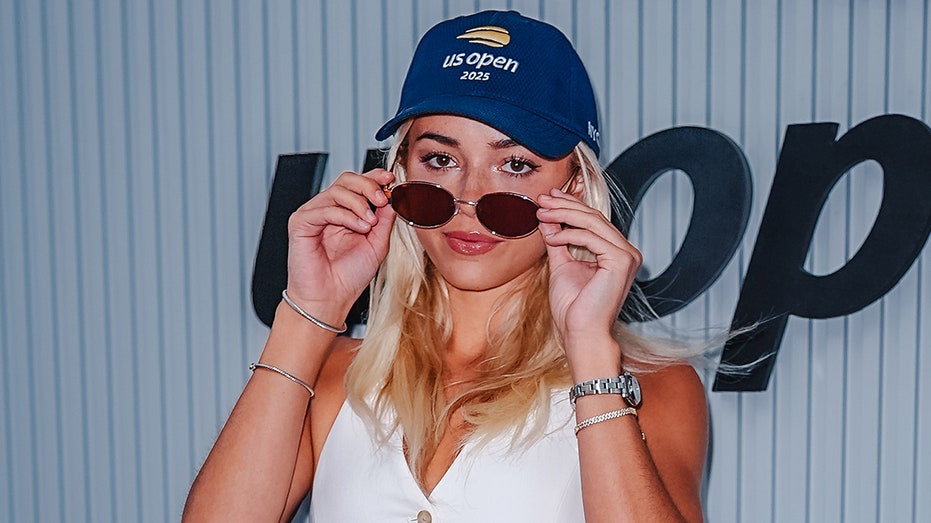
Beyond ‘Influencer’: What Livvy Dunne’s Brand Fight Reveals About the Future of Women’s Sports

Sarah Johnson
December 9, 2025
Brief
Livvy Dunne’s rejection of the “influencer” label reveals a deeper power struggle over who defines women athletes’ value in the NIL era—and how that shapes money, visibility, and control.
Livvy Dunne, NIL Money, and the Battle Over Who Gets to Define Women Athletes
Olivia "Livvy" Dunne’s irritation at being called an “influencer” might sound like a minor branding preference. It isn’t. It’s a window into a much bigger collision: between the old world of amateur sports, the new economy of attention, and a still‑unfinished revolution in how women athletes are valued.
Her insistence on being seen as a “former athlete” and “model,” not just an influencer, goes far beyond vanity. It exposes how labels shape power, earnings, and legitimacy in the NIL era — and why women athletes, even when they’re winning the new game, still have to fight to be taken seriously.
From ‘Amateur’ Gymnast to Multi‑Million‑Dollar Brand
Dunne’s story is inseparable from the radical transformation of U.S. college sports. For decades, the NCAA’s “amateurism” model barred athletes from profiting off their name, image and likeness (NIL), even as universities and networks built billion‑dollar businesses on their backs. That changed in 2021, when a wave of state laws and legal pressure forced the NCAA to allow NIL deals.
Gymnastics — especially women’s gymnastics — had long been a fan favorite but a financial backwater compared to football and men’s basketball. NIL flipped that script for a specific kind of athlete: those with massive online followings. Dunne was perfectly positioned. Years of posting training videos, behind‑the‑scenes content, and lifestyle snippets meant that by the time NIL opened up, she already had an audience in the millions.
That visibility translated into deals reportedly worth seven figures. She became a face of the NIL era: not a Heisman contender or Final Four hero, but a gymnast whose market power came from social media as much as the balance beam.
That’s precisely what makes the ‘influencer’ label so loaded for her.
Why She Rejects the ‘Influencer’ Tag
When Dunne says she doesn’t want to be known as an influencer and instead prefers “former athlete” and “model,” she’s pushing back against a hierarchy of legitimacy.
In the cultural pecking order, “athlete” implies rigor, discipline, and measurable performance. “Model” carries prestige in fashion and media, tied to legacy institutions like Sports Illustrated. “Influencer” by contrast is often treated as a catch‑all for people who are famous for being famous — and, crucially, is frequently used to trivialize the labor of mostly young women who built audiences on platforms that older institutions don’t fully respect.
Words matter economically. Being framed as a serious athlete‑entrepreneur can attract higher‑tier brand partners, corporate speaking roles, and mainstream media projects. Being pigeonholed as an influencer can limit her to one slice of the marketing world and make her appear interchangeable with thousands of other creators, despite the rarity of her athletic record.
There’s also a gender pattern here. Male star athletes who build big online followings are usually still called “quarterbacks,” “guards,” or “champions.” Women who do the same are quickly labeled “influencers,” as if their athletic accomplishments are secondary to their appearance and online presence. Dunne’s discomfort is, in part, a refusal to let that sliding scale diminish the years she spent training at an elite level.
Female NIL Success: Outliers, Not Equality
Dunne’s critique of NIL — especially her comment that a recruit can get $12 million from a booster, while “that would never happen with any women’s sport” — cuts through a popular misconception: that NIL has “fixed” gender inequality in college sports because a handful of women are making substantial money.
In reality, a small cluster of women athletes have become exceptionally valuable in the NIL marketplace — Dunne, LSU’s Angel Reese, Iowa’s Caitlin Clark, USC’s JuJu Watkins, among others. Their high earnings get outsized media coverage, creating an illusion of parity. But system‑wide, the old economics still dominate: football and men’s basketball command the biggest donor dollars, most TV deals, and consequently the most aggressive NIL spending.
The $12 million figure Dunne cites reflects the rise of so‑called “collectives” — donor‑funded entities functionally acting as free‑market salary pools. Despite the fig leaf of NIL as marketing, many deals for top male recruits are effectively pay‑for‑play. Dunne’s point is brutal and accurate: no women’s athlete is getting that level of booster money simply to secure their commitment. NIL hasn’t erased the structural underinvestment in women’s sports; it has layered a new market mechanism on top of old inequities.
The Livvy Fund: Branding Move or Structural Intervention?
Dunne’s creation of the Livvy Fund at LSU is where her story stops being just about one celebrity and starts to look like an experiment in structural change. The model is straightforward: brands she already works with contribute money to a fund, which her sister then uses to match those brands with other female student‑athletes at LSU hungry for NIL opportunities.
On one level, it’s savvy brand positioning. Dunne isn’t just cashing checks; she’s positioning herself as a champion for other women in sports, borrowing credibility from the language of equity and empowerment.
But it also solves a real market failure. Most female athletes don’t have the time, representation, or visibility to negotiate deals. Brands, meanwhile, often want to support women’s sports but don’t know how to find the right partners. The fund acts as a broker and amplifier, helping commodify attention that would otherwise go unpaid. It’s a private‑sector workaround to gaps left by athletic departments and the NCAA.
There’s a potential downside: by channeling brand money through a fund tied to a single high‑profile athlete, it may reinforce a superstar‑centric system rather than pushing institutions to build broad, equitable NIL infrastructure. Still, in a landscape where regulators and universities have lagged badly, Dunne is effectively building her own micro‑ecosystem for women’s NIL — and doing it years ahead of most schools.
Model, Mogul, or Something New?
Dunne’s pivot to modeling — from runway appearances to a Sports Illustrated Swimsuit cover — is often framed as a conventional move: another attractive athlete crossing into lifestyle media. That misses the more interesting development: she is blurring historically separate categories.
- Old model: athlete performs, retires early, and then possibly moves into coaching, commentary, or disappears from public view.
- Entertainment model: influencer builds parasocial relationship with audience, monetizes via ads, sponsorships, and merchandise.
- Dunne’s model: athlete and influencer and founder — using each role to reinforce the others.
Her rejection of the influencer label is less about disowning digital culture and more about demanding that her path be recognized as a hybrid: someone who built her brand on athletic performance, digital savvy, and now venture‑style philanthropy. The closest analogs aren’t other college gymnasts; they’re figures like Serena Williams or Naomi Osaka, who treat their sports careers as launchpads into multi‑sector enterprises. Dunne’s version is scaled to the college level, but the architecture is similar.
Image, Objectification and Power
There’s an unavoidable tension embedded in her rise. Much of Dunne’s commercial success flows from how she looks and how she presents herself — including in swimsuit shoots and viral performance clips. Critics argue that this reinforces a long‑standing pattern in women’s sports, where marketability is tied to sexualization or narrow beauty standards more than athletic dominance.
But dismissing her as merely trading on looks ignores agency and context. For years, institutions controlled almost every aspect of how women athletes were presented. NIL shifted some of that power directly into athletes’ hands. Dunne deciding how to appear, where to pose, and on what terms — while also directing money into a fund for other women — is materially different from being slotted into a marketing campaign designed by a university or network executive.
The deeper question isn’t whether her content is “too sexualized” or “not feminist enough,” but who controls the economic value created by her image and what she does with that power. On that front, her trajectory — founding a fund, critiquing booster deals, pushing for fairer NIL — is more disruptive than many of her critics acknowledge.
What This Signals About the Future of College Sports
Dunne’s story is a preview of where college sports are heading:
- Atomized Branding: The center of gravity is moving from schools and conferences to individual athletes with their own brands and infrastructure. Dunne is already operating as a stand‑alone media property.
- Parallel Economies: Men’s football and basketball run on donor‑driven pseudo‑salaries. Women’s sports, and non‑revenue men’s sports, rely more on social‑media‑driven markets where personality and storytelling matter as much as box scores.
- Entrepreneurial Expectation: Future elite athletes will be expected not just to train and compete but to manage brand partnerships, build ventures, and cultivate social platforms — or risk leaving money on the table.
- Increasing Stratification: While a few women become NIL stars, many others will remain invisible. Without deliberate mechanisms like the Livvy Fund, NIL could exacerbate inequality within women’s sports rather than closing gaps.
There’s also the question of regulation. Dunne’s frank observation about pay‑for‑play highlights how close the current system is to de facto professionalism. Court cases and labor actions already looming over the NCAA could accelerate a shift toward full employment rights for athletes. If that happens, the NIL marketplace that made Dunne famous will coexist with — or be reshaped by — formal salaries and collective bargaining.
What Mainstream Coverage Often Misses
Most coverage of Dunne zeroes in on the spectacle: viral splits on runways, swimsuit covers, high‑profile relationship with an MLB pitcher, massive follower counts. What’s largely overlooked is that she has become an early architect of a new template for women athletes in a post‑amateurism world.
Her resistance to the influencer label is less about optics and more about narrative control. It’s a demand that we see women athletes as complex economic actors — capable of building institutions, critiquing the terms of their own exploitation, and shaping the emerging rules of the game. Whether you like or dislike her public persona, that evolution in how athletes operate is the real story.
The Bottom Line
Livvy Dunne is more than a social‑media‑savvy former LSU gymnast. She’s a case study in how women athletes can leverage NIL, challenge gendered inequities in college sports economics, and build their own mini‑institutions in the process. The fight over what to call her — influencer, athlete, or model — is really a fight over who gets to define women’s value in the new sports economy. That’s why it matters far beyond gymnastics, and far beyond her personal brand.
Topics
Editor's Comments
What makes Livvy Dunne’s case particularly revealing is how it exposes a quiet sorting mechanism in the NIL era: men’s value is still tied primarily to on-field performance within legacy revenue systems, while women’s value is disproportionately tied to their ability to succeed in the attention economy. That doesn’t diminish the sophistication or legitimacy of the work Dunne does to cultivate and monetize her audience, but it does raise uncomfortable questions about who gets access to which types of capital. Is it sustainable to build women’s sports economics on the backs of a few highly aestheticized online stars, while the bulk of women athletes remain structurally underfunded? Dunne’s Livvy Fund is an attempt to push against that gravity, yet it also depends on the very dynamics it seeks to mitigate. The more her success is framed as evidence that ‘the system now works for women,’ the easier it becomes for institutions to avoid deeper reforms around media rights, revenue sharing, and investment in women’s programs. That tension will define the next phase of the NIL debate.
Like this article? Share it with your friends!
If you find this article interesting, feel free to share it with your friends!
Thank you for your support! Sharing is the greatest encouragement for us.