
Beyond the Mockery: What Jasmine Crockett’s Texas Senate Bid Really Reveals

Sarah Johnson
December 9, 2025
Brief
Jasmine Crockett’s Texas Senate bid looks like a long shot, but it reveals deep shifts in Texas politics, Democratic strategy, and Trump-era polarization that go far beyond viral mockery of her launch.
Jasmine Crockett’s Texas Senate Bid: Long Shot, Test Case, or Turning Point?
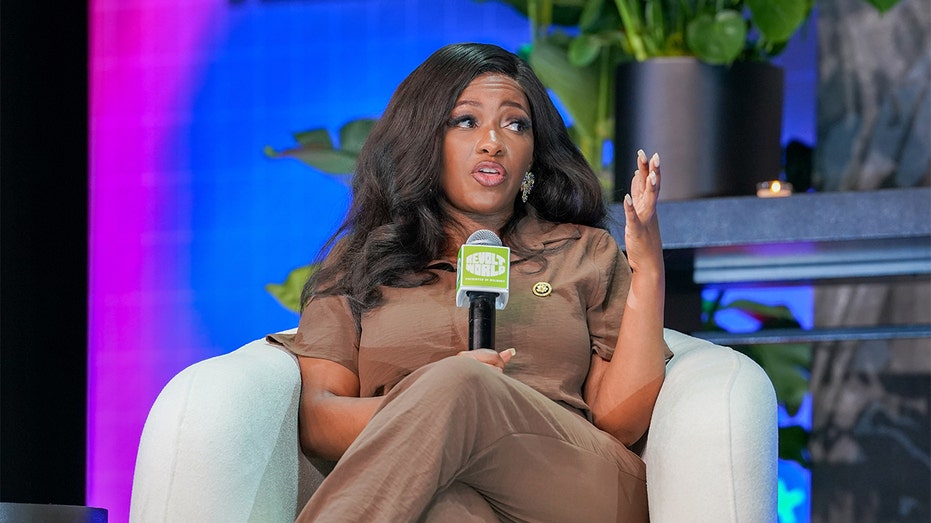
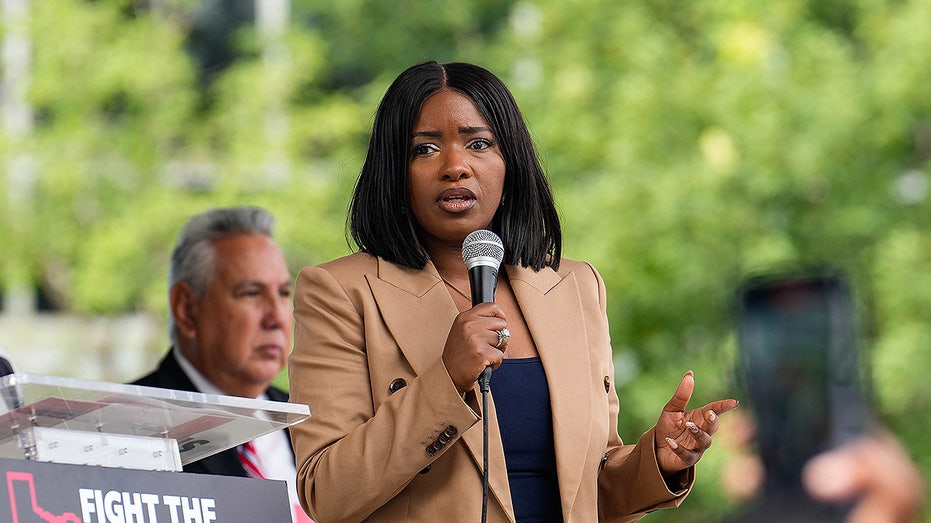
Rep. Jasmine Crockett’s last-minute entry into the Texas U.S. Senate race is being framed online as a punchline: a “circus,” a “low IQ” candidacy, a doomed progressive in a deep-red state. But the story is far more revealing than the mockery suggests. Her run illuminates three big questions: whether Texas is truly on the cusp of political realignment; how Democrats think about Trump as a mobilizing tool; and how both parties are recalibrating their strategies in the age of viral politics and polarized primaries.
Underneath the insults and memes lies a serious test of whether a loud, unapologetically progressive Black woman can mount a viable statewide campaign in a historically Republican state—and what that test will reveal about the evolving coalition politics of the South.
The bigger picture: Texas isn’t the same state it was 20 years ago
To understand Crockett’s bet, you have to zoom out. Texas hasn’t elected a Democrat statewide since 1994. Sen. John Cornyn, the incumbent she’s targeting, has never won by less than 10 points. Donald Trump carried the state by about 9 points in 2016 and roughly 5.5 points in 2020, while Republicans still control every statewide office.
Yet that picture hides a dramatic shift:
- Urban and suburban realignment: Cities like Dallas, Houston, Austin, and San Antonio are deep blue, and their suburbs have steadily trended Democratic. In 2018, Beto O’Rourke came within 2.6 points of unseating Ted Cruz, largely on the back of suburban gains and historic turnout.
- Demographic change: Texas is now a majority-minority state. Latinos are on par with or outnumber non-Hispanic whites, and younger voters are substantially more diverse and, on average, more progressive on social issues.
- Nationalization of state politics: Texas politics are increasingly about national culture wars—abortion, immigration, voting rights, and LGBTQ+ issues—rather than old-style oil-and-cotton localism. That nationalization cuts both ways: it energizes conservative backlash and progressive mobilization.
Crockett is stepping into a long-standing strategic debate inside the Democratic Party: in states like Texas, is the path to competitiveness through moderate, business-friendly candidates who court centrist suburban voters—or through sharp, ideological contrast that galvanizes new and infrequent voters?
Her candidacy unmistakably chooses the latter. The ferocity of the conservative reaction isn’t just about her odds in 2025—it’s about policing the boundaries of what “viable” looks like in the South.
What her launch really signals: a bet on anti-Trump politics and identity
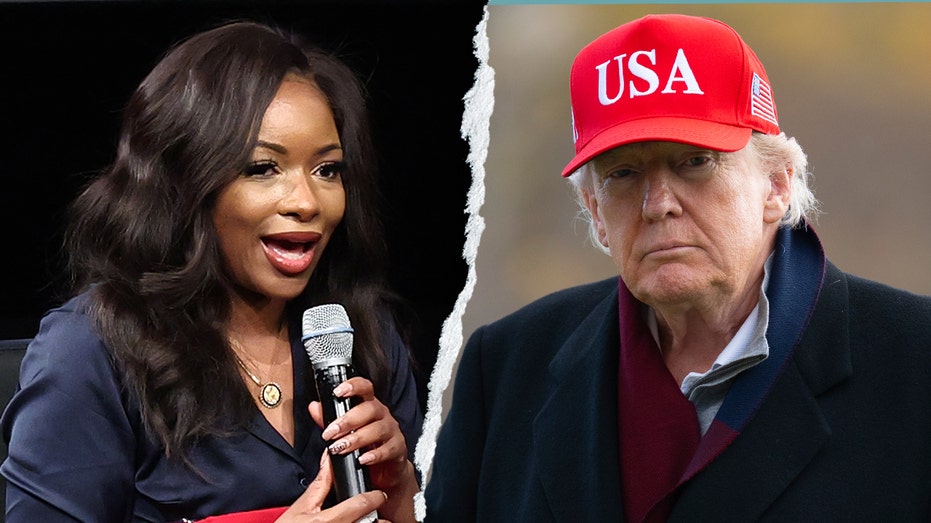
Crockett’s launch video and speech are Trump-centric by design. She leans into Trump’s insult—“low IQ”—and loops it, stares into the camera, and reframes it as a badge of honor. Her speech describes the “American dream on life support while Trump tries to pull the plug,” and she casts her candidacy as a kind of emergency intervention.
Strategically, this is a high-risk, high-reward play:
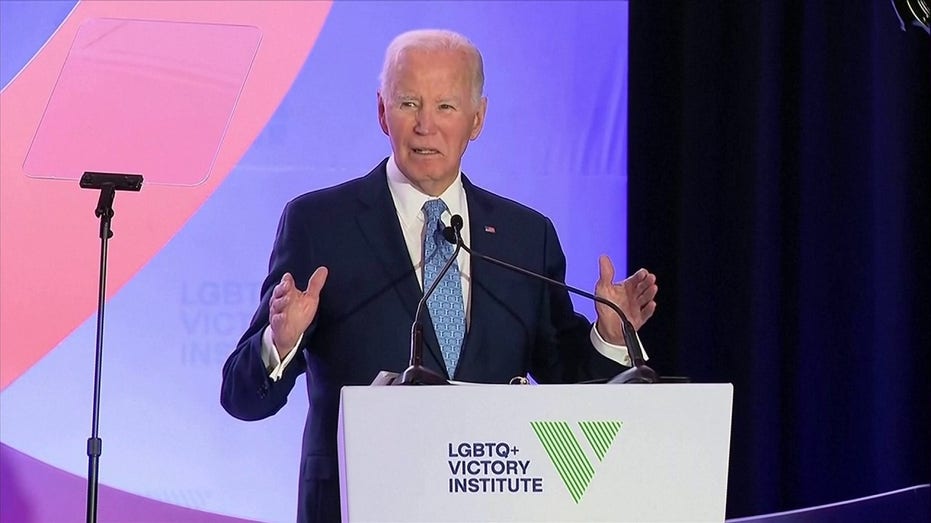
- In the Democratic primary: Making Trump the antagonist can be effective. Democratic primary electorates are deeply anti-Trump. Tying herself to the broader fight against Trump—and aligning with figures like Ayanna Pressley—cements Crockett’s status as a progressive champion rather than a cautious institutionalist. That likely helped push Colin Allred, a more moderate Democrat with a conventional profile, out of the race.
- In the general election: The same strategy is more fraught. Trump remains popular in much of Texas; national exit polls have routinely shown him outperforming other Republicans among rural and exurban voters. Running a campaign anchored in Trump-bashing may lock in base Democratic support but risk further alienating swingy moderates or Republicans who dislike Trump but remain conservative on policy.
What’s interesting is not just that Crockett attacks Trump; it’s how central he is to her identity as a candidate. Her campaign is implicitly testing a question Democrats haven’t fully resolved: when voters say they’re tired of “politics as usual,” do they want less conflict—or a more forceful champion on their side of it?
The intra-Democratic story: unity vs. clarity
Allred’s decision to drop out, coupled with Crockett’s late entry, flips the usual script. Typically, party leaders prefer moderate, low-drama candidates for statewide races in challenging states and worry that progressive firebrands may be easier to caricature as out of touch.
Here, Crockett presents herself as reluctantly answering a call—saying she “never put [herself] into any of the polls” but was compelled by “clear” trends. That framing accomplishes several things:
- It paints her as duty-driven, not ambitious, which can counter caricatures of her as a self-promoting “firebrand.”
- It hints that internal polling showed her stronger than expected against Cornyn or in a primary, suggesting that name recognition and media presence may be more valuable than ideological moderation.
- It subtly challenges established Democratic calculus: if voters are already polarized, maybe the candidate who can generate attention, turnout, and passion is more important than the one who can theoretically appeal to a shrinking pool of persuadables.
The Texas Democratic Party’s chairman describing “competitive primaries” as an “embarrassment of riches” points to a broader narrative Democrats want to sell: Texas is no longer a foregone conclusion, and robust candidate fields are a sign of vitality, not division. But that message sits uneasily with the reality that Crockett’s very presence in the race forced one prominent Democrat out.
The conservative reaction: gendered and racialized mockery as a political tool
The response from Republicans is telling—not just in its content but in its style. The official party language calling her “Low-IQ Jasmine Crockett,” the governor’s suggestion she’s destined for “The View,” and derisive commentary about her ad being tailored to “Gen-Z TikTok users” serve several functions:
- Delegitimization through insult: Rather than focusing on her policy positions, much of the criticism centers on intelligence and style. That pattern is familiar in attacks on women of color in politics: it’s less about ideological disagreement and more about questioning basic competence and seriousness.
- Base mobilization: In the social media era, mockery is a mobilizing language. Clips of her ad, framed as comedic, help energize conservative audiences and reinforce existing stereotypes about “radical” Democrats.
- Preemptive narrative-setting: By defining Crockett early as a punchline, Republicans aim to ensure that if she gains any traction, the baseline perception is already set: she’s a radical outsider, not a credible statewide figure.
The frame—“she’s about to learn the hard way that most Texans are very different from her district”—also reveals a larger Republican anxiety: that urban and suburban districts like hers might not be as isolated as they once were. Mockery is being used to reinforce geographic and cultural boundaries: Dallas can have a Jasmine Crockett; Texas, they argue, cannot.
Data, precedent, and the math problem she faces
Despite demographic tailwinds, Crockett will be running uphill. Key numbers help clarify the challenge:
- Recent margins: Cornyn beat MJ Hegar by about 9-10 points in 2020. Trump carried Texas by roughly 5.5 points the same year. If we assume similar partisan alignment, a Democrat starts at a 5–10-point deficit statewide.
- Turnout dynamics: Texas turnout has been climbing, but off a low base. Young and nonwhite voters still turn out at lower rates than older white voters, particularly in midterms and off-cycle elections. Crockett’s style may excite low-propensity voters—but converting enthusiasm into turnout is historically difficult.
- Suburban swing: The path to victory for any Democrat runs through rapidly growing suburbs in North Texas, Houston, and Austin-San Antonio corridors. Those voters tend to be economically moderate, socially mixed, and often weary of political theater. How they respond to a Trump-centric, confrontational candidacy is an open question.
Historically, progressive darlings have had mixed results in red or purple statewide races. Stacey Abrams transformed Georgia’s electorate but still narrowly lost twice. Beto O’Rourke electrified national donors and came close against Cruz, then lost gubernatorial and presidential bids. Those examples suggest that energy and media presence can narrow the gap—but not necessarily close it.
What’s being overlooked: the Cornyn and Paxton factor
Most of the commentary so far orbits Crockett’s ad and persona. What’s under-discussed is the instability on the Republican side. Cornyn, while a long-serving incumbent with deep connections, faces primary challenges from Attorney General Ken Paxton and Rep. Wesley Hunt. Paxton in particular embodies a more Trump-aligned, grievance-driven brand of Republicanism.
If the GOP primary becomes a bruising ideological battle, two things could happen:
- Scenario 1: Cornyn survives but emerges weakened—pushed right on policy, forced into full-throated defense of Trump, and alienated from some suburban moderates who once saw him as a less polarizing figure than Cruz or Paxton.
- Scenario 2: A more Trumpist candidate prevails—making Crockett’s Trump-focused messaging suddenly more salient in the general election, as the race becomes a clearer referendum on Trumpism rather than a generic R vs. D contest.
In either case, Crockett’s decision to frame the race around Trump may look less like a miscalculation and more like early positioning for a fall campaign in which Trump—and Trumpism—are inescapably front and center.
Expert perspectives: polarization, identity, and strategic risk
Political scientists and strategists I’ve spoken with over the years emphasize that candidates like Crockett are simultaneously symbols and stress tests.
One line of thinking argues that in a hyper-polarized environment, there are fewer true swing voters and more “surge” voters—people who will vote only if they feel someone is fighting clearly for their side. In that model, clarity and passion outperform moderation and caution, even in tough states.
The counterargument is that while identity and energy can expand the electorate at the margins, there is still a ceiling in states like Texas unless Democrats can make inroads with culturally conservative or economically centrist voters who are uneasy with progressive labels and rhetoric.
Crockett’s candidacy sits precisely at this fault line. She embodies a coalition—young, progressive, urban, racially diverse—that Democrats see as the future. But the future hasn’t yet arrived at the statewide level in Texas. The question is whether a candidate like her can accelerate that timeline or will simply underscore how far there is still to go.
Looking ahead: what will really matter in this race
Beyond the memes and the mockery, several key indicators will tell us whether Crockett’s campaign is symbolic or genuinely competitive:
- Fundraising and small-dollar energy: Does she tap into a national progressive donor network the way O’Rourke and Abrams did? Strong early money, especially from small donors, would signal grassroots enthusiasm beyond her district.
- Polling with key groups: Watch numbers in suburban counties around Dallas-Fort Worth and Houston. If she’s getting crushed there, it’s hard to see a path. If she’s merely trailing, that indicates real potential for a closer-than-expected race.
- GOP primary outcomes: A fractured or far-right Republican nominee could shrink the structural advantage Republicans enjoy statewide, especially if national dynamics (abortion, democracy concerns, economic shocks) cut against the GOP.
- Turnout infrastructure: Is the campaign investing in field organizing, voter registration, and local partnerships—or is it primarily a media operation? Viral clips can shape narratives, but without ground game they rarely decide statewide races.
The bottom line
Crockett’s Senate bid is almost certainly an underdog campaign, and it may well end in a double-digit loss. But the significance of her candidacy can’t be measured only by the final margin.
Her run is a revealing test of several trends: the willingness of Democrats to embrace unapologetically progressive candidates in historically red states; the enduring power—and potential limits—of running against Donald Trump; and the way race, gender, and style are weaponized in contemporary political discourse.
Whether she becomes a cautionary tale or a harbinger of change, the race will provide a detailed snapshot of where Texas—and American politics more broadly—really stand in the long, messy transition between the politics of the 20th century and the emerging realities of the 21st.
Topics
Editor's Comments
What’s striking about the reaction to Jasmine Crockett’s launch is how quickly the conversation collapsed into a referendum on style rather than substance. Republicans have focused on mocking her intellect, her ad aesthetics, and her persona, while Democrats, in defending her, have largely emphasized her identity and fighting spirit. Almost entirely missing is a serious discussion of what a Crockett-led Senate agenda for Texas would actually look like on core issues—energy policy in an oil-and-gas state, immigration and border management, or how she would reconcile progressive climate goals with the livelihoods of Texans tied to fossil fuel industries. This gap matters. If Texas is ever going to flip—or even become reliably competitive—it will likely happen when a Democrat manages to blend cultural and identity resonance with a persuasive, concrete economic vision tailored to the state’s unique profile. Crockett’s campaign might be a step toward that synthesis, or it might underscore how far Democrats still are from articulating a Texas-specific progressive program that can move beyond their urban base.
Like this article? Share it with your friends!
If you find this article interesting, feel free to share it with your friends!
Thank you for your support! Sharing is the greatest encouragement for us.