
Erika Kirk, ‘Grifter’ Politics, and Who Gets to Count as a Real Woman in 2025

Sarah Johnson
December 9, 2025
Brief
The clash over Erika Kirk being labeled a ‘grifter’ reveals a much deeper fight over who gets to define real feminism, authentic faith, and legitimate womanhood in today’s outrage-driven media culture.
The Erika Kirk ‘Grifter’ Clash Isn’t Just About One Widow. It’s About What Feminism — and Faith — Are Allowed to Look Like in 2025.
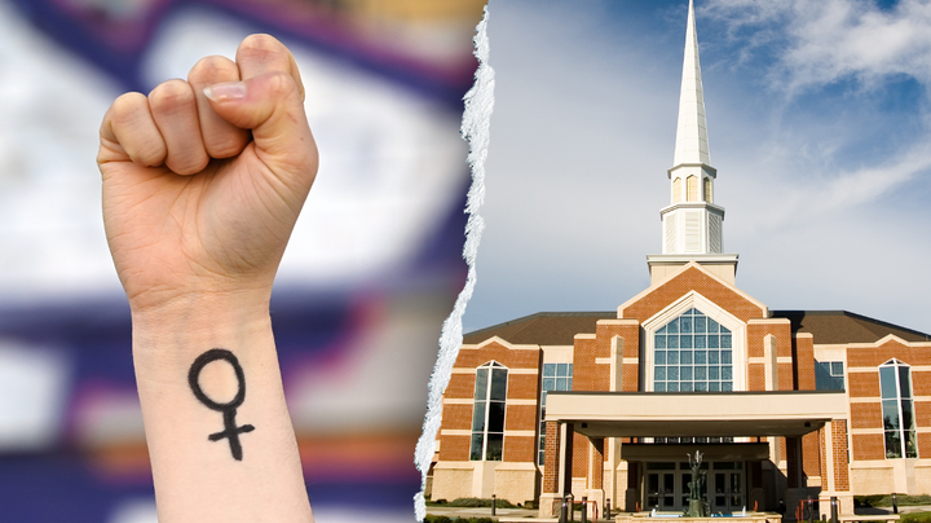
On the surface, a liberal podcaster calling a conservative widow a “grifter” sounds like just another skirmish in America’s endless culture war. But the backlash from Jennifer Welch against Erika Kirk exposes a deeper, more consequential struggle: who gets to define legitimate womanhood, authentic feminism, and sincere faith in the current media ecosystem — and who gets excommunicated as a fraud.
What makes this episode worth examining isn’t the name-calling itself, but the underlying message: certain combinations of gender, politics, and religion are being treated as inherently illegitimate. When Welch argues that Erika Kirk is “weaponizing” her gender and faith, she’s really policing the boundaries of what women are allowed to say and believe in public while still being seen as “real” women.
The Bigger Picture: A Long History of Policing ‘the Wrong Kind of Woman’
The dynamics on display here are not new. American political culture has long treated women who deviate from the dominant ideological script as traitors — especially when they argue against mainstream feminist or progressive priorities.
- Early suffrage splits: In the late 19th and early 20th centuries, some women opposed women’s suffrage on religious or social grounds. They were castigated by suffrage leaders as dupes or tools of patriarchy, even though many saw themselves as defending family and social order.
- Phyllis Schlafly and the ERA: In the 1970s, Schlafly led conservative women against the Equal Rights Amendment. Feminist activists routinely portrayed her as a hypocrite — a highly public, politically powerful woman arguing for traditional roles — and used the language of “betrayal” and “self-hatred” that sounds familiar today.
- Sarah Palin, 2008: Palin’s vice presidential run revived the idea of “the wrong kind of feminist” — a woman with political power who opposed abortion rights and progressive feminist policy. Much of the criticism framed her as embarrassingly inauthentic, not just incorrect.
Jennifer Welch’s attack on Erika Kirk fits this lineage: the accusation that conservative women are “weaponizing” their gender and the gains of prior feminist struggles is essentially a claim that they are illegitimate heirs to that legacy and therefore unqualified to represent women.
Weaponized Authenticity: Why ‘Grifter’ Has Become the Ultimate Political Insult
Calling someone a “grifter” in today’s media environment is more than questioning their sincerity. It’s a way of discrediting them completely without having to engage their arguments.
Across the ideological spectrum, “grifter” has become the insult of choice for figures who blend:
- Ideology + identity (e.g., woman, person of color, religious believer), and
- Media presence + monetization (books, speaking tours, podcasts, Patreon, merch).
If you think about the incentives of the attention economy, the “grifter” label performs crucial work:
- It delegitimizes dissenting voices inside a demographic group (women, Christians, etc.) by framing them as mercenaries rather than representatives.
- It reassures one’s own audience that they don’t need to wrestle with uncomfortable counterarguments because the other side is not just wrong — it’s fundamentally fake.
- It keeps the outrage cycle spinning by turning ideological disagreement into moral drama: not just “you’re wrong,” but “you’re a bad person exploiting your own people.”
This is symmetrical across left and right. Conservative commentators routinely label progressive activists and diversity consultants as “race grifters” or “gender grifters.” Welch is deploying the same framework in reverse: a conservative Christian widow becomes an “opportunistic grifter” for appealing to women using a traditionalist frame.
Why the Fashion Critique Matters More Than It Seems
Welch’s focus on Kirk’s “costume changes” — the idea that she dresses one way for MAGA audiences and another for New York elites — might sound petty. But it’s actually doing important rhetorical work: it recasts political argument as performance art and erases the possibility that a woman can occupy multiple social contexts without being fake.
Women in public life have always had their clothing interpreted as confession:
- Hillary Clinton’s pantsuits became a symbol of technocratic feminism — and sometimes a punchline.
- Alexandria Ocasio-Cortez faced scrutiny for wearing designer clothes, framed by critics as proof of hypocrisy.
- Conservative women in media are routinely accused of “selling” sexuality to right-wing male audiences while advocating traditional values.
What Welch is really suggesting is that changing how you present yourself to be “taken seriously” is inherently suspect. But that is, in practice, what nearly every successful public figure does — especially women, who face far narrower aesthetic and behavioral boundaries than men.
In that sense, the attack on Kirk’s “costume changes” is less about her actual clothes and more about disciplining women who cross subcultural boundaries: you can be a Christian conservative widow on Fox, or a polished guest at a New York business summit, but not both without being deemed fraudulent.
The Feminism Question: Who Owns the Legacy of the Suffragettes?
Welch argues that Erika Kirk is enjoying rights “the suffragettes and other women fought for” while undermining contemporary women by urging them not to rely on government support for family formation. This raises a contentious but important question: who owns the symbolic capital of past feminist struggles?
Historically, movements for women’s rights were ideologically diverse and often internally conflicted:
- Many early suffrage activists grounded their arguments in religious language, not secular progressive frameworks.
- Some suffrage leaders embraced eugenic or racist rhetoric to appeal to white voters — a legacy modern feminists rightly criticize.
- Postwar women’s movements diverged between liberal feminism (focused on work and legal equality), radical feminism, and more family-centered or religiously informed models.
Today, the temptation across the spectrum is to retroactively claim that the suffragettes (and later feminist icons) would have endorsed one side of the current culture war. But the reality is messier. The right to vote and to work has enabled both progressive and conservative women to build public platforms. There is no ideological litmus test attached to those rights.
So when Welch suggests Kirk is misusing gains “earned” by earlier women, she’s not just criticizing a policy view; she’s asserting that those historical victories were meant to serve one particular ideological project. That’s a powerful narrative — and a historically inaccurate one.
Grief, Martyrdom, and the Politics of Widows
There is another layer here often missed in quick-take coverage: Erika Kirk is not just a conservative activist; she is a widow of a recently assassinated political figure. Historically, widows of political or religious figures often become symbolic carriers of a cause:
- Coretta Scott King carried forward Martin Luther King Jr.’s civil rights legacy.
- Jackie Kennedy became a curator of JFK’s mythic stature.
- Multiple political leaders’ spouses around the world have stepped into public life after an assassination to keep a narrative alive.
In that tradition, Erika Kirk’s public appearances and a tour for her late husband’s book are not unusual. What’s different is the level of ideological polarization: Welch doesn’t just attack Erika’s politics; she posthumously labels Charlie Kirk an “unrepentant racist and homophobe,” effectively invalidating mourning itself as a politically suspicious act.
Once a movement or figure is declared irredeemable, anyone attached to them risks being treated as inherently tainted. That’s a dangerous precedent in a democracy: it implies that some constituencies — and their grief — are unworthy of empathy.
Expert Perspectives: Identity, Media Incentives, and the Outrage Machine
Several strands of research help explain why incidents like this are becoming more frequent and more vicious.
On identity betrayal and policing:
Political psychologist Lilliana Mason has written extensively about “identity-based polarization,” where partisan identity fuses with race, religion, and gender. In such a context, she notes, “members who deviate from group norms are more likely to be perceived as traitors than simple dissenters.” In other words, a conservative man criticizing welfare might be seen as wrong; a conservative woman doing the same is seen as betraying her gender.
On outrage as a business model:
Media scholar Siva Vaidhyanathan has described social platforms as “anger machines,” optimized to reward content that triggers strong emotional responses. Calling someone a “grifter who should be kicked to the curb” is exactly the kind of clip that travels well, independent of the underlying policy disagreement. Outrage doesn’t just accompany ideological conflict; it monetizes it.
On women, faith, and public voice:
Sociologist Nancy Ammerman has documented how women of faith often build public influence through a blend of religious and personal storytelling. That makes them uniquely vulnerable to accusations of “weaponizing” religion when they enter explicitly political debates — particularly on issues like family, sexuality, and gender roles.
What This Really Means: Narrowing the Space for Cross-Pressure Identities
The deeper risk illuminated by this controversy is not that public figures are mean to each other — that is hardly new. The more serious concern is that we are shrinking the space for people whose identities cross our preferred ideological boundaries.
Consider Erika Kirk’s composite identity as presented in this episode:
- Widow of a controversial conservative leader.
- Christian and overtly religious.
- A working mother and CEO who speaks to women about work, family, and faith.
- Someone who can move between Fox appearances and New York summits.
To a polarized audience, cross-pressure identities like this are intolerable. The system prefers purity: conservative Christian women should stay within conservative media ecosystems; professional women in New York should align with progressive feminist orthodoxies. Crossing those lines risks being dismissed as “performative” or exploitative.
Yet historically, change has often come from figures who break these rigid categories — religious civil rights leaders who talk to Wall Street, feminist conservatives who challenge Republican orthodoxy, progressive evangelicals who critique both left and right. If we label all such boundary-crossers as “grifters,” we incentivize a politics of pure tribes and permanent outrage.
Data & Evidence: How Widespread Is This Dynamic?
While this specific clash is anecdotal, it sits on top of measurable trends:
- Rising affective polarization: Surveys from Pew Research Center show that in the past two decades, the share of partisans who view the opposing party as “immoral” has climbed sharply. That moralization makes it easier to justify dehumanizing language like “kick her to the curb.”
- Gender and party alignment: The gender gap in voting and party identification has widened. Women, especially single and college-educated women, lean more Democratic. Conservative women who remain Republican thus stand out as more counter-normative and draw more intense scrutiny.
- Online abuse patterns: Studies of social media harassment show that women, especially in politics and media, receive disproportionate personal attacks, including critiques of appearance, sexuality, and family roles — exactly the lines of attack seen in the focus on Kirk’s clothing and motherhood.
Looking Ahead: What to Watch Beyond the Outrage Loop
A few key developments to monitor:
- Normalization of post-mortem dehumanization: Welch has previously laughed at celebrations of Charlie Kirk’s assassination. If celebrating political violence against opponents becomes normalized, it will further erode any shared moral baseline.
- The treatment of widows and family members in polarized politics: Whether it’s spouses of police officers, victims of gun violence, or families of political operatives, the willingness to attack grieving relatives as “props” or “grifters” is increasing.
- The future of “big tent” feminism: As more women occupy ideologically diverse roles, the question is whether feminism can accommodate women who reject state-centered solutions or progressive sexual ethics, or whether they will be permanently cast as betrayers.
- Platform incentives: If incendiary rhetoric like Welch’s continues to draw clicks and clips, other podcasters and influencers across the spectrum are likely to escalate their own language to compete.
The Bottom Line
This isn’t fundamentally a story about whether Erika Kirk’s policy concerns about government support and family formation are right or wrong. It’s a story about how we treat women who defy our expectations — particularly when they mix faith, politics, grief, and ambition in ways that don’t fit neatly into partisan boxes.
By framing such women as “grifters” who should be “kicked to the curb,” our media culture doesn’t just punish individual figures. It signals to millions of ordinary women that if their beliefs don’t align with their demographic “lane,” they too will be treated as illegitimate — not merely mistaken. In the long run, that’s corrosive not only to civil discourse, but to any serious project of gender equality that claims to speak for all women.
Topics
Editor's Comments
What’s striking in this episode is not that a liberal podcaster attacked a conservative widow—partisan media has been doing some version of that for years—but how normalized the logic has become. The language of ‘grift’ and ‘weaponization’ now functions as a universal solvent: it dissolves the need to treat ideological opponents as sincere, or even fully human, actors. The person becomes a scam; the argument becomes a con. That should trouble us, irrespective of where we land on Erika Kirk’s views about government, family, or faith. Because if public speech by a woman like Kirk is automatically framed as exploitation of her own gender and religion, then by symmetry, the same charge can be leveled at progressive women who monetize their stories of oppression. We risk a future where any attempt to turn lived experience into political argument is dismissed as self-serving performance. That’s a recipe for cynicism, not accountability—and it leaves very little room for good-faith persuasion across our deepest divides.
Like this article? Share it with your friends!
If you find this article interesting, feel free to share it with your friends!
Thank you for your support! Sharing is the greatest encouragement for us.