From ‘Godwink’ to Blueprint: The Deeper Story Behind a Viral Christmas Kindness Miracle

Sarah Johnson
December 9, 2025
Brief
A viral ‘Godwink’ Christmas story about a stranger’s kindness and a caregiver’s transformation reveals deeper truths about faith, caregiving, economic precarity and the rise of crowdfunding as a makeshift safety net.
Beyond ‘Godwinks’: What a Viral Christmas Kindness Story Reveals About Faith, Chance and Social Solidarity
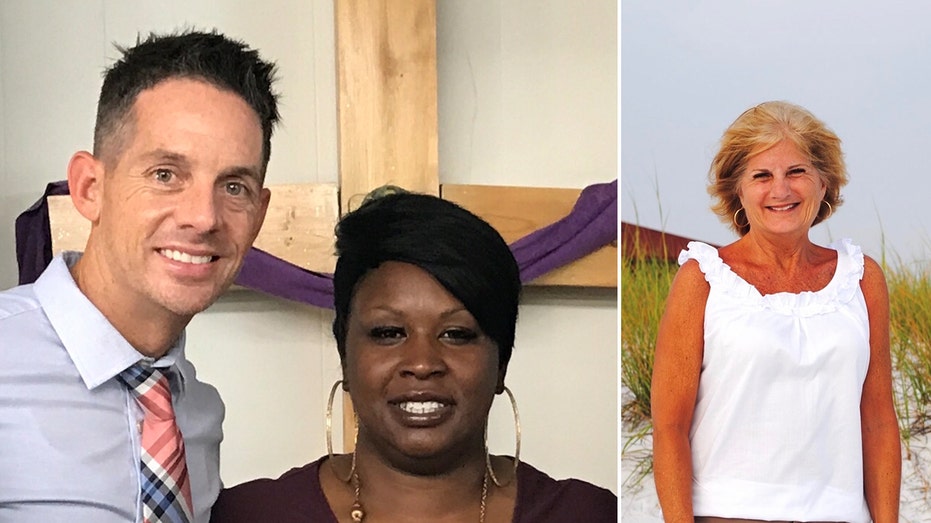
On the surface, the story of Chris Wright and TunDe Hector reads like a heartwarming holiday anecdote: a man helps a stranger before Christmas; years later, she becomes his dying mother’s caregiver; their reunion sparks a viral fundraiser that changes her life. Yet beneath the sentimentality is a dense web of themes about faith, coincidence, caregiving, and how communities step in when systems fall short.
This is not just a feel-good “Godwink” — a perceived sign of divine orchestration — but a window into how people in modern America navigate economic insecurity, health care gaps, and spiritual meaning. It shows how individual acts of kindness can be amplified by digital platforms, but also how these stories can distract from larger structural questions.
A modern parable in an age of uncertainty
The Wright–Hector story taps into something deeper than holiday nostalgia. It arrives in a period marked by distrust of institutions, political polarization, and persistent economic strain. In such times, narratives framed as “Godwinks” do important cultural work: they reassure people that life is not random, that suffering is not pointless, and that there is an invisible thread connecting our actions.
Historically, religious traditions have always used everyday encounters to illustrate divine providence. From biblical stories of Good Samaritans to 19th-century revival testimonies, believers have framed chance meetings as evidence of a guiding hand. The Godwinks concept is a contemporary iteration of that tradition, tailored for a social-media era in which gripping, compact stories travel faster than sermons.
What’s distinct here is how the narrative fuses three modern realities:
- The fragility of low-income households relying on a single tank of gas and a few dollars.
- The precariousness of end-of-life care in the U.S., heavily dependent on underpaid aides.
- The power of crowdfunding and virality to redistribute resources in sudden, emotional bursts.
Taken together, these elements turn one man’s decision to stop on the side of the road into a kind of Rorschach test for how we interpret chance, responsibility, and community.
Faith, coincidence and the human need for patterns
The language of “Godwinks” frames the story as a series of divinely orchestrated coincidences: the roadside encounter, the later reassignment of a substitute aide, the shared church connection, Wright’s recognition, and his mother’s death on Hector’s birthday.
Psychologically, humans are wired to find patterns in randomness. Cognitive scientists call this apophenia—our tendency to perceive meaningful connections between unrelated events. But religious traditions give that impulse a spiritual vocabulary. Where a statistician sees improbabilities, a believer may see providence.
Neither view cancels the other. The statistical odds of Wright encountering Hector again in such an intimate context are low, but not impossible. Yet the emotional and ethical significance of his earlier choice is unmistakable. Had he ignored her that December morning, none of the subsequent events — the bond between his mother and Hector, the GoFundMe, the career transformation — would have unfolded in the same way.
Whether one calls it a Godwink or a coincidence, the story illustrates a key sociological point: people tend to infuse morally charged events with spiritual meaning. In times of grief or vulnerability — a mother’s terminal illness, a caregiver’s struggle to advance — narratives of divine timing offer comfort and coherence.
What the story reveals about caregiving and economic precarity
Strip away the spiritual framing and another reality comes into focus: this is a story about a working woman on the edge of financial collapse, and about a health system that relies heavily on low-wage workers like her.
- Economic fragility: When Wright meets Hector on the roadside, she has $5 in her purse and is unsure how she’ll afford Christmas presents or food. That’s not unusual. Federal Reserve surveys consistently show that around 30–40% of Americans would struggle to cover a $400 emergency expense without borrowing or selling something.
- Care work undervaluation: Home health and nursing aides are among the lowest-paid roles in health care, despite doing physically and emotionally demanding work. According to U.S. Bureau of Labor Statistics data, median annual wages for home health aides remain in the low-to-mid $30,000s, often without robust benefits.
- Barriers to advancement: Hector’s “dream of becoming a nurse” is also typical. Many aides see nursing as a path out of economic precarity, but tuition costs, childcare, and unstable schedules make that path difficult.
In this light, the “miracle” is also a commentary on structural barriers. It took a nearly viral fundraiser — $35,000 rather than the $1,000 Wright initially hoped for — to unlock the door to the next stage of Hector’s career.
That generosity is moving. But it raises a deeper question: why must a dedicated caregiver’s path to advancement depend on a rare convergence of altruism, storytelling, and internet attention?
Crowdfunding as modern safety net — and its limits
The GoFundMe campaign at the heart of this story is emblematic of a broader shift: Americans increasingly turn to crowdfunding to plug gaps in health care, tuition, and basic needs.
Research on GoFundMe and similar platforms has highlighted several trends:
- Medical-related campaigns represent a large share of fundraising efforts, reflecting high out-of-pocket costs and coverage gaps.
- Campaigns that succeed often have compelling narratives, visuals, and a clear “hero” or “victim” — like a devoted caregiver with an inspiring backstory.
- People with strong social networks or media exposure tend to fare far better than those without such visibility.
Hector’s story, amplified by the emotional symmetry of her earlier encounter with Wright, fits perfectly into what digital culture rewards. But that also illustrates a tension: deservingness becomes partially a function of storytelling, not just need. Thousands of caregivers with similar dreams will never go viral.
From a policy perspective, stories like this can be double-edged. They inspire generosity and highlight the dignity of frontline workers. Yet they can also normalize the idea that life-changing opportunities should come from rare bursts of public empathy rather than predictable systems of support, scholarships, and fair wages.
Why stories like this resonate during the holidays
The story’s timing — set around Christmas and re-told during the holiday season — is not incidental. Holidays function as cultural mirrors, reflecting what a society fears it’s losing and what it longs to regain.
For many Americans, especially after years of pandemic disruption, the holidays have become less about consumption and more about a search for connection and meaning. Surveys show rising levels of loneliness and declining trust in institutions. In that context, narratives of strangers helping strangers and communities rallying together deliver a kind of emotional counterprogramming.
They also echo a long tradition of Christmas storytelling: from Dickens’ “A Christmas Carol” to modern films, the genre often features a moral awakening, social conscience, and a reminder that individual choices matter. The Wright–Hector story follows this arc, but updates it with contemporary elements: a side-of-the-road rescue instead of Victorian London, a crowdfunding platform instead of a rich benefactor.
Overlooked dimension: gender, emotional labor and whose kindness we celebrate
There’s another layer rarely addressed in mainstream coverage: gender and emotional labor. The narrative’s emotional core is the relationship between Wright’s mother and Hector. It is Hector’s daily, intimate care — bathing, lifting, listening, comforting — that makes her “family” to the Wrights.
Yet the public story tends to center on Wright’s initial act of generosity and his eventual organization of the fundraiser. He is the catalyst; she is the grateful recipient. This mirrors a broader pattern in media coverage of kindness, where acts of giving are often spotlighted more than the ongoing, often invisible work of care predominantly performed by women.
That doesn’t diminish Wright’s generosity or intentions. But it suggests we should pay equal attention to the social value of the work Hector was already doing long before the GoFundMe — and which millions of women, often women of color, do every day with little recognition.
From nursing aide to nurse to legal advocate: the power — and rarity — of mobility
The story’s ending — Hector completes nursing school and then learns her employer will fund law school so she can specialize in patient advocacy and home health care — operates almost like a narrative crescendo: a triple transformation from economically struggling aide to nurse to aspiring legal advocate.
This trajectory encapsulates a growing field: patient advocacy and health law focused on elders, home-bound patients, and those navigating complex insurance and care arrangements. As the U.S. population ages, disputes over home care, reimbursement, and patient rights are likely to increase. Having advocates who have literally been in the room — who have done the hands-on work — could reshape how those systems function.
However, this mobility is still exceptional. Most aides will not receive full tuition for professional degrees, even if they have equivalent talent and dedication. Again, we are reminded of the gap between a remarkable narrative and everyday reality.
What this story signals about where we are now
Put together, the Wright–Hector story reveals several broader trends:
- Spiritual reframing of hardship: Many people prefer to interpret hardship and unlikely encounters through a spiritual lens rather than as mere chance. This provides comfort, but can also obscure systemic issues.
- Informal moral education: The anecdote about Wright’s mother telling him as a child, “Be nice to someone today,” underscores how moral habits formed early can have long-term ripple effects in ways we never foresee.
- The rise of narrative-based philanthropy: Platforms and media favor stories with strong arcs and emotional twists — which can direct resources in highly uneven ways.
- Latent hunger for hopeful stories: In a media environment often dominated by outrage and crisis, stories like this cut through precisely because they suggest that our choices still matter and that goodness can boomerang back.
Looking ahead: from Godwink to blueprint
There are two ways to respond to a story like this.
One is to treat it as a comforting anomaly — a reminder that sometimes, amid chaos, the universe conspires for good. That reaction is understandable and, for people of faith, spiritually coherent.
The other is to treat it as a blueprint for what should be ordinary rather than extraordinary:
- Stopping when we see someone in need, even when it’s inconvenient.
- Recognizing and materially supporting caregivers, not only when their stories go viral.
- Building policies that make it easier for frontline workers to advance in education and influence without relying on luck.
- Creating channels for patient advocacy that draw on the expertise of those who’ve done hands-on care.
In this second reading, “Godwinks” are less about improbable coincidences and more about the predictable outcomes of a culture that values compassion, invests in caregivers, and designs systems that reward dedication instead of exploiting it.
Whether one sees divine fingerprints all over this story or simply the best of human nature, the underlying lesson is the same: a small act — $40 and a ride to a gas station — can reverberate through lives and institutions in ways none of us can anticipate. The question is whether we’re content to marvel at those rare reverberations, or willing to build a society in which stories like this are no longer surprising.
The bottom line
This Christmas kindness story is more than a feel-good “Godwink.” It’s a lens on economic precarity, undervalued care work, the rise of crowdfunding as a stand-in safety net, and a culture hungry for evidence that compassion still matters. If we move beyond seeing it as a one-off miracle and treat it as a challenge to our collective priorities, its impact could reach far beyond one roadside encounter in Georgia.
Topics
Editor's Comments
What strikes me most about the Wright–Hector story is how easily it could be read as a feel-good anomaly rather than a symptom of deeper structural realities. The spiritual framing — ‘Godwinks,’ divine timing, birthday coincidences — gives emotional coherence to events that might otherwise feel random or cruel. But it also risks turning systemic failures into background scenery for a miracle. A devoted caregiver needs a viral fundraiser to advance professionally; a family relies on a single aide for basic dignities at the end of life; a woman is one tank of gas away from crisis. These are not unusual circumstances. If anything, they are increasingly common. The contrarian question is whether we over-rely on such stories to reassure ourselves that individual virtue is enough. It’s easier to celebrate a spectacular act of generosity than to wrestle with why our systems so consistently require heroism to produce outcomes that should be ordinary: financial stability for caregivers, dignified care for the sick, and predictable routes to education and advocacy roles.
Like this article? Share it with your friends!
If you find this article interesting, feel free to share it with your friends!
Thank you for your support! Sharing is the greatest encouragement for us.