Beyond the Headlines: How a GOP Pregnancy-Cost Bill Could Redefine Paternal Responsibility

Sarah Johnson
December 9, 2025
Brief
Analysis of Rep. Ashley Hinson’s bill to make fathers pay 50% of pregnancy costs, exploring its post-Roe political context, legal complexities, and implications for maternal health and family policy.
Why a GOP Bill on Pregnancy Costs Could Quietly Reshape the Politics of Parenthood
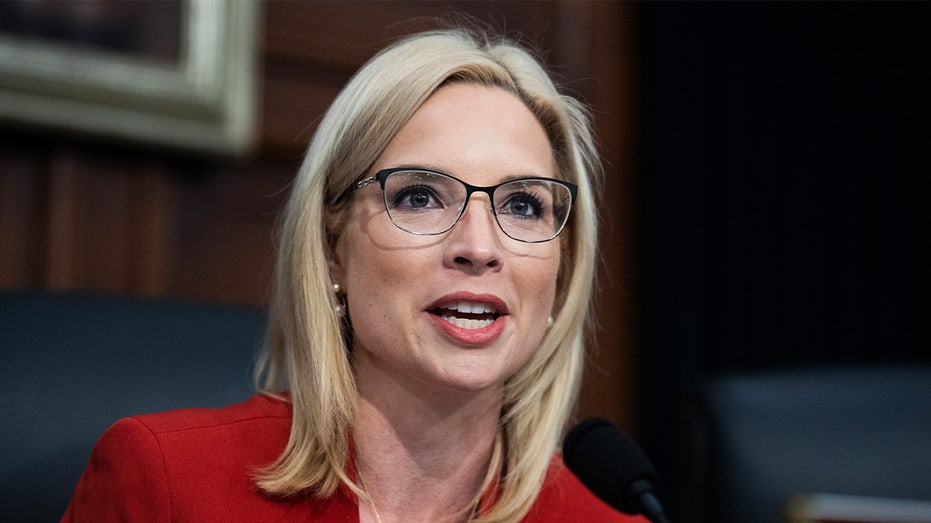
Rep. Ashley Hinson’s Supporting Healthy Pregnancy Act is being framed as a straightforward fairness measure: require biological fathers to pay at least 50% of pregnancy-related medical expenses when requested by the mother. But beneath that simple headline is a much bigger story about how both parties are repositioning themselves on family policy in a post-Roe America, how the law has historically treated pregnant women and fathers, and how economic pressure during pregnancy shapes choices long before birth.
This bill isn’t just about splitting a hospital bill. It sits at the intersection of reproductive politics, child support law, gender norms, and a fast-evolving debate inside the Republican Party about what it means to be “pro-family” when abortion access is sharply restricted in many states.
The long shadow of child support law
On paper, the idea that fathers should help pay for pregnancy costs sounds intuitive, even obvious. Yet for decades, U.S. child support systems have overwhelmingly focused on obligations after a child is born.
In most states today:
- Child support orders typically start at birth or once paternity is legally established post-birth.
- Pregnancy and delivery expenses are often treated as the mother’s burden, or at best may be considered later in child support calculations on a case-by-case basis.
- Unmarried women—now accounting for about 40% of U.S. births—are especially likely to pay pregnancy costs alone or with family help.
Historically, welfare and child support policy evolved together. In the 1980s and 1990s, federal reforms pushed states to aggressively pursue child support from noncustodial parents, largely fathers, to reduce public assistance costs. But those reforms aimed at the period after a child existed as a legal person. Pregnancy itself remained in a kind of legal gray zone for cost-sharing.
Some states have experimented with partial remedies. A handful allow courts to retroactively assign a portion of prenatal and delivery costs to fathers once paternity is established. But that’s the exception, not the norm—and it often requires litigation, time, and legal representation many low-income mothers don’t have.
Hinson’s proposal essentially tries to move cost-sharing up the timeline: if the mother requests it, the father would be required to shoulder at least half of out-of-pocket pregnancy and delivery costs, including premiums, within a state-established system.
Why this is emerging now: the post-Roe policy gap
To understand why this kind of bill is surfacing now, you have to look at what changed after the Supreme Court overturned Roe v. Wade in 2022.
Once many Republican-led states enacted bans or severe restrictions on abortion, critics argued that the GOP was focused on restricting women’s choices without building the social and economic support structures that make parenting viable—especially for low- and middle-income women. The phrase “forced birth” became common among critics, paired with a blunt question: If you insist women carry pregnancies to term, what responsibilities do fathers, employers, insurers, and the state owe them during that pregnancy?
Republican strategists and lawmakers have been acutely aware of the electoral risk, especially among suburban women and younger voters. The party’s internal debate has moved from “How do we restrict abortion?” to “What does a credible pro-family agenda look like?”
That’s the backdrop for Hinson’s bill, and also for related efforts she’s backing: informing pregnant students of their rights and resources, and a bipartisan push to expand midwife access in underserved areas. Taken together, these are early attempts to construct a “post-Roe social policy” that responds to criticism that the party is anti-abortion but not pro-mother.
What this really changes: incentive structures and power dynamics
Beyond symbolism, mandated pre-birth cost sharing could recalibrate several key dynamics.
1. Economic pressure during pregnancy
Research consistently shows that financial strain is a major factor in both abortion decisions and adverse maternal health outcomes. Out-of-pocket costs for pregnancy and delivery in the U.S. are significant even for insured women. One study published in Health Affairs found that the average out-of-pocket cost for childbirth among women with employer coverage was around $4,500, with some facing bills $10,000 or higher.
For a woman working hourly jobs, juggling housing insecurity, or navigating college, those costs can be destabilizing. If effectively implemented, a policy that guarantees fathers cover at least half of those expenses—on demand—could reduce the immediate financial penalty of continuing a pregnancy. That doesn’t eliminate broader costs (lost wages, childcare, long-term expenses), but it addresses a key pain point in the nine months before birth.
2. The legal recognition of pregnancy as a shared responsibility
Current law implicitly treats pregnancy costs as the woman’s problem until the child is born. Hinson’s bill pushes toward a different norm: if two people create a pregnancy, both are financially responsible during the gestational period, not just afterward.
That shift matters symbolically and practically. It moves law closer to the lived reality that many women experience: the financial burdens begin long before a baby arrives. It also subtly challenges enduring cultural narratives that treat men’s responsibilities as kicking in only once there is a visible child.
3. The politics of “pro-life but pro-woman”
For Republicans, the bill offers a way to argue: we are not just telling women what they can’t do; we are also requiring men to step up. That reframes the debate from one about controlling women to one about enforcing paternal accountability.
But there are limits and caveats embedded in the design:
- Abortion costs are explicitly excluded. That’s a clear ideological line. The state helps enforce paternal responsibility only for pregnancies carried to birth, not for women who seek abortions—even where abortion remains legal.
- The mother must request the payments. There’s no automatic mechanism. Women have to opt in, which means navigating whatever system states build, potentially disclosing pregnancy earlier than they’d like or dealing with a non-cooperative or abusive partner.
- Biological father identification and disputes. The bill’s effectiveness will depend heavily on how states handle contested paternity during pregnancy, an area fraught with privacy, safety, and due process questions.
Implementation landmines: from theory to reality
The core idea may be popular in the abstract, but turning it into a functioning system is where the hard questions begin.
Paternity and due process
Requiring a man to pay 50% of pregnancy costs raises immediate questions: How is paternity established before birth? What if he disputes it? Do courts issue temporary orders subject to later confirmation after genetic testing? What happens if a man pays and later turns out not to be the father?
States would have to design processes that are fast enough to be useful to pregnant women but robust enough to satisfy due process protections for alleged fathers. Historically, child support systems have struggled with mistaken paternity cases even after birth and DNA testing; adding pre-birth obligations compounds the legal complexity.
Enforcement and low-income fathers
Another overlooked issue is enforcement. The U.S. child support system already struggles to collect from low-income noncustodial parents. Federal data show that the majority of unpaid child support is owed by men with very low incomes or intermittent employment.
Requiring 50% of pregnancy costs does not create money where it doesn’t exist. For middle- and upper-income fathers, it might work relatively smoothly; for low-income fathers, it risks layering new debts and enforcement actions—possibly including wage garnishments and license suspensions—onto already precarious lives. That could, paradoxically, make long-term support for the child less stable.
Safety and coercion risks
Domestic violence and reproductive coercion are central, yet often missing, from policy debates like this. For some women, initiating a legal process that formally notifies a man of the pregnancy and demands money may increase risk of harassment or violence. Any state system implementing this bill would need safeguards—confidentiality options, third-party intermediaries, or protective orders—to prevent economic enforcement from becoming a vector for abuse.
How this fits into a broader GOP pivot on family policy
Hinson is not acting in a vacuum. Across red and purple states, Republican lawmakers have been experimenting with policies that would have been politically marginal for the party a decade ago: expanded child tax credits, baby bonuses, paid leave pilots, and maternal health initiatives.
The political logic is clear: if the party is going to own abortion restrictions, it needs to own the economic and health consequences for women as well—or at least show that it is trying. Hinson’s status as a Senate candidate makes this even more evident. Bills like this function as both policy and messaging: a way to appeal to pro-life voters, signal responsiveness to women’s concerns, and blunt Democratic attacks heading into high-stakes elections.
Democrats, for their part, are likely to respond on two fronts:
- Welcoming the recognition of paternal responsibility but arguing that it is insufficient without broader measures like paid leave, childcare subsidies, and universal health coverage for maternity.
- Highlighting the abortion exclusion as evidence that the bill is more about ideology than comprehensive support for reproductive health.
The data: where this might actually move the needle
Several trends suggest where the real-world impact could be felt if a bill like this passed and was robustly implemented:
- Maternal health disparities. The U.S. maternal mortality rate is more than double that of many peer countries, with Black women facing risk roughly three times that of White women. Financial barriers to prenatal care are a known contributor. Cost-sharing that lowers women’s out-of-pocket burden could improve early and consistent prenatal care attendance—if paired with access.
- College completion and young parents. Pregnancy is a major driver of college dropout for women. If Hinson’s companion bill increasing awareness of campus resources is effective, adding financial support from fathers during pregnancy might slightly improve retention for student mothers, though that will hinge on campus childcare and flexible academic policies.
- Relationship dynamics. Some research suggests that early, formalized financial involvement by fathers correlates with higher long-term engagement, but only where cooperation and safety exist. In high-conflict or abusive situations, legal enforcement can intensify conflict.
What’s being overlooked: the missing systemic pieces
Most coverage will focus on whether this bill is a genuine pro-woman move or a cynical political play. That’s important, but it misses several deeper issues:
- Insurance design. The bill addresses splitting out-of-pocket costs, not why those out-of-pocket costs are so high in the first place. Without reforms to deductibles, coverage gaps, and surprise billing, the underlying affordability crisis remains.
- Workplace conditions. Medical bills are only one part of the economic hit of pregnancy. Lost wages, job insecurity, and lack of paid leave are at least as significant, especially for hourly workers. The bill’s silence on employment protections limits its impact.
- State capacity. Many state child support agencies are already overloaded. Building a new pre-birth enforcement apparatus without major investments risks creating a system that looks good on paper but is slow and inaccessible in practice.
Looking ahead: key questions to watch
The real test of Hinson’s proposal is not its moral appeal but its practical architecture. As the bill moves—or is debated even without passage—several questions will determine whether it becomes a meaningful new pillar of family policy or remains mostly symbolic:
- Will lawmakers amend it to address paternity disputes and wrongful assignment of obligations?
- Will there be protections for women at risk of violence or retaliation when they invoke the law?
- Could the framework be expanded in future reforms to include some abortion-related costs in states where abortion is legal, or is that politically off-limits?
- How will this interact with Medicaid, private insurance, and hospital charity care policies?
- Will Democrats counter with a broader package tying paternal responsibility to paid leave and childcare, forcing a more comprehensive negotiation?
Even if this specific bill never becomes law, it marks a notable turning point: a Republican embrace of pre-birth paternal financial obligations as part of a post-Roe “pro-family” identity. That conceptual shift is likely to endure, whether carried by Hinson or by others who refine and expand on the idea.
The bottom line: Hinson’s Supporting Healthy Pregnancy Act is less about the narrow mechanics of splitting medical bills and more about redefining when paternal responsibility begins, how far a pro-life party must go to be credibly pro-family, and whether U.S. law is finally prepared to treat pregnancy itself—not just birth—as a shared societal and economic responsibility.
Topics
Editor's Comments
What’s striking about Hinson’s proposal is how it exposes the asymmetry at the heart of U.S. family policy: we are comfortable imposing financial duties on individual men but far more hesitant to restructure the systems that make motherhood so economically punishing. In that sense, the bill is both meaningful and revealing. Meaningful, because for a woman facing a $6,000 hospital bill, forcing the father to pay half is not symbolic—it’s rent, groceries, or tuition she might otherwise sacrifice. Revealing, because it underscores a political instinct to individualize a fundamentally structural problem. The risk is that we come to see paternal payment of half the bill as an adequate answer to much larger questions: Why are pregnancy costs so high in the first place? Why do we tolerate such fragile access to prenatal care and paid leave? And why, in one of the wealthiest countries in the world, are women still expected to solve these issues by negotiating one-on-one with the fathers of their children? The most productive use of this bill may be as a starting point—a recognition that pregnancy costs are unjustly borne—rather than the final word on what society owes pregnant people.
Like this article? Share it with your friends!
If you find this article interesting, feel free to share it with your friends!
Thank you for your support! Sharing is the greatest encouragement for us.