Heisman 2025: How Mendoza, Sayin, Pavia and Love Are Redefining College Football Stardom

Sarah Johnson
December 9, 2025
Brief
This year’s Heisman finalists don’t just reflect great seasons; they reveal how transfers, NIL-era branding, efficiency metrics, and shifting power dynamics are redefining what a “most outstanding” player really is.
Heisman Finalists 2025: Why This Year’s Race Could Rewrite the Logic of College Football Stardom
The 2025 Heisman Trophy field — Fernando Mendoza (Indiana), Julian Sayin (Ohio State), Diego Pavia (Vanderbilt), and Jeremiyah Love (Notre Dame) — looks, on the surface, like another quarterback-heavy year with one dominant running back in the mix. Underneath, it’s something more profound: a snapshot of how rapidly power, prestige, and player identity are shifting in college football.
This group tells a story about transfer-portal mobility, the quiet collapse of traditional conference hierarchies, the re-centering of efficiency over raw volume, and how image and advocacy now intersect with on-field performance. It’s not just a contest for a trophy; it’s a referendum on what kind of player — and what kind of program — defines the sport in the NIL and super-conference era.
How We Got Here: The Heisman’s Long Shadow and a Changing Map
The Heisman has historically favored three things: quarterbacks, elite brands, and gaudy numbers on Playoff-bound teams. From 2010–2023, 12 of 14 winners were quarterbacks, most from playoff or BCS-level contenders. Running backs have been squeezed to the margins, and players from non-traditional or academically oriented programs (think Vanderbilt or Indiana) have had almost no oxygen in the conversation.
Indiana’s last outright Big Ten title before this season came in 1945. Vanderbilt, for most of the modern era, has been shorthand for the SEC’s academic outlier and football underdog. Notre Dame, by contrast, has been a Heisman factory (seven winners, tied for most all time). Ohio State has produced multiple Heisman winners and is perpetually in the national title picture.
This year’s ballot compresses all those histories into four players:
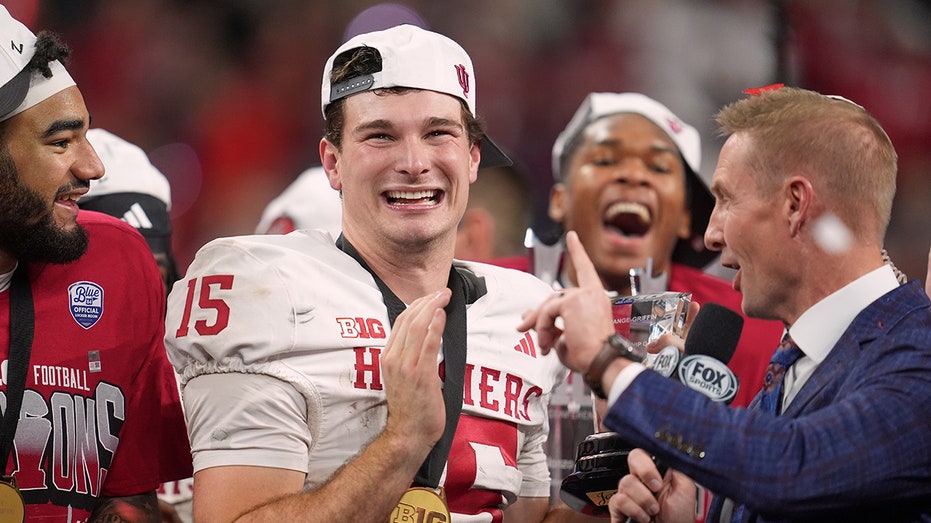
- Fernando Mendoza, a transfer quarterback who turned Indiana from a historical footnote into an unbeaten No. 1 seed.
- Julian Sayin, a hyper-efficient Ohio State starter who began as a summer position battle story and ended as the statistical surgeon of an elite offense.
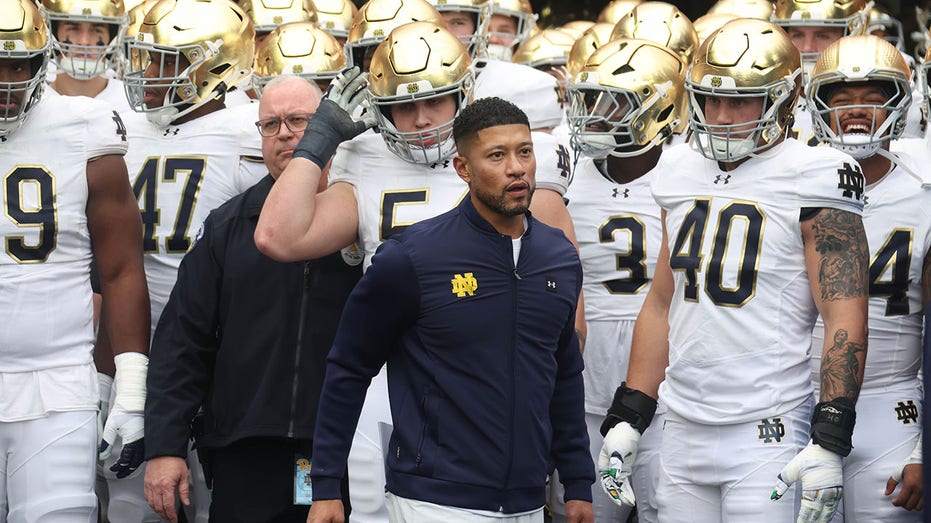
- Jeremiyah Love, the throwback workhorse from Notre Dame, representing the dwindling but still powerful case for a running back Heisman.
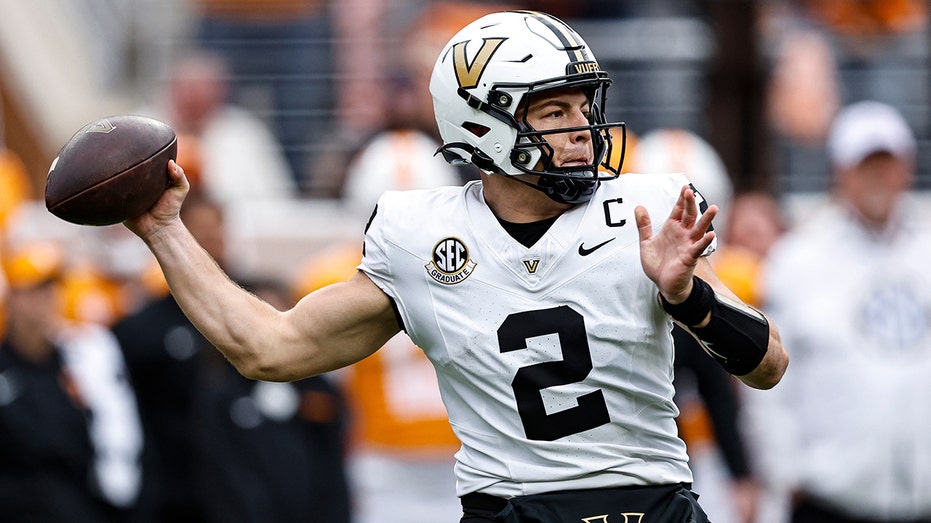
- Diego Pavia, the outspoken Vanderbilt quarterback whose public campaign and on-field numbers dragged one of college football’s least feared brands into the national spotlight.
Viewed together, they illustrate a fundamental shift: the Heisman conversation is less about where you play and more about what you do — and how loudly your story cuts through the noise.
The Transfer Portal and the New Geography of Power
Fernando Mendoza’s path from Cal to Indiana is arguably the most structurally important storyline of this Heisman race. It’s not simply a feel-good “chip on the shoulder” transfer story; it’s a case study in how the portal has redistributed power across the FBS.
Since the NCAA’s 2021 transfer rule changes and the rise of immediate eligibility, the sport has moved closer to a quasi-free-agency model. Top programs no longer just recruit high school players; they aggressively scout other teams’ rosters. Likewise, players stuck in unstable or underperforming situations can reposition themselves into better schemes or more stable coaching environments.
Mendoza’s 2,980 passing yards, FBS-leading 33 touchdown passes, and just six interceptions would be impressive anywhere. Doing it at Indiana — while piloting an undefeated Big Ten champion — is something else entirely. It’s a direct challenge to the old assumption that you must be embedded in a legacy powerhouse to engineer a Heisman-level résumé.
Historically, when non-traditional programs produced Heisman finalists (think Robert Griffin III at Baylor in 2011 or Lamar Jackson at Louisville in 2016), they were framed as outliers. Mendoza’s presence feels less like an exception and more like the emerging rule: if a program can smartly use the portal and build a coherent offensive identity, it can manufacture national relevance quickly.
Implication: The Mendoza case strengthens the precedent that Heisman voters must treat high-performing transfer quarterbacks at historically minor programs as legitimate favorites, not token invitations. That could, over the long term, widen the geographic and institutional diversity of Heisman races.
Efficiency vs. Volume: Julian Sayin and the Era of Precision Football
Julian Sayin’s profile is textbook modern analytics Heisman: 3,329 passing yards, 31 touchdowns, and an eye-popping 78.4% completion rate — best in the nation. That last number is the most telling. Offensive football has been shifting away from “air it out, hope for the best” volume toward meticulously efficient, scheme-driven production.
In older eras, quarterbacks were judged heavily on yardage totals and highlight throws in big games. Today, advanced metrics like EPA/play (expected points added), completion percentage over expectation, and success rate are more central in how analysts talk about quarterback value. Even if most Heisman voters don’t explicitly use those metrics, the media ecosystem they consume is saturated with efficiency language.
Sayin benefitted from elite talent around him — Jeremiah Smith and Carnell Tate give him an all-NFL-caliber receiving room — but that cuts both ways. Voters must decide whether to credit him for maximizing an elite supporting cast or discount his production as a function of talent advantage.
One critical nuance: Sayin had to fight for his starting role and step into a pressure cooker program with limited collegiate experience. That matters in a sport where quarterback play is not only about physical execution but also rapid assimilation of complex systems under heavy scrutiny. His trajectory — from summer battle to Heisman finalist — reflects a broader trend: the expectation that blue-chip quarterbacks must be ready to deliver almost immediately.
Implication: If Sayin places highly or wins, it would reinforce the notion that hyper-efficiency in a loaded offense is a valid MVP argument, not a disqualifying “system QB” red flag. That reshapes how future voters evaluate quarterbacks from talent-rich programs.
Jeremiyah Love and the Running Back’s Vanishing Chair at the Table
Jeremiyah Love’s candidacy is quietly one of the most important elements of this race. With 1,372 rushing yards and 18 touchdowns on a Notre Dame team that missed the Playoff, he is making a case in a position category that the Heisman has largely devalued for more than a decade.
From 2010 onward, only one running back (Derrick Henry in 2015) has won the award. That’s not because great backs disappeared, but because college football’s offensive center of gravity shifted: spread schemes, RPOs, and explosive passing offenses made quarterbacks the primary engine of scoring and the narrative focus of each season.
Love’s numbers are strong but not historically overwhelming for a Heisman back; what distinguishes him is relative positional value. In a season where so much attention is on quarterback play, he was arguably the best running back in the country, carrying an offense that did not have the schematic fireworks or positional depth of the top Playoff teams.
Notre Dame’s brand cuts both ways. The school’s Heisman history enhances his visibility, but there’s growing skepticism among some voters toward legacy programs that benefit from entrenched national coverage regardless of on-field results. Love becomes a test: can an elite player at a blue-blood program that falls short of the Playoff still command enough respect to seriously contend for the top spot?
Implication: If Love finishes a distant fourth, it will reinforce the quarterback lock on the Heisman, making it even harder for future running backs to break through without absolutely transcendent statistical seasons. A stronger showing, even without winning, could slow that trend and keep the door cracked open.
Diego Pavia, Vanderbilt, and the New Politics of Visibility
Diego Pavia is the outlier — and potentially the most interesting bellwether. His 3,192 passing yards and 27 touchdowns at Vanderbilt are impressive, but not obviously better than Mendoza or Sayin. What makes his candidacy notable is the combination of on-field performance and off-field self-advocacy.
Pavia has been “one of the most vocal voices in becoming a finalist.” That detail matters in the NIL era, where players are not just athletes but brands responsible for amplifying their narratives in a saturated marketplace. Historically, Heisman promotion was a top-down affair; schools built campaigns, bought ad space, and pitched media. Today, players themselves drive much of the conversation through social platforms, interviews, and direct engagement with fan bases.
For Vanderbilt — a program historically overshadowed in the SEC — Pavia’s success and personality have delivered rare national attention. This shows how one player, with the right combination of production and charisma, can temporarily override decades of irrelevance.
There’s also a deeper class and institutional subtext: academically elite, athletically marginalized programs like Vanderbilt have often existed on the fringe of the sport’s power structure. A Heisman finalist from that environment challenges assumptions about where elite play can emerge and how heavily we should weigh program prestige in evaluating individual excellence.
Implication: Pavia’s candidacy suggests future Heisman races may reward not just performance and team success but also the ability of players — especially at smaller or weaker programs — to build their own media ecosystems. That may advantage outgoing, media-savvy athletes over equally talented but quieter peers.
What Voters Are Really Deciding This Year
On paper, voters are choosing the “most outstanding player” in college football. In practice, they’re adjudicating several deeper questions at once:
- Program vs. Player: How much should team success (Indiana’s undefeated season, Ohio State’s No. 2 seed) weigh against the raw quality of an individual season (Love on a non-Playoff team, Pavia on a historically weak program)?
- Legacy vs. Disruption: Do you reward a traditional power’s star (Notre Dame, Ohio State), or do you lean into the sport’s new parity storylines (Indiana, Vanderbilt)?
- Volume vs. Value: Does it matter more that Sayin and Mendoza are ruthlessly efficient within high-leverage games, or that Love shouldered a heavy load in a more conventional offense?
- Narrative vs. Metric: Are voters more persuaded by the symbolic weight of Indiana’s first outright Big Ten title since 1945 or by the statistically clean elegance of a 78.4% completion rate?
There’s no purely objective answer to these trade-offs. But the way the vote breaks will signal to players, coaches, and athletic departments what kind of profile the sport’s most prestigious individual award intends to reward in the next decade.
Expert Perspectives: How Insiders Read This Race
Coaches and analysts I’ve spoken with over the years tend to separate Heisman talk into two buckets: “value to team” and “difficulty of environment.” Looking at this field through that lens clarifies the stakes.
Quarterback coaches often point out that turning around a historically middling program is structurally harder than maintaining excellence at an established powerhouse. That favors Mendoza and Pavia. At the same time, former players stress the mental pressure of succeeding at a blue-blood school, where every incompletion is a national talking point. That perspective tilts toward Sayin and, to a lesser extent, Love.
Analytics-minded observers argue that the sport is overdue for a recalibration in how we evaluate value. They point to the fact that efficiency metrics correlate more strongly with winning than raw yardage or touchdowns. If that thinking penetrates the electorate, Sayin’s profile looks increasingly compelling.
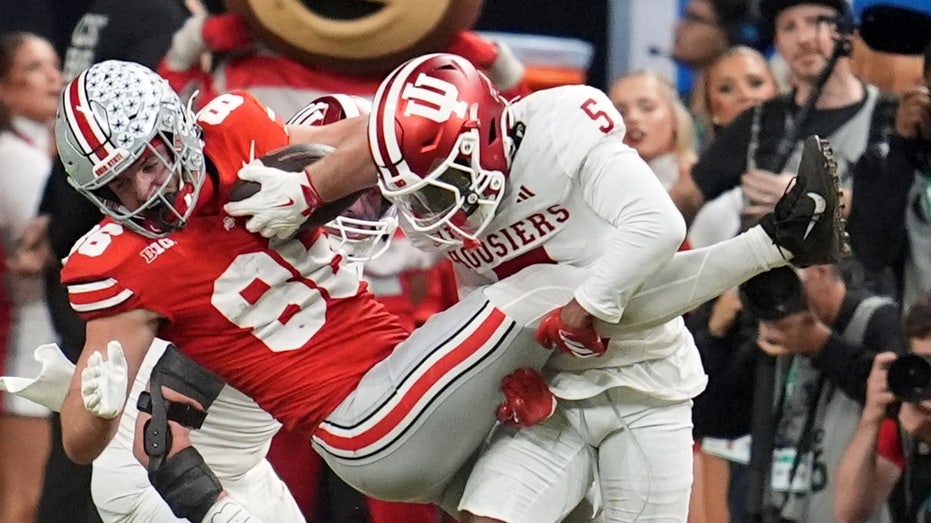
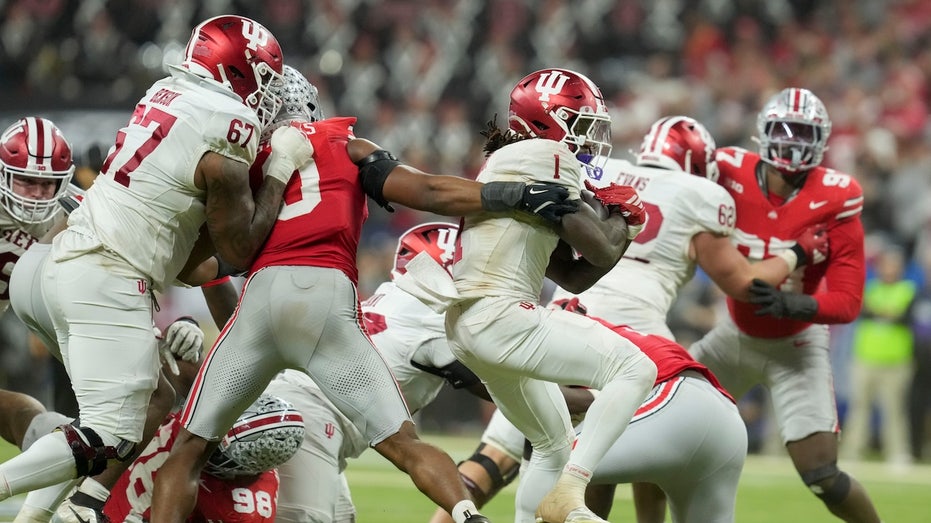
Traditionalists, however, still lean heavily on narrative and historical significance. For them, an undefeated Indiana season in a major conference — capped by a Big Ten championship win over Ohio State — is nearly irresistible. That’s Mendoza’s strongest argument, and it might be enough.
What This Means for the Future of College Football
The ripple effects of this Heisman race extend beyond the ceremony:
- Recruiting and Portal Strategy: If Mendoza wins, mid-tier Power Five programs will have a case study to sell: “Come here, and you can be the face of the sport, not just another cog in a juggernaut.” That could intensify competition for portal quarterbacks.
- NIL Valuations: A Heisman-caliber season from a player at Indiana or Vanderbilt will likely boost NIL valuations for stars at smaller brands. Agents and collectives will use this as evidence that visibility is no longer locked behind the same few helmets.
- Offensive Design: A Sayin win, rooted in extreme efficiency, would encourage more programs to prioritize precision and timing-based systems over raw explosiveness — especially if that profile continues to draw awards and NFL attention.
- Positional Value Narratives: Love’s final ranking will either reinforce or challenge the belief that running backs are now second-class citizens in major awards races. That perception will feed back into how young athletes choose positions and how coaches deploy their best playmakers.
- Media and Player Branding: Pavia’s vocal self-promotion, if seen as a successful component of his rise, will nudge more players toward active brand-building, potentially widening the gap between spotlight-friendly athletes and quieter stars.
Looking Ahead: What to Watch on Heisman Night and Beyond
Several signals will be worth close attention Saturday and in the aftermath:
- Margin of Victory: A decisive win for Mendoza would affirm that team success plus strong stats still beats all. A narrower margin, especially if Sayin or Love is close, would suggest voters are more willing to split narrative and numbers.
- How Pavia Places: If Pavia avoids a distant fourth-place finish, it will be a powerful indicator that voters are genuinely reevaluating players at historically weak programs, not simply inviting them for optics.
- Voter Explanations: Post-vote media commentary will reveal which arguments — portal mobility, efficiency, historical weight, or player-driven narratives — actually resonated.
- Recruiting Shifts: Watch Indiana and Vanderbilt’s next two recruiting cycles. A Heisman finalist (or winner) can permanently alter how a program is perceived in living rooms and transfer conversations.
The Bottom Line
This Heisman race is not just about who had the best season; it’s about who best embodies the modern era of college football. Whether voters choose the transfer-fueled disruptor (Mendoza), the hyper-efficient blue-blood surgeon (Sayin), the throwback bell-cow (Love), or the outspoken underdog star (Pavia), they’ll be defining the template for what college football greatness looks like in the portal, NIL, and super-conference age.
Topics
Editor's Comments
The most intriguing question lurking beneath this Heisman race is whether we’re actually seeing democratization in college football recognition or just a cosmetic update to the same old power dynamics. On one level, having Indiana and Vanderbilt represented among the finalists is a tangible break from tradition; a few years ago, those programs were either punchlines or afterthoughts. The transfer portal and NIL have undeniably opened pathways for talented players to reposition themselves and, in rare cases, drag entire programs into the spotlight. But it’s worth asking who can really exploit this new flexibility. Indiana’s rise still required a confluence of resources: Big Ten money, institutional commitment, and the ability to move quickly in the portal. Vanderbilt may have cracked the Heisman conversation, yet it remains embedded in a conference where financial and recruiting disparities are enormous. Meanwhile, blue-blood brands like Ohio State and Notre Dame continue to serve as default amplifiers; their stars enter the season with built-in national megaphones. So while this finalist group looks more diverse, the structural forces shaping it may be less revolutionary than they appear. Saturday’s result won’t resolve that tension, but it will hint at whether voters are truly willing to reward disruption — or simply sprinkle a few underdog stories into an otherwise familiar hierarchy.
Like this article? Share it with your friends!
If you find this article interesting, feel free to share it with your friends!
Thank you for your support! Sharing is the greatest encouragement for us.