Jacob Rodriguez, the Bronko Nagurski Award, and the Heisman Bias Exposed

Sarah Johnson
December 9, 2025
Brief
Texas Tech’s Jacob Rodriguez just joined an elite defensive lineage with the Bronko Nagurski Award. This analysis unpacks what his Heisman snub reveals about college football’s deep offensive bias.
Jacob Rodriguez, the Bronko Nagurski Award, and the Politics of Defensive Greatness
When Texas Tech linebacker Jacob Rodriguez accepted the Bronko Nagurski Award as the nation’s top defensive player, it was framed as a consolation prize for a Heisman snub. That framing misses the deeper story. Rodriguez’s season isn’t just about one player’s overlooked brilliance; it exposes how college football’s most powerful narratives still revolve around quarterbacks and brands, not full-field impact — and how that dynamic is being quietly challenged by defensive stars from non-traditional powers.
Why this moment matters
Rodriguez is the statistical and emotional engine of a Texas Tech defense that finished fifth nationally, powered a 12–1 Big 12 title run, and carried the Red Raiders to their first-ever Orange Bowl berth and a No. 4 College Football Playoff seed. His 114 tackles, four interceptions, seven forced fumbles, and leadership of a unit that allowed just 254.4 yards per game put him squarely in the tiny group of truly transformative defenders in recent years.
Yet in the Heisman conversation, he was essentially an afterthought, even as Patrick Mahomes publicly campaigned to “Get him to New York.” That disconnect raises a fundamental question: What exactly does college football value when it comes to greatness, and how far are we from treating elite defensive impact the way we treat gaudy passing numbers?
The long shadow of offensive bias
The Heisman has always been an offense-first award. Since its inception in 1935, only one primarily defensive player — Charles Woodson in 1997 — has won it, and Woodson’s victory was heavily tied to his highlight-reel work as a returner and occasional wide receiver at Michigan. Even generational defenders like Ndamukong Suh (2009) and Manti Te’o (2012) topped out as finalists, not winners.
By contrast, the Bronko Nagurski Award, created in 1993, has become the de facto Heisman for defenders. Its roster of winners — including Aaron Donald, Luke Kuechly, Terrell Suggs, Will Anderson Jr., and Chase Young — reads like a who’s who of modern defensive dominance. Rodriguez’s inclusion in that lineage is a strong signal that evaluators who specialize in defense see his season as nationally elite, not just Big 12 good.
The gap between Nagurski recognition and Heisman visibility is not accidental. It’s baked into a system that:
- Overweights offensive counting stats and highlight plays
- Privileges traditional powers and brands
- Struggles to quantify and communicate defensive impact to casual voters
Rodriguez’s season forces a reexamination of those biases at a moment when data, advanced metrics, and changing playoff structures are beginning to give defenses more of a platform.
Texas Tech’s defensive rise in historical context
To understand how unusual this is, you have to appreciate Texas Tech’s identity over the last two decades. The Red Raiders have been synonymous with high-octane offense, first under Mike Leach’s Air Raid revolution and later with Patrick Mahomes putting up video-game numbers in Lubbock. Defense was often an afterthought — a unit asked to merely survive while the offense tried to win 48–45 shootouts.
Rodriguez’s Red Raiders flip that script. They join 2018 Alabama as the only teams in the Associated Press era to win 12 games by 20-plus points in a season. That is not just winning; that is smothering. The 34–7 dismantling of a top-15 BYU in the Big 12 championship, and a regular-season 29–7 win over the same team in which Rodriguez posted 14 tackles and two takeaways, are emblematic of a team that chokes the life out of games.
Historically, when a non-blue-blood program shifts its identity around defense and physicality, it often signals a broader institutional strategy: recruiting different types of athletes, investing in strength and conditioning, and betting that you can win big by being harder to play against rather than just more explosive. TCU’s 2014 and 2022 seasons, or Utah’s rise under Kyle Whittingham, are comparable examples — but Texas Tech doing this from a historically offense-centric brand is noteworthy.
What Rodriguez actually does on the field
On paper, Rodriguez’s numbers are staggering. Beyond his 114 tackles, his seven forced fumbles are what separate him from mere volume tacklers. Forced fumbles and interceptions are “possession-flip” plays — the defensive equivalent of deep touchdown passes in terms of expected points swing. Few linebackers combine that level of disruption in coverage and at the point of attack.
When you layer these numbers over Texas Tech’s defensive performance:
- 254.4 yards allowed per game – top five nationally
- 12 wins by 20+ points – AP-era rarity matched only by 2018 Alabama
- Consistent blowouts – more indicative of total team dominance than fluky turnover luck
it becomes clear that Rodriguez’s impact wasn’t just statistical padding against weak opponents. He was the centerpiece of one of the most dominant defenses of the last decade, on a team not expected to be there.
Expert lenses on the Heisman snub
Ask defensive coaches and analysts, and you get a very different picture of Rodriguez’s value than the one reflected in Heisman voting.
Scheme and versatility. Modern defenses increasingly prize linebackers who can do everything — fit the run, cover backs and tight ends, blitz, and communicate coverage adjustments. Rodriguez fits that archetype. His interception totals suggest uncommon range and instincts in coverage, while seven forced fumbles indicate both physicality and technique in tackling.
Narrative and marketability. On the other side, media strategists will tell you that the Heisman has become as much a branding exercise as an on-field award. Offensive players surrounded by established brands and constant prime-time exposure—the Oklahomas, Ohio States, Alabamas, Michigans—have a built-in advantage. Texas Tech, even at 12–1 and as Big 12 champions, does not yet occupy that top tier of brand recognition.
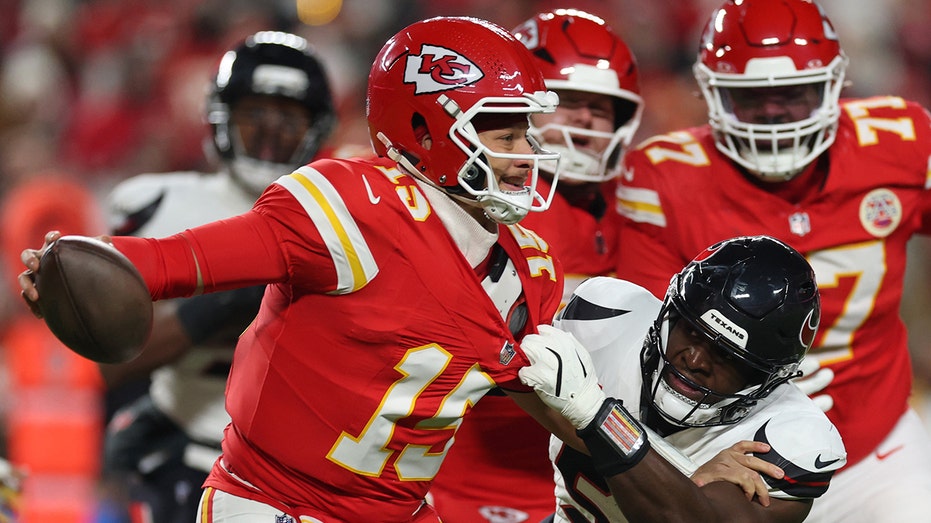
Patrick Mahomes’s public push — “Get him to New York!” — was a rare attempt by a superstar to leverage his own brand to elevate a defensive player at his alma mater. The fact that it didn’t move the needle enough underscores how entrenched the offensive bias is.
Data, defense, and the changing playoff era
The timing of Rodriguez’s rise is important. College football is entering an expanded playoff era where:
- More teams from more conferences will have national platforms
- Defense will matter more across multiple high-stakes games rather than a single showcase
- Advanced stats and analytics are increasingly incorporated into broadcasts and award narratives
As Texas Tech enters the College Football Playoff as the No. 4 seed with a bye, Rodriguez is about to get something most defenders at his level rarely had before: multiple national stages to prove, in real time, what the numbers already suggest. If the Red Raiders continue to win by suffocating teams, the post-season narrative may retroactively validate what the Nagurski voters already decided.
There’s also a recruiting angle: a CFP run led by a defensive star from a non-traditional defensive school sends a clear message to high school prospects that they don’t need to choose an SEC blue-blood to become nationally recognized defenders. That could slowly redistribute defensive talent and deepen parity in the sport.
The overlooked part of this story: system vs. star
Most quick-hit coverage focuses on Rodriguez’s mustache, his Heisman pose, and the Mahomes endorsement. What gets lost is the interplay between player and system.
Rodriguez is not just freewheeling around the field making freelance plays; he’s operating in a structure that maximizes his ability to read, react, and create chaos. The combination of scheme design, film study, and communication is what allows a linebacker to consistently be in position to generate turnovers rather than just make tackles downfield.
In that sense, the Nagurski is also an implicit endorsement of Texas Tech’s defensive coaching and infrastructure. It’s a reminder that individual awards in football are always, to some extent, awards for systems that put players in positions to excel — something the Heisman conversation almost never acknowledges when it lauds quarterbacks operating in QB-friendly schemes.
What happens if Texas Tech keeps winning?
If Texas Tech advances deep into the playoff, several things could follow:
- Narrative recalibration: Rodriguez could become, in hindsight, the “how did we leave this guy out of New York?” storyline, much like past players whose postseason performances dwarfed their award-season buzz.
- Template for future defenders: A Nagurski winner leading a non-traditional power to a CFP run strengthens the argument that defensive excellence should be a core part of Heisman evaluation, not a niche sidebar.
- Pressure on award voters: The more data and visibility defenders get in playoff settings, the harder it becomes to justify excluding them from the Heisman conversation when they clearly define their team’s identity.
Even if Texas Tech falls early, Rodriguez’s season still stands as a benchmark for what defensive dominance looks like outside the small cluster of usual suspects. That alone has ripple effects for how future defenders at programs like Kansas State, Utah, NC State, or Iowa are evaluated.
The bottom line
Jacob Rodriguez’s Bronko Nagurski Award is not just a trophy; it’s a referendum on how college football values defense in an era still obsessed with offensive fireworks. He led an historically dominant defense on a program long defined by offense, powered a Big 12 title and CFP berth, and produced the kind of turnover-heavy stat line that should have forced its way into the Heisman’s inner circle.
The fact that he didn’t make it to New York says less about Rodriguez and more about the structural biases that still shape how greatness is recognized. As the playoff era expands and defenses like Texas Tech’s get more national exposure, the sport will either adjust its award culture to match on-field reality — or keep watching its most complete players collect “consolation” trophies that, in many seasons, might better reflect who truly changed the game.
Topics
Editor's Comments
What makes Rodriguez’s season particularly revealing is the way it exposes a quiet hierarchy inside college football: we celebrate offensive innovation as genius but often treat defensive dominance as either a byproduct of weak schedules or system noise. Texas Tech complicates that narrative. This is a program with an offensive brand that essentially chose to re-architect itself around physicality and disruption — and it worked at the highest level. Yet our premier individual award still gravitates back to the familiar imagery of quarterbacks in clean pockets. The core question going forward isn’t just whether a defender can win the Heisman again; it’s whether media, voters, and even fans are prepared to accept that game-changing value doesn’t always look like a 70-yard touchdown pass. If Rodriguez leads a deep playoff run, the cognitive dissonance between what people see in January and what they voted for in December will be hard to ignore. That tension could be the lever that finally moves defensive excellence from the margins of award debates into their center, but only if we’re willing to interrogate the assumptions that have kept it sidelined for nearly a century.
Like this article? Share it with your friends!
If you find this article interesting, feel free to share it with your friends!
Thank you for your support! Sharing is the greatest encouragement for us.