Jalen Hurts’ Five-Turnover Night Exposes a Deeper Identity Crisis in Philadelphia

Sarah Johnson
December 9, 2025
Brief
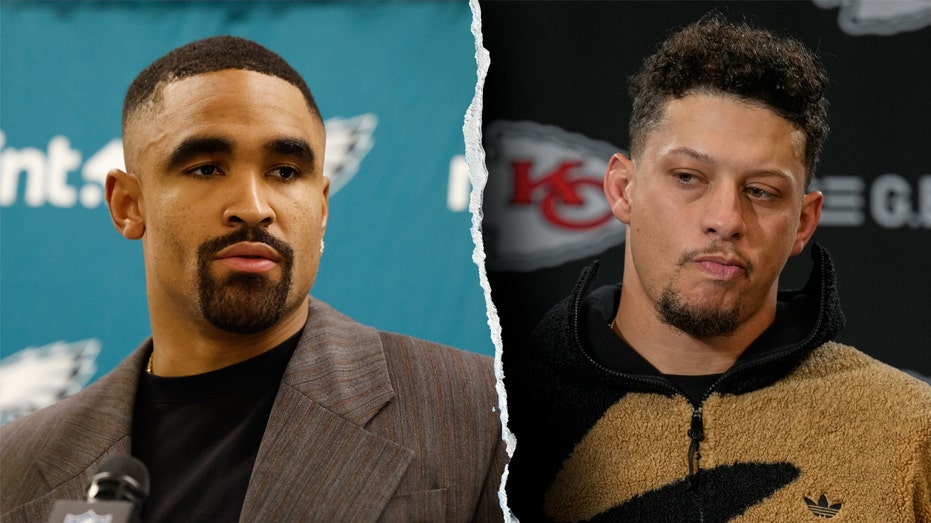
Jalen Hurts’ 5-turnover meltdown isn’t just a bad night; it exposes a deeper identity crisis in the Eagles’ offense, defensive adjustments around the league, and a pivotal turning point in Hurts’ career arc.
Jalen Hurts’ 5-Turnover Meltdown Exposes a Deeper Identity Crisis in Philadelphia
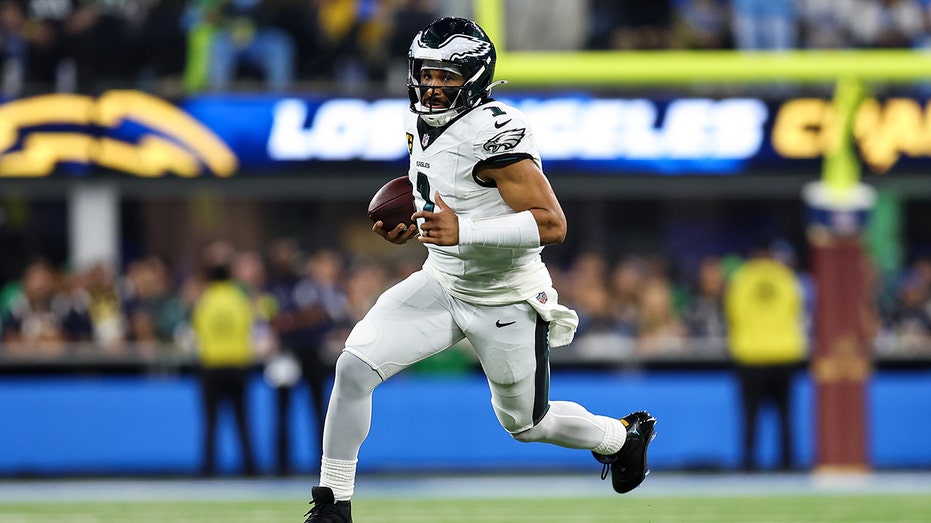
On paper, this was just an overtime loss between two 8–4 teams, sealed by a dramatic interception in the end zone. In reality, Jalen Hurts’ five-turnover night in the Eagles’ third straight defeat is a flashing red warning light for a franchise that has been trying to thread an increasingly thin needle: win now, reshape the offense on the fly, and keep its quarterback as the centerpiece of all of it.
Strip away the highlight package and this game looks less like an outlier and more like a culmination — of schematic drift, accumulated physical wear on Hurts, and the strategic uncertainty of a front office that has tried to be both a power-running, RPO-heavy attack and a timing-based, spread passing team depending on the week.
The bigger picture: how we got to a 5-turnover breaking point
Hurts’ meltdown doesn’t happen in a vacuum. It sits at the intersection of three trends that have been building over several seasons:
- The physical tax of the modern dual-threat quarterback
- Defenses catching up to Philadelphia’s early Hurts-era blueprint
- The instability that comes with constant offensive recalibration
Since taking over as starter, Hurts has been at the center of one of the league’s most run-dominant, RPO-infused offenses. At their peak, the Eagles were weaponizing his legs to create impossible math problems for defenses: load up to stop the run, get burned over the top by A.J. Brown and DeVonta Smith; play two-high shells, and Hurts would pound teams with inside zone, QB draws, and the now-famous “tush push.”
But that approach came with a cost. According to league tracking data across recent seasons, Hurts has consistently ranked near the top among quarterbacks in designed rushes and total hits taken. Historically, quarterbacks who live in that physical neighborhood — Cam Newton, Andrew Luck, even Robert Griffin III — see a steep decline when the hits accumulate and defenses adapt.
We’re seeing the same pattern with Hurts: as teams force him to win consistently from the pocket, the margin for error shrinks. When the run game isn’t perfectly dictating terms, his decision-making and ball security come under a harsher spotlight. A five-turnover game in that context looks less like a freak occurrence and more like a stress test the current version of the Eagles’ offense is failing.
What this really means: turnovers as a symptom, not the disease
Turnovers are the visible headline, but the underlying story is about structure, responsibility, and risk.
1. A quarterback asked to be everything at once
Hurts’ stat line — 21-of-40 for 240 yards, four interceptions, plus a fumble on a chaotic turnover sequence — tells you he was forcing throws in high-leverage moments. But look at the situational context: overtime, down three, in the red zone, after a defense that sacked Justin Herbert seven times had once again given the offense a chance to win.
Philadelphia’s offensive design still places a heavy percentage of the burden on Hurts’ processing and improvisation. Even on the final interception, the play concept asks him to sell play-action, roll, read leverage, and fit a timing throw in a compressed field. When a quarterback is pressing — especially after multiple earlier turnovers — that’s exactly the kind of high-risk decision that can tilt from aggressive to reckless.
The Eagles have layered weapons — A.J. Brown, DeVonta Smith, Dallas Goedert, now Saquon Barkley — but the offense too often operates as if the answer is still “Hurts must be the point guard, primary scorer, and closer all at once.” That’s a philosophical choice, not just a bad night.
2. A run game that looks statistically strong but strategically fragile
On the surface, Saquon Barkley’s 122 rushing yards on 20 carries and a fourth-quarter go-ahead touchdown would suggest offensive balance. Underneath, the story is more complicated.
Barkley’s usage reflects a recurring pattern: the Eagles toggle between games where the run is the foundation and games where it becomes an accessory when things get tense. In overtime, the decisive snap was a play-action pass from the 17, not a run behind a line that had been winning enough to keep the game in reach.
This is one of the subtle identity questions plaguing Philadelphia: are they still a team that leans on their offensive line and ground game to reduce volatility, or are they trying to evolve into a pass-first attack built around Hurts’ arm talent and perimeter weapons? In games like this, they end up in the worst of both worlds — just enough running to tease balance, not enough to stabilize a quarterback spiraling through a turnover-heavy night.
3. The defense is playing well enough to win — and that raises the stakes
Herbert’s line — 12-of-26 for 139 yards and a single touchdown — combined with seven sacks and multiple Eagles takeaways, is typically the blueprint for a comfortable Philadelphia win. Instead, those defensive efforts merely set the stage for offensive breakdowns.
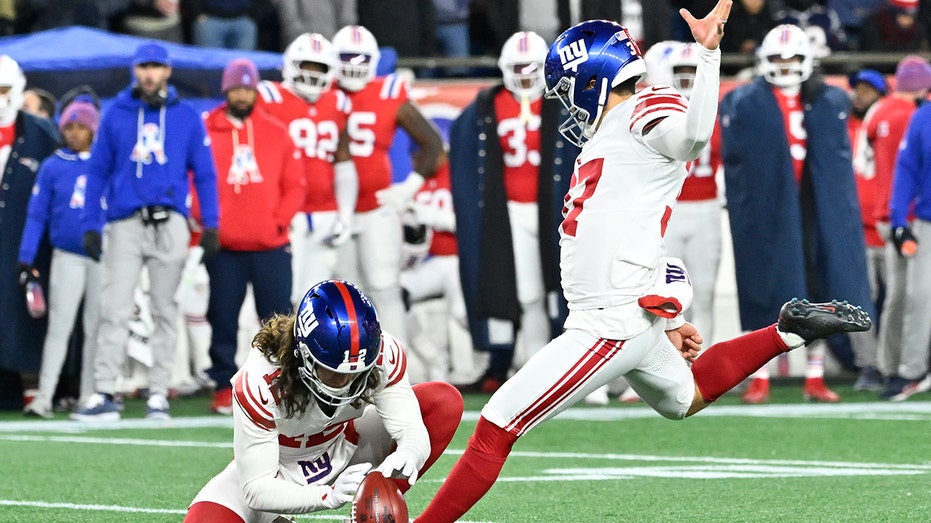
When a defense is generating that much pressure and creating short fields, the expectation is complementary football: methodical drives, field position control, and low-risk playcalling that turns opponent mistakes into points. The opposite happened — the Eagles lost the turnover battle and tempo, and the Chargers leaned on Cameron Dicker’s 5-for-5 field goal performance and Herbert’s 66 rushing yards to grind out just enough offense.
That inversion — an Eagles team wasting strong defensive outings — is not just a tactical issue; it’s a cultural one. Teams built on physical defense and run-game identity don’t expect to lose games where their quarterback commits five turnovers. They expect to never be in that position in the first place.
Expert perspectives: what the league will take from this game
Former NFL executive Louis Riddick has often argued that high-usage dual-threat quarterbacks need “schematic insulation” — designs that reduce exposure when things go sideways. This game is a textbook case of what happens when that insulation fails.
QB trainers and analysts have been pointing out for two seasons that Hurts’ lower-body wear, combined with evolving defensive looks, would eventually force him into tighter throwing windows and more late-down heroics. As defenses play more disciplined zone, squeeze RPO slants, and add simulated pressures, the easy throws that defined his breakout seasons are becoming harder to find.
Defensive coordinators will study this Chargers film for a simple reason: it shows a path to making Hurts play sped-up, out of rhythm, and chasing the game instead of dictating it. That has long-term implications for how the Eagles must evolve offensively if they want to avoid this becoming the new blueprint against them.
Data & evidence: why this loss is more than a blip
- Third straight loss, all in high-leverage spots. You don’t usually see teams with this much talent drop three in a row without a deeper structural issue. This isn’t just running into hot opponents; it’s a trend.
- Hurts’ turnover spike. Even without exact season totals here, a single game with four interceptions and a fumble is usually more than 20–25% of a quarterback’s typical season-long interceptions. That type of cluster event usually points to pressure and predictability in the passing concepts.
- Sacks vs outcomes. Seven sacks on Herbert, plus multiple takeaways, should tilt win probability heavily toward Philadelphia. When it doesn’t, it often indicates offensive imbalance, conservative responses after mistakes, or both.
- Kicker-dominated scoring. The Chargers winning behind a 5-for-5 field goal night and a limited passing game suggests they were the more structurally sound team: fewer catastrophic mistakes, cleaner situational football.
Looking ahead: what this means for the Eagles, Hurts, and the NFC
1. Immediate pressure on coaching staff and scheme
A three-game skid with a franchise quarterback turning the ball over at an alarming rate will intensify scrutiny on offensive design and playcalling. That doesn’t automatically mean staff changes, but it does mean the following questions will dominate league conversations:
- Do the Eagles need to dial back Hurts’ passing load and re-center the offense around Barkley and the run game?
- Is the current passing structure — route concepts, progressions, situational calls — asking Hurts to do too much in tight windows?
- Are they fully leveraging their tight end and short-area passing game to give Hurts high-percentage options when the deep game is taken away?
2. Hurts’ long-term arc enters a pivotal phase
Every franchise quarterback hits an inflection point where the league has “the book” on them. For Hurts, this looks like it: teams rush in disciplined lanes, disrupt inside zone timing, sit on first reads, and dare him to play clean, patient football for four quarters. The question now becomes whether he can make the next leap in anticipation, progression speed, and ball placement to counter that adjustment.
One nightmare outcome for Philadelphia would be to drift toward the path we saw with Cam Newton and others: a physically dominant, MVP-caliber stretch followed by a plateau and a slow erosion of efficiency as hits and defensive adaptation accumulate. The alternative — what we’ve seen in quarterbacks like Russell Wilson at his peak or a more mobile version of Drew Brees — is a shift toward surgical efficiency and selective rushing. The Eagles need to put Hurts on that second track, quickly.
3. Locker room dynamics and identity
When a quarterback turns the ball over five times and the defense plays well enough to win, stress lines can appear in a locker room — especially in a passionate, unforgiving football market like Philadelphia. Publicly, teammates will back Hurts; privately, veteran defensive leaders will be asking whether the offensive approach is sustainable.
The coaching staff’s response in the coming weeks will signal to the locker room whether they truly see this as a structural problem or just “a bad night.” Players can tell the difference. If the scheme and approach look identical next week against the Raiders, it will be read as a bet that Hurts can simply “play better” within the same framework. If we see more under-center looks, heavier early-down runs, and shorter passing concepts, it will signal a recognition that the system itself needs to protect its quarterback.
The bottom line
This loss isn’t just about one tipped pass in overtime or a single night where everything went wrong for Jalen Hurts. It’s a case study in what happens when a franchise quarterback, a shifting offensive identity, and a league that has adjusted to your core concepts all collide under prime-time pressure.
If the Eagles treat this as a warning and recalibrate — leaning into their run game, diversifying their passing concepts, and reducing the burden on Hurts to be both battering ram and closer — this game may end up as the painful turning point they needed. If they don’t, the five-turnover night in Los Angeles may be remembered less as a one-off meltdown and more as the moment the rest of the league realized the old blueprint for stopping Philadelphia works a little too well.
Topics
Editor's Comments
What’s most striking about this game is how familiar the script feels if you zoom out beyond one franchise. We’ve seen this arc before with teams that ride a dual-threat quarterback’s versatility to early success and then hesitate at the fork in the road: either redesign the offense as that player ages and defenses adjust, or keep doubling down on a high-variance model that depends on the quarterback winning physically and mentally every week. Philadelphia appears to be stuck in the middle. Their personnel — a premium offensive line, a true bell-cow back, elite perimeter weapons — screams for a more clearly defined identity than what we saw against the Chargers. Yet in the game’s biggest moments, they still leaned on concepts that forced Hurts to be the sole problem-solver in compressed, high-risk situations. The contrarian view here is that the problem isn’t just turnovers, or even Hurts’ decision-making. It’s a front office and coaching staff that haven’t fully committed to evolving the initial Hurts blueprint into something more sustainable. Until that changes, nights like this will be dismissed as aberrations, when they’re actually data points in a larger, more concerning trend.
Like this article? Share it with your friends!
If you find this article interesting, feel free to share it with your friends!
Thank you for your support! Sharing is the greatest encouragement for us.