Jasmine Crockett’s Texas Senate Gamble: Winning Without Trump Voters

Sarah Johnson
December 9, 2025
Brief
Jasmine Crockett’s Texas Senate bid rejects the old rule of courting Trump voters, betting instead on under-mobilized voters of color and economic populism. Here’s why that gamble matters far beyond Texas.
Jasmine Crockett’s Texas Senate Gamble: Win Without Trump Voters
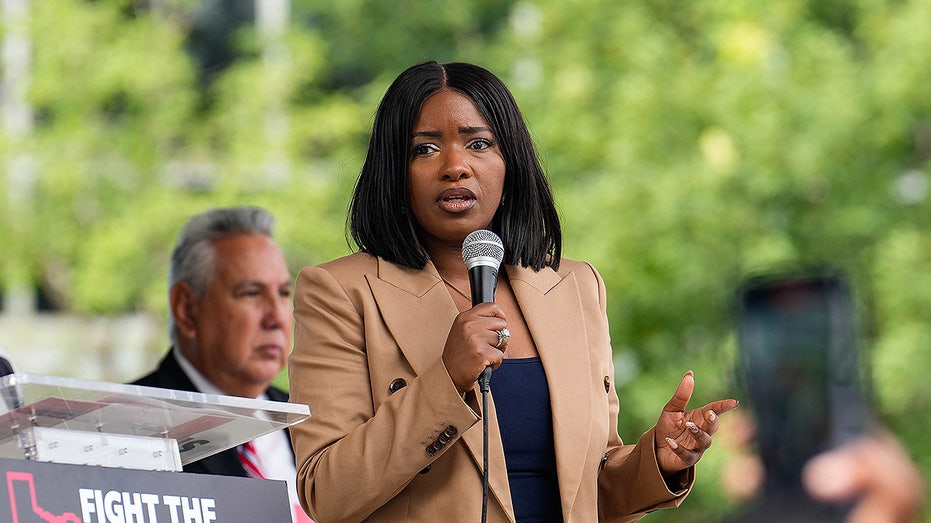
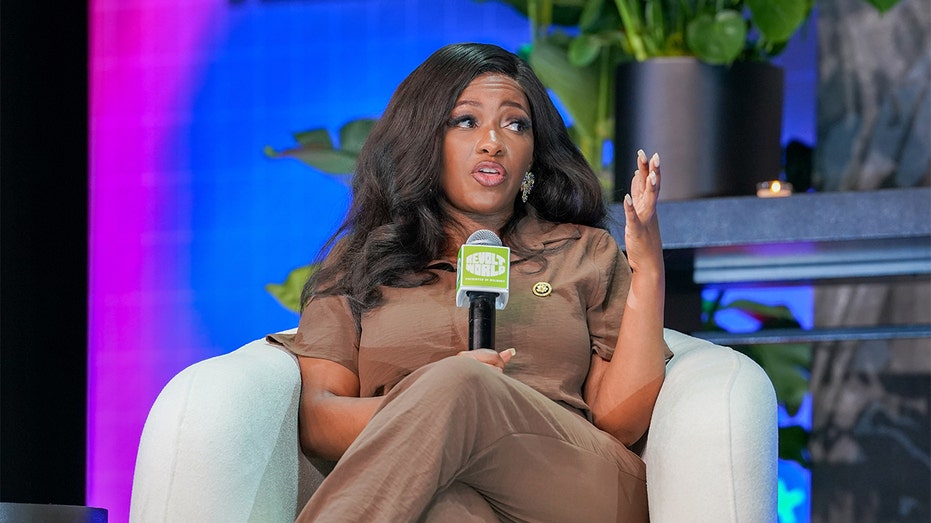
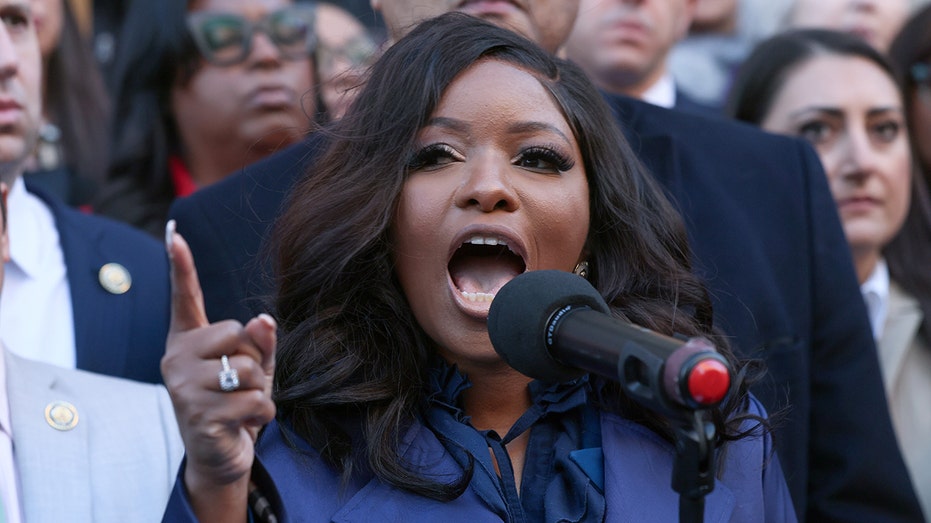
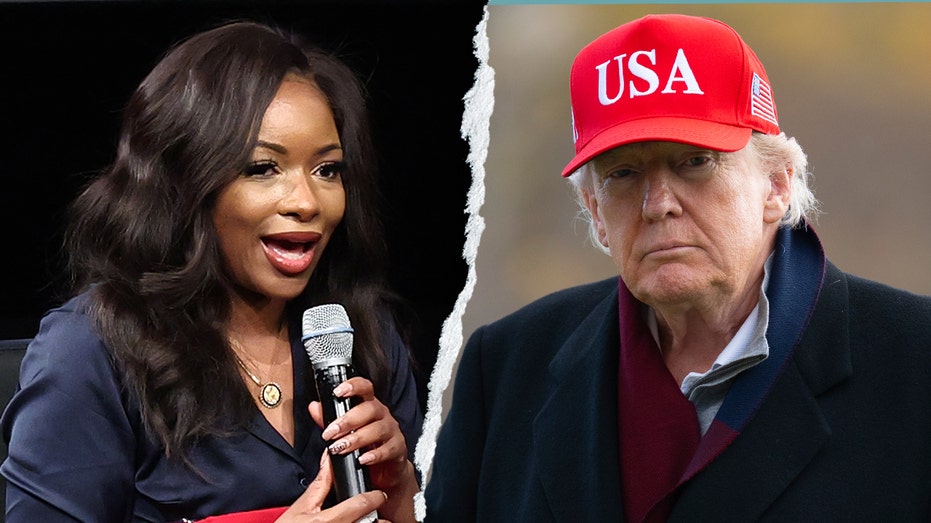
Rep. Jasmine Crockett’s declaration that she doesn’t “need” to convert Trump supporters in her bid for the U.S. Senate is not just a bold soundbite. It’s a strategic bet on a changing Texas, on the power of under-mobilized voters of color, and on a different theory of how Democrats can compete in red states without diluting their message for swing voters who may no longer exist in meaningful numbers.
To understand why this matters, you have to see it as part of a larger realignment: the nationalization of state-level politics, the hardening of partisan identity, and the emerging Democratic strategy of “base maximization” rather than persuasion in deep-red territories.
Why Crockett’s Strategy Is So Unusual — And So Telling
In a traditional statewide race, the first commandment is: broaden your coalition. Crockett is openly challenging that orthodoxy. By saying her campaign is not focused on converting Trump supporters, she is essentially acknowledging two realities:
- Most Trump voters are now hardened Republican partisans who are extremely difficult to peel away.
- Texas still has a large pool of nonvoters and sporadic voters — particularly among people of color — who could be decisive if mobilized at scale.
Her message is as much a critique of the old Democratic playbook as it is a pitch to voters: stop chasing the handful of swing voters in a deeply polarized environment and instead “engage people that historically have not been talked to.”
The Bigger Picture: Texas, Demographics, and a 30-Year Drought
Democrats have not won a U.S. Senate race in Texas since 1988, when Lloyd Bentsen was re-elected. Since then, the state has become a symbol of Republican dominance, producing national GOP figures such as George W. Bush, Rick Perry, Ted Cruz, and Greg Abbott. Yet beneath that red surface, the demographic and political story is more complicated.
Texas is now majority-minority: Crockett cites the oft-used figure that “the state of Texas is 61% people of color.” Census data show that non-Hispanic whites have fallen below 40% of the population; Latinos are roughly equal in share to whites and projected to surpass them as the largest single group, while Black, Asian, and other communities continue to grow.
Historically, however, turnout has badly lagged these demographic shifts. For years, Texas ranked near the bottom nationally in voter turnout. Even in the high-energy 2018 midterms, when Beto O’Rourke came within about 2.6 percentage points of defeating Ted Cruz, turnout was 53% — a big jump from the past, but still lower than many competitive states.
Crockett is explicitly reading from the Beto playbook: maximize turnout among voters of color. She cites his performance in 2018 — roughly 65% of the Latino vote and around 90% of the Black vote, according to post-election analysis — as proof that a progressive, clearly Democratic message can energize these communities. But she’s also implying that Democrats failed to follow through on that near-miss by building durable, election-to-election infrastructure in those same communities.
What This Really Means: A Base-First Strategy in a Polarized Era
Crockett’s refusal to center Trump voters is the logical endpoint of a trend political scientists have been documenting for the past decade: partisan sorting and identity-based politics. In Texas, as in much of the country, Trump support strongly overlaps with white, conservative, rural and exurban voters who now vote Republican up and down the ballot.
Trying to make inroads with that bloc typically forces Democrats to moderate their positions on racial justice, immigration, abortion, and economic policy. Crockett is signaling she’s not interested in that trade-off. Instead, she is betting that firmly progressive messaging on affordability, healthcare access, education, and economic inequality will galvanize those who feel ignored — namely, low-propensity voters in communities of color, young voters, and urban and suburban progressives.
That approach comes with trade-offs:
- Upside: It can create a more authentic, sharper narrative about who the candidate is fighting for, and it may increase enthusiasm and turnout among her natural base.
- Downside: It risks cementing Republican attacks that she is a “radical” or “socialist” out of step with the state, and it could leave moderate or ticket-splitting voters feeling alienated.
Greg Abbott’s reaction — calling her campaign a “circus” and predicting she will be “crushed” statewide — is not just partisan mockery; it reflects GOP confidence that Texas remains structurally tilted against Democrats and that tying Crockett to the most leftward brand of national Democratic politics will keep swing suburbs and rural regions safely red.
Expert Perspectives: Is Persuasion Overrated in States Like Texas?
Campaign strategists and political scientists are increasingly divided over whether persuasion or mobilization is more important in competitive or lean-red states.
Many scholars argue that the pool of true swing voters has shrunk dramatically. According to research by the Pew Research Center in recent presidential cycles, only a small fraction of voters genuinely oscillate between parties; most are stable partisans or leaners. That’s pushing campaigns to focus more on finding and mobilizing nonvoters.
At the same time, Texas has shown Democrats can come close but not close enough, raising the question of whether purely base-focused strategies are sufficient in a state where Republicans still command strong rural and exurban margins.
Data & Evidence: What the Numbers Suggest
Several data trends help contextualize Crockett’s bet:
- Racial and ethnic composition: Hispanics now make up about 40% of Texas’ population; Black Texans, about 13%. Combined with Asian and other communities, people of color are the majority.
- Turnout gaps: Historically, white Texans, especially older white voters, turn out at higher rates than Latino and younger voters. That gap is large enough to keep Texas red even as demographics shift.
- 2018 Senate race: O’Rourke lost by around 215,000 votes out of more than 8.3 million cast. That margin is small enough that registration and turnout improvements in urban counties (Harris, Dallas, Bexar, Travis) and fast-growing suburbs could be decisive.
- Republican resilience among Latinos: In 2020 and 2022, Republicans made meaningful gains among South Texas and Rio Grande Valley Latinos, particularly on cultural and economic issues, immigration, and energy policy.
Crockett’s reference to Beto’s 65% share of the Latino vote may understate how much the landscape has shifted since 2018. She faces a Latino electorate that is more politically contested, not less.
What’s Being Overlooked: Class, Not Just Race
Crockett frames her message around affordability, healthcare, and basic survival. She attacks Trump for prioritizing billionaires and leaving “everyday people” out in the cold — literally and metaphorically. Buried in that rhetoric is a class-based appeal that could matter more than the coverage suggests.
Texas has some of the highest rates of uninsured residents in the nation and significant cost-of-living pressures in urban centers, especially housing and property taxes. Many Texans who lean culturally conservative or have voted Republican in the past nonetheless share frustrations about economic precarity, corporate power, and access to healthcare.
If Crockett can articulate a compelling economic populism that cuts across race — without watering down her progressive identity — she might find pockets of crossover appeal among non-college white voters in certain regions, or at least soften the margins. But that would require a sustained economic message that speaks as fluently to small-town renters and gig workers as it does to urban progressives.
Looking Ahead: Can a Progressive Firebrand Run Statewide in Texas?
Several key questions will determine whether Crockett’s strategy has any chance of success — or whether it becomes another data point in Texas’ long list of Democratic heartbreaks:
- Can she build a turnout machine? Mobilizing historically ignored voters is not just about rhetoric; it requires field operations, organizing, and resources. Texas is huge, expensive, and logistically difficult. Without a robust ground game and sustained investment, the theory of the electorate she’s relying on may never fully materialize.
- How will national dynamics shape the race? A concurrent presidential election with Donald Trump on the ballot could simultaneously energize Democratic voters and harden Republican turnout. Polarization may amplify exactly the identities she is leaning into — but also the resistance she faces.
- What happens in the suburbs? Texas’ suburbs have been shifting, but not uniformly. College-educated, higher-income voters in metro areas may dislike Trump yet be wary of candidates perceived as too far left. Whether Crockett can avoid being pigeonholed as a caricature of the national progressive brand will matter in places like Collin, Williamson, and Fort Bend counties.
- Will Latino voters continue drifting right? Republicans have invested heavily in Latino outreach in border and South Texas regions. If Democrats cannot reverse or at least stabilize that trend, a base-only model built on older assumptions about Latino partisanship will falter.
Even if Crockett does not win, her performance will be read as a test of whether full-throated progressivism can narrow the gap statewide, or whether Democrats must still nominate more ideologically moderate candidates to remain competitive.
The Bottom Line
Crockett’s Senate bid is less about converting Trump loyalists and more about redefining what a viable Democratic strategy in Texas looks like in an era of hardened partisan identities. By prioritizing underrepresented voters of color and centering an economic survival message, she’s challenging decades of conventional wisdom that said Democrats must sand down their edges to court moderates in red states.
Whether this becomes a case study in forward-looking realignment or another entry in Texas’ Democratic graveyard will depend on factors that extend far beyond one candidate: turnout, demographic trends, Republican messaging, and the broader national mood. But her explicit decision to say, on camera, that she doesn’t “need” Trump voters is a sign of where American politics is heading — toward two parties increasingly speaking to different electorates, with less and less overlap in between.
Topics
Editor's Comments
What makes Jasmine Crockett’s bid particularly revealing is not simply her ideological profile, but how openly she is articulating a theory of the electorate that many strategists discuss only behind closed doors. Her insistence that she doesn’t need to convert Trump supporters crystallizes a hard truth of the Trump era: a significant share of voters are now effectively locked in, treating party identity almost like a cultural or tribal marker. In that environment, endlessly chasing crossover voters can look like a misuse of limited resources. The unresolved question is whether Democrats can afford to embrace this reality fully in statewide contests where structural disadvantages still loom large. Crockett’s campaign will likely be read as a referendum on base-first politics in a deep-red state. If she dramatically outperforms expectations, it will embolden progressive candidates elsewhere to double down on mobilization strategies. If she underperforms, centrists inside the party will argue that Democrats misread the electorate and ignored the complex mix of class, culture, and geography that still defines statewide races, particularly in the South and Sun Belt.
Like this article? Share it with your friends!
If you find this article interesting, feel free to share it with your friends!
Thank you for your support! Sharing is the greatest encouragement for us.