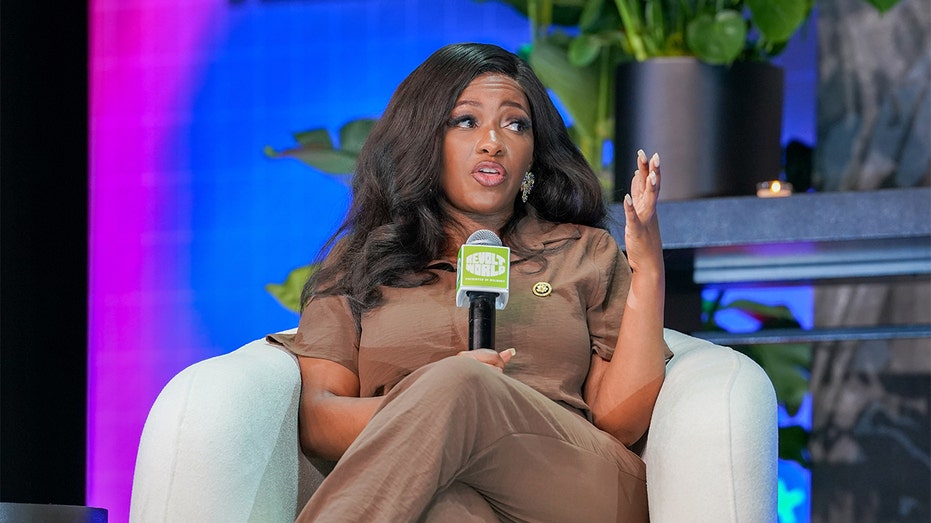
Jasmine Crockett vs. Trumpism: What Her ‘Low IQ’ Launch Ad Reveals About Texas and 2026

Sarah Johnson
December 9, 2025
Brief
Jasmine Crockett’s Trump-centered Senate launch ad is more than a clapback. This analysis unpacks what it reveals about Texas politics, turnout, Trumpism, and the risks of viral-style campaigns.
Jasmine Crockett Turns Trump’s Insults Into a Senate Launch: What This Really Signals About Texas and 2026
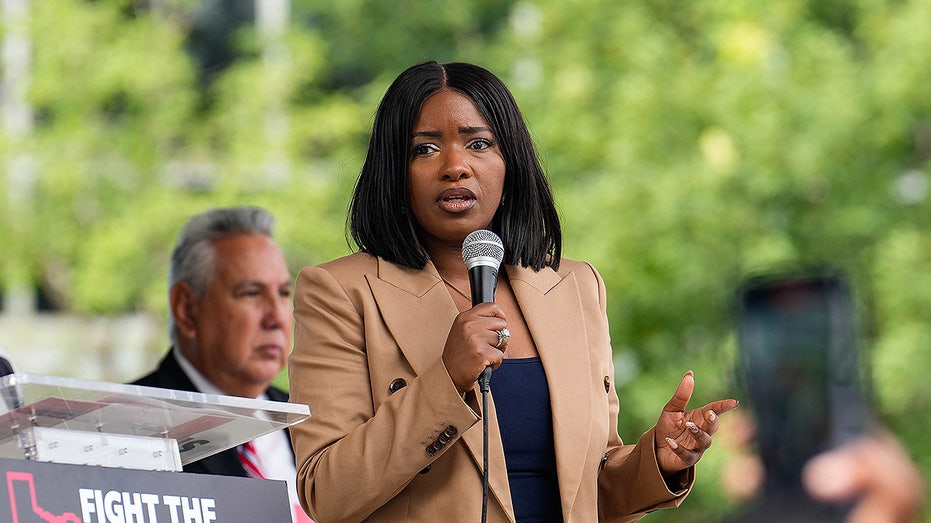
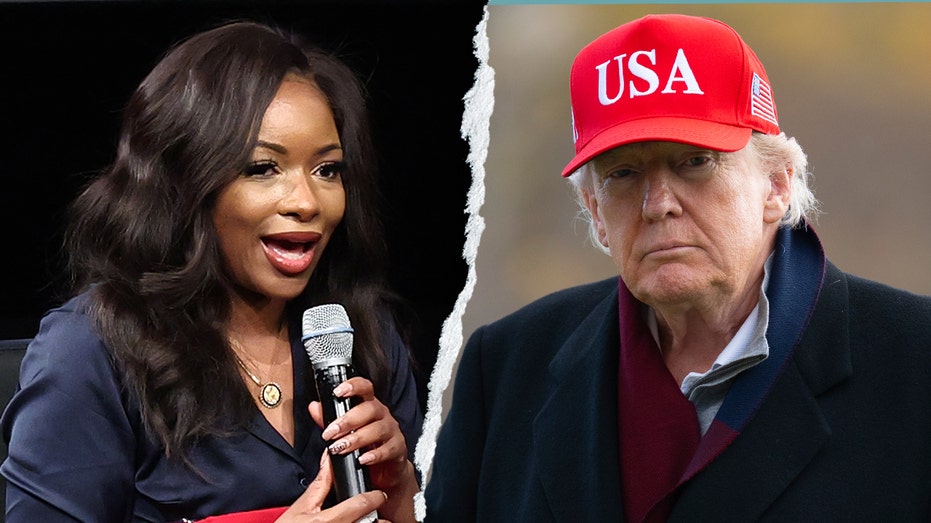
Rep. Jasmine Crockett’s decision to launch her Texas Senate bid with an ad built entirely around Donald Trump’s insults is more than a clever piece of political judo. It crystallizes three converging trends: the personalization of American politics, the growing centrality of Trump as both foil and fuel for Democrats, and the high‑risk bet Democrats are making that Texas is closer to purple than its election results suggest.
By leaning into Trump’s “low IQ” attack and recasting it as a badge of honor, Crockett isn’t just clapping back; she is testing whether a confrontational, personality‑driven brand can translate from viral moments in the House to a statewide race in a historically Republican stronghold.
The Bigger Picture: Texas, Trump, and the Politics of Insult
To understand why Crockett’s ad matters, it helps to situate it in three overlapping contexts: Texas’ recent electoral trajectory, Trump’s long‑running insult politics, and the rise of a new generation of combative Democrats.
Texas: Red State, or Low‑Turnout Battleground?
- In 2012, Mitt Romney won Texas by about 16 points. By 2020, Trump’s margin shrank to roughly 6 points over Joe Biden.
- Democrat Beto O’Rourke came within about 2.6 points of defeating Sen. Ted Cruz in 2018, in what became the most expensive Senate race in history at the time.
- Despite these narrowing margins, Republicans still control every statewide office in Texas and have not lost a Senate race there since 1988.
Crockett’s assertion that “Texas is not red, Texans just don’t vote” reflects a longstanding Democratic theory of the state: that high non‑voting rates, especially among young, Latino, and Black Texans, mask a much more competitive electorate. In 2018, turnout surged to about 53% in the midterms (high for Texas), helping O’Rourke close the gap. But in 2022, turnout slipped, and Republicans held their advantage.
Any Democrat running statewide must grapple with this structural reality: Texas is not unwinnable, but it demands huge investments in registration, mobilization, and persuasion—especially in rural and exurban areas where Republicans dominate.
Trump’s Insult Playbook as Democratic Fuel
Donald Trump’s use of demeaning nicknames and intelligence slurs (“low IQ,” “dumb,” “sleepy”) has become central to his political persona. Historically, many Republicans have tried to distance themselves from the crudest edges of this rhetoric in general elections, while Democrats have often used it to highlight Trump’s character and temperament.
Crockett’s ad inverts the usual dynamic. Instead of merely condemning the rhetoric, she weaponizes it as her central branding asset. The message is: if Trump is attacking me, I must pose a threat—so support me.
A New Style of Democrat: Combative, Viral, and Personal
Crockett is part of a cohort of younger Democrats—often women of color—who have built their profiles through sharp, viral confrontations in congressional hearings and on social media. Think of figures like Rep. Alexandria Ocasio‑Cortez, Rep. Katie Porter, or Rep. Ayanna Pressley. Their rise signals a shift from old‑style retail politics to performance‑inflected, media‑driven politics.
But there is an unresolved question: can a brand built in the crucible of Washington spectacle travel to statewide electorates, especially in states that still lean Republican? Crockett’s campaign will be a test case.
What This Really Means: Strategic Calculus Behind the Ad
Reframing Electability Around Trump
Crockett openly admits she jumped in after seeing that “the numbers were strongest for my candidacy.” Internally, that likely refers to name recognition, fundraising potential, and head‑to‑head polling in the Democratic primary.
By centering Trump in her launch, she is implicitly arguing that the best Democrat to face a Republican incumbent in 2026 is someone who can both energize the anti‑Trump base and embody opposition to MAGA politics in a visceral, personal way. In other words, electability is redefined: not as moderation, but as the ability to stand toe‑to‑toe with Trumpism.
Risk: Turning a Senate Race into a National Culture‑War Referendum
There’s a clear upside to Crockett’s approach: it maximizes national attention, small‑dollar fundraising, and grassroots energy. But it invites risk in at least three ways:
- Over‑nationalization: If the race becomes primarily about Trump, it can overshadow Texas‑specific issues like energy, immigration, property taxes, and the grid—areas where Democrats need to make tangible, local arguments to win swing voters.
- Suburban fatigue: Some suburban and moderate Republican‑leaning voters who are uneasy about Trump may still recoil from highly confrontational political styles on both sides. They might prefer quieter, less polarizing personalities, especially in a Senate seat intended to project stability.
- Counter‑mobilization: Leaning into Trump as foil can energize his base as well. In a low‑turnout environment, the side that better translates outrage into ballots wins; a Trump‑centered race may help Republicans unify and turn out.
Authenticity vs. Self‑Branding Attacks
Conservative critics are already framing Crockett’s ad as self‑obsessed (“her phone lock screen is a photo of herself,” “continues the theme”). This line of attack tries to recast her confidence and media savvy as narcissism.
The countervailing force is authenticity. Crockett’s political brand—sharp questioning in hearings, unapologetic rhetoric, visible frustration at what she sees as GOP extremism—reads as genuine to many Democrats and independents who are exhausted by euphemisms. If voters perceive her ad as a natural extension of that authenticity rather than a focus‑grouped stunt, the self‑branding attack may not stick.
Expert Perspectives: How Strategists and Scholars Read the Move
Political strategists and scholars of campaigning would likely see Crockett’s launch as an experiment in modern political communication rather than just a clapback to Trump.
- On message strategy: Ad consultants often argue that the most memorable ads are those that break the format and surprise viewers. Allowing your opponent’s insults to dominate the soundtrack while you stand composed is classic jujitsu: it uses your opponent’s energy against them.
- On gender and race: Black women candidates frequently face compounded stereotypes about competence, temperament, and “likability.” By foregrounding a “low IQ” insult from a polarizing figure like Trump, Crockett is not just rebutting a personal attack, she’s inviting viewers to interrogate the broader pattern of how powerful Black women are characterized.
- On voter psychology: Research on negative campaigning shows that attacks can backfire when they are perceived as unfair or cruel, especially when directed at marginalized groups. Crockett’s ad implicitly asks: if you find this language offensive when you hear it, why reward the politics that normalize it?
Data & Evidence: The Structural Hill Crockett Must Climb
Beyond style, the harder questions are structural: can any Democrat, no matter how compelling, win a Texas Senate seat under current conditions?
- Turnout patterns: Texas continues to lag national turnout despite population growth. In 2020, it ranked near the middle of states for participation, but in midterms it often drops toward the bottom tier.
- Demographic trends: The state’s population is diversifying—Latino residents now roughly equal or exceed non‑Hispanic white Texans, depending on the metric. However, voting patterns among Latino Texans are heterogeneous; Republicans have made inroads in South Texas and among some working‑class Latino voters.
- Party infrastructure: Republicans maintain deep organizational strength, especially in rural counties and conservative suburbs, with well‑oiled turnout operations. Democratic infrastructure has improved since 2018 but remains uneven, particularly outside major metros.
Crockett’s comment that this moment is “life or death” reflects not only ideological stakes but a practical reality: absent a major structural shock or a large sustained investment, Democrats risk cementing the narrative that Texas is a graveyard of progressive ambition.
Looking Ahead: What to Watch as the Race Develops
1. The Democratic Primary: Identity, Ideology, or Electability?
With other Democrats already jumping into the race, including figures branded as rising stars, the primary will likely revolve around three questions:
- Who can raise the most money quickly, especially from national small‑dollar donors?
- Who can convince primary voters they are both progressive enough to energize the base and pragmatic enough to win statewide?
- How do candidates differentiate themselves when they share broadly similar positions on federal issues but have very different styles?
If Crockett dominates the national conversation but fails to convert that into organizational strength across Texas counties, she could be vulnerable to a less flashy but more locally embedded rival.
2. Republican Counter‑Strategy
Republicans are already experimenting with two lines of attack: mockery (agreeing with Trump’s insults) and character hits (allegations of a “toxic” staff environment, suggestions of self‑absorption). Over time, expect three additional tactics:
- Policy framing: Efforts to tie Crockett to national Democratic positions on border security, energy regulation, and crime that may be unpopular with swing voters in Texas.
- Cultural framing: Attempts to portray her as out of step with Texas values, focusing on tone and rhetoric rather than specific votes.
- Contrast with a Republican incumbent: Painting the GOP incumbent as the stable, experienced choice versus Crockett as risky and polarizing.
3. Can Crockett Translate Viral Moments into Votes?
The biggest open question is whether Crockett can build an organizing operation as strong as her online presence. Senate races are not won on social media alone; they are won through field operations, door‑knocking, local media, and community coalitions.
The turnout problem she cites—Texans not voting—will test whether her campaign is prepared to do the unglamorous work of sustained engagement in communities that often feel politically ignored.
The Bottom Line
Crockett’s launch ad is a high‑signal political moment: it reflects a Democratic bet that Trump’s rhetoric can be used not just to mobilize outrage but to define candidacies. It signals the arrival of a new generation of unapologetic, media‑savvy Democrats on the statewide stage in Texas. And it raises a pivotal question: in an era where politics is increasingly about personalities and performance, can that energy actually flip a Senate seat in one of the GOP’s most important strongholds?
If she succeeds, the ad will be remembered as the moment a Trump insult helped launch a Democratic senator from Texas. If she fails, it will be a case study in the limits of viral politics in a structurally red state.
Topics
Editor's Comments
One underappreciated aspect of Crockett’s launch is how openly it acknowledges politics as performance. By constructing her first statewide message entirely around Trump’s words, she effectively says: this race is not just about policy, it’s about who can withstand and repurpose the spectacle of modern American politics. That may resonate with voters who feel politics has long since left the realm of dry issue briefs and entered the realm of constant conflict. But it also begs the question of what gets crowded out when campaigns become meta-commentaries on insult culture. Texas faces concrete, urgent challenges—from grid reliability to public education funding and immigration pressures—that are only glancingly referenced in this narrative. As the campaign matures, Crockett will be forced to show whether she can pivot from symbolic resistance to Trumpism toward a detailed, place-based agenda for Texas. If she doesn’t, her race risks reinforcing the very cynicism about politics-as-show that she implicitly critiques by highlighting Trump’s behavior.
Like this article? Share it with your friends!
If you find this article interesting, feel free to share it with your friends!
Thank you for your support! Sharing is the greatest encouragement for us.