
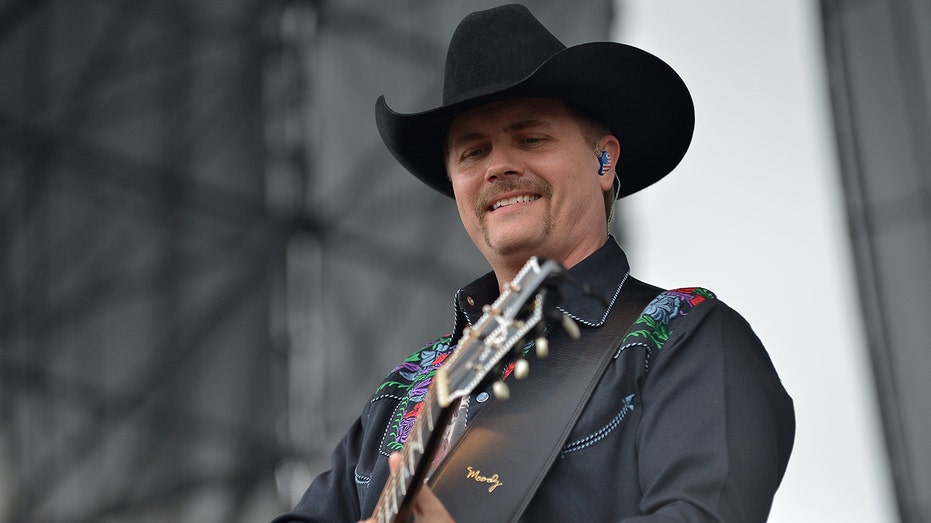
John Rich, Gambling, and God: What His ‘Gross’ Addiction Reveals About Fame and America’s Betting Boom

Sarah Johnson
December 9, 2025
Brief
John Rich’s confession about gambling addiction is more than a celebrity redemption story. It exposes how fame, faith, and America’s booming betting culture collide—and why that collision matters now.
John Rich’s ‘Gross’ Gambling Addiction: What His Confession Reveals About Fame, Faith, and America’s Quiet Betting Epidemic
Country star John Rich’s admission that his gambling addiction became a “gross” misuse of what he sees as God-given success is not just a personal redemption story. It’s a window into how modern celebrity, easy access to gambling, and deeply held religious beliefs intersect in contemporary American culture—and how those forces shape everything from how we spend our money to how we talk about moral responsibility.
Rich’s narrative moves in three arcs: sudden wealth, compulsive risk-taking, and a faith-driven reversal that leads him toward advocacy and family-centered values. That trajectory mirrors broader shifts in U.S. society: the normalization of gambling, the struggle of high earners with hidden addictions, and the way religious frameworks are being used to reinterpret both prosperity and vice.
From Honky-Tonk to High-Stakes: Why Fame Is a Fertile Ground for Gambling Addiction
Rich describes a familiar progression: starting at “$5 a hand” and escalating to “$5,000” as blackjack became a “dominating thing.” Clinicians will recognize this as classic tolerance—the same pattern seen in substance use disorders. But there’s a crucial contextual piece: the role of sudden, large income.
Research on professional athletes, musicians, and lottery winners consistently shows that rapid financial ascent increases the risk of addictive behaviors, including gambling. One study in the Journal of Gambling Studies found that individuals with higher disposable income are more likely to engage in higher-risk gambling and escalate faster, precisely because losses don’t immediately threaten basic survival. The danger is less about the first bet and more about the psychology of “house money” and invincibility that can accompany success.
For a touring country artist in the 2000s—like Rich—casinos were not just temptations, they were common venues. Casinos book artists, comp rooms, and blur the line between professional environment and private leisure. The industry structurally surrounds entertainers with normalized high-stakes gambling, making self-control less about individual virtue and more about resisting a built-in feature of their work ecosystem.
Faith, Money, and Moral Language: Why Rich Framed His Addiction as ‘Disrespectful to God’
Rich doesn’t frame his story in the language of clinical addiction, therapy, or brain chemistry. He frames it as sin and stewardship.
He calls his gambling a “gross” and “disrespectful” way of handling what he believes God gave him: “It was so disrespectful to take what God had given me and blessed me with success… and I’m putting it on a stupid blackjack table.” That framing is rooted in a long tradition of Christian teaching about money as something entrusted, not owned—what theologians call stewardship.
This is a subtle but important departure from the more common American narrative that you “earned it, it’s yours, do what you want.” Rich’s language—“None of it’s you… you take it as if it’s yours and go out here and recklessly put it in harm’s way”—directly challenges the hyper-individualistic view of wealth that dominates entertainment culture.
Historically, American Protestantism has maintained a complicated relationship with gambling. Many denominations officially condemn it, citing its association with greed, exploitation, and neglect of family duties. Yet in practice, American culture has steadily liberalized its view: lotteries fund schools, casinos fund jobs, and sports betting is now a mainstream pastime. Rich’s story sits at that tension point: culturally normalized behavior experienced as personally sinful and spiritually corrosive.
The Bigger Picture: A Personal Testimony Against a National Surge in Gambling
Rich quit blackjack in 2010, well before the current explosion of legalized sports betting and online gambling. Since the U.S. Supreme Court’s 2018 decision to strike down the federal ban on sports betting, more than 35 states have legalized sports wagering in some form. The American Gaming Association reported U.S. commercial gaming revenue exceeding $65 billion in 2023, a record high.
Yet while the money has surged, public health systems have lagged behind. Estimates typically suggest that about 1–2% of U.S. adults meet the criteria for a gambling disorder, with a larger segment experiencing “problem gambling” that harms finances, relationships, or mental health without crossing the diagnostic line. Those numbers likely underestimate the scale, especially with online betting apps quietly turning smartphones into 24/7 casinos.
What makes Rich’s narrative useful is not that it’s unique but that it’s unusually explicit about moral conflict. Many celebrities discuss addiction; fewer talk about the ethical dimension—how their behavior affects their family, their calling, and their sense of responsibility to others.
From Vice to Vigilance: Why His Pivot to Child Trafficking Advocacy Matters
After describing his gambling addiction, Rich pivots to promoting his new single and short film, “The Righteous Hunter,” about those who hunt child predators and combat child trafficking. To some, that may feel like a sharp narrative turn; in fact, it reflects an increasingly prominent pattern among entertainers who’ve passed through personal crisis: moral activism as a form of redemption and reorientation.
He collaborates with professional sting units and consults with them to avoid a “Hollywood version.” He also partners with the Department of Homeland Security on a seminar about keeping kids safe online. That detail matters: DHS and non-profit groups have repeatedly warned that the front line of trafficking and exploitation has shifted from street corners to screens. Social media platforms, gaming chats, and messaging apps are now primary hunting grounds for abusers.
By aligning himself with this issue, Rich is tapping into a broader trend: faith-driven artists using their platforms to elevate “protect the children” narratives, often tying them to anxieties about digital life, pornography, and the erosion of traditional parental authority. The risk, in some cases, is that trafficking becomes a moral panic divorced from data. But when grounded in credible partnerships and accurate portrayals, as Rich claims he sought, it can help channel intense emotional energy toward practical safety measures.
Masculinity, Control, and the ‘Flip the Switch’ Recovery Narrative
One of the more striking lines in Rich’s story is: “I just literally went ‘bang.’ I didn’t ratchet it down little by little. I literally just stopped.” That language of instant, absolute turnaround is common in religious testimonies—especially within evangelical and Pentecostal traditions where “deliverance” narratives are prized.
To many clinicians, that kind of story can be both inspiring and concerning. On one hand, spontaneous remission from addictions does happen; on the other, framing recovery as a pure act of willpower or divine conviction can inadvertently stigmatize those who can’t “just stop.” It reinforces a tough, masculine ideal: the strong man who recognizes his error, masters himself, and never looks back.
In country music, that narrative resonates with longstanding themes—personal responsibility, moral awakening, and family-first priorities. But it can obscure the fact that most people with gambling addictions require structured help: therapy, support groups, financial counseling, sometimes medication. Rich’s story is one path, not the template.
What Mainstream Coverage Often Misses About Stories Like This
There are at least four underexplored angles in stories like Rich’s:
- The industry’s complicity: Casinos, labels, and touring infrastructures often profit from intertwining entertainment and high-risk gambling, then step back when the fallout is framed as purely personal failure.
- The class angle: Rich could lose $5,000 a hand because he had it. For middle-class or working-class fans, the same addiction can mean foreclosure, bankruptcy, or homelessness. His confession highlights the behavior; it doesn’t fully capture the differential impact.
- The theology of money: Rich’s stewardship language shows how religious frameworks can be protective against excess—but also how, for some, “God gave me success” can justify high-risk ventures until a moral line is crossed.
- The emotional replacement: Trading the rush of gambling for the intensity of moral crusades—like fighting child exploitation—raises the question of whether some people are fundamentally wired for high-intensity engagement, rechanneled rather than extinguished.
Data Points That Put Rich’s Story in Context
While exact numbers evolve, several consistent findings help contextualize his confession:
- Gambling prevalence: Surveys typically find that around 85% of U.S. adults have gambled at least once in their lifetime, and a substantial minority gamble regularly.
- Disordered gambling: Around 1–2% of adults are estimated to have a gambling disorder, with higher rates among men, younger adults, and those with other addictions.
- Online expansion: The growth of mobile sports betting and online casinos has dramatically increased accessibility, a known risk factor for problem gambling.
- Co-occurring issues: Gambling addiction often coexists with depression, anxiety, and substance abuse. For high-profile performers, the pressure of public scrutiny and irregular income can amplify those risks.
Rich’s decision to frame his recovery primarily in spiritual and moral terms reflects his audience and identity. But his experience aligns with these broader patterns, underscoring that even those who appear to be winning at life are vulnerable to losing in ways that remain invisible until they decide to speak.
Family, Simplicity, and the Counter-Culture of ‘Enough’
At the end of the interview, Rich returns to a deceptively simple theme: the best moments in his life now are small, domestic rituals—putting “goofy clothes on the dogs,” letting his kids open one present on Christmas Eve, cooking his grandmother’s fried chicken.
In a culture that constantly sells more—more money, more experiences, more adrenaline—this embrace of “the simple things” is not just sentimentality. It’s an implicit rejection of the very mindset that fueled his addiction: that the next hand, the next win, the next escalation will finally deliver satisfaction.
For many Americans facing their own compulsions—whether gambling, shopping, stock trading, or digital addictions—Rich’s pivot toward routine, family, and tradition is more than a lifestyle choice. It’s a survival strategy: redefining value away from the scoreboard of money and risk, toward what cannot be bet and cannot be lost.
What to Watch Going Forward
Rich’s story raises several forward-looking questions:
- Will more high-profile entertainers speak openly about gambling addiction as sports betting saturates entertainment and advertising?
- Will faith communities leverage testimonies like Rich’s to challenge the growing normalization of gambling in everyday life, including among younger audiences?
- Can moral activism around issues like child trafficking remain grounded in facts and effective strategies rather than drifting into sensationalism?
- Will policymakers treat problem gambling as a serious public health issue, or continue to treat it as collateral damage of a lucrative industry?
Rich’s confession, and his subsequent advocacy, won’t answer all those questions. But it crystallizes the stakes: how we understand success, what we do when it warps our judgment, and whether our culture still has a language—religious or otherwise—for saying: “Enough.”
The Bottom Line
John Rich’s story is about far more than one man quitting blackjack. It’s about the collision of fame, faith, and a booming gambling economy; the power of moral language to reshape behavior; and the search for meaning and responsibility after excess. In an era where risk is celebrated and restraint is unfashionable, his decision to label his own behavior “gross” and “disrespectful” to something larger than himself is a counter-narrative worth paying attention to—especially as the rest of the country doubles down on the bet that more gambling, not less, is the future.
Topics
Editor's Comments
What stands out in John Rich’s account is not simply that a celebrity had a gambling problem—we’ve heard versions of that before—but how explicitly he frames it as a moral and spiritual violation rather than just a bad habit. That’s telling in an era when much of our discourse about addiction has shifted into almost purely medicalized language. There’s a tension here worth interrogating: public health experts want us to see gambling disorder as a brain-based, treatable condition; Rich wants us to see it as a failure of stewardship before God. Both frameworks have power, and both can be weaponized. If we lean only on the medical model, we risk absolving systems—like the gambling industry and its political enablers—of responsibility. If we lean only on the moral model, we risk crushing those who can’t flip the switch as he did. The most honest response probably demands holding both truths at once: addiction is a condition shaped by biology and environment, and our choices—and the moral frameworks that guide them—still matter. Rich’s story is compelling precisely because it refuses to flatten that complexity.
Like this article? Share it with your friends!
If you find this article interesting, feel free to share it with your friends!
Thank you for your support! Sharing is the greatest encouragement for us.