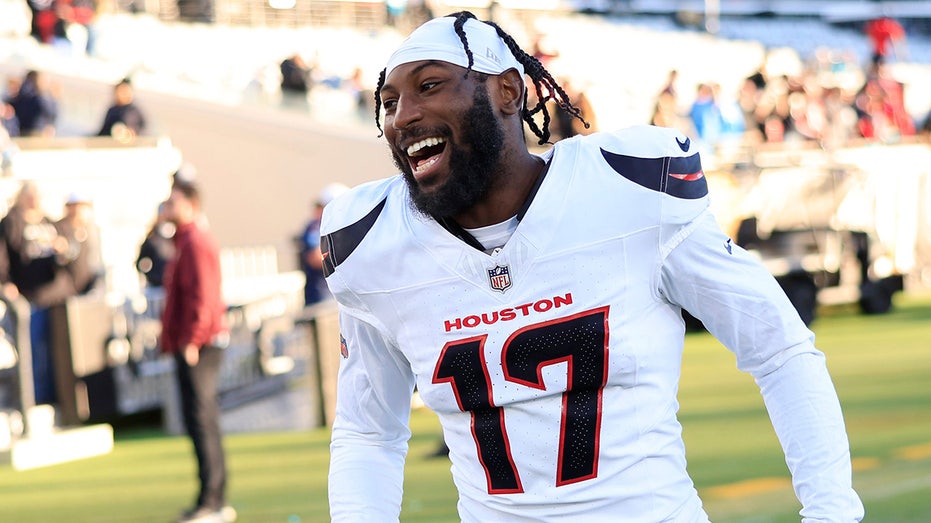
Kris Boyd Shooting Exposes the NFL’s Blind Spot on Player Safety Off the Field

Sarah Johnson
December 9, 2025
Brief
The shooting of Jets cornerback Kris Boyd is more than a crime update. This analysis unpacks what it reveals about athlete safety, urban gun violence, and the NFL’s evolving duty of care.
Beyond the Headline: What the Kris Boyd Shooting Reveals About Athlete Safety, Urban Violence, and the NFL’s Duty of Care
The apprehension of a person of interest in the shooting of New York Jets cornerback Kris Boyd is being treated as a routine crime update. It isn’t. This incident sits at the intersection of several larger forces: rising urban gun violence, the precarious off-field lives of pro athletes, the NFL’s evolving duty of care, and the way high-profile cases shape public perceptions of safety and justice.
Understanding why this story matters requires looking past the immediate mystery of who pulled the trigger and why. The more consequential questions are what this shooting says about the environments NFL players move through, how teams and leagues manage risk, and what happens when an injured, vulnerable player becomes the victim of a violent crime.
Kris Boyd’s Shooting in Context
On November 16, in the early morning hours, Kris Boyd was shot outside a Midtown Manhattan restaurant and suffered a gunshot wound to the abdomen. The shooter fled. Weeks later, New York police say a person of interest is in custody, though no charges have yet been filed, and the exact role of that individual remains unclear.
Boyd, who joined the Jets in the offseason after stints with the Minnesota Vikings and Houston Texans, had already been on injured reserve since training camp. The shooting added a traumatic, life-threatening layer to what was supposed to be a rehabilitation year. Reports indicate he required days of hospital care and continues to deal with complications from the wound.
What we know so far is limited—and law enforcement is appropriately cautious about assigning guilt before charges and evidence are public. Yet the contours of this case mirror a troubling pattern involving professional athletes, nightlife, and guns in major U.S. cities.
The Bigger Picture: Athletes, Nightlife, and Violence
The Kris Boyd shooting is not an isolated anomaly. Over the past two decades, the NFL and other major leagues have repeatedly been forced to confront off-field violence affecting players:
- In 2007, Washington safety Sean Taylor died after being shot during a home invasion, a case that rattled the league and led to renewed discussions about player security.
- In 2012, Kansas City linebacker Jovan Belcher murdered his partner and then killed himself at the team facility, exposing mental health and gun access failures.
- In 2019, Washington quarterback Dwayne Haskins later died in a separate roadway incident, but in prior years, multiple prominent players across sports were victims of robberies, shootings, or violent confrontations in nightlife settings.
Researchers who study sports and violence note that high-profile athletes face a unique combination of visibility, perceived wealth, and social exposure that elevates their risk. They are widely recognized, often move without substantial security, and frequent nightlife venues where alcohol, ego, and firearms can form a volatile mix.
New York City, like many large U.S. cities, has seen fluctuating patterns in gun violence. After significant declines from the 1990s into the early 2010s, shootings rose again during and after the COVID-19 pandemic. According to NYPD data, shootings in New York spiked in 2020–2021 before easing somewhat, but they remain notably higher than pre-2019 levels in several precincts. Manhattan’s core business districts, including Midtown, are still considered relatively safe—so when a shooting occurs there, it draws outsized attention and feeds into a broader public debate about whether cities are truly safe again.
Why This Incident Hits a Sensitive Nerve for the NFL
From the league’s perspective, the Boyd case touches on multiple pressure points:
- Player welfare and brand protection: The NFL is still trying to repair its reputation on player safety, primarily around concussions and long-term brain trauma. Violent off-field incidents—whether players are perpetrators or victims—further threaten the league’s carefully curated image as a modern, safety-conscious enterprise.
- Duty of care beyond the field: Teams invest millions in player contracts but historically have had uneven policies around security, financial education, and risk management for players’ social lives. As one veteran security director told me years ago, “We insure the helmets and forget the humans.” That’s changing, but unevenly.
- Injured players as especially vulnerable: Boyd’s status on injured reserve matters. Injured players often feel disconnected from the team routine, spend more time away from the facility, and may be more likely to go out late or seek social outlets while rehabbing. Their physical and mental vulnerability can intersect with risky environments.
These are not excuses for what happened; they are risk factors that teams and players must navigate—and that the league must confront if it wants to credibly claim it prioritizes player safety in the fullest sense.
What Police and Prosecutors Are Balancing
The NYPD’s decision to release surveillance images shortly after the shooting, and now detain a person of interest without immediate charges, highlights another tension: public pressure versus procedural caution.
High-profile crime cases involving celebrities or athletes trigger intense media scrutiny. Police departments know that quickly releasing images or descriptions of suspects can lead to tips and potential leads, but it also risks misidentification and reputational harm if the wrong person is targeted. That’s one likely reason the current individual is described as a “person of interest,” not officially accused of a specific role, while investigators continue to piece together the facts.
Even basic questions—Was Boyd the intended target? Was this a dispute that escalated? A robbery? A stray bullet?—remain unanswered publicly. That vacuum is fertile ground for speculation, which can distort public perception long before a court hears evidence.
Expert Perspectives: Security, Sociology, and Player Support
Security and sociology experts tend to see cases like Boyd’s as symptoms of deeper structural issues rather than isolated anomalies.
On athlete risk profiles:
Dr. Jeffrey Fagan, a criminologist at Columbia Law School who has studied violence in urban environments, has argued in other contexts that public figures in nightlife spaces face “a uniquely concentrated risk profile.” Fame, perceived wealth, alcohol, and the presence of firearms, he notes, “form a triangle of vulnerability” that can escalate minor conflicts into lethal outcomes. While he hasn’t commented specifically on Boyd, his broader findings apply: reduce one side of that triangle—especially guns—and violence drops sharply.
On team responsibility:
Former NFL security executive Jeff Miller, now a consultant on sports risk, has long warned that clubs underestimate their duty of care once players leave the facility. “You can’t micromanage grown adults,” he’s said in public panels, “but you can build real relationships, provide concrete security options, and normalize players using them.” For fringe or injured players—the ones not making superstar money—those options often feel inaccessible or unnecessary until something goes wrong.
On mental health and trauma:
Sports psychologist Dr. Christina Brooks notes that being shot is not just a physical injury but a profound psychological trauma: “You’re dealing with pain, fear, survivor’s guilt, and potentially a sense that your body—which is your livelihood—is no longer reliable.” For a player already battling an injury, this can compound anxiety about career prospects and identity. That Boyd reportedly returned to speak to Jets teammates, breaking down a special teams meeting, may be both a sign of resilience and a coping mechanism—reasserting his role in the team after a life-altering event.
Data: How Common Is Violence Against NFL Players?
There is no single, comprehensive, public database tracking violent crimes against pro athletes, but the broader data landscape offers clues:
- According to FBI and CDC data, firearms are involved in the majority of homicide deaths in the U.S., and young men aged 18–34 are disproportionately affected—precisely the demographic most NFL players fall into.
- Academic studies on “celebrity victimization” suggest that famous individuals report higher rates of stalking, threats, and attempted robberies than the general population, though many cases never reach the public eye.
- Internal league security briefings, as reported over the years, have highlighted spates of robberies and assaults targeting players, particularly in nightlife areas and around luxury residences.
In other words, while the NFL player population is small, their exposure to certain types of risk is outsized, and the social costs when something goes wrong are large: national headlines, fan anxiety, and pressure on cities and teams to show they can keep high-profile residents safe.
What’s Being Overlooked
Most coverage so far focuses on the procedural update: there is a person of interest in custody, no charges yet, investigation ongoing. Several deeper issues are largely missing from the conversation:
- Boyd’s long-term health and career: Abdominal gunshot wounds can cause chronic pain, digestive issues, nerve damage, and mobility limitations. Even if he returns to play, his performance and longevity could be affected. That matters not only to the Jets but to any player looking at this incident and wondering how fragile their careers truly are.
- The uneven security safety net in the NFL: Superstars often travel with private security and can afford high-end protective measures. Players on the margins—like Boyd, on injured reserve after bouncing between teams—rarely have that kind of support, even though they still carry the visibility and perceived wealth that make them targets.
- The psychological ripple effects in the locker room: When a teammate is shot, it doesn’t just shake the individual—it reshapes how the entire roster thinks about nightlife, city safety, and the risks of simply being recognizable in public. Younger players in particular may reassess how and where they spend their time.
Looking Ahead: What to Watch
Several key developments will determine how significant this case becomes beyond the immediate crime investigation:
- Clarity on motive and circumstances: Was Boyd targeted, or was he caught in the crossfire? If evidence shows he was intentionally attacked, it raises questions about player-specific threats, potential extortion, or prior conflicts. If it was random or incidental, it feeds into broader concerns about urban gun violence.
- The legal process for the person of interest: Whether this individual is ultimately charged, cleared, or linked only tangentially will shape public trust in the NYPD’s handling of a celebrity-adjacent case. A high-profile arrest followed by weak evidence would fuel criticism of policing-by-press-release.
- The Jets’ and NFL’s policy response: Does this event trigger internal reviews of player security, especially for injured or fringe players? Will the league expand resources for personal security consultations, trauma counseling, and financial help for non-superstar players seeking protection?
- Boyd’s recovery and role: If he publicly discusses the experience—and the support or lack thereof he received—it could become a catalyst for change in how teams address off-field risk, much as past tragedies reshaped concussion and mental health policies.
The Bottom Line
This isn’t just a crime blotter item about a shooting outside a restaurant. It’s a case study in how modern professional athletes live at the convergence of fame, risk, and fragmented support systems. The Kris Boyd shooting forces uncomfortable questions about who gets protection, how teams manage off-field risks, and whether cities and leagues are truly prepared for the vulnerabilities that come with visibility.
If the NFL is sincere about player safety, it can’t confine that concern to the sideline and the helmet. Incidents like this underscore that for many players, the most serious threats to their health and careers may come not from a hit across the middle—but from a bullet on a city street.
Topics
Editor's Comments
What’s most unsettling about the Kris Boyd case is how ordinary it is when stripped of its NFL veneer. A young man in his twenties, out late in a big city, is shot and nearly killed; police circulate images, then quietly detain someone while they sort out what actually happened. This pattern plays out in American cities every week with far less media attention. The difference here is that Boyd’s profile forces us to look at it. That visibility is both opportunity and distortion. It can drive resources, pressure the NYPD to move quickly, and push the NFL to confront uncomfortable truths about player safety. But it can also obscure the systemic nature of the problem by framing it as an exceptional, celebrity-linked event. The real question for the league, and for the public, is whether we treat Boyd’s shooting as a wake-up call about a broader ecosystem of risk—or as just another headline that fades when the next news cycle arrives.
Like this article? Share it with your friends!
If you find this article interesting, feel free to share it with your friends!
Thank you for your support! Sharing is the greatest encouragement for us.