Mahomes, Hurts and the New Quarterback Reality Reshaping the NFL

Sarah Johnson
December 9, 2025
Brief
Mahomes and Hurts are suddenly struggling months after Super Bowl LIX. This analysis unpacks cap pressures, defensive evolution, and structural shifts reshaping their futures and the NFL’s power map.
Mahomes, Hurts and the New Quarterback Reality: Why the NFL’s Two Brightest Stars Are Suddenly Struggling
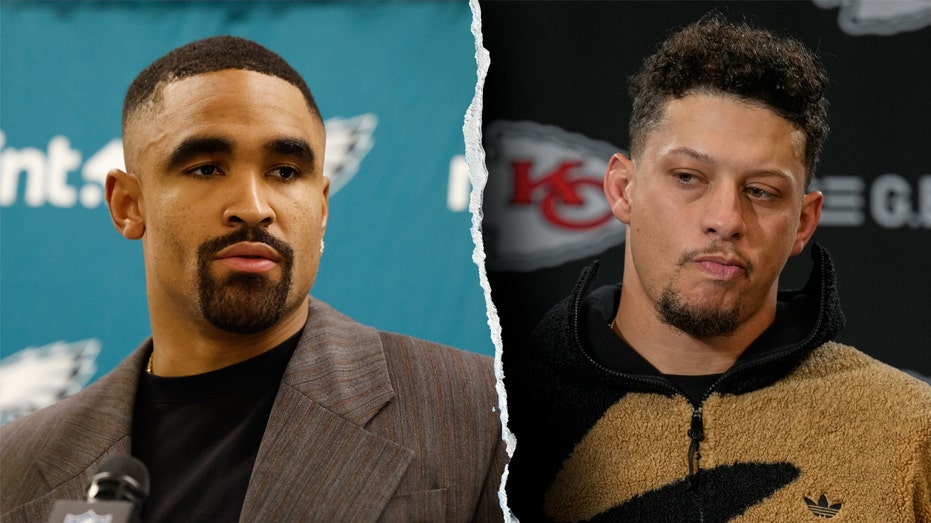
Ten months after headlining Super Bowl LIX, Patrick Mahomes and Jalen Hurts were supposed to be the safest bets in football. Instead, both are mired in statistically brutal stretches, their teams wobbling at the precise moment contenders usually sharpen their edge. This isn’t just a bad week for two elite quarterbacks; it’s a window into how quickly power structures shift in today’s NFL — and how even generational talents are being stressed by deeper systemic changes in the league.
The bigger picture: When elite QBs stop looking inevitable
On paper, Week 14 was ugly:
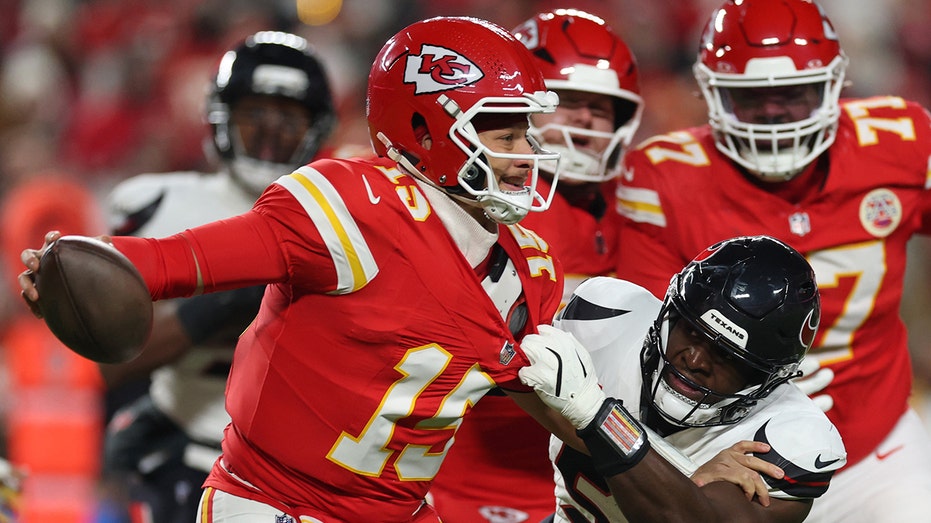
- Mahomes: 14-of-33, 160 yards, 3 interceptions in a 20–10 loss to Houston. Chiefs fall to 6–7 and sit outside the playoff picture with four weeks left.
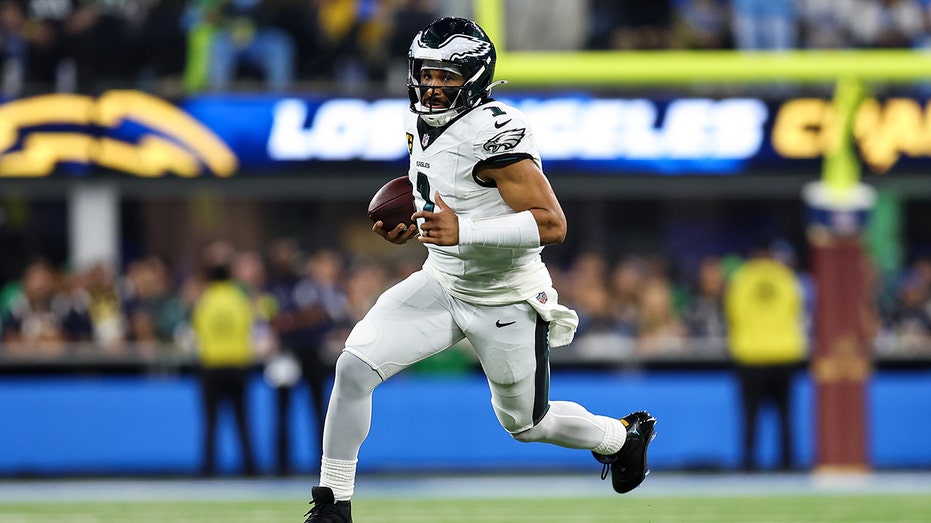
- Hurts: 21-of-40, 240 yards, 4 interceptions and a lost fumble in an overtime loss, part of an Eagles stretch of three straight defeats and no more than 21 points in five games.
But the significance goes beyond box scores. For the last half-decade, the NFL’s competitive logic has been simple: if you have Mahomes or a near-Mahomes (Hurts has flirted with that tier), you have a margin for error others don’t. This season, that margin has shrunk dramatically.
Historically, this is not unprecedented. Tom Brady’s Patriots missed the playoffs in 2008 and 2020. Aaron Rodgers posted a mediocre 6–10 season in 2008 and an 8–9 year in 2022. Even Peyton Manning had the 2015 season where his body betrayed him. The pattern is clear: eras of dominance are rarely linear. What’s different now is how quickly the league punishes even slight regression — and how many structural forces are converging against quarterback-led dynasties.
Why this is happening now: four structural pressures on star quarterbacks
1. The cap era cost of having “the guy”
Once a quarterback moves from rookie deal to mega-contract, the entire roster calculus changes. Both Mahomes and Hurts are now deep into big-money territory. That doesn’t just impact who they throw to; it shapes everything from offensive line depth to defensive rotation.
- The Chiefs’ transition: Post–Tyreek Hill, Kansas City has tried to build a more balanced offense while threading the cap. The result: a revolving-door receiving corps, young wideouts learning on the fly, and a line that has been good but inconsistent. Mahomes’ margin for improvisation has narrowed because his weapons are less forgiving of off-script chaos.
- The Eagles’ retool: Philadelphia paid its stars — including Hurts — and then lost key glue pieces on both sides of the ball. The offense is still talent-rich at the top, but its depth and cohesion have eroded. When injuries and game-plan issues hit, Hurts is forced into high-variance hero ball.
Historically, dynasties like the early-2000s Patriots thrived because Brady’s cap hit stayed relatively modest while the team ruthlessly churned the roster. Today’s quarterback market makes that model harder to replicate. The Chiefs and Eagles are now living in the fully inflated version of that world.
2. Defensive adaptation and the “solve-the-superstar” cycle
The NFL operates on a constant adaptation loop: an innovative offense breaks the league, defenses adjust over 18–24 months, then offenses must reinvent themselves. Mahomes and Hurts are both at a painful point in that cycle.
- Mahomes vs the two-high era 2.0: After early-career dominance off deep shots and broken plays, defenses pivoted to two-high shells and forcing underneath throws. Mahomes adjusted and won another ring by being more patient. Now, the next iteration is here: mixed coverages, disguised rotations, and simulated pressures designed to make him hold the ball half a beat longer, increasing turnover risk.
- Hurts vs the QB run/RPO backlash: In 2022–23, Hurts and the Eagles punished defenses with RPOs, deep shots, and the QB run threat, including the infamous “tush push.” Defenses have since devoted practice time and personnel to building mobile-QB packages. The result: tighter windows, more defenders sitting underneath slants and seams, and heavier hits when Hurts hangs in the pocket.
We’re seeing the same pattern that hit Lamar Jackson circa 2020 and Josh Allen around 2022–23: once you become the archetype, the league spends its offseason designing ways to make you ordinary.
3. Offensive line erosion and the invisible crisis
A consistent thread in nearly every superstar quarterback downturn is protection. The public sees interceptions; the film shows disrupted timing.
League-wide data has shown a steady rise in pressure rates over the past several seasons as defenses prioritize speed and multiplicity. Even a half-second of extra heat can turn a calculated risk into a tipped ball or forced throw. Both Kansas City and Philadelphia have been dealing with:
- Shuffling on the interior line
- Injuries that force backups into key roles
- More exotic pressure looks that stress communication, not just raw talent
Quarterbacks as talented as Mahomes and Hurts can mask line issues — until they can’t. Once the film shows defenses that pressure changes decision-making, the dam breaks, and you get games like Week 14: hurried reads and turnovers rather than controlled aggression.
4. Psychological pressure and the weight of expectation
Quarterback play is as mental as it is mechanical. After a Super Bowl run, every game carries a different psychological load. Opponents treat you as a measuring stick. Local and national scrutiny intensifies. Every interception is framed less as a mistake and more as a narrative inflection point.
Both Mahomes and Hurts showed leadership in their postgame remarks — taking responsibility rather than deflecting blame. But the underlying truth is this: when you are the foundational identity of your franchise, your margin for mental error is as slim as your physical one. That can lead to forcing throws, trying to drag a struggling team across the line, and compounding small problems into bad stat lines.
What this really means for the AFC and NFC power maps
The most immediate consequence of these struggles is that the Super Bowl race looks radically more open than it did in August. With Kansas City currently outside the playoff picture and Philadelphia reeling, the league’s power map is being redrawn in real time.
- AFC: The Chiefs’ slip opens space for emerging or resurgent franchises — Denver, for instance — to seize seeding advantages and narrative momentum. The aura of inevitability around facing Mahomes in January has cracked, if only for this season.
- NFC: The Eagles still lead the NFC East at 8–5, but their offensive stagnation invites challengers. Teams like the Rams and Seahawks, both with at least 10 wins, are no longer background characters; they’re viable conference favorites. For opponents, Philadelphia is starting to look less like a juggernaut and more like a talented but exploitable team.
In broader terms, this is a break from the recent season pattern where September–October confirmed what we suspected in August. Instead, 2025 is shaping up more like the 2011 or 2012 seasons — chaotic, matchup-driven, and hostile to preordained favorites.
Expert perspectives: Are Mahomes and Hurts declining, or just adjusting?
Most analysts caution against reading this as a long-term decline.
NFL quarterback coach David Lee has long argued that “elite QBs don’t suddenly forget how to play — what changes is the support structure and the defensive picture.” That framing fits both Mahomes and Hurts. Their mechanics have not collapsed; their environments have become more complex and less forgiving.
Sports psychologist Dr. Jen Welter, who has worked with elite athletes across football and other sports, notes that “the second act of a star’s career is always more cognitively demanding than the first. Once the league has your ‘book,’ you’re playing chess, not checkers.” We’re watching both quarterbacks enter that second-act phase now: where raw talent is still necessary, but not sufficient, to dominate.
Analytics experts also warn against overreacting to small samples. A single game with 3–5 turnovers can distort season-long perception. But the underlying trends — lower explosive play rates, more turnover-worthy throws under pressure, and fewer easy answers against modern defenses — are real challenges that demand schematic evolution.
Data and overlooked angles
Several under-discussed angles stand out:
- Turnover clustering: High-turnover games often occur when a quarterback is trying to drag a flawed game plan over the finish line. Hurts’ five-turnover outing and Mahomes’ three interceptions fit that pattern: late-and-forced rather than systematically bad.
- Red zone & third down efficiency: While yardage totals draw headlines, the more telling stats for struggling teams are third-down conversion rates and red zone touchdown percentages. Those are often where chemistry, protection, and play-calling cohesion — not just talent — show up. Both offenses have seen slippage in these high-leverage situations compared with their Super Bowl seasons.
- Coaching churn and play-calling evolution: Quietly, both teams have dealt with shifts in offensive staff responsibilities over the last few years. Each departure forces the quarterback to become not just a player but a co-architect. That added cognitive load can show up as hesitancy or over-aggression on Sundays.
Looking ahead: What to watch over the final four weeks
The last month of the regular season will tell us less about Mahomes’ and Hurts’ raw talent and more about their capacity for adaptation.
- Scheme simplification vs. innovation: Do the Chiefs and Eagles simplify to rebuild rhythm — more quick game, defined reads, and high-percentage throws — or do they double down on complexity to stay “ahead” of defensive adjustments?
- Turnover response: One of the best indicators of long-term elite status is how a quarterback responds to a turnover cluster. Do the interceptions snowball into tentativeness, or do they prompt smarter aggression?
- Locker room temperature: Prolonged offensive struggles can fracture teams, especially ones accustomed to success. How publicly and privately the locker rooms respond — and whether coaches keep messages consistent — will heavily influence whether this is a one-year blip or the start of a longer slide.
- Front-office posture: Teams’ offseason decisions will signal how they interpret this slump. Do they treat it as a supporting cast issue (revamping receiver rooms and lines) or as a schematic identity crisis requiring coaching and play-calling changes?
The bottom line
Mahomes and Hurts struggling in December is not primarily a story about two quarterbacks forgetting how to play football. It is a story about how the modern NFL relentlessly pressures even its brightest stars through cap realities, defensive innovation, and the weight of sustained expectations.
The Chiefs and Eagles are not just fighting for playoff position; they’re fighting to define what the next era of their quarterback’s careers will look like. For the rest of the league, that uncertainty is an opening. For Mahomes and Hurts, it’s a test of whether they can evolve quickly enough to stay ahead of a game that never stops solving its own problems.
Topics
Editor's Comments
What’s most telling about this moment isn’t just that Mahomes and Hurts are struggling; it’s how differently we interpret those struggles compared with past eras. When Brady and Manning hit rough patches, the discourse tended to focus on aging curves or isolated roster problems. With Mahomes and Hurts, the conversation is really about system fragility in a hyper-optimized league. Everything—from cap structure to analytics-driven defensive design—pushes even elite teams toward volatility. That has real implications for how franchises should think about ‘windows.’ Instead of assuming a decade-long run anchored by one star, front offices may need to plan in shorter, three-to-four-year bursts, building for mini-runs around schematic edges and overlapping contract peaks. The real contrarian question: are we entering an era where, paradoxically, having a top-tier quarterback no longer guarantees sustained dominance, but instead simply gives you a slightly better chance of surviving the league’s systemic churn?
Like this article? Share it with your friends!
If you find this article interesting, feel free to share it with your friends!
Thank you for your support! Sharing is the greatest encouragement for us.