Philip Rivers at 44: What the Colts’ Hail Mary Says About the NFL’s Quarterback Problem

Sarah Johnson
December 9, 2025
Brief
Philip Rivers’ potential return at 44 isn’t just a novelty. It exposes deep structural issues in how NFL teams build rosters, manage quarterback risk, and chase short-term wins over long-term stability.
Philip Rivers at 44: What the Colts’ Quarterback Hail Mary Reveals About the Modern NFL
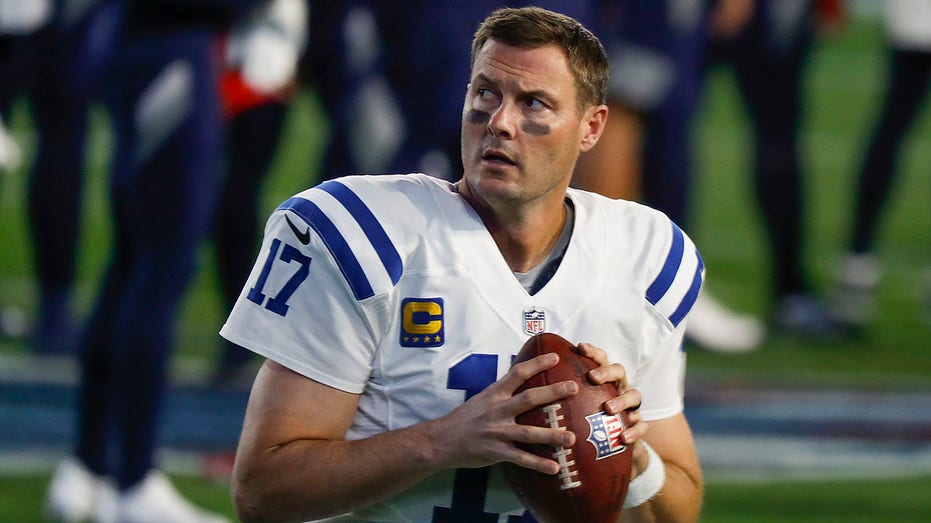
The headline is irresistible: a 44-year-old new grandfather, out of the league since 2020, flying to Indianapolis as a possible emergency option for a playoff push. But underneath the novelty, Philip Rivers’ potential return says a lot about how the NFL is changing — structurally, economically, and culturally.
This is not just a story about one team in crisis. It’s a snapshot of a league where quarterback instability, a hyper-aggressive win-now culture, and the aging curve of elite passers are colliding. The Colts’ move is less about nostalgia and more about the brutal math of a season on the brink.
The Colts’ Desperation Isn’t an Accident — It’s a Symptom
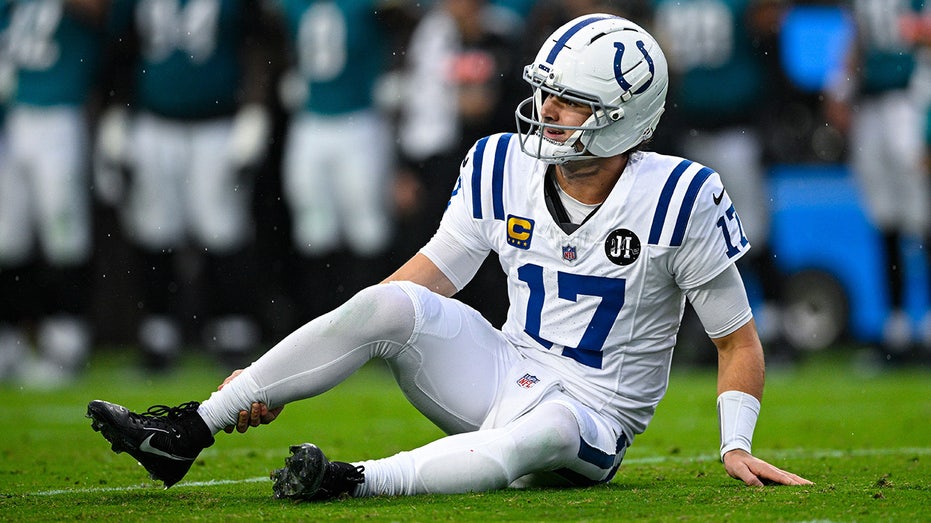
On the surface, the Colts’ situation is straightforward: Daniel Jones, already playing through a broken fibula, tears his Achilles. Rookie Riley Leonard, elevated into the starting role, now has a knee issue. That leaves Brett Rypien as the only healthy option heading into a critical Week 15 road game against the Seahawks.
Underneath that, there’s a deeper pattern. In the last decade, the Colts have been one of the NFL’s defining examples of quarterback instability:
- 2012–2018: Andrew Luck, viewed as a generational franchise QB, retires unexpectedly at 29.
- 2019–2023: Revolving door — Jacoby Brissett, Philip Rivers, Carson Wentz, Matt Ryan, plus assorted short-term stopgaps.
- 2024–2025: Another reset, this time trying to build around Daniel Jones and a rookie.
In that context, calling a retired veteran who last played for you five seasons ago isn’t just a contingency plan; it’s the logical endpoint of years of short-term quarterback fixes. The franchise has never fully recovered from Luck’s retirement, and Rivers’ name resurfacing underscores how little long-term stability they've managed to create at the most important position.
The Bigger Picture: Aging QBs and the New NFL Lifecycle
Rivers is 44, a grandfather, and has been coaching high school football. In almost any previous NFL era, the idea of a team calling him in December for meaningful snaps would have been absurd. But in the modern era, the boundaries on QB age are shifting:
- Tom Brady played at an MVP level at 40 and won a Super Bowl at 43.
- Drew Brees was a top-10 quarterback at 40 and 41.
- Aaron Rodgers was still a reigning MVP candidate at 38–39.
Sports science, rule changes that protect quarterbacks, and offensive schemes that emphasize timing and quick decisions have extended the shelf life of high-IQ passers. Rivers, never dependent on mobility, fits that archetype. His last season in 2020 was not nostalgia-ball — he threw for 4,169 yards, 24 TDs, 11 INTs, and led the Colts to an 11–5 record.
But there’s a key difference: Brady and Brees never left. Rivers has been out of the league for years, living a different life rhythm, coaching teenagers, and not subjected to the year-round grind of NFL preparation. That gap matters.
Historically, comebacks after multi-year absences are rare and usually underwhelming. Think of:
- Jay Cutler, pulled out of near-retirement by the Dolphins in 2017, performing below replacement level.
- Michael Vick, who successfully returned after a long absence, but with the benefit of youth (he was 29) and elite athleticism.
Rivers falls into a new category: the aging, hyper-experienced, cerebral QB as emergency infrastructure — less franchise savior, more disaster recovery system.
What This Really Means for Team-Building
Rivers’ visit highlights two structural problems in the modern NFL:
1. The Vanishing Middle Class of Quarterbacks
The league has become polarized at QB: you either have a franchise cornerstone on a big second contract, a cheap rookie, or you’re cycling through short-term vets and journeymen. The middle class of stable, mid-tier veterans who can hold a team’s floor has thinned out.
Part of this is financial. With top QBs consuming $45–55 million per year in cap space, teams are forced into extremes: either build around a star or squeeze value out of rookie deals. That leaves fewer teams interested in paying mid-level money for average but stable veterans. Those players increasingly float on the margins — or retire.
Rivers being considered for a practice squad role — a technical move that allows roster flexibility — underlines how teams are trying to hack the system. They want veteran brainpower on call without committing a full roster spot until absolutely necessary.
2. Injury Volatility and the Cost of Thin Depth Charts
Achilles, ACLs, High ankle sprains: the league is seeing high-profile QB injuries at a worrying clip. Between 2023 and 2025, multiple teams’ seasons have been derailed by QB health issues, including the Jets (Rodgers), Bengals (Burrow), Vikings (Cousins), and 49ers (multiple QB injuries leading to the Purdy saga).
Yet many teams still try to optimize 53-man rosters around upside and versatility rather than sturdy but unspectacular depth — especially at quarterback. The Colts’ willingness to field a roster that can be one play away from Brett Rypien starting in a playoff race is part of that risk calculus. Rivers is, in effect, a late-season hedge against their own roster strategy.
Rivers’ Perspective: Legacy, Identity, and the Pull of the Game
On Rivers’ side, the decision is not just about whether his arm still works. It’s about risk to his body, his post-football identity, and his legacy.
He left the league after a statistically strong season and has since transitioned into high school coaching and family life — he now has the added identity marker of “grandfather,” which the narrative will not let him escape.
For players of Rivers’ generation, there’s a powerful pull in the idea of one more run. But it’s not cost-free:
- Physical Risk: A short ramp-up into NFL-level hits at 44, after years away, is very different from aging in the league with continuous conditioning.
- Psychological Pressure: If he returns and struggles, it reshapes the last line of his career story from “underrated ironman competitor” to “couldn’t walk away.”
- Family and Lifestyle: He has been living on a coach’s calendar, not an NFL calendar. Reversing that has ripple effects beyond the locker room.
At the same time, coaches love quarterbacks like Rivers: he knows the building, the staff, the culture, and the language of the offense can be adapted to him quickly. For a team trying to salvage a season, his football brain may matter as much as his arm.
Expert Perspectives: Strategic Risk or Smart Asymmetric Bet?
Coaches and analysts are divided on whether a late-season move like this is savvy or reckless.
Former GM and analyst Louis Riddick has often argued that teams underestimate the value of veteran QB insurance: “When your season derails because you didn’t want to pay for competent QB depth, that’s not bad luck — that’s a roster-building failure.” Rivers’ visit fits the idea of belatedly paying the insurance premium.
Sports performance experts are more cautious. A 44-year-old who hasn’t played an NFL snap since 2020 faces a dramatically compressed conditioning curve. Even if Rivers has kept himself in decent shape while coaching, he hasn’t taken NFL hits, run full-speed dropbacks against top-tier rushers, or processed game-speed defenses in years. That’s not just rust; it’s a different physiological and cognitive demand profile.
Offensive coaches, though, may look at it differently. Rivers’ game was always built on pre-snap reads, timing, and anticipation. That kind of quarterback can be viable with a diminished physical toolkit if the protection holds and the scheme protects him.
Data & Context: How Much Could Rivers Actually Move the Needle?
We don’t know whether Rivers will even sign, much less start. But we can sketch out the performance context:
- In 2020, Rivers ranked in the top half of NFL starters in yards, completion percentage (68%), and EPA/play in a ball-control offense that minimized his limitations.
- His career totals — 63,440 passing yards and 421 touchdowns — place him firmly in the upper tier of all-time passers, even if postseason success (5–7 record) eluded him.
- The current Colts are hovering on the playoff bubble after three straight losses, meaning marginal QB upgrades carry outsized value — a single extra win could swing a wild-card spot.
Even a league-average Rivers for 2–3 games might be worth a win compared to a replacement-level backup. But the risk is that a rust-heavy, physically diminished Rivers could perform below that baseline, especially behind imperfect protection or in bad weather late in the year.
What This Says About the NFL’s Future
The Rivers story is part of a broader trend that will likely intensify over the next decade:
- Veteran QB “Pools”: Teams may increasingly maintain informal pools of retired or semi-retired quarterbacks — players who know certain systems and can be activated late in the year during injury crises.
- Practice Squad as Strategic Weapon: Loosening practice-squad rules (expanded size, veteran eligibility) has turned it into a staging ground for exactly this kind of contingency move.
- Quarterback Load Management: As contracts grow and injury fears rise, we could see more emphasis on multi-QB preparedness rather than a single ironman starter model.
- Legacy Calculus for Veterans: High-profile retirees will increasingly face the temptation of situational comebacks, especially for playoff-ready teams. Their decisions will be influenced as much by branding and long-term narrative as by money.
Looking Ahead: What to Watch Next
The immediate questions:
- Does Rivers sign, and if so, is it purely as practice-squad insurance or with a realistic path to starting?
- How serious is Riley Leonard’s knee issue — is this a 1–2 week problem or a season-altering one?
- Do the Colts adjust their offense, returning to a 2020-style Rivers-friendly attack (quick game, heavy use of backs and tight ends) if he plays?
Beyond Indianapolis, other front offices will be watching closely. If Rivers signs and even competently manages a game or two, it will validate the concept of late-stage veteran reinforcements. If it goes poorly — or if he ultimately declines the opportunity — it may serve as a cautionary tale about leaning too hard on nostalgia over infrastructure.
The Bottom Line
Philip Rivers’ potential return is not primarily a feel-good story about a grandfather chasing one more shot. It’s a mirror held up to the modern NFL: a league that has stretched quarterback careers, hollowed out its mid-tier depth, and become so win-now obsessed that a 44-year-old high school coach can suddenly become a rational option in December.
Whether Rivers plays a snap or not, the fact that this conversation is happening at all tells us where the league is headed — and how precarious the quarterback position has become for teams that never quite get their long-term plan right.
Topics
Editor's Comments
What’s striking in this story is how normalized extreme contingency has become in the NFL. Five or ten years ago, reaching out to a 44-year-old former starter, now a high school coach and grandfather, would have read as a gimmick or a PR move. Today, it’s being processed as a rational response to structural forces: ballooning QB salaries, compressed roster spots, and an increasingly violent landscape for the position. We should pay closer attention to the cultural cost of that normalization. When franchises treat quarterback health and availability as a roulette wheel to be managed rather than a risk to be mitigated, it incentivizes thin depth charts and hero-ball reliance on one player — until the emergency phone call to a retired veteran. The more the league leans into late-stage veteran rescue fantasies, the easier it becomes to postpone the harder work: investing in real developmental pipelines, adjusting schemes to protect quarterbacks, and rethinking the economic incentives that make mid-tier QB depth feel expendable. Rivers’ name is on the headline, but the deeper story is about institutional planning versus improvisation — and right now, improvisation is winning.
Like this article? Share it with your friends!
If you find this article interesting, feel free to share it with your friends!
Thank you for your support! Sharing is the greatest encouragement for us.