Sabbath, Outrage, and Legacy: What Charlie Kirk’s Final Book Reveals About Burnout Politics

Sarah Johnson
December 9, 2025
Brief
Charlie Kirk’s final book on Sabbath rest isn’t just a personal farewell. It reveals how modern political movements are trying to metabolize burnout, control attention, and sacralize rest in an age of outrage.
Charlie Kirk’s Final Book, the Sabbath, and the Politics of Exhaustion in America
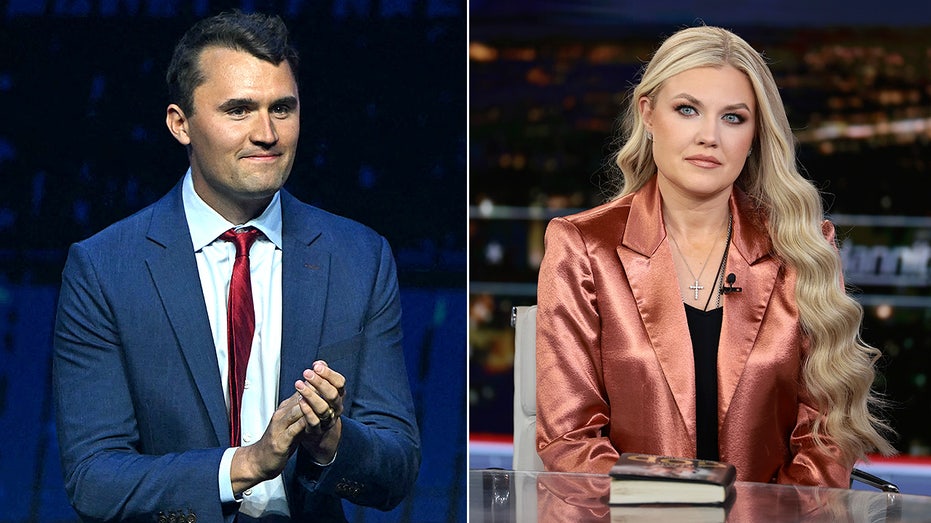
Charlie Kirk’s final book, completed weeks before he was shot and killed on a college campus, is being framed by his widow Erika as his “last words” to her. But the work is more than a personal artifact of grief. It’s a revealing document about how a leading figure in combative, 24/7 conservative activism came to publicly center an ancient spiritual discipline—keeping the Sabbath—as the antidote to both the “machine of modern life” and the partisan noise he helped amplify.
Seen in isolation, this is a human-interest story about a young widow, a final manuscript, and a family’s attempt to find meaning after a public assassination. Placed in context, however, it offers a window into three broader dynamics shaping American life: the weaponization of attention, the backlash against burnout across ideological lines, and the slow migration of political influencers into quasi-pastoral roles for their followers.
The bigger picture: Sabbath in an age of permanent outrage
The Sabbath—one day of rest, reflection, and religious observance—has deep roots in Judaism and Christianity. For centuries in the U.S., some form of Sabbath norm was culturally reinforced, from church attendance to “blue laws” that kept many businesses closed on Sundays. That consensus began to erode in the late 20th century.
Several forces converged:
- Deregulation and consumerism: The repeal of blue laws in most states from the 1970s onward normalized seven-day retail and service work.
- Technological acceleration: Email, smartphones, and social media collapsed any boundary between work and home, public and private, weekday and weekend.
- Political media arms race: Cable news, talk radio, and later online political ecosystems incentivized permanent engagement—"don’t look away, or the other side wins."
By the 2010s, sociologists and public-health researchers were documenting an American population that worked more hours than peer nations, slept less, and reported higher levels of stress and burnout. The American Psychological Association’s 2024 Stress in America survey found that roughly three-quarters of adults (74%) reported feeling overwhelmed by the number of crises facing the world; about half said they checked news or social media about politics multiple times a day.
In this environment, elite political figures faced a paradox: their influence depended on feeding outrage and engagement, but their own mental health—and often their family life—required withdrawal. Kirk’s final book appears to be his attempt to describe how he personally solved that tension: by carving out a sacred, untouchable “off” switch one day each week.
What this really means: A political brand trying to metabolize exhaustion
Erika Kirk’s description of their home practice—phones off, family dinner, gratitude circles—could come from a secular wellness retreat as easily as from a conservative media appearance. Yet the framing of the book is explicitly theological (“in the name of God,” “rest with the Lord”) and politically adjacent: the Sabbath becomes a tool not just for spiritual renewal but for sustaining a highly confrontational public career.
That dual purpose matters. As Erika puts it, if Charlie “answered every single critic and didn’t stop and put his phone down… he’d get nothing done. He would not have built Turning Point USA.” In other words, rest isn’t described as an alternative to the performance of partisan politics but as its precondition. This is a significant pivot from earlier conservative talk-radio culture, which often equated constant vigilance with virtue.
The underlying message to followers is subtle but powerful: you can stay fully committed to the political fight and you must protect yourself from being consumed by it. Sabbath becomes the spiritual language for what the tech world has started calling “attention hygiene.”
This raises deeper questions about the direction of American activism:
- Is this a genuine theological recovery of Sabbath, or a coping mechanism to keep people functional inside an unsustainably intense political ecosystem?
- Does sacralizing “rest” risk turning it into another productivity hack—something you do so you can work and fight harder—rather than a countercultural critique of the entire system?
Grief, narrative, and the making of a martyr-mentor
The timing and circumstances of Kirk’s death give his last book an emotional weight it would not otherwise have. Erika explicitly calls the book his “last words” to her, and her added foreword recasts the manuscript as a kind of posthumous letter, not only to her and their family but to his followers.
Historically, when public figures die violently at a young age—whether political leaders, activists, or religious figures—their final writings often take on near-scriptural status within their communities. Martin Luther King Jr.’s “I’ve Been to the Mountaintop” speech, given the night before his assassination, and diary entries by murdered dissidents in authoritarian regimes are classic examples. The pattern is not that their last texts predict their deaths, but that survivors read them retroactively as prophetic.
Erika’s language—calling the book “prophetic” and a “tribute to his legacy”—fits this mold. It sets up a narrative in which Kirk’s spiritual reflections on rest become the interpretive key for understanding his life and death. That has two important implications:
- Internal cohesion: For Turning Point USA and its orbit, the book can function as a unifying document at a time of potential fragmentation after the loss of a charismatic founder.
- Leader transition: With Erika now elected CEO, positioning herself as steward of her husband’s “last words” strengthens her moral and emotional authority within the organization.
This isn’t necessarily cynical; it is how communities often respond to sudden loss. But it does mean the book is operating in at least three registers simultaneously: spiritual guidance, lifestyle/wellness counsel, and movement scripture.
Expert perspectives: Spiritual disciplines in a hyper-politicized age
Religious historians note that American Christians have cycled through various “rediscoveries” of spiritual discipline—Sabbath, fasting, contemplation—during periods of social upheaval and technological change. The current moment is no exception.
Christian sociologist Dr. Nancy Ammerman has written about how everyday spiritual practices help believers cope with anxiety and a sense of lost control. She argues that “small, repeated rituals—whether they are family meals, prayers, or abstaining from work—can create a counterstory to the narrative that our value lies in constant productivity.” Viewed through that lens, Kirk’s Sabbath advocacy fits a larger trend of religious communities resisting neoliberal work culture, even when their politics otherwise defend free-market dynamism.
Digital culture researcher Dr. Sherry Turkle, known for her work on technology and human relationships, has warned that a “24/7 connected life erodes the space we need to form coherent selves.” Although she writes from a largely secular standpoint, her conclusion overlaps with Sabbath theology: humans need protected spaces where they are not performing, producing, or reacting. The difference is that where Turkle calls for “device-free zones,” Kirk calls for “a day with the Lord.”
From a political-science perspective, Dr. Eitan Hersh, author of research on “political hobbyism,” has documented how highly engaged citizens—especially in wealthier demographics—spend hours daily consuming news and debating online, with little actual civic impact. A weekly Sabbath from political media, Hersh has suggested in interviews, might reduce performative outrage and refocus people on tangible community involvement. Kirk’s framing, emphasizing family and gratitude over online combat, inadvertently aligns with that critique.
Data and evidence: The burnout backdrop
The personal story behind the book sits atop stark national trends:
- Work and time pressure: OECD data consistently show that Americans work more hours annually than workers in most other advanced economies. Surveys by Gallup indicate that roughly 60% of U.S. workers report feeling “emotionally detached” at work; around 19% describe themselves as “miserable.”
- Religious practice as buffer: Studies published in journals such as JAMA Psychiatry have found correlations between regular religious service attendance and lower rates of depression and suicide, though causation is complex.
- Always-on politics: Pew Research Center reports that a growing share of Americans—especially those who are highly ideological—consume political news daily or several times per day, and that these groups also report higher levels of anger and stress about national politics.
In that light, a book arguing that one day a week should be carved out explicitly away from political noise taps into a broad, cross-partisan exhaustion—even if the author’s own public persona was built on intensifying that noise during the other six days.
What mainstream coverage is missing
Most media framing will understandably focus on the tragedy of Kirk’s killing, the personal grief of his widow, and the human interest in a “final book” narrative. But several underexplored angles deserve attention:
- The strategic function of spiritual messaging in political movements. Turning Point USA, like several contemporary political organizations, is not just a policy shop; it is a lifestyle brand. Incorporating Sabbath rhetoric deepens that brand from ideological to spiritual identity, tightening loyalty and blurring the line between political leader and spiritual guide.
- The class dimension of “rest.” The ability to turn off devices, refuse work contact, and dedicate a day to family is not evenly distributed. Many low-wage workers and gig workers simply cannot afford this luxury. A Sabbath message packaged through national media and major retailers risks speaking primarily to a middle- and upper-middle-class audience that has more control over their schedules.
- The tension between Sabbath and outrage-based business models. Conservative and progressive media alike monetize constant agitation—email blasts, alerts, livestreams, fundraising tied to breaking crises. A genuine Sabbath discipline would require not just individual behavior change, but a retooling of the outrage economy itself. That tension is only faintly acknowledged.
Looking ahead: Will Sabbath become a political identity marker?
It is too early to know whether Kirk’s final book will have lasting impact beyond his existing supporter base. But it foreshadows emerging trends:
- Faith-infused activism: Movements on both the right and left increasingly use religious language—Sabbath, lament, “prayer walks,” moral injury—to frame political engagement and recovery from it.
- Rest as a badge of virtue: Just as “hustle culture” once made overwork a status symbol, we may see “protected rest” become a new badge of moral seriousness among politically engaged elites.
- Widow leadership transitions: Erika’s elevation to CEO continues a long tradition where spouses of slain leaders step in to carry forward a cause. How she balances spiritual messaging with the combative style associated with Turning Point will be a barometer of whether this Sabbath emphasis represents a real shift or a memorial moment.
One practical consequence to watch: if a significant portion of Kirk’s followers adopt even a partial Sabbath practice—less news, fewer online fights one day per week—data might show subtle dips in weekend engagement on partisan platforms and fundraising emails. That would be a measurable indicator that spiritual disciplines are reshaping political behavior, not just being used to market books.
The bottom line
Charlie Kirk’s final book is being received, rightly, as a deeply personal set of “last words” by his widow and his supporters. At the same time, it is a symptom and symbol of a larger crisis: a nation burned out on politics, trapped in economic and technological systems that demand constant attention, and groping backward toward ancient religious practices for relief.
Whether the book ultimately serves as a true countercultural challenge to the nonstop outrage economy—or as a spiritualized productivity tool that keeps that economy running more efficiently—will depend less on its theology and more on how its readers choose to live, and what kinds of political and media institutions they decide to build in its wake.
Topics
Editor's Comments
What stands out here is the unresolved contradiction between message and medium. A book urging withdrawal from the ‘machine of modern life’ is being marketed through precisely that machine—major retailers, cross-platform media hits, a coordinated promotional tour. That doesn't invalidate the message, but it makes it more complicated than the personal grief narrative allows. If anything, this story reveals how deeply we’re all embedded in systems that monetize attention and emotion, including religious and political movements that critique those systems. One question I’d like to see explored more directly by both journalists and readers is this: what would it look like for an organization like Turning Point to build Sabbath into its institutional rhythms, not just its rhetoric? That would mean fewer emails, slower reaction cycles, and a willingness to cede some ground in the daily news war. Until we see institutional Sabbath, not just individual Sabbath, the broader outrage economy will remain intact—and spiritual language will function more as a coping mechanism than as a catalyst for structural change.
Like this article? Share it with your friends!
If you find this article interesting, feel free to share it with your friends!
Thank you for your support! Sharing is the greatest encouragement for us.