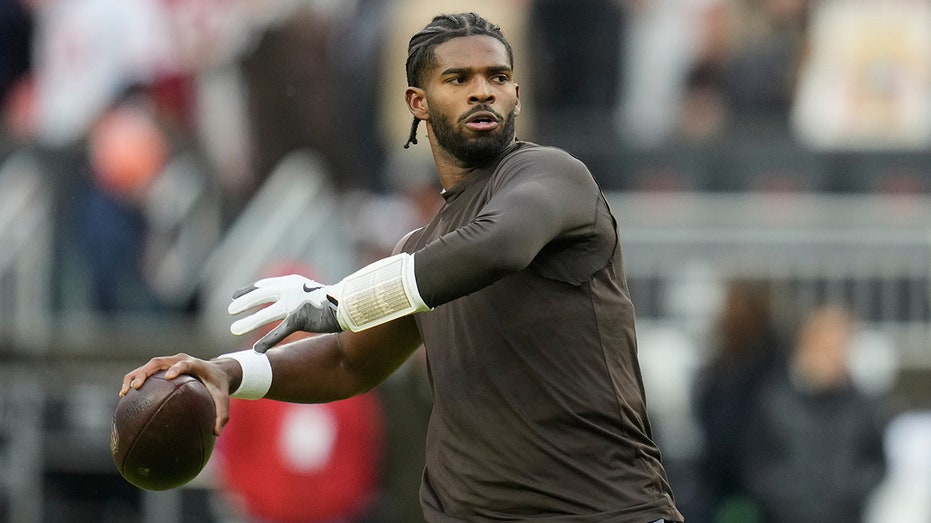
Shedeur Sanders and the Browns’ Gamble: Inside Cleveland’s High-Stakes Quarterback Bet

Sarah Johnson
December 9, 2025
Brief
The Browns’ decision to start Shedeur Sanders for the rest of 2025 is more than a depth chart move. It reveals Cleveland’s QB strategy, media pressures, and long-term franchise identity struggle.
Browns Hand Shedeur Sanders the Keys: A Quarterback Decision That Reaches Far Beyond Cleveland
The Cleveland Browns’ decision to ride with rookie quarterback Shedeur Sanders for the rest of the 2025 season looks, on the surface, like a straightforward depth-chart announcement. It’s not. It’s a window into how modern NFL teams manage young quarterbacks, how media power reshapes expectations, and how a franchise with one of the league’s most tortured QB histories is trying — again — to reset its identity.
At stake is more than the final four games of a losing season. Cleveland is effectively choosing between short-term tactical conservatism and long-term strategic clarity. They’re also betting that a highly branded college star can evolve into an NFL field general in one of the harshest environments for quarterbacks, both on the field and in the media.
Cleveland’s QB Trauma and Why This Decision Matters
To understand why committing to Sanders is significant, you have to understand the Browns’ decades-long quarterback carousel. Since returning to the league in 1999, Cleveland has started more than 30 different QBs — a who’s who of stopgaps, busts, and what-ifs. From Tim Couch and Brady Quinn to Johnny Manziel and Baker Mayfield, the franchise has cycled through prospects with dizzying speed, often bailing on development when the pressure cooker of fan frustration and ownership impatience boiled over.
In that context, head coach Kevin Stefanski publicly declaring there will be no more quarterback moves this season is not just a depth chart update; it’s a statement of organizational discipline. It signals an attempt to break the familiar pattern: panic, benching, reset, repeat.
Historically, Browns regimes have rarely been rewarded for that instability. Teams that’ve sustained success at quarterback — from Pittsburgh with Ben Roethlisberger to the Chargers with Philip Rivers and now Justin Herbert — have endured early lumps and media criticism. Cleveland has often tried to bypass that phase, looking for instant solutions. The Sanders decision suggests they are, at least for now, willing to absorb the short-term pain.
Shedeur Sanders: Between Hype, Legacy, and Development Curve
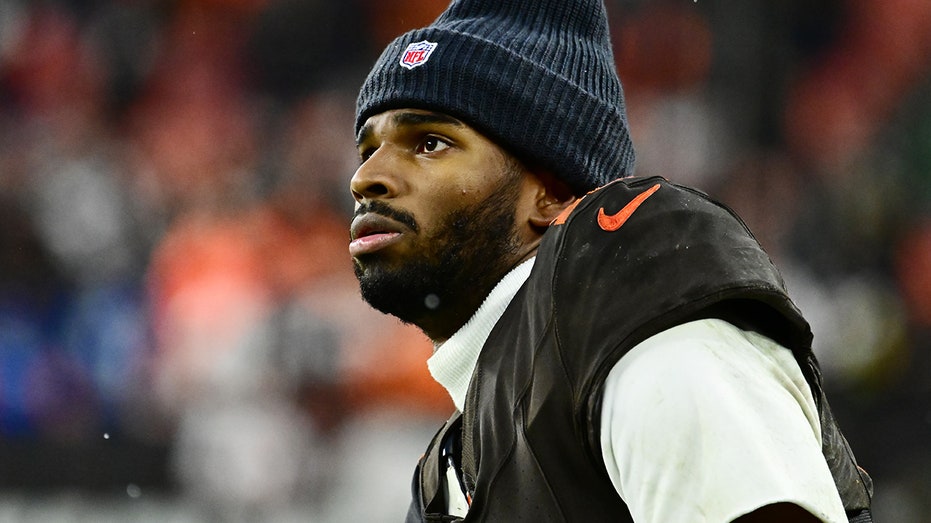
Shedeur Sanders arrives in Cleveland with an unusually loaded profile for a rookie: son of Deion Sanders, one of the most recognizable names in football; a college star whose games became cultural events; and a media brand that long predates his first NFL snap. That matters.
Unlike many rookies, Sanders doesn’t enter the league as a blank slate. He comes with:
- Massive public expectations built during his Colorado tenure, where his poise and production were hyped weekly.
- A polarizing media ecosystem ready to interpret every snap as proof of either stardom or fraud.
- Unusual leverage for a rookie QB because his off-field brand and popularity create both upside and political risk for the franchise.
This makes Stefanski’s decision to both endorse Sanders and, at key moments, pull him off the field (as in the controversial two-point conversion wildcat call) particularly fraught. The coaching staff is trying to develop a quarterback; much of the public thinks they’re managing a rising star or mishandling a celebrity. Those are very different jobs.
What Sanders Has Shown So Far: Signal vs. Noise
Strip away the social media noise and look at the early on-field sample. In three starts, Sanders has:
- Won his debut and became the first Browns QB to win his first-ever NFL start.
- Completed a season-high 64% of his passes against an elite San Francisco 49ers defense, even in a loss.
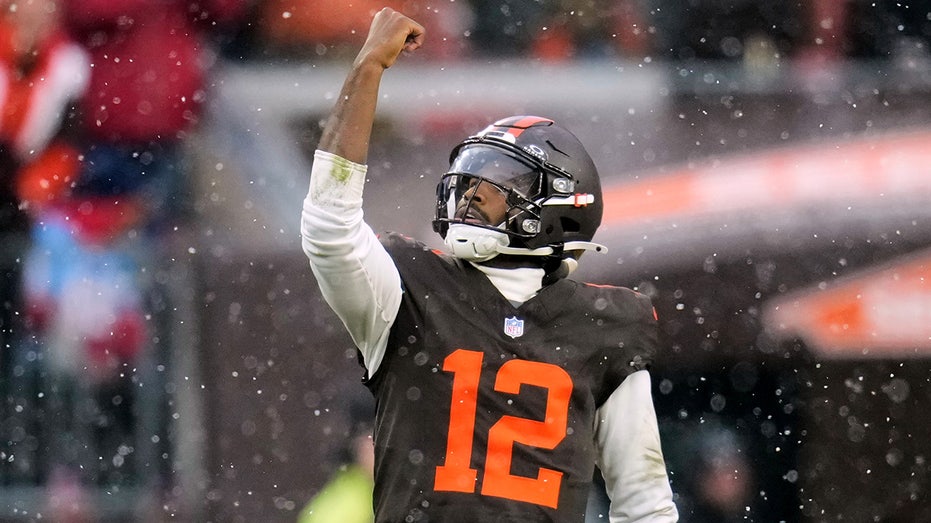
- Thrown for 364 yards, three passing TDs, and a rushing TD in sloppy conditions against Tennessee, even as the team fell short.
Those numbers don’t scream “bust”; they scream “promising but raw.” The yardage and touchdown production suggest comfort pushing the ball and functioning within the scheme. The 23-of-42 line against Tennessee (54.8% completion) and the loss against a struggling Titans team highlight inconsistency and situational growing pains.
For a rookie, that’s typical. For a Sanders, it’s litigated in real time by national personalities.
Stefanski vs. the Hot Take Economy
The wildcat decision on the critical two-point conversion was an inflection point. Stefanski dialed up a play featuring rookie running back Quinshon Judkins instead of leaving Sanders on the field to capitalize on the momentum of his touchdown throw. The play failed, and the reaction was instant and incendiary. Shannon Sharpe blasted the decision. Skip Bayless escalated further, calling for Stefanski to be fired.
Underneath the outrage are deeper questions:
- Trust: Does the staff fully trust Sanders in high-leverage goal-line moments, or are they protecting him?
- Optics vs. Strategy: Was the call rooted in analytics and personnel matching, or in a conservative instinct that undermines the QB’s leadership credibility?
- Power dynamics: How much will high-profile media voices influence the franchise’s willingness to live with developmental mistakes?
Modern coaches don’t operate in a vacuum. They know that one failed play is now a content cycle. When that play involves a young, highly visible quarterback, it can shape narratives inside the locker room and in ownership suites as much as on social media.
The Bigger Trend: How Teams Are Rethinking Rookie QB Timelines
Cleveland’s decision fits into a broader league pattern: teams are abandoning half-measures at the quarterback position. Recent history shows two dominant development strategies:
- Sink-or-swim early: As with C.J. Stroud in Houston or Justin Herbert with the Chargers, teams lean into live reps, accepting early mistakes for longer-term payoff.
- Extended incubation: As with Patrick Mahomes behind Alex Smith or Jordan Love behind Aaron Rodgers, teams delay full exposure, then commit once ready.
The Browns are somewhere in between. Sanders was not thrust into the job from Week 1; he took over after Dillon Gabriel’s concussion. But now, with the season effectively lost, Cleveland is clearly pivoting to live-fire development. The remainder of 2025 becomes a lab: can Sanders show enough to enter 2026 as the unchallenged QB1, or will the franchise be forced back into the quarterback marketplace yet again?
What’s Being Overlooked: Locker Room Politics and Franchise Identity
Mainstream reactions have focused on the tactical decision-making and Sanders’ stat line. Less attention has been paid to how this QB choice shapes the Browns’ internal dynamics.
In a locker room, announcing a quarterback as the starter “for the rest of the season” does three things:
- Clarifies hierarchy: Players now know whose voice commands the huddle. That can stabilize preparation and sideline communication.
- Sends a message about accountability: Committing to a rookie during a losing stretch signals that development is now prioritized over marginal short-term improvements with a placeholder.
- Defines the rebuild narrative: A team with a clear QB plan can more easily sell a vision to veterans, free agents, and the fan base.
There’s also a brand dimension. The Browns have long been known as the franchise that breaks quarterbacks. If Sanders, with his unique media footprint and family backing, thrives, Cleveland can rebrand itself as a place that finally solved the position — a transformation with real implications for attracting offensive coaches and skill players.
A Brutal Four-Game Evaluation Window
The Browns’ remaining schedule — at Chicago, then Buffalo, Pittsburgh, and Cincinnati — is no soft landing. It’s a live-fire stress test across multiple defensive styles and environments:
- Chicago Bears: A cold-weather road game with a defense that has improved in stretches; a test of Sanders’ operation in hostile conditions.
- Buffalo Bills: A sophisticated defense that disguises coverages; a test of mental processing and pre-snap reads.
- Pittsburgh Steelers: A historically aggressive front; a test of pocket toughness and decision-making under pressure.
- Cincinnati Bengals: A divisional opponent that has built its identity around a franchise QB; a direct contrast in organizational trajectory.
From an analytical standpoint, these four games function as a mini-season of evaluation. Cleveland’s front office will be watching for:
- Down-to-down consistency more than highlight throws.
- Response to adversity after turnovers, sacks, or hostile crowds.
- Communication and command — how teammates respond to Sanders in huddles and on the sideline.
Those factors, more than raw stats, will determine whether the franchise can build around Sanders or must hedge with veteran competition next offseason.
Expert Perspectives: Development vs. Drama
Quarterback development experts have long argued that how teams manage early adversity can make or break a career. The public may see a failed two-point wildcat as an isolated bad call. Coaches and QB tutors see potential scars — or fuel.
Former QBs often stress the importance of feeling trusted in critical moments. When a coaching staff pulls a quarterback off the field for a gadget play right after a big throw, it risks sending the message: “We believe in your arm, but not your decision-making in the tightest window.” For some players, that becomes a chip on the shoulder; for others, it can seed doubt.
What differentiates successful young quarterbacks is often resilience in that exact scenario — turning perceived slights and early missteps into growth rather than resentment. How Sanders internalizes these moments will be as important as how Stefanski explains them.
Data, Trends, and the Sanders Test Case
League-wide, the data on rookie quarterbacks is stark:
- From 2011–2023, fewer than half of first-round quarterbacks signed a second contract as a clear, uncontested starter with their original team.
- Those who did (Mahomes, Allen, Burrow, Herbert, Lamar Jackson) generally showed clear year-one or year-two flashes in advanced metrics like EPA/play and success rate, even if win-loss records lagged.
What the Browns are looking for from Sanders over these four games isn’t perfection; it’s evidence of those flashes — sustained drives against top defenses, anticipation throws into tight windows, and consistent pre-snap control of protections and route adjustments.
If Sanders can pair the production we saw against Tennessee (364 yards, three TDs) with cleaner decision-making and situational execution, Cleveland can reasonably justify building around him. If his play regresses under the weight of tougher defenses and mounting criticism, the front office will have difficult choices to make in a quarterback landscape that rarely offers clean solutions.
Looking Ahead: What This Means for 2026 and Beyond
Cleveland’s commitment to Sanders for the rest of 2025 sets up a crucial offseason decision tree:
- Scenario 1: Sanders ascends. He finishes strong, the locker room rallies around him, and analytics support his trajectory. The Browns can allocate draft and cap resources to the offensive line, receiving corps, and defense, assuming the most expensive piece — the quarterback — is in place.
- Scenario 2: Mixed signals. Sanders shows flashes but also alarming inconsistency. Cleveland may pursue a veteran hedge, creating another quasi-competition that risks repeating old patterns.
- Scenario 3: Clear regression. The Browns are forced back into the QB market, with all the associated costs in draft capital, time, and organizational credibility.
In all three scenarios, the organization’s handling of this stretch — their public messaging, their support structure, their willingness to own strategic decisions like the wildcat call — will shape their reputation as either QB-friendly or QB-destructive. In the modern NFL, that reputation can be as important as cap space.
The Bottom Line
The Browns aren’t just naming a starter. They are making a statement about who they want to be as a franchise, how they intend to develop a uniquely high-profile rookie, and how much noise they’re willing to tolerate in pursuit of stability.
Shedeur Sanders is now at the center of three intersecting pressures: a city desperate for a long-term quarterback, a league that increasingly demands early returns, and a media environment where every decision around him becomes a national segment. How Cleveland navigates those pressures will determine whether this moment is just another chapter in the franchise’s quarterback saga — or the beginning of a very different story.
Topics
Editor's Comments
What’s most striking in this situation isn’t just the Browns’ faith in Shedeur Sanders; it’s how little margin for error any young quarterback now has in the social media era. Decisions that used to be debated quietly in film rooms are now litigated by millions in real time, with coaches and players pulled into a content economy that rewards outrage over nuance. Cleveland’s wildcat call is a perfect example: analytically, we don’t know the full defensive look, internal self-scout, or practice performance that informed it. Symbolically, though, it was gasoline on an already flammable narrative about whether the organization truly trusts Sanders. The contrarian question here is whether franchises should consciously resist that media pull, even at the cost of short-term reputation damage. If organizations allow hot-take backlash to shape their developmental timelines, they risk building teams optimized for public approval, not sustained success. The next month will reveal whether the Browns are willing to endure that discomfort in service of a longer-term quarterback bet — or whether they flinch when the noise gets loud enough.
Like this article? Share it with your friends!
If you find this article interesting, feel free to share it with your friends!
Thank you for your support! Sharing is the greatest encouragement for us.