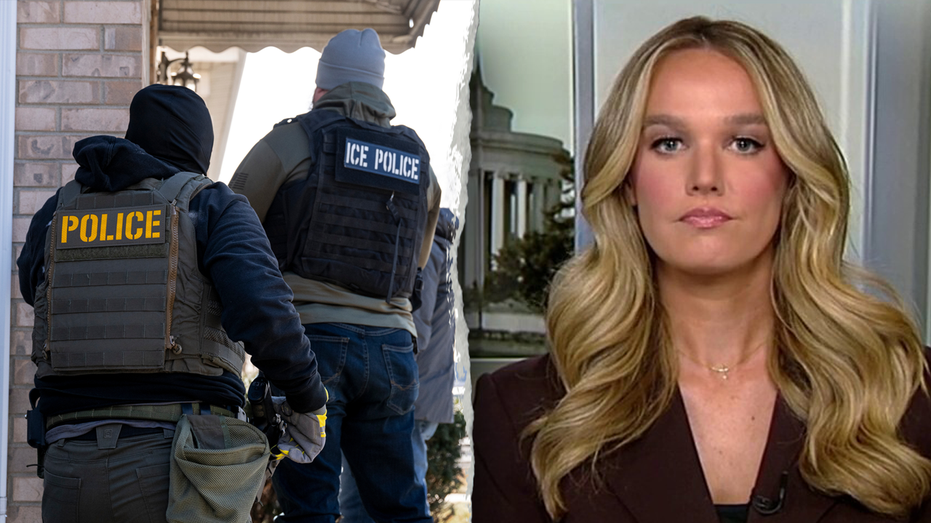
Threats to ‘Shoot ICE on Sight’ Reveal a Dangerous New Phase in America’s Immigration Wars

Sarah Johnson
December 9, 2025
Brief
Analysis of the New Jersey twins’ alleged threats against a DHS official as a symptom of escalating political radicalization around immigration enforcement and the growing targeting of public-facing federal officials.
Threats Against ICE Officials Are a Warning Signal, Not an Isolated Crime
The arrest of Ricardo and Emilio Roman-Flores, New Jersey twins charged with terroristic threats against a senior Department of Homeland Security (DHS) official and calls to “shoot ICE on sight,” is being framed as a story about two dangerous individuals. It’s actually something larger: a flashpoint where escalating political rhetoric, polarized immigration policy, and the normalization of dehumanizing language toward government officials collide.
Understanding why this matters requires stepping back from the sensational details and looking at the structural forces that made an incident like this almost predictable.
A New Phase in the Targeting of Federal Officials
Threats against immigration officers are not new. But the scale and intensity have shifted in the past decade. DHS has reported steep increases in threats against Immigration and Customs Enforcement (ICE), with internal alerts citing spikes running into the thousands of percent. Even if we treat headline figures like “8,000%” with caution, the direction of the trend is clear: federal immigration officers have become politically symbolic targets.
This didn’t happen in a vacuum. After 9/11, law enforcement and national security workers were widely valorized. Today, some of those same institutions are viewed as enemies by segments across the spectrum—either as tools of racist oppression or as instruments of an unaccountable deep state, depending on one’s politics. ICE sits at the center of that storm.
The Roman-Flores case fits the pattern: politically charged threats, made on a public platform, aimed at a visible spokesperson—Assistant Secretary Tricia McLaughlin—who has become a lightning rod in the public debate over mass deportations and immigration enforcement. The speed of the arrest (within three days) is telling: DHS and local police are now treating online threats less as background noise and more as potential precursors to real-world violence.
How Immigration Became a Frontline of Political Radicalization
To understand how two American citizens from a New Jersey suburb end up posting about medieval torture and hanging federal officials, it helps to trace how immigration enforcement became a proxy battlefield for broader cultural and political conflicts.
- Post-9/11 Expansion: ICE was created in 2003 as part of DHS, with a mandate that blurred national security, border control, and interior enforcement. That gave immigration policing a new scale and symbolism.
- Obama-Era Paradox: The Obama administration both expanded deportations and introduced protections like DACA. This duality simultaneously angered the right (for perceived leniency) and parts of the left (for record deportations).
- “Abolish ICE” & Trump-Era Polarization: By the late 2010s, ICE became shorthand for everything critics saw as abusive about immigration enforcement. The “Abolish ICE” slogan on one side and “law and order” absolutism on the other fed into a moralized, zero-sum dynamic.
- Social Media as Battlefield: Platforms like X (formerly Twitter) incentivize outrage and performative extremity. The line between rhetorical violence and operational planning has blurred.
Historically, when enforcement agencies become politicized, threats follow. In the 1960s and 1970s, FBI and local police involved in civil rights crackdowns received intense threats. In the 1990s, federal agents were cast as tyrants in militia movements, culminating in attacks like Oklahoma City. The current wave aimed at ICE officers and DHS officials looks like the immigration-politics version of that cyclical pattern.
From Slogan to Criminal Charge: When Does Political Rage Become a Terroristic Threat?
Legally, the Roman-Flores brothers are being charged with conspiracy and terroristic threats, along with weapons-related offenses. The key question in cases like this is where courts draw the line between protected speech—even vulgar, hateful speech—and criminal threats.
U.S. law generally protects abstract advocacy of violence (e.g., “someone should shoot ICE”), but does not protect direct, specific threats to identified individuals or incitement likely to produce imminent lawless action. When posts target a named official, invoke specific methods of killing or torture, and appear coordinated, prosecutors have a clearer path to argue these are “true threats,” not mere political hyperbole.
The presence of an alleged unlawful assault weapon and prohibited weapons significantly raises the stakes. Historically, prosecutors have leveraged weapons charges to underscore that a threat wasn’t just rhetorical bluster. In multiple post–January 6 cases, prosecutors used the combination of online threats plus weapons possession to justify pretrial detention and stiff sentencing recommendations.
The Rhetoric Feedback Loop: Blame the Left, Blame the Right—Miss the Point
Both ICE Director Todd Lyons and Tricia McLaughlin have explicitly linked threats like these to “extreme rhetoric” from the left, sanctuary-city politicians, and critical media. There’s a familiar pattern here: each side points to the other’s language as the origin point of violence.
What’s missing from most public discussion is how rhetorical escalation has become systemic—and bipartisan:
- Some progressive activists regularly describe ICE as akin to a fascist or terrorist organization, and enforcement officers as “kidnappers” or “war criminals.”
- Some conservative figures label sanctuary city leaders as traitors, depict migrants as an “invasion,” and suggest political enemies are destroying the nation.
Each side’s base then hears: this isn’t policy disagreement; this is existential warfare. In that environment, a small but dangerous subset of individuals decides that violence, or threats of it, are not only justified but morally obligatory.
This doesn’t mean rhetoric “causes” specific criminal acts in a simple, linear way. But it does create what extremism researchers call a permissive environment: a cultural climate where dehumanizing language and violent fantasies are normalized, making it easier for unstable or radicalized individuals to cross into action.
Why Public-Facing Officials Are Increasingly at Risk
McLaughlin’s role is key: she is the administration’s primary public defender of aggressive immigration enforcement. In the modern media ecosystem, that makes her a symbolic avatar of the policy, not just a bureaucrat implementing it.
We’ve seen this before:
- Public health officials during COVID, from Anthony Fauci to local health directors, received death threats and needed security details.
- Election officials in swing states faced coordinated harassment and threats after 2020.
- School board members became targets over curriculum, masking, and LGBTQ policy fights.
The pattern is consistent: when institutions become politicized, their most visible representatives become lightning rods. What used to be low-profile administrative roles now carry personal risk. That has real downstream consequences: qualified professionals may avoid such positions, pushing agencies toward more ideological or security-hardened leadership and weakening public accountability.
Data: Threats Are Not Just a Perception Problem
Multiple data points underline that this is not merely about officials feeling uncomfortable:
- The U.S. Marshals Service has reported significant increases in the number of federal judges and protected officials requiring security assessments and threat mitigation.
- The Capitol Police have documented a sharp rise in threats against members of Congress over the last decade.
- Local law enforcement associations report growing volumes of online threats, many tied to contentious political issues like immigration, policing, and elections.
While comprehensive public DHS data on ICE-specific threats is limited for security reasons, internal warnings about multi-thousand-percent increases suggest that what we are seeing in New Jersey is part of a broader trend of weaponized intimidation directed at enforcement personnel.
The Risk of Overcorrection: Security vs. Civil Liberties
The swift message from ICE—“we will hunt you down”—is intentionally stark. It’s meant to deter copycats. But there are two competing dangers:
- Underreaction: If threats are dismissed as online noise, authorities may miss warning signs of genuine plots. Recent domestic terrorism cases show many actors telegraph intent online before acting.
- Overreaction: Aggressive pursuit of online speech risks sliding into criminalizing dissent or hyperbolic political commentary, especially in a system where marginalized groups already distrust law enforcement.
The Roman-Flores case will likely be watched closely by civil liberties advocates. The presence of weapons and specific targeting of an identifiable official may make this an easier case to prosecute. But the broader precedent—how authorities distinguish between vehement anti-ICE speech and chargeable threats—will shape the boundaries of political expression in a polarized era.
What This Signals for Future Immigration Politics
Looking ahead, several implications stand out:
- Further securitization of immigration policy: Continued threats will bolster arguments inside DHS for more resources devoted to security, threat assessment, and protective details—potentially at the expense of other priorities like community outreach or due process safeguards.
- Harsher rhetoric on both sides: Every threat case becomes evidence for each camp’s narrative: for enforcement advocates, proof that critics foster violence; for anti-ICE activists, proof that the government is cracking down on dissent.
- Chilling effect on public debate: Ordinary people, including immigrants and advocates, may become more cautious about speaking out for fear that harsh words could be construed as threats, especially in online spaces.
- Institutional resilience test: Agencies like ICE will have to balance defending their personnel with acknowledging legitimate public concerns about abuses, misconduct, or policy choices. Leaning exclusively on security framing risks hardening public opposition.
What’s Being Overlooked: The Local Dimension
An underreported angle is the role of local law enforcement. The Absecon Police Department and its SWAT team executed the search and arrests. This underscores how national political conflicts are increasingly being operationalized at the local level.
Small and mid-sized departments now find themselves enforcing national political lines—serving warrants tied to threats against federal officials, handling protests over federal policy, and managing community tensions around immigration enforcement. Yet many of these departments lack the training, resources, and trust capital to navigate politically explosive cases without deepening divides.
How local agencies handle such operations—transparency, use of force, communication with the community—will either reinforce or erode trust, especially in communities already wary of federal immigration action.
The Bottom Line
The Roman-Flores case is not just about two brothers and some toxic posts on X. It is a symptom of a larger, troubling transformation: immigration enforcement has become a hyperpolarized symbol in American politics, and the people who work in that space—especially the public-facing ones—are increasingly treated as legitimate targets by extremists.
Unless both political rhetoric and institutional strategies shift, we should expect more of this: more threats, more high-profile arrests, more hardened security around officials, and a shrinking space for reasoned debate on one of the country’s most consequential policy issues.
Topics
Editor's Comments
What worries me about the Roman-Flores case isn’t just the violent language; it’s how unsurprising it feels. We have gradually normalized the idea that mid-level officials—health directors, election workers, immigration spokespeople—are fair game for vilification that would have once been reserved for heads of state. That shift erodes a basic premise of democratic governance: that public servants can implement contested policies without fearing for their lives. At the same time, the institutional response risks drifting toward a security reflex that equates harsh criticism with latent criminality. The hard question we keep dodging is this: how do we lower the temperature when both political and media ecosystems are built to reward outrage? Until there are systemic incentives for de-escalation—within parties, newsrooms, and platforms—cases like this will continue to surface, and we’ll keep treating symptoms instead of the disease.
Like this article? Share it with your friends!
If you find this article interesting, feel free to share it with your friends!
Thank you for your support! Sharing is the greatest encouragement for us.