A Week of Missiles: What America’s Shortfall Really Reveals About a U.S.–China War

Sarah Johnson
December 9, 2025
Brief
A week’s worth of missiles in a U.S.–China war isn’t just a readiness problem. It exposes a deeper industrial strategy crisis that could reshape deterrence, alliances, and the future of American power.
America’s Missile Shortfall Is Really an Industrial Strategy Crisis
Warnings that the United States could run out of key long‑range missiles “after roughly a week” of war with China over Taiwan are not just about weapons inventories. They expose a deeper, structural problem: the U.S. has allowed its capacity to fight and sustain a great‑power war to atrophy, while China has spent two decades building an integrated military–industrial machine designed precisely for that scenario.
What’s new here is not the fear of a U.S.–China clash, but the blunt admission from inside the defense establishment that the United States might be tactically superior and strategically unprepared at the same time. That paradox is where this story really sits.
The bigger picture: How Washington forgot how to fight long wars
Historically, the United States has not won major conflicts because it started with the best equipment. It won because it could out‑produce, out‑sustain, and out‑innovate its adversaries over time.
- World War II: The U.S. produced over 300,000 military aircraft and nearly 90,000 tanks between 1940–45. Detroit became the “Arsenal of Democracy,” converting auto plants into weapons factories in months.
- Cold War: The contest with the Soviet Union hinged as much on industrial and technological depth as on nuclear arsenals. U.S. GDP repeatedly ran 30–40% larger than the Soviet economy, underwriting decades of R&D and sustained defense spending that Moscow struggled to match.
- Post‑9/11 wars: The fight shifted to counterinsurgency. The U.S. military optimized for small wars against weaker enemies, demand for artillery shells and shipbuilding slowed, and political pressure prioritized short‑term savings over industrial redundancy.
By contrast, China has studied the American way of war and targeted U.S. vulnerabilities: long supply lines, limited munitions stockpiles, and fragile defense production capacity. Beijing’s strategy has emphasized volume as much as precision. Anti‑ship ballistic missiles, mass drone swarms, and a navy designed to overwhelm U.S. forces near Taiwan all depend on having enough hardware to outlast the opening phase of any conflict.
The central tension: the U.S. still thinks in terms of exquisite, scarce systems; China increasingly thinks in terms of cheap, numerous ones. A week’s worth of precision missiles is a symptom of that misalignment.
Why the missile math matters
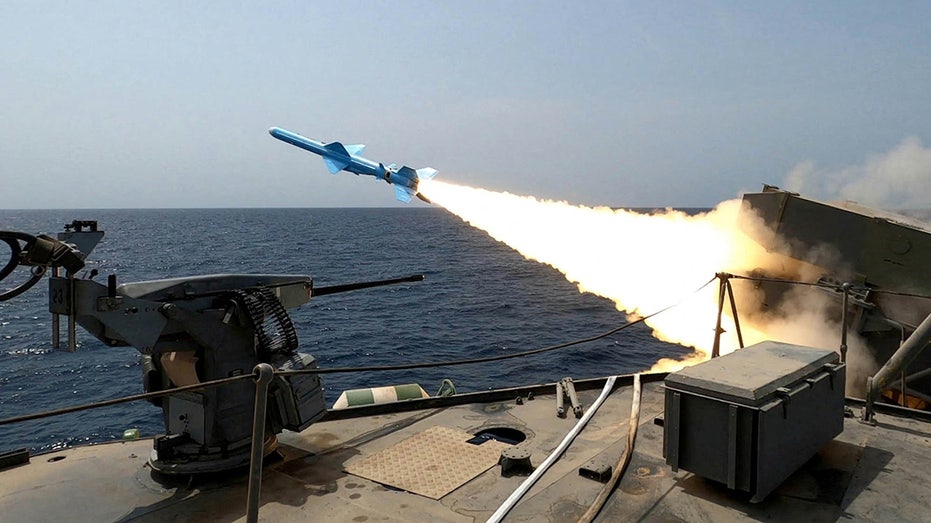
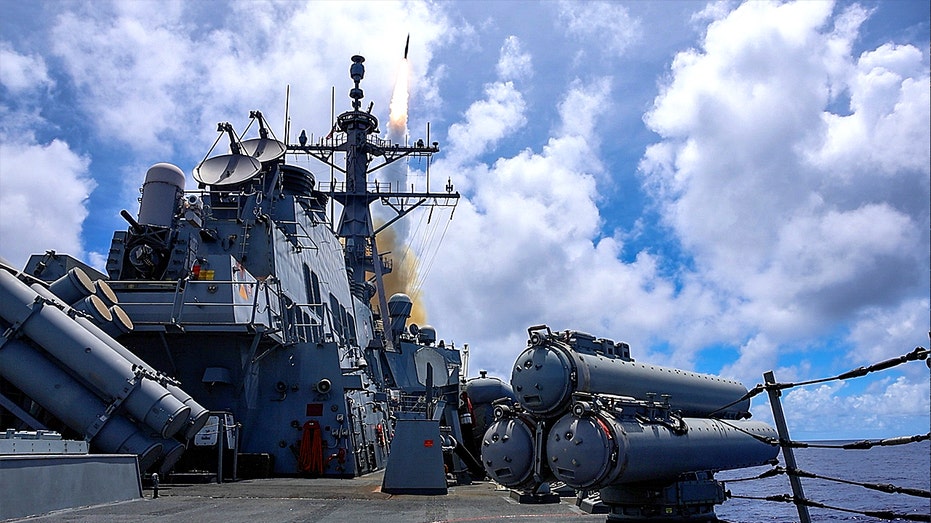
The warning that U.S. long‑range munitions could be depleted within a week is not pulled from thin air. Pentagon war games and independent analyses have repeatedly found that in a high‑intensity Indo‑Pacific war, stocks of weapons like long‑range anti‑ship missiles (LRASM), Joint Air‑to‑Surface Standoff Missiles (JASSM), and Standard Missile air defense interceptors would be expended extremely quickly.
Several dynamics drive this:
- High consumption rates: In every modern conflict, expectations about munitions use have been too conservative. Ukraine burns through artillery shells at a rate NATO planners once reserved for a full alliance war; Israel’s intercept of Iranian missiles and drones in April 2024 reportedly consumed months’ worth of interceptors in one night.
- Slow production lines: Many U.S. missile programs produce only dozens or low hundreds per year. Surge capacity is minimal. Replenishing stockpiles could take years, not months.
- Cost asymmetry: A single U.S. ship‑launched interceptor can cost $2–4 million. The missile or drone it intercepts may be a fraction of that price. Over time, this exchange rate favors the side willing to saturate defenses with cheap volume.
If China can force the U.S. into a contest of volume — multiple waves of missile and drone salvos — Washington’s reliance on a relatively small inventory of high‑end munitions becomes a strategic liability. The United States does not simply risk losing ships or aircraft; it risks losing the ability to contest the battlespace at all after the opening rounds.
The undersea wild card: America’s one big remaining edge
The analysis correctly spotlights a key asymmetry: China’s weakness in anti‑submarine warfare (ASW). Despite its shipbuilding surge, the People’s Liberation Army Navy (PLAN) still struggles to detect and track quiet nuclear and diesel‑electric submarines, particularly in contested waters like the Philippine Sea or deep Pacific.
That gap matters because it offers the U.S. a way to impose heavy costs without burning through scarce missile inventories:
- Submarines as missile trucks: U.S. Virginia‑class attack submarines and converted Ohio‑class SSGNs can carry large loads of cruise missiles (Tomahawk and future hypersonic weapons). They can launch from closer ranges, increasing the number of available firing platforms and complicating Chinese defenses.
- Shipping strangulation: In any attempted Chinese amphibious assault or blockade of Taiwan, troop transports, logistics ships, and escort vessels would be prime targets. Submarines — crewed and unmanned — could inflict serious attrition without requiring significant air superiority.
- Persistent presence: Undersea platforms can loiter near choke points like the Bashi Channel or south of Taiwan, ready to strike when Chinese forces are most vulnerable.
However, leaning too heavily on undersea dominance has its risks. China is investing heavily in seabed sensors, advanced sonar, and AI‑enabled ASW networks. The U.S. has an edge now, but technological convergence is likely. Betting the defense of Taiwan on a single domain would repeat the very mistake this missile shortfall exposes: overreliance on one narrow advantage.
The industrial base problem: more than just “spend more on defense”
The missile issue is really an industrial strategy problem in disguise. The U.S. defense industrial base is optimized for peacetime efficiency and predictable, low‑volume production, not for rapid surge in a major war.
Several structural issues stand out:
- Consolidation since the 1990s: After the Cold War, the U.S. defense sector shrank from dozens of major contractors to a handful of primes. This reduced competition, limited redundancy, and left single points of failure in critical supply chains.
- Aging shipyards and facilities: U.S. public and private shipyards are overloaded maintaining current fleets, let alone expanding them. Meanwhile, China has built the world’s largest commercial and naval shipbuilding sector, reportedly over 200 times larger in capacity.
- Procurement bureaucracy: Multi‑year acquisition cycles, rigid requirements, and complex contracting procedures favor large incumbents and slow adaptation. By the time a weapon is fielded at scale, the threat environment may have already shifted.
- Workforce erosion: Skilled welders, machinists, and systems engineers — the human capital behind industrial surge — are in short supply. The U.S. has allowed key defense manufacturing skills to wither or move offshore.
China, by contrast, has fused state planning, industrial policy, and military modernization in a way that resembles a 21st‑century version of mobilized total war economies. Its shipyards, missile plants, and drone factories are integrated into national plans and supported by a vast ecosystem of dual‑use commercial tech firms.
The uncomfortable truth is that the U.S. cannot fix its missile deficit simply by signing a few more contracts. It requires reimagining defense production as a strategic national capability on par with energy security or semiconductor manufacturing.
AI and autonomy: the only way to keep up with the speed of fire
Missile shortages are also about time and cognition. Modern battlefields, particularly in the air and maritime domains, generate volumes of data and threats no human staff can process in real time. This is where artificial intelligence and autonomy are not optional but foundational.
Three areas are converging:
- Sensor fusion and targeting: Satellites, drones, submarines, and surface ships will all be feeding data into targeting chains. AI will be needed to correlate, de‑conflict, and prioritize targets in seconds, not minutes.
- Air and missile defense: Defending against mass salvos of missiles and drones requires automated tracking and engagement prioritization. Human “man‑in‑the‑loop” models will be overwhelmed without AI assistance.
- Swarming and attritable systems: To counter China’s mass, the U.S. will need its own low‑cost, expendable drones and interceptors, potentially coordinated by AI swarm algorithms rather than traditional command hierarchies.
The irony is that the U.S. still leads in many core AI technologies — chips, software frameworks, and research talent — but its national security ecosystem struggles to integrate those advantages. Silicon Valley remains wary of direct military partnerships, while the Pentagon’s contracting system often locks out fast‑moving commercial firms.
Unless Washington figures out how to bring companies like Nvidia, Google, Microsoft, and a long tail of startups into the defense arena at scale, the U.S. risks losing an advantage that could offset its industrial lag.
What mainstream coverage is missing
Most reporting frames this as a budget and readiness story: the U.S. doesn’t have enough missiles; China has more ships; therefore, spend more and move faster. That’s incomplete.
Three underappreciated angles deserve more attention:
- Alliance industrial integration: The U.S. does not need to match China’s production volume alone. Japanese and South Korean shipyards, Australian facilities, and European munitions firms could be integrated into a distributed, resilient industrial network. That requires major policy changes, shared standards, and political will.
- Economic risk calculus: A U.S.–China war over Taiwan could shock the global economy far more than the 2008 financial crisis or the COVID‑19 pandemic. That reality cuts both ways: it may deter conflict — but it also incentivizes each side to prepare to win quickly, driving precisely the kind of high‑intensity, front‑loaded warfare that burns through munitions at unsustainable rates.
- Democratic resilience: Sustaining a long war is not only about factories; it’s about political patience. U.S. domestic polarization, budget brinkmanship, and war‑weariness could be as limiting as missile inventories. China’s authoritarian system has different vulnerabilities — corruption, information control, demographic decline — but U.S. planners cannot assume unlimited domestic tolerance for casualties and economic disruption.
Looking ahead: what to watch in the next five years
Several signposts will reveal whether the United States is actually addressing the problems this missile warning highlights:
- Stockpile transparency and surge contracts: Do Congressional hearings and Pentagon reports start disclosing target inventories and production goals for key munitions? Are there multi‑year, multi‑vendor contracts that meaningfully expand capacity?
- Shipyard modernization: Are U.S. yards being recapitalized, and are allied shipyards in Japan and South Korea being brought into U.S. fleet support and expansion in a formalized way?
- AI integration beyond pilot programs: Do AI‑enabled command systems, air defense networks, and autonomous platforms move from experiments to operational units in the Indo‑Pacific?
- Regulatory and export reforms: Does Washington update export controls and technology‑sharing rules to allow allied co‑production of advanced munitions and sensors without years of red tape?
The risk is not just that the U.S. is unprepared for war, but that half‑measures create a false sense of security. Declaring a “wartime footing” while still operating an industrial base designed for peacetime margins courts strategic miscalculation.
The bottom line
A week’s worth of missiles in a potential war with China is not a shocking statistic; it is a verdict on three decades of strategic drift. The U.S. bet that technological edge, limited interventions, and a globalized economy would make large‑scale industrial warfare obsolete. China bet the opposite — and built accordingly.
Rebalancing that equation will require more than bigger budgets. It demands an industrial strategy that treats munitions factories, shipyards, AI labs, and allied production lines as core pillars of deterrence. Without that shift, warnings about running out of missiles are less a hypothetical than an early obituary for American military primacy in the Western Pacific.
Topics
Editor's Comments
What’s most striking is how casually Washington now uses the phrase “wartime footing” without having done the political and economic work that phrase implies. In World War II, moving to a wartime footing meant rationing, price controls, massive tax changes, and a wholesale reorientation of the civilian economy. Today, it’s invoked to describe marginal tweaks to procurement timelines and incremental budget increases. That gap between rhetoric and reality may be the most dangerous variable in this entire equation. If U.S. leaders overestimate how quickly industry can respond, they may miscalculate both their ability to deter China and to sustain a fight if deterrence fails. Conversely, acknowledging the true scale of change required would mean confronting voters with hard trade-offs about spending, globalization, and industrial policy — conversations neither party has been eager to have. Until that happens, talk of ‘wartime footing’ risks becoming another Washington slogan, not a strategy.
Like this article? Share it with your friends!
If you find this article interesting, feel free to share it with your friends!
Thank you for your support! Sharing is the greatest encouragement for us.