Why Colin Kaepernick Still Haunts the NFL Every Time a Team Needs a Quarterback

Sarah Johnson
December 9, 2025
Brief
Colin Kaepernick resurfaces in Colts QB chatter, exposing the NFL’s unresolved clash between protest, brand risk, and race. This analysis explains what the debate reveals about power, labor, and future activism.
Colin Kaepernick, the Colts, and the NFL’s Long Shadow: Why a Backup QB Debate Still Sets Off a Culture War
On its face, the story is simple: the Indianapolis Colts run out of healthy quarterbacks, rumors surface that 44‑year‑old Philip Rivers might get a workout, and some fans jump online to ask, “What about Colin Kaepernick?”
But the fact that a depth‑chart emergency in Indianapolis can instantly resurrect an 8‑plus‑year debate about a quarterback who hasn’t taken an NFL snap since 2016 tells us something important. This is no longer just a football question; it’s a referendum on how the league handles dissent, race, player power, and brand risk in 2025.
From Backup QB to Symbolic Battleground
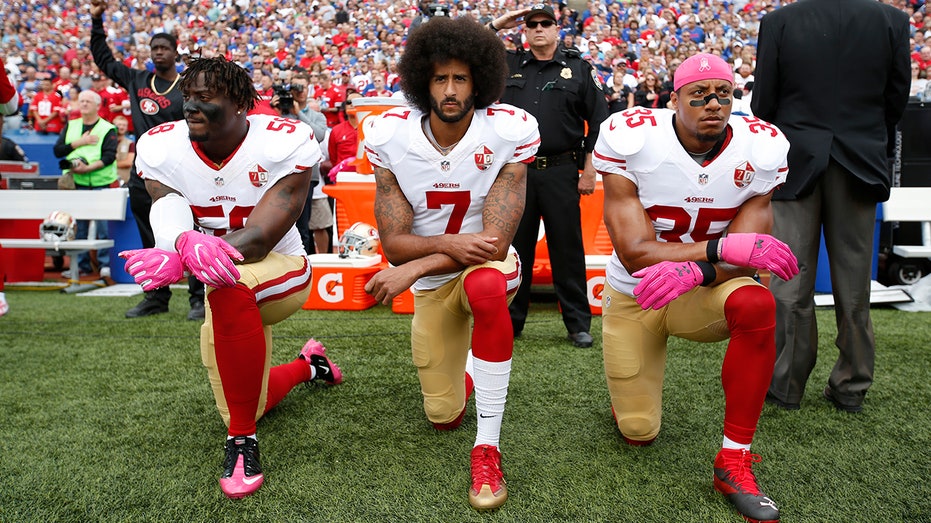
To understand why Kaepernick’s name resurfaces every time a team loses its starter, you have to rewind to 2016. Then a backup in San Francisco, he began kneeling during the national anthem to protest police brutality and systemic racism. His protest—quiet, lawful, and coordinated with a military veteran—nonetheless detonated a political firestorm.
By 2017, Kaepernick was a free agent. Despite taking the 49ers to a Super Bowl, despite having starting‑caliber numbers, he received no offers. He filed a collusion grievance against the NFL, eventually reaching a confidential settlement in 2019. That settlement didn’t confirm collusion publicly, but it reinforced a widespread belief: Kaepernick wasn’t just unsigned; he was being informally blackballed.
Since then, the NFL has tried to reposition itself. It put “End Racism” in end zones, aired social justice PSAs, and cut a high‑profile deal with Jay‑Z’s Roc Nation to reshape its image. Yet the league still hasn’t found a roster spot for the player whose protest forced it into this uncomfortable reckoning. That contradiction is precisely what fuels the recurring calls to “give him a shot” whenever a QB‑desperate team emerges.
Why the Colts Flashpoint Matters Now
The current Colts situation adds another wrinkle. Facing a quarterback injury crisis, reports suggest the team might look at Philip Rivers, who last played in 2020 and is now 44 and a grandfather. Fans on social media immediately asked why a retired quarterback who’s been out of the league for four seasons might get a look before Kaepernick, who, while 38 and long inactive, has consistently claimed he’s been training for a comeback.
On purely football grounds, teams usually prioritize familiarity with their system, recent game film, and perceived “fit” in the locker room. Rivers has history with the Colts and ran Frank Reich’s system; Kaepernick does not. But that explanation doesn’t fully account for why Kaepernick has never been offered even a camp arm role, a practice squad contract, or a legitimate preseason tryout in nearly a decade.
So the Colts aren’t just making a roster decision. They’re stepping into (or sidestepping) a dispute over what kind of dissent the NFL will tolerate, and at what cost.
The Unspoken Calculation: Risk, Revenue, and Optics
Teams won’t say this on the record, but several underlying calculations are at work:
- Brand risk vs. on‑field upside: Even as public opinion has shifted, Kaepernick remains polarizing among segments of the fan base, sponsors, and some media. For an owner, signing him invites intense national scrutiny—often out of proportion to the football role he’d likely play.
- Distraction narrative: Teams repeatedly cite avoiding “distractions” to justify controversial choices. A third‑string quarterback who triggers continuous national debate, protest, and counter‑protest may be viewed as a net negative, regardless of his physical tools.
- Labor precedent: Owners are acutely aware of precedent. Bringing back a player who sued the league for collusion and publicly likened the draft and Combine to a slave auction could be seen as validating his critique, or at least breaking the implicit united front that kept him out.
- Time away from the game: Eight-plus years without game snaps is unprecedented for any NFL comeback, especially at quarterback. Decision‑makers can lean on this as a football justification, even if that underplays how much their earlier decisions contributed to that layoff.
In other words, the Colts’ calculus is not just: “Can he help us win Sunday?” It’s also: “Are we prepared to become the epicenter of a cultural battle we didn’t ask for?” Thus far, no team has answered yes.
What the Kaepernick Debate Reveals About the NFL’s ‘Social Justice Era’
In the wake of George Floyd’s murder in 2020, the NFL publicly shifted tone. Commissioner Roger Goodell stated the league should have listened earlier to players who were protesting. Teams posted black squares, pledged donations, and embraced slogans condemning racism.
Yet Kaepernick remained unsigned, even as lesser‑known quarterbacks with poorer career numbers cycled through rosters. That disconnect undercuts the league’s messaging in several ways:
- Performative vs. structural change: End zone paint and social media campaigns are low‑risk gestures. Reversing an informal blackball of the league’s most visible racial‑justice protester would be structural—and politically costly.
- Gatekeeping dissent: The NFL has largely tried to channel activism into controlled campaigns it can co‑brand and monetize. Kaepernick’s activism, especially his sharper critiques of policing and the league itself, is not easily co‑opted.
- Message to current players: The apparent lesson is clear: push too far beyond the league’s comfort zone, especially in ways that threaten its image, and your career can end quickly—even if your talent should keep you employed.
That’s why, years later, the question “Why not Kaepernick?” continues to sting. It spotlights a gap between rhetoric and reality that the league’s PR efforts haven’t closed.
Is a Football Comeback Still Realistic?
From a strictly football perspective, the odds of a meaningful return are slim. Kaepernick is 38. The longest successful quarterback “returns” (think Michael Vick after prison) involved far shorter time away and regular competitive play elsewhere. Kaepernick has trained privately but hasn’t played in the CFL, XFL, USFL, or other leagues.
Still, several factors complicate the purely football argument:
- Roster churn reality: Over the past few seasons, teams have started and signed quarterbacks with minimal resumes: undrafted free agents, journeymen with poor statistics, and mid‑season street signings.
- Expanded practice squads: The league created more flexible roster spots, ostensibly to broaden opportunities. Yet Kaepernick never occupied even the lowest‑risk slot.
- Controlled tryouts: Teams regularly bring in players for workouts that never lead to contracts. A sincere attempt at evaluation doesn’t require a public signing—and still hasn’t happened in a transparent way.
What this suggests is that the football rationale is not the only rationale. It’s a convenient shield for a deeper discomfort with what Kaepernick represents.
Why Fans Keep Pushing the Question
The persistence of fan calls for Kaepernick, particularly when teams reach for retired or marginal options, is about more than nostalgia. It reflects a demand for consistency—if the league’s talent market is “purely meritocratic,” how can it ignore a quarterback who once led a team to the Super Bowl while signing clearly inferior players?
There’s also an element of generational shift. Younger fans are generally more comfortable with athlete activism. For them, the original kneeling controversy is less shocking than the league’s prolonged unwillingness to offer even a symbolic opportunity. In that context, calling for Kaepernick isn’t just about his arm strength; it’s a way of calling out what they see as hypocrisy.
Expert Perspectives: Power, Protest, and the Limits of ‘Stick to Sports’
Sports sociologists and labor scholars see the Kaepernick saga as a case study in how leagues discipline political dissent.
Dr. Harry Edwards, a pioneering sports sociologist who advised Kaepernick early in his protest, has long argued that high‑profile athletes who challenge structural power rarely return to business as usual. He’s pointed to Muhammad Ali, Tommie Smith, and John Carlos as examples of the high personal cost of political stand‑taking in sports.
Dr. Amira Rose Davis, a sports historian, has noted that Kaepernick’s “exile” fits a familiar pattern: institutions often try to write dissident athletes out of the active story while later embracing a sanitized version of their legacy. “The league loves Jackie Robinson in hindsight,” she’s observed, “but it punishes players whose activism isn’t yet safe to celebrate.”
From a labor perspective, Professor Michael LeRoy, who studies sports law and collective bargaining, has argued that Kaepernick’s collusion case—even without a public verdict—sent a message. “The settlement amount may remain confidential, but the deterrent effect is not,” he’s said in interviews about the case. “It signals to other players and agents where the boundaries of acceptable activism might lie.”
The Overlooked Angle: What This Means for Future Athlete Activism
The Kaepernick‑Colts chatter isn’t just about one player; it’s a bellwether for how future athletes will calculate the risks of visible activism.
- Chilling effect: When a player with Kaepernick’s talent and resume can vanish from the league for years after a peaceful protest, it sends a clear warning to younger players contemplating similar stands.
- Strategic activism: More recent activist efforts—like team‑wide statements, coordinated voting drives, or league‑approved campaigns—reflect a shift toward collective action that’s harder to isolate and punish.
- Alternative platforms: Kaepernick has built Know Your Rights Camp and a publishing imprint, and authored books. That model—using fame to build independent platforms outside league control—may become more attractive to athlete‑activists who expect institutional pushback.
In that sense, even if Kaepernick never takes another snap, his impact on how athletes think about their voice, leverage, and exit options is likely to endure.
What to Watch Going Forward
Several developments will show whether the league is truly moving beyond the Kaepernick era or simply waiting for it to fade:
- Who gets emergency QB jobs: Each time a team faces a quarterback crisis, its choices will be read as implicit commentary on how far the league is willing to go to avoid Kaepernick.
- Owner rhetoric: Very few owners have spoken candidly about Kaepernick. If any ever do, especially with admissions of past missteps, that could mark a turning point.
- Future protest responses: How teams respond to the next wave of on‑field protest—whether about policing, voting rights, or international issues—will reveal whether Kaepernick’s treatment was an outlier or a template.
- Post‑career reckoning: Historically, sports institutions have often rehabilitated the reputations of athletes they once punished, once the immediate politics cool. A similar shift around Kaepernick would be a sign that the league is finally ready to own its role in this saga.
The Bottom Line
The Colts’ quarterback crisis and the resulting fan calls for Colin Kaepernick highlight a tension the NFL still hasn’t resolved. The league wants to market itself as socially aware and racially inclusive, yet the player who most visibly challenged its comfort zone remains on the outside looking in.
At this point, the question isn’t only whether Kaepernick can still play at an NFL level. It’s whether any franchise is willing to absorb the symbolic weight that comes with answering that question honestly. Until one does, every injury‑induced quarterback scramble will continue to revive the same debate—and remind us that the NFL’s struggle with protest, power, and race is far from over.
Topics
Editor's Comments
What’s most striking about the latest Kaepernick–Colts conversation is how normalized the underlying contradiction has become. We’ve reached a point where fans casually ask why a retired 44‑year‑old might get a call before a 38‑year‑old who once led a team to the Super Bowl, and the league’s silence feels routine rather than extraordinary. That normalization is itself a form of institutional success: the NFL has managed, over nearly a decade, to make the effective exclusion of a high‑profile dissident seem like just another personnel quirk. The danger is that we start treating this as a settled chapter rather than an ongoing labor and civil‑rights issue. If we focus only on whether Kaepernick personally ‘deserves’ a roster spot in 2025, we miss the larger question: what does it mean for a multibillion‑dollar industry to quietly enforce ideological boundaries while marketing itself as a champion of inclusion? Until that question is confronted directly—by owners, players, and fans—the league’s social‑justice messaging will remain more branding exercise than genuine reckoning.
Like this article? Share it with your friends!
If you find this article interesting, feel free to share it with your friends!
Thank you for your support! Sharing is the greatest encouragement for us.