Beyond ‘Piracy’: What the U.S. Seizure of a Venezuelan Oil Tanker Really Signals

Sarah Johnson
December 11, 2025
Brief
The U.S. seizure of a sanctioned Venezuelan oil tanker is more than a legal action—it’s a test of sanctions power, maritime law, and global perceptions of American “piracy” in the 21st century.
Why a Seized Oil Tanker Off Venezuela Is About Much More Than ‘Piracy’
When Venezuelan officials accuse the United States of “international piracy” after U.S. forces seize a massive, sanctioned oil tanker off their coast, the story is not really about one ship. It is about who gets to police the global economy, how far a superpower’s reach extends beyond its borders, and what happens when sanctions enforcement looks a lot like gunboat diplomacy in the age of financial warfare.
A Single Tanker as a Test Case for 21st‑Century Power
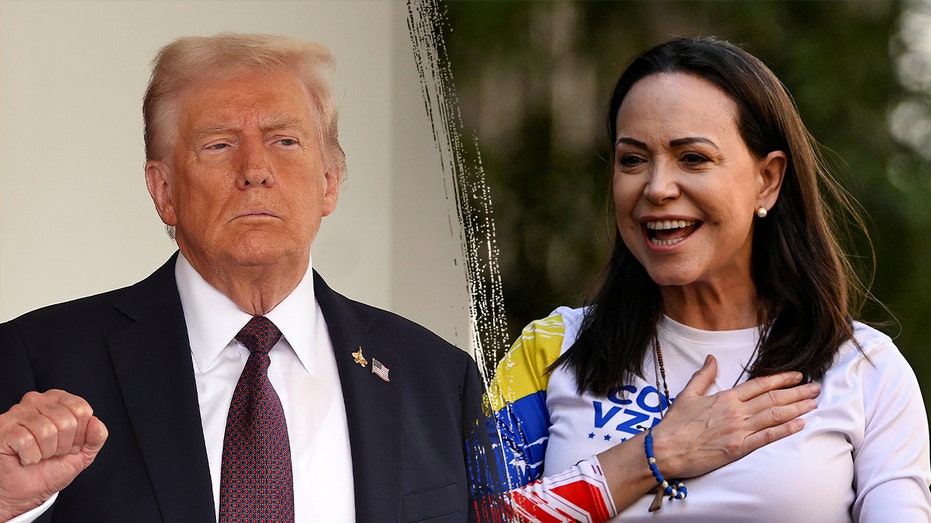
The United States says the tanker was part of an illicit network moving sanctioned Venezuelan and Iranian oil, allegedly benefiting foreign terrorist organizations. Venezuela calls the operation “blatant theft” and a violation of its sovereignty. President Donald Trump, in announcing the seizure, added a combustible detail: when asked about the oil on board, he replied, “Well, we keep it, I guess.”
That offhand remark turns a sanctions-enforcement operation into something else in the eyes of much of the world: the spectacle of the world’s dominant power using its navy and law enforcement to seize a commercial asset, and then openly musing about keeping the spoils. The optics matter for international law, for the legitimacy of sanctions regimes, and for the already battered credibility of U.S. foreign policy in Latin America and beyond.
From Gunboat Diplomacy to Financial Warfare
To understand why Caracas so quickly reached for the word “piracy,” we have to revisit the history of U.S. power projection in the region and the evolution of sanctions as a strategic weapon.
Latin America’s Long Memory
- Early 20th century: The U.S. routinely used its navy and Marines to secure commercial and strategic interests in the Caribbean and Central America—the classic era of “gunboat diplomacy.” Interventions in Nicaragua, Haiti, and the Dominican Republic left a legacy of suspicion that Washington’s language of law and order often masks raw economic and strategic self‑interest.
- Cold War era: Coups in Guatemala (1954) and Chile (1973), the Contra war in Nicaragua, and the 1989 invasion of Panama cemented a narrative in much of Latin America: when U.S. interests are at stake—especially involving resources or political alignment—Washington is willing to bend or ignore norms of sovereignty.
- Venezuela specifically: Since Hugo Chávez’s rise in 1999, Venezuelan leaders have framed U.S. policy as a continuation of imperial behavior, using these historical episodes to cast themselves as targets of foreign meddling. The Maduro government has leaned heavily on that narrative as the economy collapsed under mismanagement, corruption, and sanctions.
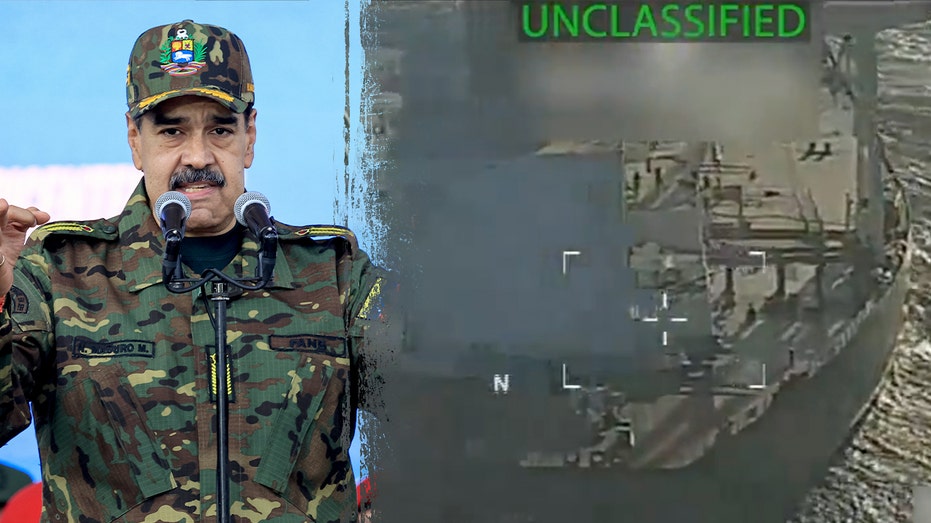
In that context, the image of U.S. tactical teams rappelling from a helicopter onto a sanctioned tanker near Venezuelan waters is almost made for Caracas’ scriptwriters. Calling it “piracy” instantly ties a sanctions operation to a much older story about resource sovereignty and foreign plunder.
The Rise of Sanctions as Strategic Weapons
Since the 1990s, the U.S. has increasingly shifted from large-scale military interventions to what Treasury insiders call “financial warfare.” The Office of Foreign Assets Control (OFAC) maintains more than 50 sanctions programs, and U.S. dominance of the global dollar system enables Washington to reach deep into foreign economies without firing a shot.
Venezuela and Iran sit near the center of this strategy:
- Iran: Comprehensive energy and financial sanctions aim to constrain its nuclear and regional activities. Oil shipments are a prime target; the U.S. has previously seized Iranian fuel cargoes headed to Venezuela, citing terrorism and sanctions violations.
- Venezuela: Sectoral and individual sanctions target state oil company PDVSA, senior officials, and key allies, intended to squeeze the Maduro government and limit its ability to export crude.
The tanker seizure is part of that enforcement architecture—but it also represents an escalation: a visible, kinetic operation in a sensitive maritime zone, broadcast with video and celebrated at a White House event. Sanctions, once mostly invisible financial tools, now come with footage resembling a special forces raid.
What This Really Means: Law, Optics, and the Weaponization of Oil
Legal Justifications vs. Perception of Force
Legally, the U.S. will point to several pillars to justify the seizure:
- Domestic authority: U.S. sanctions laws and terrorism-related statutes allow the government to seize assets linked to sanctioned entities or designated terrorist organizations, even outside U.S. territory, if there is a sufficient jurisdictional hook (for example, dollar transactions cleared through U.S. banks, use of U.S. persons, or ports in friendly states).
- Flag state and cooperation: The tanker’s flag, ownership structure, and location matter. If the vessel flies the flag of a state cooperating with the U.S. or operates through companies with ties to U.S. jurisdiction, Washington gains legal leverage. Many tankers used in sanctions evasion rely on opaque flags of convenience and shell companies—ripe targets for U.S. legal action.
- Counter‑terrorism framing: By tying the tanker’s operations to “foreign terrorist organizations,” the U.S. invokes its most expansive seizure authorities and strengthens its argument that this is law enforcement, not simple economic coercion.
But international perception often does not turn on legal nuance. To many states—especially those wary of U.S. power—the optics are straightforward: an armed seizure of a commercial vessel moving a sanctioned commodity, followed by presidential comments that sound less like a court‑ordered forfeiture and more like trophy‑taking.
That gap between legal basis and political perception is where Venezuela’s “piracy” rhetoric gains traction, particularly among countries already frustrated by secondary sanctions and U.S. extra-territorial reach.
The “We Keep the Oil” Problem
Trump’s “Well, we keep it, I guess” line may have been off-the-cuff, but it carries strategic consequences:
- It blurs motives: Sanctions enforcement is supposed to be about legal compliance and security, not economic gain. Suggesting the U.S. will keep confiscated oil allows adversaries to argue that Washington is using law enforcement as a pretext for resource seizure.
- It undermines legal process: Typically, seized cargoes are subject to forfeiture proceedings; proceeds may be held, redirected to victims, or used for specific purposes. Casual talk of simply “keeping” the oil obscures these processes and fuels accusations that law follows politics, not the other way around.
- It feeds existing narratives: For Venezuela, Iran, Russia, and others, this is rhetorical gold: visual proof, in their telling, that the U.S. is less a rules-based actor than a 21st-century corsair.
Oil as a Political and Economic Weapon
Venezuela’s dependence on oil exports—historically accounting for over 90% of its export earnings—makes tanker seizures a direct hit on its lifeline. Iran, similarly squeezed, has used clandestine tanker networks to move oil to China, Syria, and Venezuela, often with ship-to-ship transfers, transponder manipulation, and shell companies.
By going after the physical vessels, not just the financial transactions, the U.S. is signaling a willingness to escalate enforcement into the physical domain. The seizure also dovetails with broader U.S. military posture in the Caribbean, where Washington has recently bolstered naval presence under the stated aim of combating drug trafficking and transnational crime. The same assets used to intercept drug shipments can be repurposed to enforce energy sanctions.
Overlooked Angles: Global Shipping, Insurance, and Middle Powers
Most coverage frames this as a bilateral spat: Washington vs. Caracas. What’s largely missing is how this plays in the global shipping, insurance, and trading ecosystems—and in the corridors of middle powers trying to navigate between U.S. pressure and energy needs.
Shipping and Insurance Risk Calculus
Every time a tanker is seized on the high seas or near a disputed maritime area, shipowners and insurers update their risk models. For the global shipping industry, operations near sanctioned states are already fraught:
- War risk premiums: Rates rise when navies start boarding commercial vessels, whether in the Persian Gulf or the Caribbean. Insurers will factor this operation into coverage near Venezuelan waters, raising costs for any shipping in the region—not only sanctioned cargoes.
- Compliance pressure: The vivid imagery of a helicopter assault amplifies the deterrent effect. Western insurers, banks, and trading houses will become even more cautious about any deal remotely connected to Venezuelan or Iranian oil, fearing enforcement actions.
- Rise of non‑Western operators: As Western firms pull back, less regulated actors—from smaller Asian and Middle Eastern trading houses to state-linked companies in Russia or China—may fill the gap, deepening geopolitical fragmentation in energy markets.
Middle Powers Caught in the Middle
Countries such as India, Turkey, and some EU members have struggled to balance U.S. sanctions demands with their own energy and diplomatic interests. A high-profile seizure like this raises uncomfortable questions:
- If a tanker carrying sanctioned oil to a non‑U.S. customer is boarded, what liabilities does the receiving state face?
- Will U.S. maritime enforcement extend further, potentially intercepting cargoes destined for larger powers like China?
- How should states respond when their flag or their companies are implicated in such seizures?
These questions will push some governments to invest in alternative payment systems, diversify flag registries, and quietly coordinate with other states wary of U.S. extra‑territorial sanctions.
Expert Perspectives: Legitimacy vs. Deterrence
Legal and policy experts are sharply divided on how far the U.S. should go in enforcing its sanctions at sea.
Maritime law scholars point out that legitimacy depends not just on having a legal rationale, but on how states perceive it. If too many actors see U.S. actions as selective or politically motivated, they may respond by building parallel systems that circumvent Western-dominated legal and financial architecture. Sanctions lose some of their coercive power when workarounds become institutionalized.
National security analysts, by contrast, emphasize deterrence. They argue that without tangible, high-profile enforcement actions, sanctions networks adapt quickly, using dark fleets, falsified documents, and complex logistical chains. A large tanker seizure, complete with publicized footage, sends a powerful message to shipowners and middlemen: the risks are real, and the U.S. will act beyond mere paper sanctions.
Humanitarian and development experts bring a third lens, warning that intensifying sanctions on already collapsing economies like Venezuela’s can deepen human suffering without necessarily shifting elite behavior. For ordinary Venezuelans, the headline is less about maritime law than about further constraints on the country’s main source of foreign currency—compounding shortages, inflation, and migration pressures.
Looking Ahead: Escalation Paths and Strategic Blowback
Several key dynamics will determine whether this tanker seizure becomes a precedent or a one‑off spectacle.
1. Will There Be Reciprocity?
Venezuela lacks the naval capability to respond in kind. But its allies do not. Iran, for example, has a track record of reciprocal tanker seizures when it feels aggrieved by Western actions. If Tehran concludes that the U.S. is too aggressively targeting its oil networks—especially those linked to Venezuela—it may seek to raise the costs in other theaters, such as the Persian Gulf.
2. How Will Other Powers React?
China, Russia, and some non‑aligned states will not be emotionally invested in this specific tanker, but they will be keenly interested in the precedent: the U.S. using military assets to enforce its unilateral sanctions far from U.S. shores. Expect more rhetorical pushback and a renewed push for mechanisms that reduce dollar dependence, from alternative payment systems to local‑currency energy deals.
3. Domestic U.S. Politics
The seized tanker will likely be used domestically as evidence of a tough stance on terrorism, rogue regimes, and illicit trade. Democrats and Republicans may differ on tactics, but both parties have embraced sanctions as a low‑cost foreign policy tool. The temptation to turn operations like this into political theater—complete with dramatic footage—will remain strong.
The risk is that domestic political incentives for “visible wins” lead to escalatory patterns abroad, where each high-profile seizure chips away at the perceived neutrality of maritime law and the legitimacy of sanctions.
4. Venezuelan Internal Dynamics
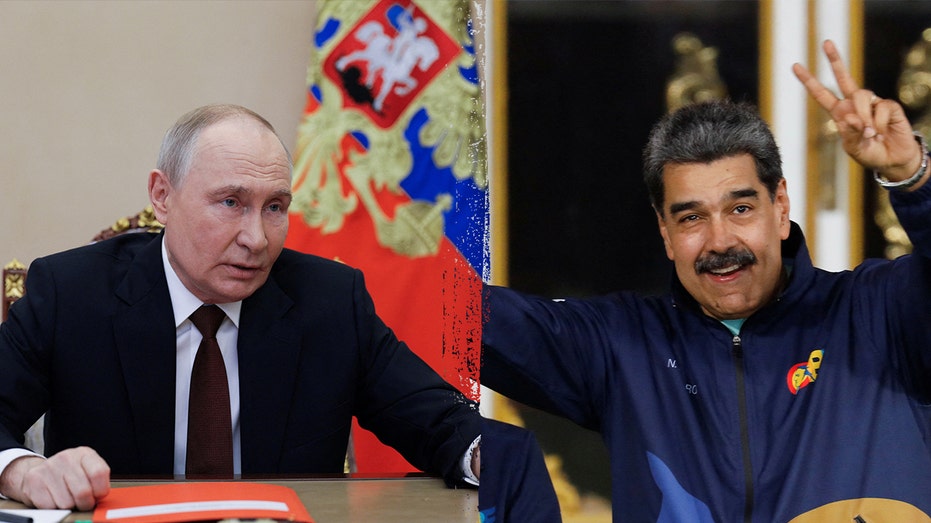
For Nicolás Maduro, the incident is politically useful. It reinforces his long‑standing narrative of external aggression, diverts attention from domestic governance failures, and provides a rallying point for loyalists. At the same time, every successful U.S. interdiction tightens the regime’s financial vise, forcing it to rely more heavily on opaque deals with Russia, Iran, and non‑transparent intermediaries.
That combination—greater external dependence and heightened internal siege mentality—tends to entrench authoritarian behavior rather than moderate it.
The Bottom Line
This tanker seizure is more than a dramatic video clip. It is a window into a world where U.S. power is increasingly exercised through economic and legal tools, but backed by hard military assets when needed. Venezuela’s charge of “piracy” is hyperbolic, but it speaks to a deeper unease: as sanctions enforcement becomes more aggressive and more physical, the line between law enforcement and coercive power projection blurs. How the U.S. navigates that line—especially in the Global South, where memories of past interventions run deep—will help determine whether its sanctions strategy remains an effective tool of statecraft or accelerates the emergence of alternative economic orders designed to work around it.
Topics
Editor's Comments
What’s most striking about this episode is not the fact of a sanctions-related seizure—that’s become almost routine—but the way it was packaged politically. The operation sits at the intersection of law enforcement and spectacle: unclassified video of a helicopter insertion, a presidential announcement that emphasizes the size of the tanker, and an offhand comment about “keeping” the oil. That blend plays well domestically as a show of strength, yet it undermines the painstaking legal architecture that U.S. officials rely on to justify extra‑territorial sanctions. If enforcement actions are increasingly dramatized for political gain, Washington risks transforming a powerful but fragile sanctions regime into something that looks, from the outside, like selective economic raiding. The long-term danger is less immediate retaliation than quiet erosion: more states seeking parallel financial rails, more tolerance for shadow fleets, and a more fragmented global order where the dollar’s reach—and by extension U.S. leverage—subtly recedes.
Like this article? Share it with your friends!
If you find this article interesting, feel free to share it with your friends!
Thank you for your support! Sharing is the greatest encouragement for us.