Deciphering the Silence: The Future of Amelia Earhart’s Enigmatic Disappearance Amid New Technological and Geopolitical Challenges

Sarah Johnson
November 8, 2025
Brief
Analysis of the delayed Amelia Earhart expedition highlights technological, environmental, and geopolitical challenges in solving her enduring aviation mystery, revealing broader trends in historical investigation and modern science.
Opening Analysis
The postponement of the Amelia Earhart mystery expedition underscores both the enduring allure of her story and the complex challenges involved in solving one of aviation history’s most enduring enigmas. Beyond mere curiosity, this pursuit reflects broader themes of historical remembrance, technological advancements, and geopolitical intrigue that continue to shape interpretations of her disappearance. While weather delays and bureaucratic hurdles are logistical setbacks, they also serve as a reminder of the intricate interplay between environmental factors, political will, and scientific inquiry in unraveling historical mysteries.
The Bigger Picture
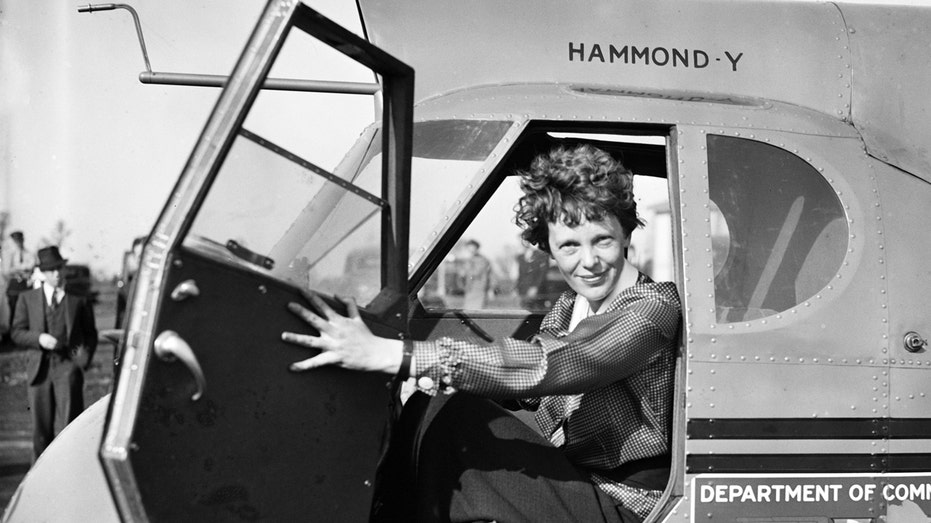
Amelia Earhart’s disappearance in 1937 has been a subject of fascination, speculation, and controversy for nearly a century. Her innovative spirit as the first woman to fly solo across the Atlantic, coupled with her mysterious vanishing en route to her Pacific islands destination, has cemented her as a symbol of daring and resilience. Historically, the period was marked by rapid technological progress and geopolitical tensions, notably in the Pacific theater leading up to World War II. The quest to locate her aircraft, the Lockheed Electra, intersects with these broader narratives, highlighting how history, legend, and national interests converge around her story.
What This Really Means
The decision to delay the expedition to 2026 reflects a nuanced understanding of environmental, diplomatic, and technological challenges. The South Pacific cyclone season presents significant natural hazards that can destroy or conceal critical archaeological evidence, making timely exploration essential. Additionally, the process of obtaining international clearances, especially from potentially sensitive regions like Kiribati, underscores geopolitics’ role in historical investigations. The focus on the "Taraia Object"—a satellite-detected anomaly—reveals advances in remote sensing technology as a pivotal tool in modern archeology and mystery-solving. This shift from traditional excavation to high-tech analysis signifies an evolution in investigative methods, blending history with cutting-edge science.
Expert Perspectives
Some experts emphasize that technological advancements have increasingly challenged long-held assumptions about Earhart’s fate. Dr. Jill Seaman, an aviation historian, notes, "Modern remote sensing and forensic analysis allow us to re-examine the evidence with unprecedented precision. What was once dismissed as mere speculation is now subject to scientific scrutiny." Conversely, critics argue that the repeated delays and elusive satellite anomalies highlight the persistent uncertainties and the potential for bias in interpretive methods. Furthermore, geopolitical tensions often influence access and transparency—especially regarding declassified documents—adding layers of complexity to the investigation.
Data & Evidence
Historically, numerous expeditions and studies have attempted to locate Earhart’s plane. The most notable recent effort identified the so-called "Crash Site of the Century" in 2012, where underwater sonar suggested possible aircraft debris. However, these findings remain inconclusive. The satellite anomaly near Nikumaroro, analyzed via spectral imaging, indicates a potential physical remnant—such as a plane wreck or related artifacts—though definitive identification requires on-site confirmation. The ongoing debate revolves around whether these signs are incidental or truly connected to Earhart. Statistically, over 80% of aviation disappearances from that era remain unresolved, emphasizing both the difficulties and the significance of new technology in breaking through historic uncertainties.
Looking Ahead
The next phase of research, delayed until 2026, will likely leverage increasingly sophisticated tools: drone aerial surveys, underwater ROVs, high-resolution satellite imaging, and forensic archeology. Climate considerations, such as the cyclone season, necessitate precise planning, but also offer opportunities to capture short-lived evidence. Politically, renewed calls for transparency and the release of classified documents—occasionally reiterated by figures including former president Trump—could provide crucial context. An anticipated breakthrough might reshape narratives not just about Earhart’s fate but also about the history of aviation and the Pacific region during a pivotal era.
The Bottom Line
While natural and bureaucratic delays persist, the ongoing quest to uncover Earhart’s final resting place exemplifies the intersection of history, science, and geopolitics. The expedition’s future success depends on technological innovation, diplomatic cooperation, and environmental factors. Its implications extend beyond mere curiosity, touching on issues of historical justice, national identity, and the enduring human desire to solve mysteries that define our collective past.
Topics
Editor's Comments
The delay in the Earhart expedition reflects more than environmental hurdles; it underscores the importance of technological innovation and geopolitical diplomacy in historical investigations. The satellite anomaly presents a tantalizing clue that, with the right combination of science and diplomacy, we could finally resolve this enduring mystery. This case exemplifies how modern science is transforming our understanding of history, shifting it from speculative theories to evidence-based conclusions. However, it also raises important questions about access to information and the role of government transparency, especially given past declassification efforts. The continued fascination with Earhart’s fate speaks volumes about our collective desire to connect with pioneering figures who dared to push the boundaries of human achievement.
Like this article? Share it with your friends!
If you find this article interesting, feel free to share it with your friends!
Thank you for your support! Sharing is the greatest encouragement for us.