
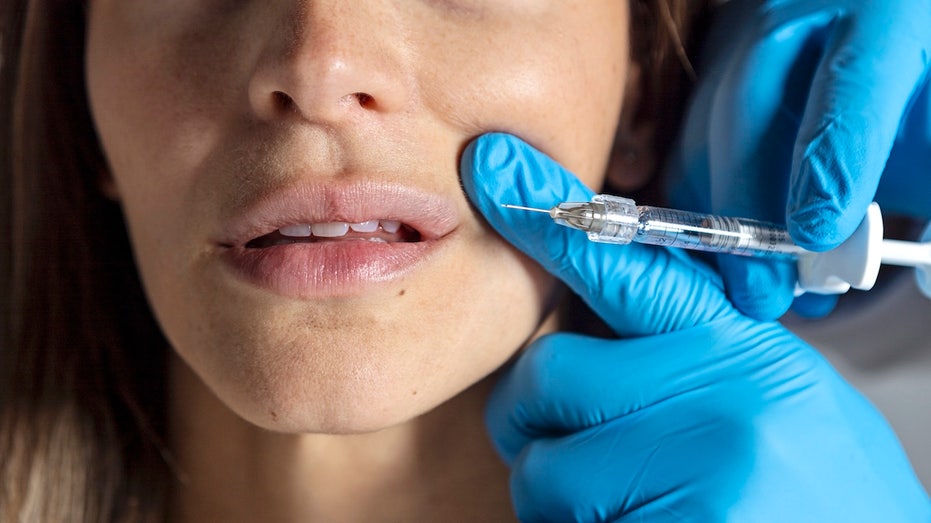
The Hidden Vascular Risks of Cosmetic Fillers — And Why Ultrasound Could Redraw the Safety Rulebook

Sarah Johnson
December 8, 2025
Brief
Cosmetic fillers are booming, but a new ultrasound-based study exposes hidden vascular risks. This analysis unpacks the anatomy, regulation gaps, and how imaging could redefine safety standards in aesthetic medicine.
Cosmetic Fillers, Hidden Vascular Risk, and the Quiet Push to Make Ultrasound the New Standard of Care
Cosmetic fillers have become one of the most normalized medical procedures of the 21st century — the Botox-and-filler appointment is now as routine as a haircut for millions of people. But the study presented at the Radiological Society of North America (RSNA) meeting, highlighting how Doppler ultrasound can detect dangerous vascular occlusions after hyaluronic acid injections, exposes a tension medicine hasn’t fully resolved: We’ve medicalized beauty at scale without building the same safety infrastructure we demand in other invasive procedures.
What this research really signals is not just a new diagnostic tool, but the early stages of a regulatory, ethical, and economic reshaping of the cosmetic injectables industry — one where real-time imaging may become the dividing line between acceptable risk and preventable harm.
The bigger picture: A high-volume industry built on low perceived risk
More than 5 million cosmetic filler procedures are performed annually in the U.S. alone. Globally, hyaluronic acid fillers are among the fastest-growing aesthetic interventions, driven by social media, influencer culture, and the “Zoom face” effect that surged during and after the pandemic.
Historically, fillers have been marketed and perceived as:
- Minimally invasive — quick, outpatient procedures with little downtime.
- Reversible — hyaluronic acid can be dissolved with hyaluronidase, creating a sense of safety.
- Low risk — serious complications discussed as rare, almost theoretical events.
Yet the anatomy tells a different story. The face is dense with critical blood vessels that connect directly to the eyes and brain. For decades, plastic surgeons and dermatologists have known that accidental injection of filler into an artery can cause tissue necrosis, blindness, or even stroke. Published case reports of filler-induced vision loss date back at least to the 1980s, with clustering in high-risk regions such as the nasal dorsum, glabella (area between the eyebrows), and nasolabial folds.
What changed over the last 10–15 years is the sheer volume and democratization of injectors: from board-certified surgeons and dermatologists to medspas, franchised chains, and even non-physicians in some jurisdictions, often operating under loose supervision. The RSNA study doesn’t just reveal a medical technique — it exposes the cost of scaling this system without equally scaling safeguards.
What this study really shows — and why it matters
The research team reviewed 100 patients at six sites who developed vascular complications after hyaluronic acid filler injections between May 2022 and April 2025. Several details stand out:
- Over 40% had blockages in small “perforator” vessels — the tiny connectors between larger arteries and the skin. These are easy to injure and hard to assess without imaging.
- 35% had major facial arteries with no blood flow — including arteries tied into the circulation of the eye and brain.
- The nasal region was the highest-risk area, especially around the lateral nasal artery, which connects to vessels feeding the eye and, indirectly, the brain.
Using Doppler ultrasound, clinicians were able to:
- Precisely locate the filler causing the occlusion.
- Map blood flow (or its absence) in real time.
- Place hyaluronidase directly at the blockage rather than using large, “blind” doses.
This is a subtle but fundamental shift. Historically, treating suspected vascular occlusion after fillers has relied on a mix of clinical judgment and empiricism: look for skin blanching, pain, mottling, or color changes; then flood the area with hyaluronidase and hope to dissolve the material fast enough. Ultrasound transforms that process into targeted, data-driven rescue.
Equally important is what the study indirectly reveals: serious vascular events may be more common than the industry narrative suggests, particularly in poorly trained hands. One quoted expert notes that with experienced, board-certified injectors, vascular occlusion risk should be under 1%, but in untrained hands, complication rates can rise to 10–20% — orders of magnitude higher. In an industry doing millions of procedures a year, even a 1% rate translates to tens of thousands of patients affected.
Beneath the surface: Training, regulation, and an uneven risk landscape
To understand the significance of ultrasound in this setting, you have to look at how fragmented the injector landscape is:
- Training standards vary wildly: A board-certified plastic surgeon may spend years mastering facial anatomy and complication management. A nurse injector in a high-volume medspa may receive only a few days of product-focused training.
- Regulation is patchwork: In the U.S., state-level rules determine who can inject fillers and under what supervision. In many countries, enforcement is weak, and “cosmetic medicine” operates in a gray zone.
- Economic pressures drive speed: Business models that reward volume — more patients per hour, more syringes per client — can squeeze out time for detailed risk assessment or imaging.
In this environment, ultrasound becomes more than a diagnostic gadget. It represents a potential standard-of-care upgrade that could accentuate the gap between high-end, medically grounded practices and low-cost, high-volume providers.
There’s also a transparency problem: many serious complications never enter the formal literature. They are quietly managed in clinics, or not recognized at all, especially when symptoms are delayed or subtle. The RSNA data set is already biased toward severe cases — people who got sick enough to seek specialized help. That suggests we are only seeing the visible tip of a much larger complication iceberg.
Expert perspectives: Ultrasound as both safety tool and liability shield
Radiologists and plastic surgeons increasingly see ultrasound-guided fillers as analogous to how medicine adopted imaging in other areas: needle biopsies, central line placements, and nerve blocks moved from blind techniques to ultrasound-guided standards within a decade once data showed fewer complications and better outcomes.
Several experts in aesthetic medicine have argued that facial ultrasound could follow the same trajectory:
- As a preventive tool — mapping vessels before injecting, especially in high-risk zones like the nose, glabella, and nasolabial folds.
- As an emergency tool — rapidly assessing suspected occlusions and guiding hyaluronidase injections.
- As a medico-legal buffer — allowing practitioners to show that they followed an imaging-based protocol if complications occur.
But integrating ultrasound raises practical questions: Who gets trained? Who pays for the equipment? Will insurers cover imaging in cosmetic procedures that are almost always paid out-of-pocket? And what happens to lower-cost providers who can’t invest in devices or training?
Data, risk, and what’s missing from mainstream coverage
Most mainstream stories emphasize the dramatic outcomes — blindness, necrosis, stroke. But the more subtle, long-term issues tend to be overlooked:
- Cumulative vascular damage: Repeated injections over years may injure small vessels even without a dramatic occlusion. That could contribute to chronic skin changes, delayed healing, or unusual patterns of aging in heavily treated areas.
- Unequal risk exposure: Patients drawn to bargain pricing or heavily marketed medspa chains are more likely to encounter minimally trained injectors. That risk is disproportionately borne by younger women and increasingly by people with fewer financial resources, who are targeted with financing plans and discount packages.
- Global disparities: The study was based in Brazil, a country with one of the world’s most advanced — and most commercialized — plastic surgery cultures. But standards elsewhere may be lower, especially where regulation is weaker and demand is soaring.
Another overlooked angle: psychological and cultural pressure. The surge in filler use is not simply about vanity; it’s structurally encouraged by algorithms, beauty filters, and workplace ageism. When people feel their livelihoods or social acceptance depend on maintaining a certain look, their risk tolerance shifts — often without fully understanding what those risks actually are.
Looking ahead: Will ultrasound become mandatory — or a luxury add-on?
Several scenarios are plausible over the next 5–10 years:
- Professional societies set imaging-based standards
Plastic surgery and dermatology organizations could begin recommending ultrasound mapping in high-risk regions and imaging-guided rescue for suspected occlusions. At first, these may be framed as "best practices," but over time they can become de facto standards, especially in litigation. - The market bifurcates
High-end practices adopt ultrasound and use it as a competitive differentiator — "image-guided safety" becomes part of the marketing pitch. Lower-cost providers may not adopt it, widening the gap in complication rates and outcomes. - Regulators intervene after high-profile cases
A cluster of blindness or stroke cases linked to unregulated injectors could spur lawmakers to tighten who can inject, mandate training, or require ultrasound in certain procedures. Historically, medicine often waits for scandal before codifying safety standards. - Technology becomes cheaper and more integrated
Portable, app-connected ultrasound devices are already on the market. As costs fall and interfaces improve, using handheld ultrasound in injector clinics could become as simple as using a dermatoscope.
One of the study’s most important findings wasn’t clinical, but operational: even among experienced specialists, Doppler exams were performed inconsistently, underscoring the need for standardized protocols. Without clear guidelines, simply owning an ultrasound machine doesn’t guarantee better outcomes.
Implications for patients: What you should demand before saying yes to fillers
For patients, the message is not "never get fillers" but "treat them like the medical procedures they are." That means asking pointed questions:
- Who is injecting me, and what is their core training? Are they a board-certified plastic surgeon, dermatologist, facial plastic surgeon, or another specialist with formal anatomy and complication training?
- What is your plan if something goes wrong? Do you stock hyaluronidase on-site? Do you have protocols for suspected vascular occlusion? Do you have access to ultrasound or to a referral center that does?
- Do you use or offer ultrasound in high-risk areas? If not, why?
- How many vascular complications have you managed? A practitioner who claims never to have seen a complication in thousands of cases may be downplaying risks or failing to recognize subtle events.
As ultrasound-guided injections spread, patients may increasingly view imaging not as an optional extra, but as a sign that a clinic is aligned with evolving medical standards rather than bare-minimum cosmetic practice.
The bottom line
The RSNA study is a warning shot to a booming industry built on the promise of quick, safe enhancement. Hyaluronic acid fillers are not benign; they are biologically active implants delivered into one of the body’s most complex vascular networks. Doppler ultrasound offers a way to see — literally — what has long been done blind.
Whether that technology becomes a universal safeguard or a luxury add-on will depend on regulators, professional societies, insurers, and the willingness of patients to demand more than a pretty result — to demand a truly medical standard of care for procedures that carry medical-level risks.
Topics
Editor's Comments
What stands out in this story is less the novelty of ultrasound—which has been quietly gaining ground in aesthetic circles for years—and more the way it forces us to confront how we’ve framed risk in cosmetic medicine. We’ve accepted a narrative that fillers are low-stakes, reversible enhancements, even as case reports of blindness and stroke accumulate in specialist journals. The RSNA study isn’t large, and it’s not peer-reviewed yet, but it acts as a spotlight: once you can see the exact vessels being blocked, it becomes harder to claim that these outcomes are vanishingly rare or unavoidable. The bigger question is whether the industry will absorb this technology in a way that narrows or widens inequities. If ultrasound becomes a premium safety feature reserved for wealthier patients in high-end clinics, we risk entrenching a two-tier system where the most vulnerable consumers bear the brunt of preventable harm. Regulators and professional bodies will have to decide if imaging-guided standards are optional upgrades or core patient protections. Historically, medicine has often waited for scandal before acting; with fillers, we have a chance to move before the next high-profile tragedy forces our hand.
Like this article? Share it with your friends!
If you find this article interesting, feel free to share it with your friends!
Thank you for your support! Sharing is the greatest encouragement for us.