Beyond the Slogan: What Megan Rapinoe’s Critique of “Never Chase Reality” Reveals About U.S. Soccer

Sarah Johnson
December 17, 2025
Brief
Megan Rapinoe’s jab at the USMNT’s “Never Chase Reality” slogan exposes deeper tensions in U.S. soccer—between branding and results, men’s and women’s programs, and how America defines success in the global game.
Megan Rapinoe vs. “Never Chase Reality”: What a Slogan Fight Reveals About U.S. Soccer, Identity, and Expectations
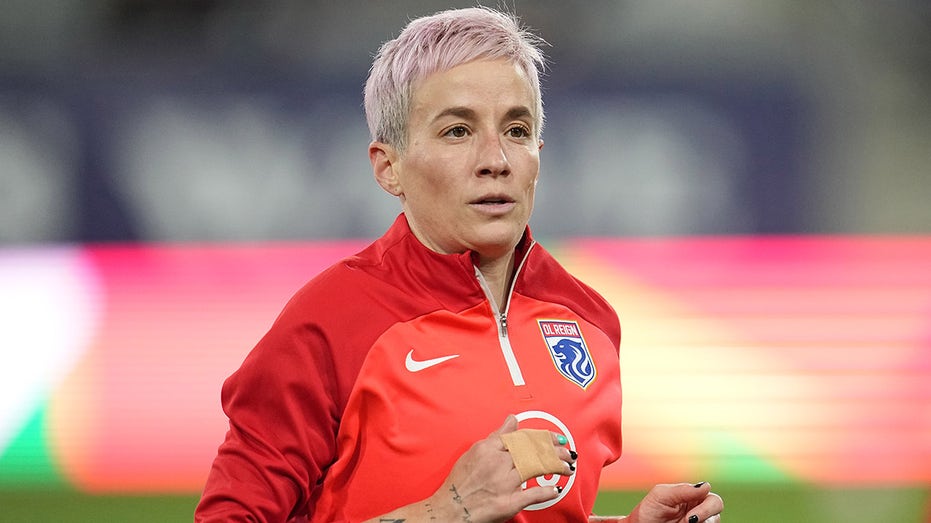
On the surface, Megan Rapinoe poking fun at the U.S. men’s national team’s new World Cup slogan — “Never Chase Reality” — looks like a minor sports culture dust-up. In reality, it’s a revealing window into the deep tensions shaping U.S. soccer: between marketing and performance, men’s and women’s programs, aspiration and accountability, and a country still deciding what it wants its global sporting identity to be.
Rapinoe’s critique is less about a tagline and more about a long-simmering question: has U.S. Soccer, especially on the men’s side, become better at selling a story than delivering results?
The bigger picture: Why a slogan hits a nerve now
The U.S. men’s team is entering a uniquely high-stakes World Cup cycle. As co-hosts of the 2026 tournament, they will enjoy automatic qualification, home crowds, and massive media attention. This generation has been billed as a “golden generation” for nearly a decade, with players in top European leagues and unprecedented investment in youth development. Yet the results on the global stage remain modest:
- Quarterfinals once (2002), still the high-water mark in the modern era.
- Missed the 2018 World Cup entirely.
- Round of 16 exit in 2022, after a creditable but hardly transformative run.
Now layer onto that history the broader evolution of U.S. soccer:
- The women’s team has set the bar: Four World Cup titles, four Olympic golds, and sustained dominance for decades created a model of excellence — and a comparison point the men can’t escape.
- Pay equity battles: The women’s successful equal-pay fight exposed structural inequities in U.S. Soccer and re-framed public expectations around fairness and value.
- Commercialization of the sport: MLS expansion, European clubs touring the U.S., and soaring media rights have turned soccer into a serious business, not a niche pastime.
In that context, a slogan like “Never Chase Reality” lands differently. It’s not just a phrase. It’s a test of whether the federation understands its own moment — and its own public.
What the slogan is trying to do – and why Rapinoe hears something else
From the federation’s perspective, the message is clear enough: ignore the odds, embrace audacious ambition, and imagine a future where the U.S. is not a plucky outsider but a genuine contender. Marcello Hernandez’s explanation — “Never chasing reality means ignoring the odds and daring to dream” — fits a classic American mythos: the underdog who refuses to accept limits.
Rapinoe, however, zeroes in on the unintended message: if you’re telling people not to chase reality, it can sound like you’re already bracing for failure. After years of being sold the “next big step” for U.S. men’s soccer, fans and players like Rapinoe are more attuned to spin. She frames it bluntly: it sounds like a team that “already think[s] you’re not good.”
This disconnect highlights a broader tension in modern sports branding: slogans are supposed to be aspirational yet grounded. “Dream big” — the simpler phrase Rapinoe suggests — connects ambition to something universally understood. “Never Chase Reality,” by contrast, plays with abstraction and irony, which is risky in a sport where hard results are brutally clear every four years.
History lesson: U.S. soccer’s complicated relationship with reality
To understand why this critique resonates, it helps to remember how U.S. soccer has long been built on narrative as much as on achievement:
- 1994 World Cup: Hosting the tournament was a nation-building project for soccer itself. The U.S. team wasn’t expected to win; simply competing respectably was the narrative.
- “Don’t Tread on Me” era (mid-2000s): Marketing leaned into defiant, underdog imagery — edgy, gritty, American rebellion against global elites.
- 2010 “Go, Go, USA!” moment: Landon Donovan’s goal created a high point that solidified the belief that the U.S. could compete at the highest level, even while structural issues persisted beneath the surface.
- 2018 failure: Missing the World Cup was an ugly reality check that exposed complacency in development systems, coaching, and governance.
In each era, U.S. Soccer has used slogans and campaigns to bridge the gap between aspiration and reality. But the stakes have changed. With a home World Cup in 2026, higher pay, better infrastructure, and far more global experience in the player pool, fans and former players are less willing to accept narrative without performance.
Gender politics and credibility: Why Rapinoe’s critique carries weight
Rapinoe is not just any ex-player reacting to a slogan; she is a symbol of a program that achieved what the men’s side has often only promised: dominance and cultural relevance. Her career sits at the intersection of:
- On-field success: World Cup and Olympic titles.
- Off-field influence: Leadership in the equal pay lawsuit, advocacy for LGBTQ+ rights, and broader social activism.
- Brand literacy: The women’s team has had to fight for investment, fan attention, and sponsorships — they understand intimately how language, image, and narrative shape their worth in the marketplace.
So when Rapinoe questions the slogan’s subtext, she’s also implicitly questioning U.S. Soccer’s communication strategy and its willingness to confront uncomfortable truths: the men’s underachievement, the fragility of the “golden generation” narrative, and the temptation to package hope as progress.
There’s also a deeper gendered layer: for decades, women athletes were told to be “realistic” about their value, their salaries, their visibility. Rapinoe’s generation rejected that premise — demanding reality catch up to their ambitions. Against that backdrop, a men’s slogan about not chasing reality can sound tone-deaf, even if unintentionally so.
Expert perspectives: Branding vs. performance
Sports sociologists and branding experts often warn that messaging that leans too heavily on abstraction can backfire when results are mixed. As one sports marketing consultant, Kimberly Alvarez, has argued in past analyses of World Cup campaigns, “fans don’t mind big dreams; what they resent is being sold inevitability without evidence.”
Similarly, soccer analyst Grant Wahl (whose past work still shapes conversations about U.S. soccer) frequently emphasized that the U.S. team’s credibility globally would rise less from slick campaigns and more from producing stars who shine in the Champions League and at major tournaments.
In that context, “Never Chase Reality” becomes a kind of Rorschach test: optimists hear boundless ambition, skeptics hear preemptive excuse-making.
Data points: Ambition vs. track record
To fairly judge whether the slogan aligns with reality, we have to look at the data:
- World Cup performance: Since 1994, the U.S. men have advanced from the group stage four times but have only one quarterfinal appearance (2002). They’ve never reached a semifinal.
- Global ranking: The U.S. typically hovers around the top 15–25 in FIFA rankings — respectable, but far from elite.
- Player development: More Americans now play in top-five European leagues than ever before, but few are genuine world superstars on par with the top 50 players globally.
- Home advantage: Historical patterns show host nations often overperform (South Korea 2002, Russia 2018, Qatar less so but structurally unique), which increases expectations for 2026.
In other words, the reality is not bleak — but it is not yet that of a serious title contender. A slogan telling fans to ignore reality might feel oddly timed when the task ahead is less about defying destiny and more about finally matching rhetoric with execution.
What this really means: A struggle over how America wants to see itself
Beyond tactics and tournament prospects, this debate reflects a broader American story. The U.S. has long built its identity around exceptionalism — the belief that rules and norms binding other nations don’t fully apply here. In sports, that’s manifested in underdog narratives, miracle upsets, and a willingness to embrace spectacle.
But soccer is not a sport where exceptionalism comes cheap. It requires decades of investment, tactical sophistication, cultural buy-in, and institutional stability. The U.S. has made major strides on all these fronts, yet remains locked outside the truly elite tier.
Rapinoe’s reaction suggests a different framework: earning status through results, not mythology. Her preference for something as straightforward as “Dream big” speaks to a desire for transparent ambition — without clever wordplay that risks sounding like evasion.
Looking ahead: How this will matter by 2026
Whether this slogan survives or quietly disappears will be less important than whether U.S. Soccer internalizes the criticism behind it. Key things to watch:
- Performance at 2026: Anything short of a quarterfinal will be framed as underachievement for this “golden generation,” especially on home soil.
- Public discourse: If the team struggles, “Never Chase Reality” could become an easy punchline and shorthand for over-marketing and under-delivering.
- Relationship with the women’s program: Rapinoe’s critique is also a reminder that the women’s team is not just a separate brand; it’s a benchmark and, increasingly, a moral compass for the federation.
- How younger fans respond: Gen Z and younger millennials are highly attuned to authenticity and corporate messaging. They will likely judge the campaign not by its cleverness but by how well it aligns with what they see on the field.
The bottom line
This isn’t really a story about a retired star nitpicking a slogan. It’s about a federation at an inflection point, a men’s team trying to prove its hype is justified, and a women’s icon reminding everyone that reality — results, equity, and credibility — always catches up with the narrative.
If U.S. Soccer wants “Never Chase Reality” to resonate the way it intends, the men’s team will need to do the one thing no campaign can fake: win big, on the field, when the world is watching at home in 2026.
Topics
Editor's Comments
What’s striking here isn’t just the slogan itself, but who’s objecting to it and why. Rapinoe is effectively calling bluff on a pattern that extends beyond soccer: institutions using language to leapfrog the hard, slow work of change. The men’s team has unquestionably progressed—more players in Europe, better infrastructure, smarter youth systems. But the federation’s tendency to frame every cycle as a potential breakthrough risks eroding trust when those breakthroughs don’t arrive. The women’s program, by contrast, built its case through dominance and then demanded recognition. That sequencing matters. If the USMNT is serious about transforming its status by 2026, the most radical move it could make is not another clever tagline, but a posture of radical transparency: candid assessments of its limitations, clear benchmarks for success, and a willingness to let performance, not marketing, carry the narrative. In a media environment saturated with slogans, the most disruptive message might be honesty.
Like this article? Share it with your friends!
If you find this article interesting, feel free to share it with your friends!
Thank you for your support! Sharing is the greatest encouragement for us.