Behind Melania Trump’s ‘Home Is Where The Heart Is’ Christmas: Soft Power, Symbolism and the Battle Over American Identity

Sarah Johnson
December 14, 2025
Brief
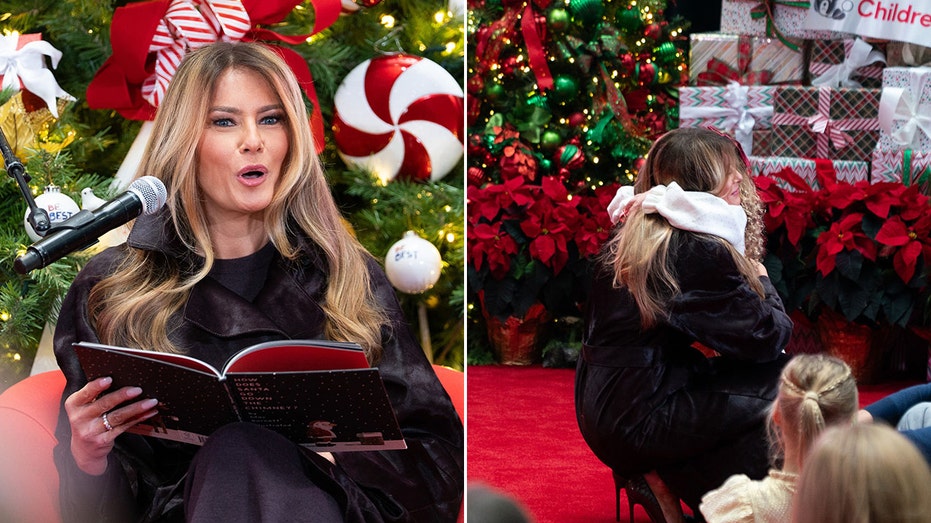
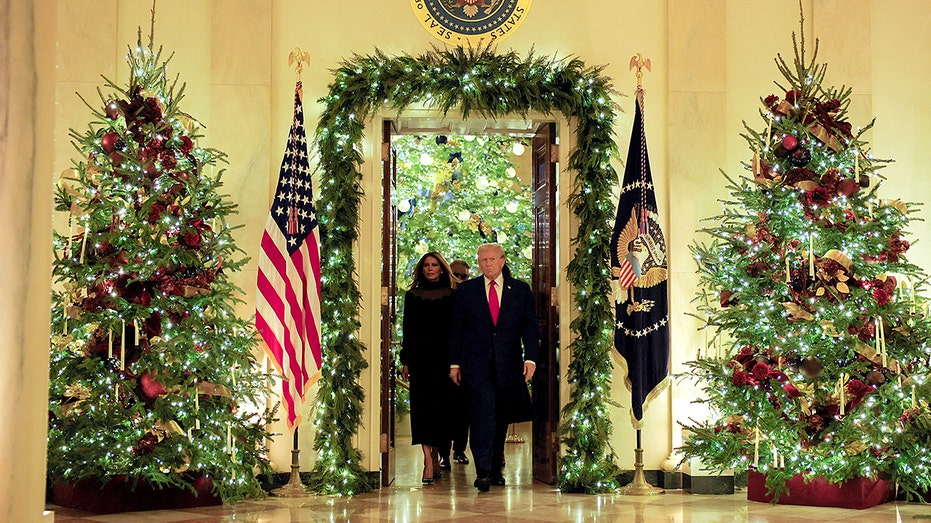
Melania Trump’s 2025 ‘Home Is Where The Heart Is’ Christmas décor is more than holiday aesthetics. It’s a strategic exercise in soft power, national storytelling, and Trump-era legacy repair.
Melania Trump’s ‘Home Is Where The Heart Is’ Christmas: Soft Power, Hard Politics
On the surface, a first lady’s Christmas décor seems like the least political thing happening in Washington. Yet Melania Trump’s 2025 “Home Is Where The Heart Is” theme is not just about twinkling lights and gingerbread. It’s a carefully curated display of soft power, national identity, and image rehabilitation aimed at both history and the here-and-now of America’s fractured politics.
Holiday imagery inside the White House has always been about much more than taste. It is a storytelling device: about who belongs, whose sacrifice is honored, what kind of country the first family believes America is—or should be. In Trump’s case, it is also about rewriting a narrative that has long framed her as a detached, reluctant first lady, and recentering the Trump brand as patriotic, traditional, and welcoming at a moment when the country remains sharply divided over that legacy.
The deeper story behind the ornaments
Since the Kennedy era, first ladies have controlled the Christmas aesthetic, using the Blue Room tree and surrounding décor as a kind of visual op-ed. Pat Nixon’s decision in the early 1970s to feature ornaments representing all 50 states and territories was a deliberate nod to national unity at a time of Vietnam-era protests and social upheaval.
Melania Trump’s 2025 choices consciously place her within that lineage, but with distinctly Trump-era inflections:
- Gold Star families in the Blue Room: Turning the main tree into a tribute to families who lost loved ones in military service links the Trump White House to sacrifice, patriotism, and the military—core pillars of conservative identity and a constituency Donald Trump has courted aggressively.
- America 250 branding in the East Room: Featuring the official logo of the semiquincentennial of the Declaration of Independence (America 250) positions the Trump White House as a custodian of the founding narrative at a time when debates over U.S. history, race, and national memory are intense.
- Gingerbread White House and new ballroom construction: Highlighting the new Trump-era ballroom and the prominent American flag on the grounds subtly asserts permanence—suggesting Trump-era changes are not a temporary political aberration but part of the White House’s long architectural and ceremonial story.
- BE BEST echo in the Red Room: Integrating her anti-bullying/child-wellbeing initiative into the holiday décor recasts a politically controversial tenure as one grounded in children and kindness—less about Twitter feuds, more about nurturing.
All of this unfolds under the seemingly apolitical banner: “Home Is Where The Heart Is.” That phrase does double duty. It speaks to familiar holiday sentiment—but also reframes the Trump White House as the emotional heart of the nation’s “home,” the People’s House, at a time when many Americans still see Trump’s tenure as a source of democratic instability.
From Jackie to Melania: the politics of Christmas at the White House
Holiday décor has been part of White House politics for more than a century, but the modern era of “themed” Christmas begins with Jacqueline Kennedy. Her 1961 Nutcracker-themed tree, rich in symbolism and European cultural references, was a statement about refinement and Camelot-era glamour during the Cold War. Every first lady since has used Christmas to send messages:
- Pat Nixon (1969–74): Expanded open houses and used state-and-territory ornaments, signaling unity and accessibility during a time of protest and mistrust of government.
- Nancy Reagan (1981–89): Her famous Red Room cranberry tree and glitzy Hollywood-lined events embodied the Reagan era’s fusion of patriotism and celebrity.
- Hillary Clinton (1993–2001): Themes like “A Visit from St. Nicholas” and American folk art underscored her emphasis on American traditions during globalization and the early internet age.
- Michelle Obama (2009–2017): “Simple Gifts” and “Gather Around” themes highlighted military families, service, and inclusion, in line with her Joining Forces initiative and a broader multicultural, civic-minded vision of America.
Melania Trump’s 2025 decorations sit squarely in this tradition—but with a key twist. Where earlier first ladies often tried to bridge divides or reflect pluralism, Trump’s aesthetic leans hard into a particular version of America: militaristic, nostalgic, flag-centered, and focused on the founding moment. The choice of Gold Star families, state symbols, Old Glory-color ribbons, and the America 250 logo is not just festive—it’s ideological.
That does not make it illegitimate; it makes it explicit. In a polarized era, even Christmas trees are cultural battlegrounds. The décor becomes another arena where competing narratives about what America is—and who gets to define it—play out.
Why “home” is doing so much work here
“Home Is Where The Heart Is” carries a heavy freight of subtext in 2025. Consider how the word “home” has been contested in recent years:
- Immigration and belonging: Public debates about who deserves to call America home, from DREAMers to refugees, have polarised politics. Emphasizing the White House as a welcoming home projects inclusivity—but within a highly curated, secure, and decidedly elite environment.
- Political displacement: Both Trump supporters and opponents often describe feeling like strangers in their own country. Inviting “the American people” into the People’s House during renovations is a symbolic gesture that attempts to soften that sense of estrangement—while simultaneously reinforcing the Trump brand as the gatekeeper of that space.
- Post-pandemic psychology: After years in which “home” was associated with lockdowns, isolation, and remote everything, reasserting home as warm, communal, and patriotic is an attempt to restore a pre-crisis emotional landscape.
By foregrounding home, family, and “the character of America within the People’s House,” the décor narrative tries to reframe the Trump years not as a period of institutional stress and democratic anxiety but as a time of tradition, continuity, and shared values. It’s a form of reputational retrofit, done in garlands and lights instead of press releases.
Soft power, hard calculations
First ladies have no formal constitutional power, but they wield considerable cultural influence. Holiday décor is one of their most powerful vehicles of soft power: it shapes public perception through imagery, emotion, and ritual.
In Melania Trump’s case, several strategic goals are evident:
- Legacy repair and rebranding: Earlier viral moments—like the leaked “who gives a f*** about Christmas” recording—cemented a public image of cynicism about this very tradition. A meticulously curated, tradition-heavy Christmas helps overwrite that perception and re-anchor her in the lineage of “dutiful” first ladies.
- Normalisation of the Trump era: The more the Trumps appear embedded in longstanding White House rituals, the easier it is to argue that their time in power was simply another chapter in American political life rather than a dangerous rupture.
- Appeal to swing constituencies: Gold Star families, patriotic imagery, and child-focused initiatives speak to suburban, religious, and military-connected voters who may have been uncomfortable with Trump’s rhetoric but are moved by symbolic acts of respect and tradition.
- Cultural counter-programming: At a time when portions of academia, activism, and media interrogate the darker sides of American history, the White House Christmas offers a counter-narrative: a visually harmonious, untroubled America rooted in founding ideals and shared sacrifice.
To understand why this matters, consider that millions of Americans will never enter the White House, but they will see these images on TV, social media, and in campaign materials. The décor becomes political content by another name.
What most coverage is missing
Most mainstream coverage tends to focus on the aesthetics: how many trees, what color scheme, which celebrity designer was involved. What gets underexplored are the deeper layers:
- The selective memory of military sacrifice: Honoring Gold Star families is genuinely meaningful, but it also sidesteps more complex questions about veterans’ healthcare, military policy, or how those wars began. The décor recognizes sacrifice without grappling with its causes or consequences.
- Whose America is being represented: State birds and flowers convey geographic diversity, but there is little visible acknowledgement of racial, religious, or cultural divergence in the story being told. The imagery leans heavily Anglo-Protestant founding myth, even as the U.S. approaches a majority-nonwhite demographic reality.
- The role of commercial and design elites: The involvement of high-end designer Hervé Pierre underscores how White House holidays are also exercises in luxury branding and visual marketing—far from the average American living room they’re meant to mirror.
- Faith as background, not foreground: Jackie Kennedy’s quoted reflection about Christmas as a promise of “redemption and love” highlights the religious core of the holiday. The modern décor narrative, however, keeps explicit religiosity subdued in favor of broad, civil-religion patriotism—crosses replaced by eagles and stars.
Expert perspectives: symbolism as strategy
Political communication scholars have long argued that visual symbolism in executive settings often matters as much as legislation for shaping public memory.
Dr. Kathryn Brownell, a historian of the presidency and media, has written about how White House rituals “domesticate power,” making the presidency feel intimate rather than distant. Christmas tours and receptions take this further by literally inviting the public into that domesticated space, turning citizens into participants in the presidential mythos.
Meanwhile, Dr. Lauren Wright, who studies first ladies and political communication, has emphasized that “symbolic acts” by first ladies can meaningfully move public opinion, particularly among less politically engaged citizens. Holiday imagery sits squarely in that category: it reaches people who may never watch a debate but will share a Christmas photo.
From a cultural criticism standpoint, scholars like Dr. Andrew Whitehead, who study Christian nationalism, might note how the decorations blend civil religion (flag, founding, sacrifice) with the Christmas narrative. Even without overt religious iconography, the display reinforces an implicit idea: to be fully at home in America is to embrace a certain reading of its founding and its flag.
Looking ahead: why this matters beyond December
As the United States heads toward its 250th birthday, fights over symbols are only likely to intensify. The America 250 logo in the East Room is a preview: the semiquincentennial will not just be parades and fireworks; it will be a contest over which America is being celebrated.
Expect several dynamics in the coming years:
- Escalating symbol wars: From statue removals to flag controversies, cultural battles will increasingly revolve around imagery. White House décor—holiday or otherwise—will be scrutinized as a barometer of which narratives are winning.
- First ladies as cultural chancellors: With Congress gridlocked and public trust in institutions low, first ladies (or spouses of leaders generally) will play a growing role in shaping national mood through rituals and symbolism rather than policy.
- Commercialization of national memory: Designers, brands, and entertainment figures involved in events like America 250 will further blur the line between civic commemoration and marketing. The current use of a high-fashion designer for holiday décor is a microcosm of that trend.
- Digital amplification: AI-generated imagery, social media filters, and curated online tours will amplify the reach of White House rituals, but also make them easier to parody, remix, and critique.
The 2025 Trump Christmas, then, is not just a one-off aesthetic exercise. It’s part of a longer campaign to stake a claim in the story America tells about itself heading into a milestone anniversary—and to ensure the Trump years occupy a central, normalized place in that narrative.
The bottom line
Melania Trump’s “Home Is Where The Heart Is” Christmas presentation is not mere decoration; it is a layered act of political storytelling. By honoring Gold Star families, highlighting America 250, reviving first lady traditions from Kennedy to Reagan, and emphasizing the White House as the people’s home, it seeks to fold a deeply polarizing presidency into the comforting rhythms of national ritual.
Whether Americans accept that invitation—to see the Trump era as part of a timeless story of home, sacrifice, and patriotism—depends less on the beauty of the decorations than on what they think the word “home” really means in today’s America, and who they believe it truly belongs to.
Topics
Editor's Comments
What stands out in this year’s White House Christmas is how thoroughly it illustrates a broader shift in American politics: the migration of ideological conflict from policy arenas into cultural rituals. We used to look to legislation, court decisions, and party platforms to see where the country was heading. Increasingly, we have to read the symbols—what’s on the tree, who is honored at ceremonies, which historical anniversaries get lavish treatment and which don’t. In that sense, Melania Trump’s ‘Home Is Where The Heart Is’ décor feels less like background scenery and more like a carefully staged intervention in the ongoing fight over national memory. It offers a cohesive, comforting story of America that many will find appealing, but it also leaves almost no space for the discomfort, pluralism, and unresolved tensions that define the lived experience of millions of Americans. The real question going forward is whether our public rituals can evolve to hold both: celebration and critique, pride and accountability. Right now, this display leans heavily toward reassurance—and away from complexity.
Like this article? Share it with your friends!
If you find this article interesting, feel free to share it with your friends!
Thank you for your support! Sharing is the greatest encouragement for us.