Royal Spears in a Sacred Lake: How a Polish Discovery Rewrites the Birth of a Kingdom

Sarah Johnson
December 18, 2025
Brief
Newly discovered gold-adorned spears from Lake Lednica reveal how Poland’s first rulers fused warfare, Christianity and elite symbolism to build a kingdom at Europe’s medieval frontier.
Gold-Covered Spears in a Polish Lake Are Rewriting the Story of Europe’s First Kings
Glittering spearheads pulled from a quiet Polish lake sound like the stuff of legend. In reality, they open a rare window into one of Europe’s least understood transformations: how a loose pagan warrior confederation on the edge of the continent turned, within a few generations, into the Christian kingdom of Poland.
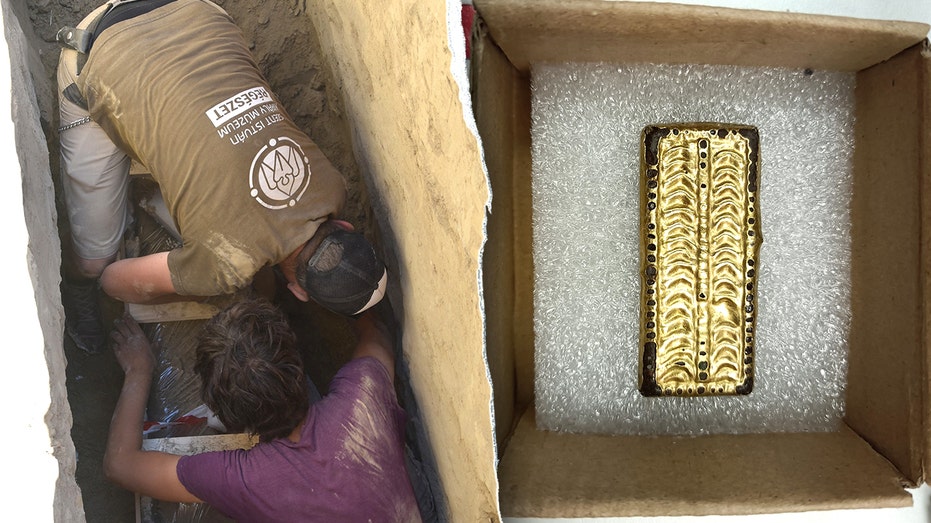
The Lake Lednica discovery is not just another archaeological curiosity. It sits at the crossroads of state formation, religion, elite power, and memory politics in Central Europe. These weapons—especially the richly decorated, gold- and silver-covered “princely spear”—force historians and archaeologists to reconsider what early Piast rule looked like in practice and how power was performed, negotiated, and sacralized in the 10th and 11th centuries.
From Marshland to Monarchy: Why Lake Lednica Matters
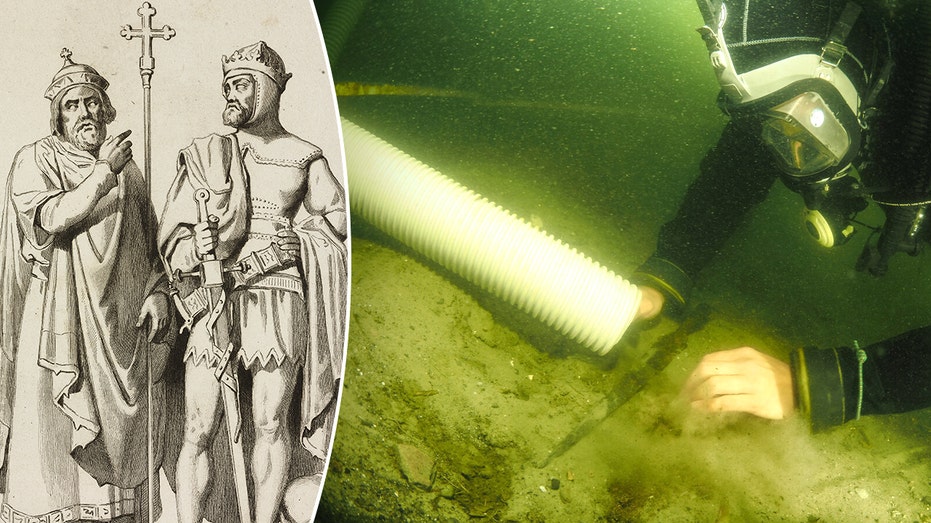
Ostrów Lednicki, the island stronghold in Lake Lednica, is widely regarded as one of the cradles of the Polish state. In the late 10th century, it functioned as both fortress and ceremonial center for the early Piast dynasty, particularly under Mieszko I (r. c. 960–992) and his son Bolesław I the Brave (r. 992–1025).
Two converging processes made this site pivotal:
- State formation through warfare. The Piast rulers built their authority by controlling fortified centers (gród), levying tribute, and maintaining warrior retinues. Weapons—especially high-status ones—were tools of governance as much as battlefield instruments.
- Christianization as a political strategy. Mieszko’s baptism in 966 (traditionally linked to Ostrów Lednicki) plugged his realm into the Latin Christian world, securing alliances and legitimizing rule in the eyes of Western monarchs and the papacy.
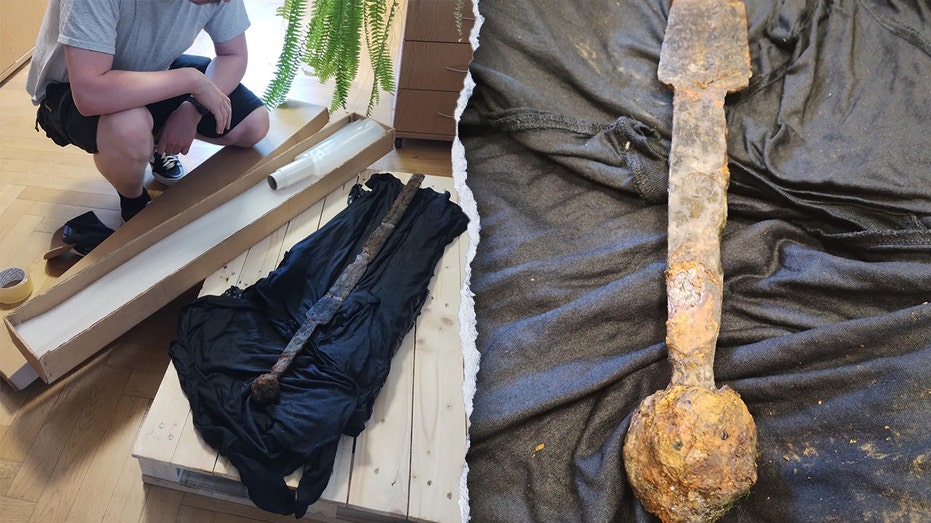
Lake Lednica has already yielded around 280 weapons and related artifacts, forming the largest assemblage of early medieval arms from a single site in Europe. The latest finds—four decorated spearheads, including one with extensive gold, silver, and bronze inlay—are therefore not isolated curios, but part of a long-running pattern that turns the lake itself into a kind of archive of power.
Spears as Symbols: Power, Prestige and the Politics of Metal
The standout piece from this discovery is the so-called “princely spear,” whose decorated socket is made entirely from colored metal alloys and still preserves a fragment of the wooden shaft. The presence of precious metals and sophisticated interlace ornament suggests it was never simply a battlefield tool.
In early medieval Europe, spears and lances often functioned as:
- Regalia and insignia. The imperial Holy Lance of the German kings and emperors—supposedly containing a nail from the True Cross—was carried in processions and at coronations, symbolizing divine sanction for rule.
- Markers of rank. High-born warriors and nobles distinguished themselves through quality and decoration of arms. In some Scandinavian and Slavic contexts, richly adorned weapons were almost wearable titles.
- Ritual objects. In both pagan and Christian contexts, lances feature in oaths, boundary-making, and religious symbolism (from the spear of Longinus to saintly warrior imagery).
These Lednica spearheads resemble high-status examples documented across Northern and Eastern Europe, but the richness of the alloys and the level of ornamentation make them outliers. That suggests either direct access to skilled artisans—possibly imported from Western workshops—or the emergence of a distinct Piast court style, blending local traditions with foreign influences.
This matters because it indicates that, by the time of Mieszko I and Bolesław the Brave, the Piast court was not a peripheral, makeshift polity. It was plugged into the same elite metalworking networks that served the Ottonian and later Holy Roman imperial courts. In material terms, the early Polish rulers were playing in the same league.
War Relics or Sacred Offerings? The Two Competing Narratives
Why did so many weapons end up in the lake? Archaeologists outline two main hypotheses, both plausible—and both revealing.
1. Battlefield Losses from a Crisis of the State
One scenario links the deposit to the violent upheavals of the 1030s, when Czech Duke Bretislaus I invaded and sacked major Piast strongholds. This period saw internal rebellion, anti-Christian backlash, and what historians call the “Pagan Reaction” in Poland, culminating in the weakening (and partial collapse) of Piast control.
If the Lednica weapons are remnants of this chaos, they capture a literal dunking of Piast power: armed forces retreating across causeways or boats, elite warriors falling into the water, or defenders deliberately casting weapons away during routs. In this reading, the lake becomes the graveyard of a specific historical catastrophe.
2. Deliberate Deposits in a Sacred Landscape
The alternative interpretation sees the weapons as intentional offerings. Depositing weapons and valuables in rivers, bogs, and lakes is a practice documented across Iron Age and early medieval Europe—from Danish bog bodies to weapon deposits in the Rhine and Thames. Water was seen, as Museum director Andrzej Kowalczyk notes, as a gateway to the realm of the dead or the divine.
The timing is crucial: even as Christianization advanced, older ritual logics persisted. For newly Christian elites, offering precious weapons to the waters near a royal and ecclesiastical center might have been reinterpreted as a Christianized ritual—perhaps asking for victory, giving thanks, or marking a ruler’s death—without completely abandoning older sacred geographies.
Realistically, the deposit may not be either/or. Over decades, both battle losses and ritual offerings could accumulate in the same watery archive, especially near a major stronghold with repeated military and ceremonial use.
A Frontier State Between Cross and Sword
The Lednica discoveries highlight a crucial tension in early Piast Poland: it was simultaneously a Christianizing kingdom and a warrior society rooted in pre-Christian traditions.
On the Christian side, Ostrów Lednicki has yielded some of the oldest liturgical objects in Poland—a staurotheke containing a relic of the True Cross, an ivory liturgical comb, a metal censer, reliquary fragments. These objects connect the island directly to the ritual and symbolic heart of Latin Christendom.
On the martial side, we now have an unparalleled assemblage of spears, axes, and swords around the same island. Put together, these finds show a court that was not merely importing Christian symbolism but fusing it with an existing ethos of militarized, clan-based leadership. In modern terms: the Piast monarchy was building a brand that combined the cross and the spear.
That fusion echoes similar patterns elsewhere: the Scandinavian kings who merged Viking martial culture with Christianity, or the early Hungarian rulers who balanced nomadic steppe traditions with Western-style kingship. Lednica is the Polish version of this broader European story of hybrid state-building on the periphery of Latin Christendom.
What Mainstream Coverage Often Misses
Most news reports focus understandably on the eye-catching elements: gold-covered spearheads, royal connections, the romance of a mysterious lake. But several deeper dynamics deserve attention:
- Elite competition and display. These weapons likely played roles in public ceremonies—oaths, assemblies, judicial gatherings—where visible symbols of power were as important as fortifications or armies.
- Control of trade and craftsmen. Access to precious metals and skilled artisans implies control over long-distance trade routes reaching into the German lands, Scandinavia, and perhaps Byzantium. This is economic power, not just martial prestige.
- Memory politics. Modern Poland invests heavily in Piast heritage as a narrative of ancient statehood and continuity. High-status finds at Lednica will feed directly into museum displays, school curricula, and public debates about where “Polishness” begins.
- The environmental archive. The exceptional preservation of organic material (like the spear shaft fragment) in Lake Lednica is a reminder that lakes and wetlands preserve stories that stone ruins alone cannot tell.
Expert Perspectives: Reading the Lake as a Political Text
Archaeologists increasingly treat sites like Lednica not just as isolated strongholds, but as nodes in a political landscape shaped by water, movement, and ritual.
Scandinavian specialist Prof. Neil Price has argued in other contexts that weapon deposits in water are often “not about disposal, but about communication with invisible audiences”—gods, ancestors, or the community’s future memory. Applying that lens to Lednica, these spears may have been messages to multiple audiences at once: the divine, the dynasty, and posterity.
Central European historian Prof. Przemysław Urbańczyk has long emphasized that early Polish rulers relied on personal retinues (drużyna) whose loyalty was secured by gifts, plunder, and prestige. A gold-decorated spear is as much an investment in loyalty as a sign of royal magnificence. To deposit such a weapon in a lake—rather than pass it down or recycle its metal—signals a choice to convert material value into symbolic capital.
What This Changes in Our Understanding of Early Poland
While a handful of spearheads will not overturn decades of scholarship, they do shift several lines of interpretation:
- Elites were more sophisticated than “frontier warlords.” The level of craftsmanship and ornament aligns the Piast court with contemporaries in the Empire, not with a peripheral, rough warrior band.
- Christianization did not erase older sacred geographies. The coexistence of liturgical items and weapon deposits in water suggests layered religious practices rather than a clean break from paganism.
- Royal power was performative and material. Objects like the princely spear acted as extensions of the ruler’s body and authority, visible on horseback, in ritual, and even in death.
- Crises like the 1030s invasion leave archaeological fingerprints. If even part of this assemblage relates to Bretislaus’s campaign, we are seeing the physical aftermath of one of the most traumatic events in early Polish history.
Looking Ahead: What to Watch as Research Continues
The Lednica team’s work is far from finished. Several next steps will determine how transformative this discovery becomes:
- Metallurgical and isotopic analysis. Tracing metal sources could show whether the alloys came from local deposits, German mines, or even more distant networks.
- Refined dating. High-precision dating, combined with stratigraphic and contextual analysis, could tie specific deposits to particular reigns or events, such as Mieszko’s baptism or the 1030s crises.
- Comparative study. Systematic comparison with finds from the Elbe, Rhine, and Scandinavian lakes may clarify whether Lednica represents a unique Piast style or a regional variant of a broader northern European practice.
- Public interpretation. How museums frame these items—ritual vs. war, Christian vs. pagan, national vs. regional—will shape popular understanding of early Polish history for decades.
The Bottom Line
Beneath the romantic image of royal spears lost in a lake lies a more complex reality: a frontier kingdom experimenting with what kingship should look like, how faith and force should interlock, and how power should be staged before both human and divine audiences. The gold-covered spear from Lake Lednica is not just a relic of Poland’s first rulers; it is evidence that those rulers understood something enduring about politics—symbols can outlast fortresses, and sometimes the most enduring archives are at the bottom of a lake.
Topics
Editor's Comments
What’s striking about the Lednica spears is how they complicate the tidy national origin stories many European countries rely on. In public memory, Poland’s emergence is often framed as a linear progression: tribal chaos, Mieszko’s baptism, and then a Christian kingdom. These weapons, lying at the bottom of a lake that is both a royal and sacred landscape, suggest instead a prolonged period of experimentation. Rulers were trying out different ways of performing authority—through spectacular arms, through imported Christian relics, through fortifications and military campaigns—and not all of those strategies were stable. The likely connection to moments of crisis, like the 1030s invasions, raises an uncomfortable but important question: how much of early state-building rests on failure and collapse that we usually write out of the story? Archaeological evidence like this forces us to see not just the triumphant founding moments, but also the breakdowns that shaped what survived.
Like this article? Share it with your friends!
If you find this article interesting, feel free to share it with your friends!
Thank you for your support! Sharing is the greatest encouragement for us.