
The Silent Winter Stress Test: How Snow Shoveling Exposes a Hidden Heart Crisis

Sarah Johnson
December 18, 2025
Brief
Snow shoveling heart attacks aren’t random tragedies—they’re the predictable result of aging, inactivity, and climate extremes. This analysis explains the deeper systemic failures and what must change.
Snow Shoveling and the Hidden Heart Crisis: Why a Winter Chore Exposes a Much Bigger Health Failure
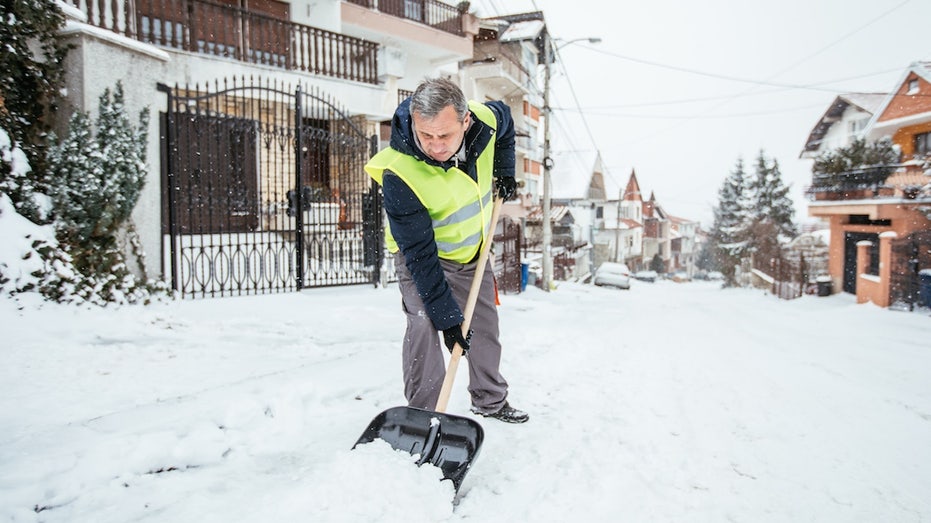
Each winter, emergency rooms in snowy regions quietly prepare for an almost predictable surge: middle‑aged and older adults arriving with chest pain, shortness of breath, and in too many cases, full cardiac arrest after shoveling snow. The new Mayo Clinic review showing that just 10 minutes of heavy shoveling can push the heart to roughly 97% of its maximum rate doesn’t just validate what cardiologists have long suspected — it exposes a deeper, systemic issue in how we think about aging, exercise, and climate‑related health risks.
This isn’t really a story about snow. It’s a story about the collision of three trends: an aging population, widespread sedentary lifestyles, and intensifying winter weather extremes. Snow shoveling just happens to be where these forces visibly meet — sometimes fatally.
The bigger picture: How snow shoveling became a cardiac minefield
The association between shoveling and heart attacks isn’t new. As far back as the 1980s and 1990s, hospitals in Canada and the northern U.S. reported spikes in cardiac events after heavy snowfalls. A 2017 study in the journal CMAJ analyzing more than 128,000 heart attack cases in Quebec found a clear pattern: the risk of myocardial infarction rose significantly after snowfalls, particularly among men, and was linked to both the amount and duration of snowfall.
But several shifts since then have magnified the risk:
- Demographics: The U.S. population over 65 has grown from about 35 million in 2000 to over 56 million today, and will approach 80 million by 2040. More older adults now live independently in single‑family homes that require snow removal.
- Physical inactivity: The CDC estimates that roughly 1 in 4 U.S. adults is completely inactive, and rates are higher for those over 65. Many of the people who grab a shovel a few times a year are otherwise mostly sedentary.
- Climate volatility: While winters are warming on average, climate change is increasing weather extremes. That means fewer but more intense storms in many regions — heavier, wetter snow that is dramatically more demanding to move.
These trends turn what used to be a tough seasonal chore into what one cardiologist quoted in the story accurately describes as an unsupervised maximal exertion stress test for at‑risk adults.
Why shoveling stresses the heart in ways people underestimate
Standard public messages about shoveling — “take it easy,” “don’t overexert” — gloss over the specific physiological stresses that make this activity uniquely dangerous, particularly in the cold.
Three mechanisms matter most:
- Cold‑induced vasoconstriction and blood pressure spikes. In low temperatures, blood vessels constrict to conserve heat. This raises blood pressure and increases the heart’s workload. For someone with hypertension or stiffened arteries, that spike can be dramatic. The recent Annals of Internal Medicine study cited in the story found that cold accounts for nearly twice as many cardiovascular deaths as heat — and that older adults are disproportionately affected.
- Sudden, unaccustomed exertion. A person who sits at a desk most days and does little structured exercise can go from resting heart rate to peak effort in minutes while shoveling, especially wet, heavy snow. The Mayo Clinic review’s finding — heart rates reaching ~97% of maximum within 10 minutes — means shoveling can exceed what many people reach on a treadmill stress test, but without monitoring or medical backup.
- Isometric strain and Valsalva‑type effort. Shoveling involves bending, lifting, twisting, and often holding the breath during heavy lifts (the Valsalva maneuver). This pattern can sharply increase intrathoracic pressure and blood pressure, worsening the strain on compromised coronary arteries and potentially triggering plaque rupture — the immediate cause of many heart attacks.
That combination — cold, sudden maximal effort, and high blood pressure surges — is precisely the scenario cardiologists try to control and monitor in a clinical stress test environment. On the driveway, there’s no ECG, no staff, and no defibrillator.
What this really means: It’s not about age, it’s about risk profiles and inequality
The headline question — “Are you too old to shovel snow?” — oversimplifies the real issue. Age is a proxy, not a cutoff. What matters is an individual’s cardiovascular risk profile and baseline conditioning.
Most cardiology guidelines would flag the following groups as high‑risk for heavy shoveling, regardless of exact age:
- Prior heart attack, stroke, bypass, or coronary stents
- Known coronary artery disease, heart failure, or significant valvular disease
- Multiple risk factors: hypertension, high cholesterol, diabetes, smoking, obesity, or strong family history
- Markedly sedentary lifestyle or poor functional capacity (e.g., struggling with stairs or carrying groceries)
But here’s what mainstream coverage often misses: who has the option not to shovel?
- Economic constraints: Hiring a snow removal service can cost hundreds of dollars per season. Lower‑income older adults may feel they have no choice but to do it themselves.
- Housing patterns: Aging in place in car‑dependent suburbs means many older homeowners face long driveways and sidewalks with no municipal clearing.
- Social isolation: Those living alone or without nearby family or community networks lack someone to “ask for help,” as experts often advise.
The result is an inequitable risk landscape: an affluent 70‑year‑old in a condo with maintenance staff faces essentially no shoveling risk, while a 68‑year‑old on a fixed income in a snowbelt suburb faces repeated, high‑risk exertion every storm.
Expert perspectives: From cardiology to public health planning
Cardiologists quoted in the original piece emphasize caution starting in the mid‑40s and strong warnings above 65, especially for those with risk factors. Their clinical experience aligns with broader cardiology guidance.
Other experts point to a wider framing:
Dr. Barry Franklin, a leading exercise physiologist who has studied exercise‑related cardiac events, has long warned that “the most dangerous activity for many middle‑aged men is not marathon running — it’s shoveling snow after months of inactivity.” His research highlights that the relative risk of cardiac events spikes most sharply when a sedentary individual suddenly performs vigorous activity, especially in cold weather.
Public health planners increasingly see winter weather as a cardiovascular hazard, not just a transportation one. The finding that cold causes nearly twice as many cardiovascular deaths as heat underscores the need to treat winter storms as health emergencies for vulnerable populations, not just infrastructure events.
Geriatricians raise a different concern: falls. For older adults, the combination of icy surfaces, heavy lifting, and impaired balance can mean hip fractures and long‑term disability, even if the heart holds up. When we talk about whether someone is “too old” to shovel, mobility and bone health matter alongside cardiac risk.
Data & evidence: What the numbers tell us
- Heart rate: The Mayo Clinic review cited in the story: 10 minutes of heavy shoveling drives heart rate to ~97% of maximum — effectively maximal exertion.
- Cold vs heat: The Annals of Internal Medicine study found cold exposure is associated with nearly double the number of cardiovascular deaths compared with heat, with those over 65 most affected.
- Device comparison: The American Heart Association notes that snow blowers can still raise heart rate to ~120 bpm, but shoveling can push it to 170 bpm — a crucial difference for someone with compromised coronary arteries.
- Sedentary baseline: CDC data show only about 28–30% of adults 65+ meet recommended physical activity guidelines. For the majority, shoveling is a rare, intense stressor, not part of a trained routine.
Taken together, the evidence suggests that for many older or at‑risk adults, manual shoveling is not a benign household task — it’s a high‑intensity, medically significant event.
What’s being overlooked: Policy gaps and climate‑era responsibilities
Most advice on snow shoveling risk is framed as individual responsibility: know your limits, get checked by a doctor, ask for help. That framing ignores several structural gaps:
- Lack of “winter cardiovascular alerts.” Cities routinely issue heat advisories that warn people with heart conditions to stay cool. Few issue winter storm alerts that explicitly warn older adults about shoveling risk, even when they know ERs will see a spike in cardiac cases.
- Underdeveloped community assistance programs. Some municipalities and nonprofits run “snow angel” or volunteer shoveling programs for seniors and people with disabilities, but coverage is patchy and poorly funded. In many places, such programs don’t exist at all.
- Insurance blind spots. Health systems invest heavily in cardiac rehab and high‑tech interventions but rarely in low‑tech risk mitigation like subsidized snow removal or community fitness programs that could improve baseline conditioning long before the first storm.
- Climate adaptation planning. As climate patterns shift, local governments are updating flood maps and cooling centers but are slower to integrate winter‑related cardiovascular risk into resilience planning.
In other words, we know snow shoveling predictably sends certain people to the hospital, yet we largely treat each case as an individual tragedy rather than a preventable, patterned outcome.
Looking ahead: How this risk could evolve — and what to watch
Several trends will shape how dangerous snow shoveling remains in coming decades:
- Aging in colder regions. Many snowbelt states — from Minnesota to Michigan to upstate New York and New England — are simultaneously aging and losing younger population. That means a higher proportion of homeowners who are older and at higher cardiac risk.
- Technology adoption. Wider use of snow blowers, heated driveways, and contracted services can reduce manual shoveling, but these technologies are unevenly distributed by income. Policy choices — like tax credits or local assistance programs — could dramatically influence who gets access.
- Preventive cardiology. If healthcare systems more aggressively promote year‑round physical conditioning and routine cardiac risk screening, fewer people would face shoveling with unrecognized coronary disease and poor fitness.
- Climate volatility. Warmer winters on average may paradoxically bring more episodes of heavy, wet snow in transitional temperature bands — exactly the type of snow that is hardest and most dangerous to move.
Watch for whether winter storm coverage starts to explicitly include cardiac warnings for older adults, and whether municipalities develop systematic ways to keep high‑risk residents off their driveways during and after storms.
Practical implications: Redefining “safe” winter chores
For individuals, the evidence argues for a shift in mindset:
- If you are over 45 with multiple risk factors — or over 65 with any significant cardiac history — manual shoveling heavy snow should be treated as high‑risk exertion, not a casual chore.
- A “snow strategy” (neighbors, family, paid help, or a blower) is not a luxury; it’s a health intervention, comparable in importance to taking blood pressure medications.
- If you must shovel, smaller loads, pushing rather than lifting, frequent breaks, and avoiding early morning (when heart attack risk is naturally higher) are not just comfort tips — they’re risk‑reduction measures.
For policymakers and health systems, the story invites tougher questions: Is it acceptable that predictable, preventable driveway exertion remains a silent driver of winter cardiac deaths? Or should we begin treating snow removal for high‑risk adults as a public health issue on par with heat waves and air quality alerts?
The bottom line
The real question isn’t whether you’re “too old” to shovel snow. It’s whether your heart, your risk factors, and your support system make snow shoveling a manageable task — or an unrecognized medical gamble.
As winters grow more erratic and populations age, the familiar image of an older neighbor dutifully clearing a driveway needs to be reconsidered. For many, that winter ritual is less a symbol of self‑reliance than a warning sign of a system that leaves vulnerable people to shoulder dangerous burdens alone.
Topics
Editor's Comments
What stands out in this story is how normalized a clearly high-risk behavior has become. Shoveling snow is framed as a test of toughness or independence, particularly for older men, even as cardiology data show it can be the equivalent of a maximal stress test under the worst possible conditions. The deeper issue is structural: we’ve built suburbs that assume every homeowner will personally manage physically demanding maintenance tasks for decades, and we’ve underinvested in both preventive fitness and community support networks. That leaves older, poorer, and sicker residents facing a stark choice between safety and basic mobility. A more honest public conversation would treat snow shoveling risk like heat waves or air pollution—predictable, patterned, and amenable to population-level interventions. Until then, each winter storm will quietly reproduce the same preventable tragedies, written off as individual bad luck instead of the outcome of policy and design choices.
Like this article? Share it with your friends!
If you find this article interesting, feel free to share it with your friends!
Thank you for your support! Sharing is the greatest encouragement for us.