Unearthing London's Hidden Past: Ancient Artifacts Beneath Westminster Rewrite the City’s Origin Story

Sarah Johnson
December 3, 2025
Brief
Discover how ancient artifacts dating back over 6,000 years beneath London's Houses of Parliament reshape our understanding of the city's prehistoric roots and the importance of heritage in urban development.
Opening Analysis
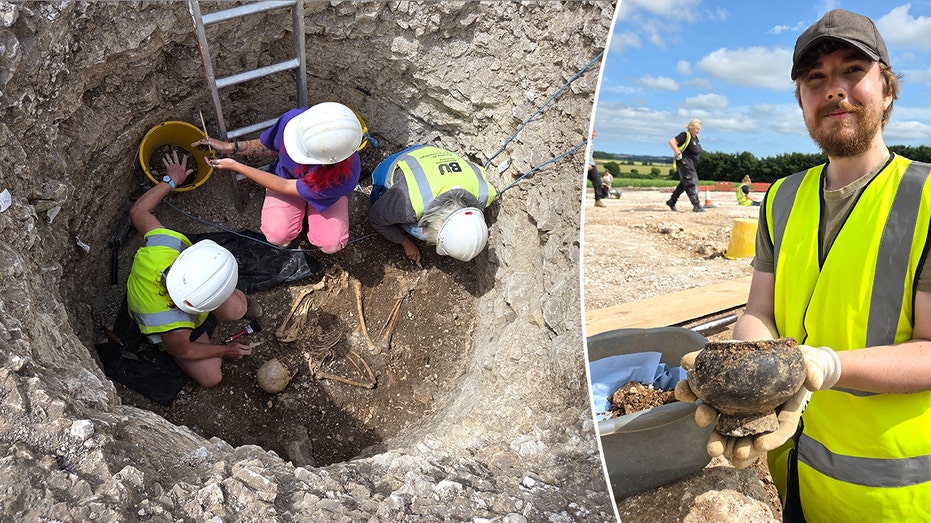
The recent discovery of artifacts beneath the Palace of Westminster, notably relics predating Stonehenge, offers a rare and profound glimpse into London’s prehistoric landscape—an arena historically perceived as a medieval and modern political hub. Such findings challenge conventional narratives that largely focus on London’s medieval and Victorian significance, revealing that this iconic site was part of a human story stretching back over 6,000 years. This discovery underscores the importance of integrating deep historical context into urban development projects and redefines the perceived timespan of London's human habitation.
The Bigger Picture
London’s archaeological record has long been a tapestry of layered history—ranging from Roman Londinium to medieval structures and later modern transformations. However, the recent unearthing of artifacts dating back to around 4300 BC situates Westminster within a broader prehistoric landscape, once known as Thorney Island. In prehistoric Britain, Thorney Island was a vital hub for Mesolithic communities engaged in fishing, hunting, and gathering and functioned as part of a largely submerged coastal landscape before becoming landmass and urban center. Historically, the recognition of such early human activity directly beneath one of the world’s most politically symbolic sites shifts the narrative from a city built solely on medieval and industrial foundations to one that has been continuously inhabited and utilized for thousands of years.
What This Really Means
In a profound sense, these findings emphasize the durability and adaptability of human settlements along the Thames. They reflect a persistent human connection to this landscape that predates even Stonehenge, which itself is a monument of cosmic and social significance. For urban planning and restoration, such discoveries extend the notion of heritage beyond ornate architecture to fundamental human history, fostering a more holistic appreciation of London’s origins. Furthermore, the preservation and digital modeling of these structures exemplify emerging best practices—balancing archaeological integrity while allowing for modern modernization efforts. It signifies a pivotal shift toward safeguarding buried histories beneath urban modernization projects worldwide.
Expert Perspectives
Dr. Alison Roberts, a prehistoric archaeologist specializing in British Mesolithic sites, articulated that “finding direct evidence of 6,000-year-old flint technology in central London is an extraordinary confirmation of early human resilience and adaptability.” She notes that such artifacts are rare, particularly in urban settings heavily disturbed by subsequent civilizations. “These relics challenge the simplistic view of London as a medieval and modern city—highlighting its deep roots in prehistoric human activity,” she emphasized.
Historian and urban development expert Professor Mark Evans commented, “This discovery propels our understanding of London’s landscape evolution. It suggests that the history of human occupation here is both deeper and more complex than previously recognized, prompting a reassessment of London as an archaeological mosaic, not merely a political or economic hub.”
Data & Evidence
Previous research indicates that London’s earliest settlements date to at least the Roman period (AD 43). However, evidence of Mesolithic activity, such as the flint fragments unearthed, is scarce—especially in what is now central London. The finds demonstrate that human activity on Thorney Island predates the Neolithic constructions of Stonehenge (begun circa 3100 BC) by over a millennium. The preservation quality of these artifacts, including tools and hearth remnants, supports theories of a near-continuous human presence and adaptation to changing environments over millennia.
Looking Ahead
These discoveries set a precedent for future archaeological investigations in urban centers globally, where layers of history often remain buried beneath modern infrastructure. They urge city planners, archaeologists, and policymakers to prioritize cultural heritage preservation in urban renewal projects. Moreover, ongoing technological advances—such as 3D digital reconstructions and non-invasive survey methods—will likely reveal even more about London’s prehistoric past, opening new frontiers in understanding human archaeology in dense city environments.
The Bottom Line
The findings beneath the Palace of Westminster dramatically extend London’s human history, revealing a civilization on Thorney Island that thrived over 6,000 years ago. These artifacts challenge previous assumptions, underscore the city’s archaeological significance, and highlight the importance of integrating heritage preservation into urban development. They remind us that London’s story isn’t merely medieval or Victorian—it's rooted in a profound prehistoric past that continues to influence the city’s cultural DNA.
Topics
Editor's Comments
This discovery is monumental not only in archaeological terms but also in redefining urban historical narratives. It prompts critical questions: How many other ancient sites are hidden within major cities worldwide? And how can modern urban planning better integrate heritage preservation without hindering development? As we continue to excavate beneath our cities, we gain a humbling perspective: human history is more layered and resilient than we've previously appreciated. Such findings challenge us to think globally about the value of archaeology amid rapid urbanization and underscore the importance of safeguarding our collective past, often buried beneath our feet.
Like this article? Share it with your friends!
If you find this article interesting, feel free to share it with your friends!
Thank you for your support! Sharing is the greatest encouragement for us.