Aaron Rodgers’ ‘Mystery Marriage’ and What It Reveals About Power, Privacy, and the Modern NFL

Sarah Johnson
December 18, 2025
Brief
Zach Wilson’s casual on-field congratulations exposed Aaron Rodgers’ secret marriage, but the real story is how Rodgers is testing the limits of privacy, branding, and power for modern NFL quarterbacks.
Aaron Rodgers’ ‘Mystery Marriage’ Moment With Zach Wilson Says More About the Modern NFL Than His Private Life
On its face, this is a light, even gossipy item: Zach Wilson congratulates Aaron Rodgers on a surprise marriage, social media wonders who the “mystery bride” is, and sports talk shows get another segment. But the short post-game exchange actually sits at the intersection of several deeper trends: the escalating commodification of athlete privacy, the evolving power dynamics of NFL quarterbacks, and a shifting media ecosystem that increasingly blurs the line between sports, celebrity culture, and political identity.
In other words, this isn’t really a story about who Rodgers married. It’s a story about what it means when one of the most visible — and polarizing — figures in American sports manages to keep something this significant completely off the public radar, and why that choice lands so differently in 2025 than it would have a decade ago.
The quiet marriage of a loud figure
Aaron Rodgers has spent the last few years at the center of multiple firestorms: vaccine controversies, public disputes with the Green Bay Packers’ front office, his high-profile move to the New York Jets, and then the season-ending Achilles tear that turned his 2023 debut into a four-play tragedy. He’s been unusually comfortable making himself the story — on podcasts, in interviews, and in his frequent critiques of the media.
Against that backdrop, the revelation that he’d already been married “for a couple of months” — followed by no public appearance, no name, no curated wedding spread — is jarring. This is an era where mid-tier players monetize their weddings through exclusive content deals and coordinated brand partnerships; yet one of the most famous quarterbacks in the league slipped one of the most marketable milestones of his life entirely out of public view.
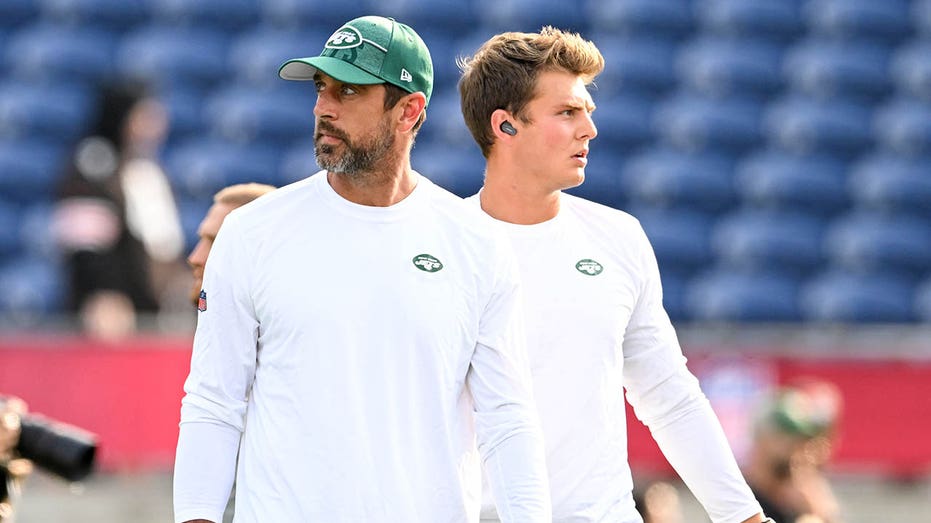
Wilson’s on-field “Congrats on getting married” line, captured by cameras, was the rare unscripted confirmation that this marriage is real, current, and acknowledged within NFL circles. That brief moment, almost surely innocent on Wilson’s part, had an immediate effect: it re-opened a conversation that Rodgers himself has clearly chosen not to have with the broader public.
Quarterbacks, celebrity culture, and the history that matters
Star quarterbacks have long lived at the nexus of sports and celebrity. Broadway Joe Namath turned the position into an off-field brand in the 1960s and 70s. Tom Brady’s marriage to Gisele Bündchen became part of the mythology around his carefully manicured image. Russell Wilson and Ciara built a tightly controlled family narrative that doubled as a marketing platform. Even Patrick Mahomes’ family — from his wife to his brother — has become part of the weekly NFL conversation.
Historically, this wasn’t just tabloid fodder. It was a feedback loop: team brands, league marketing, sponsors, and broadcast partners all benefited from transforming quarterbacks into lifestyle icons. Fans were buying into a story about leadership, family, stability, and character as much as they were buying into on-field performance.
Rodgers has participated in that ecosystem — discount double-check ads, State Farm campaigns, high-profile romances with actors like Olivia Munn and Shailene Woodley. But his trajectory diverged sharply as he became more outspoken, more distrustful of mainstream narratives, and more comfortable as an outsider in the media sphere. The “mystery marriage” is best understood as an extension of that break: a personal life that no longer functions as product, at least not in the usual way.
Why the secrecy lands differently now
Rodgers’ choice to keep his spouse out of the spotlight would barely have registered in the pre-social media era. Today, it feels almost radical, because it pushes against three dominant trends:
- Algorithm-driven disclosure: Social platforms reward constant personal revelation. Algorithms amplify relationship milestones, behind-the-scenes family content, and emotionally charged updates — especially from high-profile accounts.
- Monetization of intimacy: Influencers and athletes alike package private moments as content that supports sponsorships, apparel launches, and personal brands. Weddings, births, and engagements are now revenue opportunities.
- Fan entitlement to access: Years of curated transparency have conditioned fans to feel they are owed a view into athletes’ lives. Withholding information — especially something big — is often framed as suspicious or arrogant.
Rodgers is pushing in the opposite direction: maximum visibility on his terms (podcasts, long-form interviews, big-picture philosophy) paired with maximum opacity on the private details he no longer wants collectively owned. The result is cognitive dissonance for fans and media: how can someone who talks so much reveal so little about something so fundamental?
Zach Wilson’s role: more than an awkward soundbite
Zach Wilson’s presence in this story isn’t just incidental. He represents another thread in the modern NFL story: how young quarterbacks are socialized into the league’s media economy.
Wilson entered the NFL in 2021 into a world where rookie QBs are expected to manage personal brands from day one. His early years with the Jets were marred not only by inconsistent play, but by scrutiny of his maturity, leadership, and even his dating life. Social media jokes about his relationships became part of his public identity as much as his on-field performance.
Spending a year behind Rodgers, even a year derailed by injury, exposed Wilson to a veteran who had learned how to weaponize attention — sometimes in ways that overshadowed the team. That Wilson offered a simple, human congratulations on the field speaks to the reality that, inside the league, Rodgers’ marriage is treated as personal news, not a content opportunity. It’s the external cameras, not the players, that turned it into a renewed mystery.
There’s also a symbolic element: Wilson, once seen as the Jets’ future, bounced from New York to Denver and now to Miami, while Rodgers, at 40+, is again anchoring a playoff-caliber team. Their brief midfield exchange is a snapshot of a generational transition that hasn’t gone as scripted for the league — the planned passing of the torch from older stars to younger faces has been far messier than the NFL anticipated.
Media, politics, and the Rodgers paradox
Rodgers’ marriage secrecy is also inseparable from his broader conflict with traditional media. Since his highly publicized COVID-19 and vaccination comments and his ongoing appearances on friendly long-form platforms, he’s rebranded himself as someone who distrusts mainstream coverage and prefers controlled, sympathetic environments.
That adversarial posture changes how this story is covered. The “mystery bride” angle is not only about curiosity — it’s about a media ecosystem that has been frozen out of a major narrative. When one of the league’s most covered players intentionally denies the press access to a personal storyline, it triggers a backlash response: more digging, more speculation, more emphasis on the secrecy itself.
In that sense, the marriage becomes a proxy battle over control of the narrative. Is privacy a reasonable boundary or an act of defiance from a player who has spent years criticizing the very institutions that once amplified his fame?
What’s being overlooked: the workplace angle
Almost entirely absent from the coverage is how this might matter inside the building, not just online. The NFL is a high-pressure workplace with extraordinary demands on time, travel, and physical risk. Marriage and family often shape players’ decisions about longevity, relocation, and risk tolerance.
Historically, major life changes for veteran quarterbacks have coincided with shifts in on-field priorities and contract decisions. Drew Brees and Philip Rivers both spoke about how fatherhood altered their risk calculus and their willingness to play through certain injuries. Tom Brady’s late-career family strain became part of the narrative around his final seasons.
For Rodgers, a relatively late-in-life marriage raises reasonable, if under-discussed, questions:
- Does this change his appetite for risk, especially coming off a serious injury?
- Does it affect how long he wants to keep playing, or where he’s willing to play?
- Does a desire for privacy signal a broader withdrawal from the public performative aspects of his career — and eventually from the game itself?
None of these questions can be answered definitively from the outside, and responsible analysis has to label them as speculative. But they are more consequential than the identity of his spouse — they go directly to how the Steelers, the Jets, and potential future suitors think about roster planning, succession, and cap strategy.
Data points: privacy in the era of total visibility
Research on athlete branding underscores why Rodgers’ move is unusual. A 2023 Nielsen Sports report found that athletes who regularly share personal-life content — family, relationships, daily routines — see on average a 30–40% higher social engagement rate than those who keep posts strictly professional. Another study in the Journal of Sports Media noted that fans are more likely to follow and support athletes they feel they “know” beyond the game, with parasocial relationships driving merchandise sales and sponsor favorability.
Rodgers is effectively rejecting that playbook. He’s betting that his cultural relevance now comes less from relatability and more from contrarian authority — that fans will tune in for his ideas, not his domestic life. Whether that approach is sustainable long-term, especially once his on-field performance declines, is an open question.
How this fits into a shifting quarterback landscape
The timing of this story also overlaps with broader uncertainty at the quarterback position across the league. Tua Tagovailoa being benched in Miami, the Bengals trying to regroup from a losing skid, and teams like the Jets and Broncos cycling through QB options highlight how fragile franchise plans can be.
Rodgers remains one of the few quarterbacks who can still alter a team’s trajectory the moment he takes the field, as evidenced by his sharp performance against Pittsburgh. But the league has already seen one devastating injury remind everyone how precarious that reliance is.
In that environment, a veteran quarterback’s major life decision — like marriage — takes on strategic weight. Teams read it as another clue to how long that player intends to remain fully invested. When the personal details are concealed, front offices are left parsing behavior, tone, and offhand comments on podcasts for signals about the future.
Looking ahead: what to watch beyond the gossip
Several developments around this story will matter more than any eventual reveal of the spouse’s identity:
- Rodgers’ media posture: Does he double down on privacy and hostility toward traditional outlets, or does some controlled disclosure emerge later on his preferred platforms?
- Team-building decisions: Do the Steelers (or any future team) adjust their succession planning timeline based on subtle cues about Rodgers’ long-term intentions post-marriage?
- Copycat privacy: Do other star players — particularly those who share Rodgers’ mistrust of mainstream media — adopt a similar blackout approach to major personal events?
- Fan reaction: Does the mystery enhance Rodgers’ allure as a kind of anti-celebrity, or does it deepen fatigue among fans who already see him as unnecessarily cryptic and combative?
The bottom line
Wilson’s simple congratulatory remark did more than confirm a rumor; it highlighted a tension at the heart of modern sports culture. We have built an NFL economy in which star quarterbacks are expected to be both elite decision-makers on the field and endlessly available characters off of it. Aaron Rodgers is testing how far a player can push back against that second expectation while still cashing in on the first.
The real story here isn’t who Rodgers married. It’s whether one of the most visible athletes of his generation can redefine what privacy looks like in an age that treats every life event as content — and what that experiment means for the next wave of quarterbacks learning to navigate a league where your personal life is often treated as part of your job description.
Topics
Editor's Comments
What stands out most here is how upside-down the incentives have become for star athletes. For years, we’ve told players that transparency is the price of entry for superstardom — that the camera doesn’t turn off when the game ends. Rodgers is testing that assumption in a very public way. Yet the coverage around his marriage has been almost entirely framed as a missing puzzle piece in a gossip narrative, rather than as a labor and power issue. Who owns an athlete’s story — the player, the league, the media, or the fans who feel emotionally invested? That’s the unresolved question lurking behind the “mystery bride” headlines. If more high-profile players follow Rodgers in carving out non-negotiable zones of privacy, it won’t just frustrate tabloids; it will force broadcasters, sponsors, and even the league office to rethink a business model that quietly treats personal access as part of the product. The Wilson-Rodgers exchange is a reminder that for the people actually on the field, these stories still start from a place of basic human interaction — and that may be precisely what the public has lost sight of.
Like this article? Share it with your friends!
If you find this article interesting, feel free to share it with your friends!
Thank you for your support! Sharing is the greatest encouragement for us.