Beyond the Viral Dance: What Michelle Jenneke’s Secret 8.5-Year Relationship Tells Us About Fame and Privacy

Sarah Johnson
December 16, 2025
Brief
Michelle Jenneke’s surprise engagement after an 8.5-year private relationship reveals how modern Olympians negotiate viral fame, privacy, gendered scrutiny, and brand pressure in the social media age.
Michelle Jenneke’s ‘Hidden’ Engagement: What an 8.5-Year Private Relationship Reveals About Fame in the Viral Era
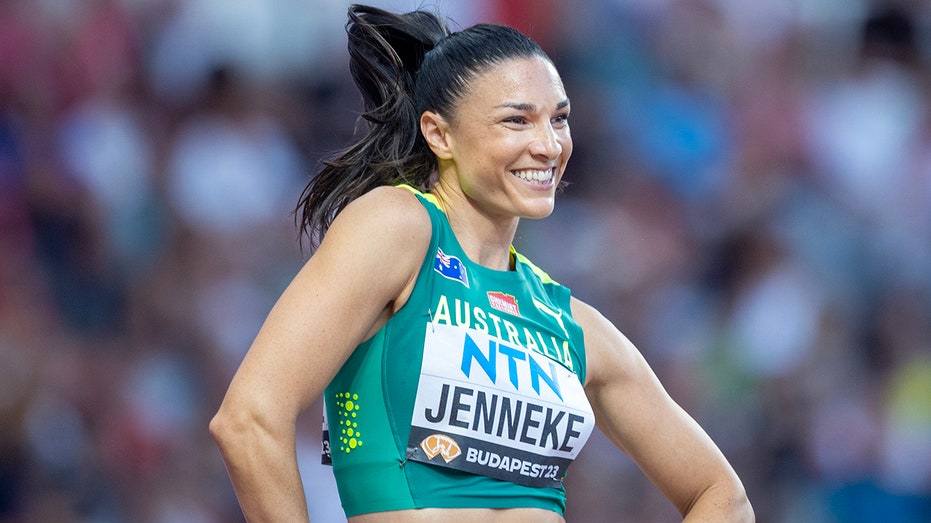
Michelle Jenneke’s engagement announcement, after nearly a decade of deliberately hidden coupledom with fellow Olympian Alex Beck, is more than a feel-good sports headline. It’s a sharp lens on how athletes navigate the increasingly hostile intersection of viral fame, platform capitalism, and personal privacy — and how the definition of “public figure” has mutated since her first brush with internet virality in 2012.
From Viral Sensation to Reluctant Brand
Jenneke’s career offers a textbook case study in how a single viral clip can permanently reshape an athlete’s public identity.
- In 2012, her playful pre-race warm-up dance at the IAAF World Junior Championships went viral, reportedly garnering tens of millions of views across platforms.
- By 2013, she appeared in the Sports Illustrated Swimsuit Issue — a move that cemented her as both athlete and pop-culture figure.
- Yet her major-event results — heats exits in the 100-meter hurdles at both Rio 2016 and Paris 2024 — never matched the scale of her digital fame.
This dissonance matters. Jenneke became part of a new category: athletes whose cultural value is built less on medals and more on moments. That category exploded over the last decade, from gymnast internet stars to TikTok-famous college athletes taking advantage of NIL rules in the U.S.
Her decision to keep an 8.5-year relationship with another Olympian completely off the public radar sits in stark contrast to that trajectory. While social media encourages constant visibility, she chose almost total opacity in one of the most scrutinized areas of celebrity life: romance.
The Bigger Picture: How Athlete Privacy Collided With the Social Media Economy
To understand why Jenneke’s announcement feels notable, it helps to situate her story in the broader evolution of athlete celebrity:
- The Pre-Social Era (pre-2005): Athlete narratives were mediated almost entirely by traditional media and team PR. Personal lives emerged via scheduled interviews, glossy magazine spreads, or scandal.
- The Early Social Era (2005–2015): Platforms like Facebook, Twitter, and eventually Instagram gave athletes direct channels to fans. Privacy was still relatively manageable; the economic incentives were real but not overwhelming.
- The Platform Capitalism Era (2015–present): Virality is monetizable; personal life becomes a key asset. Romantic relationships are content feeds, engagement announcements are brand-building moments, and algorithmic visibility rewards intimacy — or the illusion of it.
Jenneke sits uniquely in this timeline. Her viral fame came just as phase three was accelerating. She could have leaned fully into the influencer playbook: couple content, behind-the-scenes vlogs, parasocial fan engagement. Instead, she compartmentalized:
- Public: Training clips, race footage, selected sponsorship content.
- Private: A long-term relationship with another Olympian, kept entirely off the grid until an engagement announcement.
That separation is increasingly rare — and increasingly radical — in an economy where personality is monetized and algorithms reward emotional disclosure.
What This Really Means: Reclaiming Narrative Control in the Viral Age
Jenneke’s engagement post is not just a life milestone; it’s a quiet act of narrative control. She and Alex Beck managed to preserve a nearly decade-long relationship from the scrutiny that often accompanies even speculative rumors about athlete couples. There are several layers to why this matters.
1. A Counter-Model to the “Always On” Athlete
Many contemporary athletes discover that their earning potential is tied not just to performance but to their willingness to be accessible — to share relationships, family, homes, vulnerabilities. That model has upsides (direct fan connection, independent revenue streams) but also real costs: mental health strain, harassment, and loss of autonomy.
By maintaining a long-term private relationship in an era of hyperexposure, Jenneke demonstrates that athletic and commercial relevance need not require total personal transparency. She has sponsors and a global profile without using her relationship as content until she chose to do so, on her terms.
2. Gender, Objectification, and the Right to Withhold
Jenneke’s early coverage disproportionately focused on her body and her dance, not her hurdling technique or training regimen. Female athletes, particularly those whose fame intersects with swimsuit issues and viral visuals, often face persistent objectification and intrusive interest in their romantic lives.
In that context, her decision to wall off her relationship can be read as a form of boundary-setting: a refusal to let her private life be an extension of that gaze. She accepted that her body would be public as an athlete and model, but not her intimate relationships.
3. Athletes as Whole People, Not Just Highlight Reels
There’s an implicit narrative in sports media: success equals medals, failure equals irrelevance. Jenneke’s sporting results on the Olympic stage have been modest compared to the scale of her visibility, yet she has sustained a career, a partnership, and a life that doesn’t map neatly onto the win-or-fail binary.
Her engagement post subtly reframes her story: not just the athlete who didn’t get out of Olympic heats, but a person who built a stable, long-term relationship while competing at an elite level. It reminds us that personal success often runs on a separate track from the medal table.
Expert Perspectives: Privacy, Performance, and Parasocial Pressure
Sports psychologists and media scholars have been warning for years about the cost of hypervisibility on athletes’ mental health.
Dr. Caroline Silby, a sports psychologist who has worked with Olympic athletes, has argued that boundaries around personal life are not a luxury but a performance tool. As she has put it in public talks: “Athletes need at least one part of their lives that isn’t up for public evaluation. That sanctuary is often what allows them to handle scrutiny in the areas that are public.”
Media scholar Professor David Rowe, who has written extensively on sport and popular culture, has noted that viral fame often “locks” athletes into a particular persona: “Once an athlete goes viral for a specific moment or pose, the market tries to keep them there. Resisting that can mean resisting profitable expectations — and that resistance is rarely visible to the public.”
Seen through that lens, Jenneke’s private relationship with Beck looks less like a neutral choice and more like a strategic one. By refusing to turn their partnership into part of the brand, they effectively kept one dimension of their identities off the commercial table.
Data & Evidence: The Rising Value — and Cost — of Athlete Intimacy
Several trends provide context for how unusual an eight-plus-year hidden relationship is in today’s sports-media ecosystem:
- Social Media Pressure: A 2021 survey by the International Olympic Committee found that over 70% of elite athletes felt pressure to maintain an active social media presence for sponsorship reasons.
- Mental Health Concerns: Post-Tokyo 2020, multiple high-profile athletes cited media and social pressure as drivers of mental health struggles. Organizations from the IOC to national Olympic committees have increased investment in mental health resources.
- Relationship Scrutiny: Search and social trends show spikes in athlete romance speculation around global events. Gossip and rumor content about athlete relationships routinely surpasses performance analysis in engagement metrics.
In that environment, two Olympians managing to keep a relationship quiet for 8.5 years suggests an unusually disciplined approach — and likely a conscious agreement about what would and would not be shared publicly.
Why Keeping It Quiet May Have Helped Their Careers
There are practical reasons an Olympic track couple might choose low visibility:
- Reduced Distraction: Heading into major championships, relationship speculation and media stories can become distractions that overshadow performance narratives.
- Avoiding Comparative Narratives: When both partners compete at a high level, media often frames them competitively (who performed better, who qualified, who ‘carried’ the other), which can strain both performance and relationship dynamics.
- Control Over Timing: Keeping the relationship private allowed them to choose a positive, milestone moment — the engagement — as the entry point for public awareness, rather than reacting to leaks or speculation.
It’s notable that the reveal comes after Paris 2024 and after Beck’s representation of Australia at Tokyo 2020. Both have ticked the “Olympian” box. They may feel more able to handle external narratives now that they’ve each experienced the Olympic spotlight in their own right.
Looking Ahead: A Template for the Next Generation of Athletes?
While this engagement will likely be covered as a human-interest side note, it hints at several trends worth watching in elite sport:
1. The Rise of “Selective Openness”
Instead of either total openness or total withdrawal, more athletes are experimenting with selective visibility: sharing training and advocacy but keeping family or relationships off-limits. Jenneke and Beck’s approach suggests that this can be sustained over long periods with discipline and clear boundaries.
2. Athlete Couples as Support Systems — Not Content Strategies
We’re accustomed to seeing high-profile athlete couples turned into brands. But there is a parallel trend of low-key athlete partnerships that serve primarily as mutual support systems in a demanding career. Given the pressures of an Olympic cycle, having a partner who understands training loads, injuries, and qualification stress can be a competitive advantage — whether or not it’s visible on Instagram.
3. A Subtle Rebalancing of Value
Stories like this challenge a media ecosystem that still tends to value spectacle over stability. An 8.5-year relationship in the background of two elite sporting careers is quietly impressive — but it doesn’t create the drama algorithms like. As fans, acknowledging that achievement shifts how we define success beyond medals and viral moments.
The Bottom Line
Michelle Jenneke’s engagement to Alex Beck is more than a charming social media post. It’s a rare example of two athletes successfully ring-fencing a core part of their lives from a system designed to turn everything — bodies, emotions, relationships — into content.
In an era when young athletes are often told that visibility is synonymous with opportunity, their 8.5-year private relationship offers a counter-lesson: it is still possible to participate in the public stage of modern sport without surrendering every corner of one’s personal life. The real story here isn’t just who she’s marrying — it’s how long they managed to keep that story entirely their own.
Topics
Editor's Comments
What’s striking about the Michelle Jenneke–Alex Beck story is how unremarkable it would have been 25 years ago. In the pre-social media era, an athlete revealing a long-term partner at engagement or marriage was common, hardly newsworthy. The fact that this revelation now feels surprising tells us more about us than about them: we’ve normalized a level of entitlement to celebrity intimacy that would once have seemed intrusive. There’s also a class and power dimension here. Global superstars often have teams to manage privacy, NDAs, and security. Mid-tier or niche-sport athletes, like many track and field competitors, are more exposed: less infrastructure, more dependence on social platforms for income. Jenneke and Beck’s success in carving out private space under those conditions suggests a deliberate, perhaps even defiant, stance. Going forward, I’d like to see more scrutiny of the unspoken economic pressures pushing athletes toward overexposure — and more reporting on those who quietly opt out, accepting lower commercial upside in exchange for a more livable life.
Like this article? Share it with your friends!
If you find this article interesting, feel free to share it with your friends!
Thank you for your support! Sharing is the greatest encouragement for us.