
How Abandoned U.S. Weapons Became the Backbone of the Taliban Security Apparatus: A Deep Dive into Afghanistan Reconstruction Failures

Sarah Johnson
December 6, 2025
Brief
Analysis of SIGAR's report reveals how billions in U.S.-funded military aid unintentionally empowered the Taliban, exposing the strategic failures and broader implications of America's Afghanistan mission.
Why the Abandoned Arsenal Matters: Revisiting the US Withdrawal from Afghanistan
The recent report by the Special Inspector General for Afghanistan Reconstruction (SIGAR) shines a critical spotlight on a troubling legacy of the two-decade U.S. engagement in Afghanistan: tens of billions of dollars in taxpayer-funded military equipment and infrastructure fell into Taliban hands and now underpin their security apparatus. This outcome is not merely a footnote in the chaotic 2021 withdrawal but a stark illustration of deeper strategic miscalculations, flawed assumptions about Afghan state-building, and the complex interplay of geopolitics and local realities. To fully grasp the implications, it's essential to explore the historical context of U.S. involvement in Afghanistan, the foundational challenges in building Afghan forces, and what the Taliban's acquisition of these resources means for regional and global security.
The Bigger Picture: Two Decades of Reconstruction and Its Failures
Since the initial U.S. invasion of Afghanistan in 2001, aimed at dismantling al-Qaeda and removing the Taliban from power, America and its allies have spent approximately $144.7 billion on reconstruction efforts—making it one of the most expensive foreign interventions in history. The mission was not limited to counterterrorism; it aimed ambitiously at establishing a stable democracy with functional institutions, a viable economy, and capable security forces.
However, persistent challenges undercut these goals from the start. The U.S. approach heavily emphasized mirroring the Afghan National Defense and Security Forces (ANDSF) on U.S. military structures, inadvertently creating dependencies on American logistical, leadership, and operational support. The ANDSF’s reliance on foreign aid and expertise undermined its autonomy and resilience.
Moreover, SIGAR’s Acting Inspector General Gene Aloise highlighted a pivotal underlying cause: the U.S. alliance with deeply corrupt and oppressive local power brokers seriously eroded public trust and bolstered insurgent narratives. These alliances compromised governance reform and fueled systemic weaknesses that allowed the Taliban to maintain a resilient insurgency despite overwhelming military and financial support for the Afghan government.
What This Really Means: Core Taliban Strength Emerges from American Support
The Taliban's seizure of weapons, facilities, and equipment valued at approximately $7.1 billion did more than simply stock their arsenals. It provided them with the essential infrastructure and resources needed to govern and enforce their rule—forming the backbone of their security forces. This transfer was not an accident but a direct consequence of strategic decisions by the U.S. Department of Defense not to destroy or remove all materiel during the withdrawal, and by extension, of the failure to create sustainable Afghan capabilities.
The capture of operational weapons systems and facilities signals a significant tactical and strategic advantage for the Taliban, bolstering their ability to maintain internal control and deter opposition. It also raises troubling questions about how similar U.S.-funded aid can be diverted in conflict zones, potentially fueling insurgencies or authoritarian regimes elsewhere if safeguards are inadequate.
Underlying this is the broader lesson on the risks of building security forces that are not self-sufficient but rather dependent on foreign military and financial support. The swift collapse of the ANDSF after U.S. troops withdrew exemplifies the fragility resulting from such dependencies.
Expert Perspectives: Diverse Views on the Aftermath
Military analyst Dr. Kimberly Atkinson notes, "The SIGAR report confirms a recurring theme in U.S. foreign interventions—weaponizing aid without building local capacity leads to strategic failures. The U.S. underestimated the social and political fault lines in Afghanistan, and over-relied on military logistics rather than political reconciliation."
Similarly, political scientist Prof. Faisal Karim points out, "The entrenchment of warlords and corrupt officials was a critical blind spot. These alliances, aimed at quick stability, sowed the seeds for collapse. The Taliban’s ability to assimilate abandoned U.S. equipment was more than a military gain; it is symbolic of the reversal of the entire state-building project."
From a humanitarian perspective, Dr. Allison Becker warns, "While security concerns dominate, continued U.S. humanitarian aid post-fall indicates recognition of ongoing fragility. The complex interplay of security and aid raises questions about long-term development strategies under Taliban rule."
Data and Evidence: Quantifying the Stakes
- The U.S. Congress allocated approximately $144.7 billion for reconstruction between 2002 and 2021.
- Afghan forces held over 316,000 weapons worth roughly $512 million when the government collapsed.
- About $7.1 billion in U.S. equipment was left behind, now reportedly constituting the core of the Taliban’s security forces.
- Despite the collapse, the U.S. remained Afghanistan's largest donor, distributing over $3.8 billion in humanitarian aid since 2021, including $120 million in early 2025 alone.
These numbers highlight the enormous scale of investment and loss, underscoring the complex legacy of U.S. engagement.
Looking Ahead: Regional and Global Implications
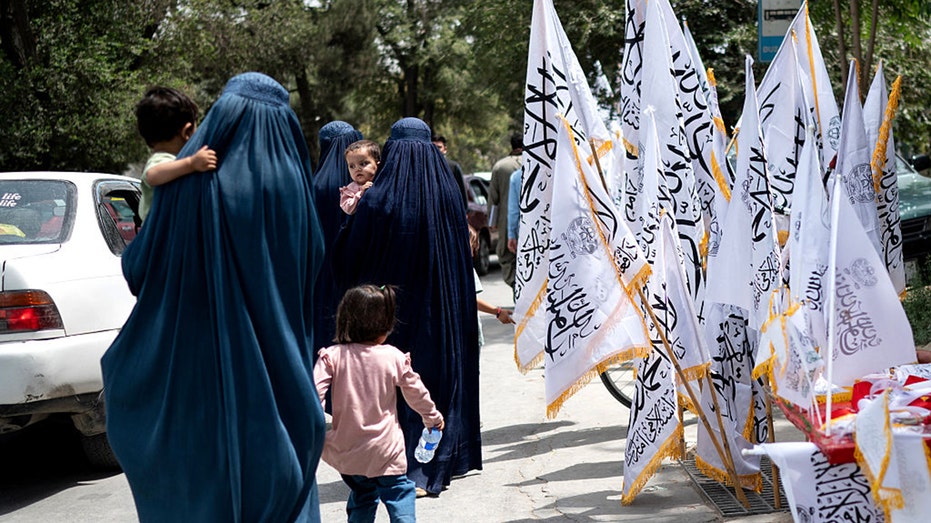
The Taliban’s consolidation of power with American-supplied weapons has profound implications. Regionally, it risks destabilizing neighboring countries already concerned about spillover violence and refugee flows. The bolstered Taliban security apparatus could facilitate safe havens for extremist groups, complicating counterterrorism efforts.
For the U.S. and the international community, the failure to safeguard aid and ensure durable Afghan institutions raises urgent questions about future foreign assistance frameworks. There is a need to rethink how to support fragile states—balancing military aid with strong governance reforms and community engagement to prevent similar outcomes.
Strategically, the episode advocates for cautious exit strategies from intervention zones, emphasizing irreversible capacity building rather than short-term military successes. The lessons from Afghanistan could inform policies regarding current and future conflicts where foreign powers provide security assistance.
The Bottom Line
The SIGAR report reveals that the massive U.S. investment in Afghanistan's security was effectively converted into resources empowering the Taliban, highlighting critical flaws in strategy, execution, and exit planning. The resulting security and governance vacuum exposes the limits of imposing foreign models without local ownership. Moving forward, this underscores the imperative for nuanced approaches that integrate political, social, and military dimensions to foster sustainable peace.
Topics
Editor's Comments
This report is a sobering reminder that military aid flows can have unintended consequences far beyond the battlefield. The failure to build adaptable, resilient Afghan institutions reflects a fundamental challenge in intervention policy: how to reconcile short-term security goals with long-term nation-building. Too often, aid tied heavily to external models breeds fragile dependencies vulnerable to abrupt regime changes. The acquisition of U.S. weapons by the Taliban invites a critical reassessment of how foreign military assistance is structured and monitored. Moreover, the continued humanitarian aid paradoxically underscores the limits of purely military solutions in addressing deep-seated political and social issues. Policymakers must learn that without inclusive governance and anti-corruption efforts, reconstruction risks reversing itself, empowering adversaries rather than stabilizing nations.
Like this article? Share it with your friends!
If you find this article interesting, feel free to share it with your friends!
Thank you for your support! Sharing is the greatest encouragement for us.