Amy Schumer’s Split Exposes Our Myths About Weight, Autism, and ‘Perfect’ Marriage

Sarah Johnson
December 15, 2025
Brief
Amy Schumer’s split from Chris Fischer exposes deeper cultural tensions around women’s bodies, autism, IVF, and performative marriage. This analysis unpacks the narratives she’s preemptively rejecting—and why they matter.
Amy Schumer’s Split Is Really About Three Taboo Topics: Weight, Autism, and the Myth of the “Perfect” Modern Marriage
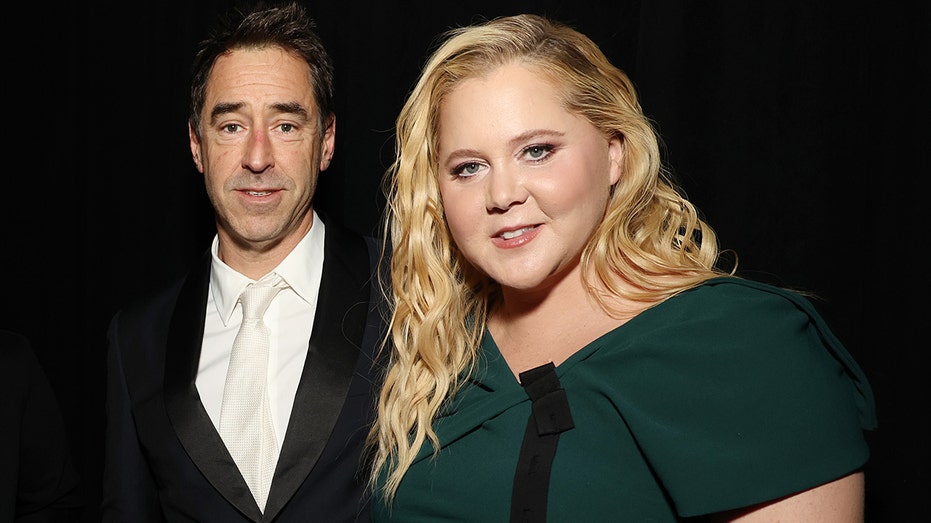
Amy Schumer announcing the end of her seven-year marriage to chef Chris Fischer will be widely covered as another celebrity breakup, flavored with a few of her trademark jokes. That framing misses the real story. This split sits at the intersection of three powerful cultural fault lines: how we talk about women’s bodies, how we understand neurodiverse relationships, and how social media performance reshapes modern marriage.
Schumer’s Instagram caption — dismissing weight loss and her husband’s attractiveness as reasons for the breakup, and explicitly noting earlier that their fate had “nothing to do with weight loss or autism” — is not just humor. It’s a strategic preemptive strike on the narratives she knows will be projected onto her life. That move tells us almost as much about us as it does about her.
The Bigger Picture: A Marriage Lived in the Spotlight
Schumer and Fischer’s relationship has been unusually public from the beginning. They made their relationship Instagram-official, live-streamed their early domestic life through a cooking show, invited viewers into their fertility struggles in the docuseries Expecting Amy, and used stand-up specials and talk shows to narrate their journey. The public not only watched their marriage; it was invited to co-author the story.
Two issues were repeatedly foregrounded:
- Fischer’s autism diagnosis. Schumer discussed it in a Netflix special and on talk shows, framing his traits as part of what she loved and using their experience to de-stigmatize adult autism diagnoses.
- Her body and health. From hyperemesis during pregnancy to IVF, hysterectomy, and later, dramatic weight loss, Schumer has made her body a site of confessional honesty and cultural commentary.
Once those themes are out in the open, the public tends to treat them as storylines in an ongoing series rather than facets of private lives. Her breakup announcement is, in effect, a rare attempt to slam shut two predictable narrative doors: “she got hot and traded up” and “autism ruined the marriage.” That she had to do this at all is a commentary on celebrity culture in 2025.
What This Really Means: Three Deeper Storylines
1. The Persistent Fantasy of the ‘Glow-Up Divorce’
Schumer’s line about not dropping “some lbs” and deciding she could “bag [a] basket” is wry, but she’s skewering a very real trope: the idea that when women lose weight, divorce is almost inevitable, either because they “outgrow” their partner or because their partner can’t handle their newfound attractiveness.
This is grounded in a broader cultural obsession with “revenge bodies” and glow-up narratives. Social media rewards visual transformation with likes, followers, and media coverage. When Schumer’s weight loss drew headlines and celebrity praise, it fed into a familiar storyline: woman improves body, upgrades life. Her post rejects that script outright.
Underneath the joke is a critique: we are far more comfortable framing divorce as a shallow aesthetic consequence than acknowledging the far more common and complicated reasons couples separate — chronic stress, emotional drift, unequal labor, shifting values, and the grinding impact of health issues and caregiving burdens.
2. Autism, Marriage, and the Limits of Representation
Schumer has consistently spoken about Fischer’s autism in loving, destigmatizing terms. She credited his diagnosis with giving them “helpful tools” and emphasized that his traits were part of why she fell madly in love with him. That made their marriage an inadvertent test case in the public imagination: could a high-profile couple normalize neurodiverse relationships?
When she later wrote that “whatever ends up happening with me and Chris has nothing to do with … autism,” she was trying to prevent a predictable backlash: the notion that autism inherently makes relationships unstable. Her concern is well-founded. Research shows that autistic adults often face stereotypes around empathy, intimacy, and compatibility, despite wide variation across the spectrum.
The danger now is that their split will be retrofitted into a cautionary tale about autism rather than read for what it is: a marriage between two complex individuals that, like many, ran its course. Schumer’s insistence on decoupling the breakup from Fischer’s diagnosis is an attempt to protect both him and the broader autistic community from weaponized misinterpretation.
3. IVF, Chronic Health, and the Invisible Strain on Relationships
The couple’s publicly documented struggles with IVF, pregnancy complications, and Schumer’s hysterectomy are crucial context. Long before this split, she talked about being “run down and emotional,” the toll of failed IVF cycles, and the grief of knowing there would be no second biological child.
Multiple studies have found elevated stress, depression, and relationship strain among couples undergoing fertility treatment. While most do not end in divorce, the experience can reveal fault lines that might otherwise stay dormant. Add in her health battles — endometriosis, major surgery, and the physical reinvention implied by losing around 50 pounds — and you have a relationship exposed to serial shocks.
Schumer’s previous admission that “you don’t really get sympathy because you already have one child” speaks to another under-discussed reality: secondary infertility and the shame of feeling unentitled to grief. Couples navigating that terrain often receive less social support, even as they grapple with serious emotional and financial stress.
Expert Perspectives: What Professionals See Behind the Headlines
Relationship and disability experts point to several themes that typically get lost in celebrity coverage.
First, on the intersection of neurodiversity and marriage, clinical psychologist Dr. Tony Attwood has long emphasized that neurodiverse couples can thrive, but often need a different communication toolkit and more explicit negotiation of needs. When relationships end, autism is frequently blamed in simplistic ways rather than understood as one of many factors in a complex dynamic.
Second, fertility specialists and mental health professionals highlight that the emotional fatigue from prolonged medical interventions can linger long after treatment stops. Even for couples who remain together, identity shifts — from imagining a larger family to reconciling with a single-child reality — can reconfigure the relationship landscape.
Finally, media scholars note that “performative intimacy” — broadcasting domestic life for entertainment — changes how couples experience their own relationship. When intimacy becomes content, private disagreements can feel like plot problems, and staying together or breaking up both become public-relations decisions as much as personal ones.
Data & Evidence: How Common Is What They’re Going Through?
Several broader trends help situate this split:
- Marriage duration. A seven-year marriage with a young child, followed by an “amicable” split, aligns with a longstanding pattern: divorce risk tends to peak in the first decade of marriage.
- Fertility stress. Studies in reproductive medicine generally estimate that up to half of couples undergoing IVF report significant relationship strain, with a minority eventually separating, though causality is complex.
- Celebrity divorce narratives. Social media-era splits increasingly come with preemptive messaging — controlling the narrative before tabloids or commenters do. Schumer’s pre-emptive denial of certain motives is now part of a recognizable crisis-communications playbook, albeit delivered in her comedic voice.
There is less quantitative data on neurodiverse marriages specifically, but existing research and anecdotal evidence both suggest a wide spectrum of outcomes. Some couples report distinctive challenges; others credit neurodiverse traits with bringing structure, honesty, or creativity to the partnership. Treating autism as a monolithic predictor of marital success or failure is simply not supported by the evidence.
Looking Ahead: Why This Story Will Echo Beyond the Tabloids
Several consequences are likely to unfold from here:
- Co-parenting as a public narrative. By emphasizing “family forever” and “all love and respect,” Schumer is positioning this split within a growing trend: celebrities framing divorce as a reconfigured family rather than a failed one. How she and Fischer share parenting going forward could become part of a larger cultural script about post-divorce family stability.
- More nuanced talk about autism and relationships. Her explicit defense of Fischer and her refusal to blame autism may embolden others in neurodiverse relationships to push back against stigma. We could see more first-person accounts that complicate simplistic assumptions about autism and intimacy.
- Shifting narratives around body change and relationship change. Schumer calling out the expected “she got thin and left” storyline could spark more critical conversations about how we project motives onto women’s bodies and treat weight loss as a moral and relational turning point.
- Content boundaries for public couples. As more celebrity couples monetize their domestic lives — from cooking shows to docuseries — Schumer’s experience may prompt hard questions about how much of a relationship can be turned into content without eroding its private foundations.
The Bottom Line
Amy Schumer’s separation from Chris Fischer is not just another celebrity breakup. It exposes how quickly we reduce complex personal lives to lazy narratives about weight, disability, and female ambition. By preemptively rejecting those narratives, Schumer is not only protecting her family; she’s holding up a mirror to a culture that still struggles to see women, autistic partners, and non-traditional families as three-dimensional.
The real story here isn’t why their marriage ended — a question that remains, rightly, largely private. It’s why our first instinct is to blame a dress size or a diagnosis, instead of accepting that even loving, intentional marriages can end without a villain, a makeover, or a simple moral.
Topics
Editor's Comments
What’s striking about Amy Schumer’s announcement is how much of it is defensive architecture. Before we even know the private dynamics of the split, we can already see the narratives she’s trying to block: that she left because she got thinner, that autism made her marriage unsustainable, that there has to be a clean villain. This is what happens when a relationship has been partially co-authored with the public; disentangling yourself requires not just legal paperwork but narrative damage control. The contrarian question worth asking is whether our appetite for “relatable” celebrity disclosure has gone too far. We applaud honesty about IVF, mental health, and neurodiversity, but we rarely reckon with the long tail: once those intimate details are public, they become the lens through which every future decision is judged. Schumer’s post reads like an attempt to reclaim a sliver of complexity in a culture that keeps demanding simple stories.
Like this article? Share it with your friends!
If you find this article interesting, feel free to share it with your friends!
Thank you for your support! Sharing is the greatest encouragement for us.