Why Andrew Bogut’s “Public Hangings” Comment After the Bondi Hanukkah Attack Matters More Than You Think

Sarah Johnson
December 14, 2025
Brief
Andrew Bogut’s call to “publicly hang” terrorists after the Bondi Hanukkah attack reveals a deeper shift in Australia: growing punitive populism, distrust of institutions, and rising insecurity for Jewish communities.
Andrew Bogut’s “Public Hangings” Comment Exposes a Deeper Shift in How Democracies Respond to Terror
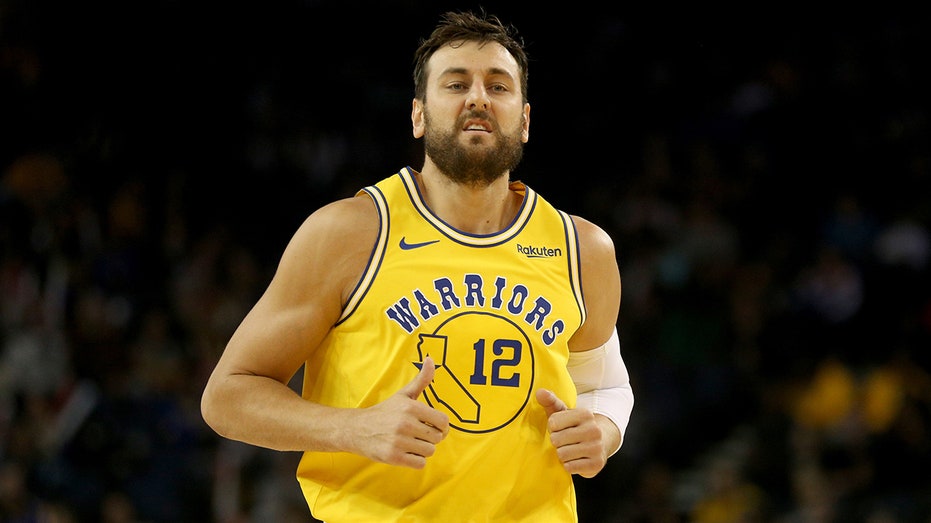
The immediate headlines frame this as a celebrity outburst: former NBA champion Andrew Bogut calling on authorities to “publicly hang” terrorists after a deadly attack on a Hanukkah event near Bondi Beach in Sydney. But this reaction is less about one athlete’s anger and more about a growing fracture line inside Western democracies: how far a fearful, polarized public is willing to go in abandoning long-standing legal and moral norms when terror strikes close to home—especially when Jews are the target.
Bogut’s posts sit at the intersection of three volatile narratives: the resurgence of antisemitic violence post–October 7, the erosion of trust in mainstream media and institutions, and the normalization of extreme punitive rhetoric in online debate. Understanding his comments in that broader context is essential to understanding where Australia—and other democracies—may be heading next.
The bigger picture: terror, Jews, and a shifting Australian landscape
Australia has seen politically motivated violence before—most notably the 2014 Lindt Café siege in Sydney, carried out by a self-styled Islamist extremist, which left two hostages dead and triggered a national security rethink. But mass shootings remain rare due in large part to sweeping gun reforms after the 1996 Port Arthur massacre, when 35 people were killed and John Howard’s government pushed through strict firearms laws.
The reported Bondi Hanukkah attack, leaving at least 12 dead and dozens injured, is being treated as a terrorist incident and described by authorities as a targeted attack on the Jewish community. That targeting matters: since Hamas’s October 7, 2023, attacks on Israel and the subsequent war in Gaza, Jewish communities worldwide have faced a documented spike in threats, harassment, and violence.
In Australia, the Executive Council of Australian Jewry reported in 2024 that antisemitic incidents had surged sharply after October 7, including abuse, vandalism, and intimidation outside synagogues and Jewish schools. Jewish communities in Sydney and Melbourne have described feeling less safe in public, particularly at visibly Jewish events.
Against that backdrop, a mass shooting at a Hanukkah celebration is more than an isolated crime; it lands in a climate where many Jews already feel they are on the front line of global tensions being imported into local streets. That is the emotional context in which Bogut and many others are reacting: a sense not just of horror, but of systemic failure to protect a minority community.
What Bogut’s comments reveal about public mood and institutional trust
Bogut’s reaction had three key elements: a claim that X was being censored in the Bondi area, a demand for the “public hanging” of the perpetrators, and a dismissal of electoral politics as a solution (“Thinking you can vote your way out of this mess is beyond naive”). Each piece speaks to a deeper trend.
1. The censorship claim: information distrust as default
Bogut’s allegation that X was being “heavily sensored [sic]” and that users were being forced to rely on a “main stream media version” of events taps into a familiar narrative: that governments and legacy media are actively filtering, distorting, or suppressing truth. This reflects a broader information crisis rather than proof of any specific geofencing or shutdown.
In crisis situations, social platforms sometimes throttle livestreams, automatically limit graphic content, or suffer network overloads. Meanwhile, law enforcement may request platforms to remove posts that reveal real-time tactical details or misidentify suspects. Those operational realities easily get reframed as political censorship, particularly in polarized online communities already primed to distrust institutions.
The bigger issue isn’t whether there was any technical throttling; it’s that a significant slice of the public now instinctively believes that whatever officials and mainstream outlets say is incomplete at best, maliciously manipulated at worst. That gap is precisely where speculative or extremist narratives flourish.
2. The call for public hangings: punitive populism in real time
The demand to “publicly hang” the attackers, if alive, is not just an emotional outburst—it’s a crystallization of punitive populism: the idea that only harsh, exemplary, often extrajudicial punishments can restore order and deter future terror.
Australia abolished the death penalty at the federal level in 1973, and by 2010 had committed legally never to reintroduce it. Public executions have not taken place there in over a century. Yet in moments of shock, calls to roll back these norms resurface, often framed as common-sense justice for “obvious” villains like terrorists or child murderers.
Bogut’s influence matters. As a former NBA champion and national sports figure, his rhetoric helps normalize the idea that the “right” response to terror involves a repudiation of the rule-of-law framework—from presumption of innocence to fair trial and proportionate punishment—in favor of spectacular, retributive violence by the state.
Even if such calls are never implemented, they shift the Overton window: public debate about security moves from “How do we prevent this?” to “Why aren’t we punishing harder?” That can make more invasive surveillance, prolonged detention without charge, or citizenship revocations politically easier to justify.
3. “You can’t vote your way out of this”: a crisis of democratic efficacy
The line about being “naive” to think you can vote your way out speaks to something deeper than cynicism. It signals a loss of faith in democratic mechanisms to solve complex problems like terrorism, radicalization, and communal violence. If voting is seen as useless, the implied alternatives range from apathy and disengagement to extra-parliamentary activism—or, in more troubling cases, support for authoritarian approaches.
This sentiment isn’t unique to Australia. In Europe and North America, fears of terror and migration, combined with economic stagnation and cultural polarization, have fueled movements that argue only strongman politics or emergency powers can restore safety. Bogut’s post echoes that global mood: the sense that “normal politics” is too slow, too compromised, or too captured by elites to provide security.
Expert perspectives: security, law, and radicalization
Security and legal experts warn that how societies talk about terror after an attack affects both future security and social cohesion.
Dr. Lydia Khalil, a counterterrorism specialist and research fellow in politics and security, has argued in past analyses that over-securitized or collective punishment responses to jihadist or ideologically motivated attacks can actually fuel further radicalization, especially if entire communities feel targeted or stigmatized.
Professor George Williams, a leading Australian constitutional law scholar, has cautioned that exceptional laws passed in the wake of terror attacks often outlast the immediate moment and may gradually normalize expanded state powers. The same logic applies to rhetoric: once extreme language becomes acceptable in mainstream debate, it is tough to walk back.
On the other side, some security practitioners emphasize that repeated, high-casualty attacks can erode public confidence in authorities and that visible, decisive responses—including tough sentencing and strong public messaging—can be necessary to maintain deterrence and reassure vulnerable communities.
Those tensions—between deterrence and rights, reassurance and overreach—are exactly what Bogut’s comments bring into sharp relief, albeit in an unsophisticated form.
Data and overlooked angles: antisemitism, online ecosystems, and athletes as political actors
Antisemitic violence as a distinct threat
Globally, antisemitic incidents have soared since October 7. In some Western countries, Jewish institutions have reported increases of several hundred percent in threats and harassment compared with pre-2023 baselines. Even before this attack, Australian Jewish groups were reporting record levels of abuse and intimidation.
The Bondi shooting, described as the worst attack against Jews since October 7, is part of that continuum. What’s often missing from immediate coverage is how cumulative fear changes behavior: parents changing schools, synagogues turning into fortress-like spaces, religious holidays celebrated under police guard. For many Australian Jews, Hanukkah 2025 will now be psychologically split into “before Bondi” and “after Bondi.”
The online anger economy
Bogut’s post also sits inside the “anger economy” of platforms like X. Content that expresses outrage, suspicion of elites, and calls for harsh retribution tends to gain traction far faster than sober analysis. There is a structural incentive to say the most extreme thing that still resonates with your audience.
That means high-profile figures become accelerants. A comment about “publicly hanging” terrorists is almost designed to travel: it’s shocking, binary, and fits into existing narratives about civilizational struggle and betrayed citizens. Each viral iteration hardens attitudes and makes nuanced policy conversations harder to sustain.
Athletes as political amplifiers
Over the last decade, athletes have increasingly become political actors: from Colin Kaepernick’s kneeling protests to NBA players speaking out on racial justice, Hong Kong, or human rights. Bogut has previously courted controversy with posts on COVID-19 restrictions and media skepticism. His latest comments reinforce that sports figures are not just entertainers—they are influential nodes in the political attention economy.
What’s changing is not just that athletes comment, but the direction of that commentary. Where many high-profile sports voices in the U.S. leaned left on issues like policing and race, some current voices (including Bogut) channel a different constituency: one that is skeptical of institutions, hostile to perceived “globalist” agendas, and more open to draconian security measures.
Looking ahead: policy, social cohesion, and speech boundaries
Several key questions now loom for Australia and comparable democracies.
1. How will security policy evolve after a targeted Jewish massacre?
Expect intense debate over whether existing counterterrorism frameworks adequately address both Islamist and far-right anti-Jewish violence, and whether surveillance, community liaison, and threat assessment for religious events are sufficient. Jewish institutions will likely push for sustained—not just episodic—increases in protection.
The risk is a two-tier response: emergency measures that heavily securitize Jewish spaces while leaving underlying drivers of radicalization—online propaganda, grievance narratives, identity-based polarization—largely untouched.
2. Will retributive rhetoric bleed into policy?
While Australia is not on the verge of reinstating public executions, public anger can legitimize policies that edge closer to the line of due process: longer pre-charge detention, expanded use of control orders, broader definitions of extremism. That’s the slippery slope legal scholars warn about: extreme rhetoric doesn’t change the law overnight, but it lowers resistance to measures that once would have been unthinkable.
3. Where is the boundary between free speech and incitement?
Calls to “publicly hang” specific offenders occupy a gray zone. They are not a direct call to vigilante violence, but they valorize state violence and can feed a broader culture of dehumanization. Regulators and platforms will face renewed pressure to define what is acceptable when public figures react to atrocities.
4. Can trust in democratic problem-solving be rebuilt?
Underneath everything is Bogut’s assertion that “you can’t vote your way out of this.” If that view spreads, it undermines support not only for specific parties, but for the very idea that negotiation, legislation, and incremental reform are viable tools against existential threats. The alternative is often a drift toward permanent emergency politics—where fear, not law, sets the limits.
The bottom line
Andrew Bogut’s furious reaction to the Bondi Hanukkah massacre is not just a celebrity hot take. It is a window into how terror, antisemitism, and mistrust of institutions are reshaping the political imagination of ordinary citizens in a liberal democracy. His call to “publicly hang” terrorists and his dismissal of voting as a solution may remain rhetoric—but rhetoric of this kind has a track record of changing what becomes politically possible.
The deeper question is not what Bogut said in a moment of rage, but whether Australia can respond to a devastating attack on its Jewish community in a way that delivers real security without sacrificing the legal and moral guardrails that distinguish democracies from the terror they condemn.
Topics
Editor's Comments
What stands out in this episode is how seamlessly a horrific, targeted attack on a Jewish celebration has been absorbed into pre-existing culture-war narratives. Instead of a broad-based discussion about protecting a vulnerable minority and understanding the specific drivers of antisemitic violence, the conversation online quickly gravitated toward familiar themes: institutional betrayal, media censorship, and the supposed necessity of extreme retributive justice. That shift serves several political agendas but does very little for public safety. It also risks sidelining the voices of those most affected—Jewish communities—who often want both robust security and safeguards against overreach. The deeper challenge for Australia will be whether it can hold two ideas at once: that the threat to Jews is real and urgent, and that responding effectively requires more than symbolic toughness or a return to punishments we abandoned for good reasons decades ago.
Like this article? Share it with your friends!
If you find this article interesting, feel free to share it with your friends!
Thank you for your support! Sharing is the greatest encouragement for us.