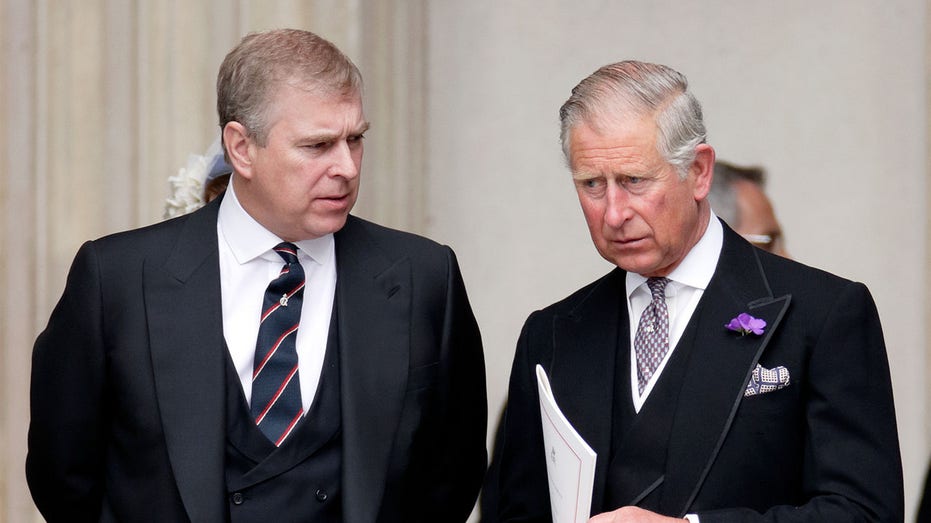
King Charles III’s Erasure of Prince Andrew’s Titles: A Royal Reckoning and Institutional Reset

Sarah Johnson
December 3, 2025
Brief
An in-depth analysis of King Charles III’s decisive removal of Prince Andrew’s titles, revealing its historical context, royal family dynamics, and implications for the future of the British monarchy.
Opening Analysis
The dramatic removal of Prince Andrew’s final royal titles by King Charles III marks a watershed moment in the British monarchy’s ongoing efforts to recalibrate its public image amid scandals. Far from merely symbolic, this decisive action signals a strategic shift under Charles’s reign to reinforce accountability, preserve institutional legitimacy, and manage the monarchy’s historical baggage. It also exposes profound tensions within the royal family and highlights evolving expectations for conduct among senior royals in a modern, scrutinizing media environment.
The Bigger Picture
Prince Andrew’s downfall cannot be understood in isolation—it must be viewed against decades of mounting scrutiny around his personal associations and alleged misconduct. Since the Jeffrey Epstein scandal erupted publicly in 2019, Andrew has faced withering criticism for his perceived lack of contrition and questionable decisions. Historically, British royalty operated within a culture of near-immunity and opaque privilege, but shifting public norms and media dynamics have pressured the institution to adapt or risk irrelevance.
King Charles’s ascension to the throne in 2022 ushered in a new era emphasizing modernization and damage control. Where Queen Elizabeth II’s response to controversies was often cautious and preserving family unity, Charles appears both more willing and able to enforce harsher penalties to protect the monarchy’s future. Stripping Andrew of honors such as the Order of the Garter and Royal Victorian Order—the latter of which reflected personal favor—indicates a deliberate erasure of his standing in royal history.
What This Really Means
Beyond removing titles, this move is a carefully calibrated act of institutional self-preservation. It publicly distances the crown from scandal while showcasing a leadership style focused on accountability. The timing—amid public lease disputes and ongoing fallout from Epstein-related claims—suggests palace strategists aimed to control the narrative and affirm King Charles’s command.
Moreover, this action enforces a new precedent: royal privilege is no longer a shield against consequences, especially where reputational risk is involved. It sends a clear internal message to other royals that misconduct or association with controversy can lead to formal sanctions, even by a reigning monarch.
The continuing retention of titles by Andrew’s children signals a nuanced balancing act—protecting the dynasty's future while marginalizing the individual deemed irredeemable within the family hierarchy.
Expert Perspectives
Royal experts emphasize both the strategic and familial dimensions. Hilary Fordwich notes that "acting decisively and early is preferable, better late than never," underscoring that this step was overdue. Ian Pelham Turner highlights minimal sympathy within the family, interpreting Charles’s restraint as motivated partly by brotherly loyalty and a desire to prevent damaging tell-all disclosures. Meredith Constant points to savvy timing crafted to generate positive public response and reinforce Charles’s strong leadership image.
Legal and sociological scholars contributing to broader discourse note how this reflects monarchic adaptation to contemporary norms where transparency and victim advocacy increasingly shape public expectations. The palace’s explicit sympathy for survivors of abuse, contrasted with its treatment of Andrew, aligns with shifting societal priorities on justice and institutional responsibility.
Data & Evidence
Since 2019, public trust in the British monarchy has experienced fluctuations, with significant dips following scandals involving Prince Andrew. Polls from organizations such as YouGov have shown a decline in favorable views toward the royal family linked to issues of elitism, accountability, and transparency. Notably, a 2024 survey indicated that 62% of British respondents believe that royals involved in serious allegations should face tangible consequences.
The official Gazette announcements formally annulling Andrew’s appointments provide legal codification of his removal—a rare and historically significant step, marking only the second major expulsion from the Order of the Garter in modern times.
Looking Ahead
King Charles’s actions may set a precedent reshaping royal governance, encouraging more proactive responses to crises and scandals. Future royals may face heightened scrutiny not only by media but via possible formal accountability mechanisms within the institution.
Andrew’s eviction from Royal Lodge and status reduction open questions about his ongoing role in public life and how the family balances reunion against reputation. There is likely to be continued monitoring of his movements and potential fallout among public supporters and detractors.
This episode also raises crucial questions about how monarchy will sustain relevance in a changing Britain that demands greater transparency, especially as republican debates occasionally resurface amid controversies.
The Bottom Line
The erasure of Prince Andrew’s royal legacy underlines King Charles III’s determination to safeguard the monarchy through clear demarcation from scandal-tainted family members. This moment reflects both historical rupture and institutional modernization—signaling an evolving royal role aligned with contemporary ethical expectations. While controversy lingers, the monarchy’s strategic recalibration may prove essential for its survival in a 21st-century Britain that increasingly values accountability over tradition.
Topics
Editor's Comments
While the public spectacle of stripping royal honors often serves immediate reputational needs, it also raises deeper questions about the monarchy’s internal governance and its adaptability to modern ethical standards. King Charles’s decision, though widely applauded, highlights a reactive rather than proactive stance historically characteristic of this institution. The ongoing challenge for the monarchy will be to institutionalize accountability mechanisms that prevent similar crises before they escalate publicly. Additionally, the delicate compartmentalization—punishing one individual while preserving the titles of his children—reveals the balancing act between tradition and modernity that the crown must navigate carefully. Watching how this unfolds will be key to understanding the monarchy's evolving role in an increasingly critical society.
Like this article? Share it with your friends!
If you find this article interesting, feel free to share it with your friends!
Thank you for your support! Sharing is the greatest encouragement for us.