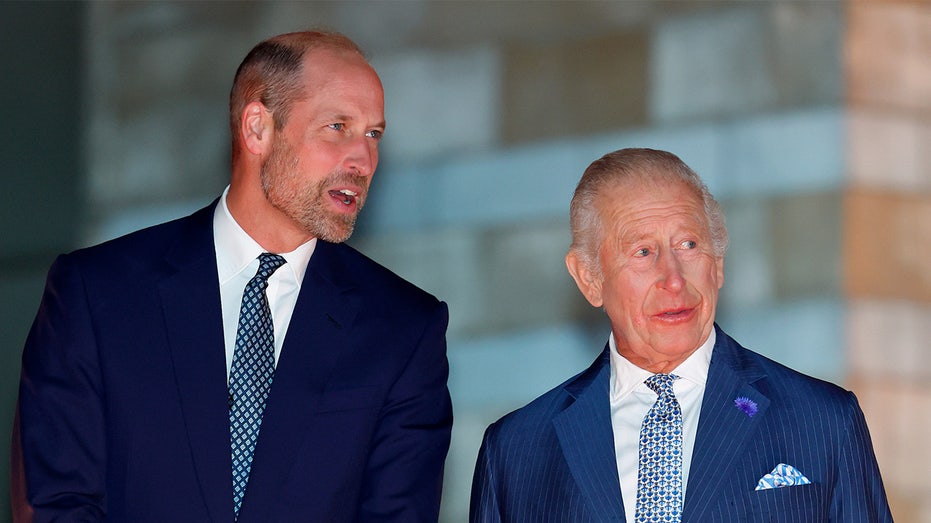
Prince William’s Quiet Revolution: Modernizing the British Monarchy Amid King Charles’s Trials

Sarah Johnson
December 3, 2025
Brief
An in-depth analysis reveals how Prince William is modernizing the British monarchy amid King Charles's health struggles and royal scandals, signaling a strategic reinvention for 21st-century relevance.
Opening Analysis
Three years into King Charles III's reign, the British monarchy finds itself navigating turbulent waters marked by personal health crises, deeply rooted familial scandals, and a shifting generational ethos. Amid King Charles's cancer diagnosis and controversial challenges surrounding senior royal figures, Prince William emerges as the quiet architect of a more modernized monarchy—one aimed at preserving relevance in a 21st-century world that increasingly questions inherited privilege. This transition extends beyond mere stylistic changes; it signals a redefinition of royal identity, governance priorities, and public engagement, shaped by lessons from the past and pressures of the present.
The Bigger Picture
The British monarchy has long stood as a symbol of continuity amid change, but its stability has been punctuated by periods of crisis and reinvention. Since Queen Elizabeth II’s record-breaking reign ended, King Charles III ascended to a throne burdened by mounting public scrutiny, expectations, and unresolved royal family dynamics. Historically, the Crown has been intertwined with Britain's evolving national identity, its role shifting in response to geopolitical shifts, democratic reforms, and cultural attitudes.
Charles’s own inheritance includes the painful legacy of Diana, Princess of Wales, and the fractured relationships within the House of Windsor. These include publicly known conflicts such as the estrangement from Prince Harry and the ongoing fallout from Prince Andrew's scandals related to Jeffrey Epstein, which challenged the monarchy’s moral authority internationally. The monarchy’s need for adaptation is tempered by a complex balance: maintaining traditions linked to national unity and the Church of England, while meeting demands for authenticity, accountability, and a renewed social contract with the public.
What This Really Means
Prince William's efforts represent a paradigm shift that prioritizes familial stability, modern family values, and a recalibrated public image. His emphasis on creating a private home life rooted in love and safety—explicitly contrasting with the divorce and turmoil that defined his own childhood—reflects a conscious effort to distance the future monarchy from past vulnerabilities. This approach may redefine the institution's public persona from a detached symbol of hierarchy toward a more relatable and compassionate entity.
Notably, William’s apparent prioritization of family over expansive global statesmanship reveals a strategic reshaping of royal duties tailored to contemporary expectations. As royal expert Hilary Fordwich observes, the modernization efforts often unfold «behind the scenes,» embedding progressive values that ensure the monarchy’s durability by aligning with societal shifts toward transparency, mental health awareness, and philanthropy.
Furthermore, William and Catherine's decision to eschew Buckingham Palace as their primary residence signals a break from royal excess and an acknowledgment of changing public perceptions around privilege and fiscal responsibility. The likely rationalization of royal properties underlines a pragmatic approach to monarchy as a national resource rather than a private estate, potentially reducing public costs and environmental footprint.
Meanwhile, King Charles’s preference for William to assume a more traditional global statesman role underscores intergenerational tensions within the royal hierarchy. The younger generation's inclination to champion causes like mental health, homelessness, and environmentalism illustrates a shift toward issue-driven monarchy that could recalibrate its societal relevance while maintaining elements of symbolic heritage.
Expert Perspectives
- Hilary Fordwich, Royal Commentator: "Prince William is quietly but steadfastly modernizing the monarchy to ensure it resonates with the new generation. Much of this work is conducted away from the public eye but is crucial for the Crown's future legitimacy."
- Richard Fitzwilliams, Royal Expert: "William’s focus on family priority reflects a deep awareness of the monarchy’s vulnerabilities. His approach to royal properties and public duties illustrates a pragmatic reshaping tailored to current societal norms while preserving Britain's unique traditions."
- Dr. Andrew Kettler, Historian of British Monarchy: "The current transition is reminiscent of Edward VIII’s abdication crisis aftermath when the monarchy was forced into profound self-reinvention. William’s modernization efforts suggest a strategic adaptation to avoid such existential threats in an era of global media scrutiny."
Data & Evidence
Polling trends from British social research organizations like YouGov indicate a generational divergence in attitudes toward the monarchy. While overall support remains above 60%, favorability among those aged 18-34 has declined markedly over the last decade, often citing perceived irrelevance and scandals as key drivers.
In 2023, a study published by the Institute for Government showed that 72% of the UK population favors a slimming down of royal expenses and properties, directly reflecting public pressure that William’s crown adaptation seems to heed.
The Church of England, over which the monarch is Supreme Governor, has experienced a decline in membership by approximately 15% over the past decade, signaling challenges to the monarchy’s religious and symbolic role.
Looking Ahead
The future stability and influence of the British monarchy hinge on successfully balancing royal tradition with evolving public expectations. Prince William’s quieter, value-driven approach may act as a blueprint for sustainability—a resilience built on transparency, family cohesion, and charitable impact rather than grandeur alone.
However, tensions remain. How King Charles’s treatment and legacy influence public perceptions of leadership and continuity will be vital, as will the resolution of lingering family fissures, including possible reconciliation efforts with Prince Harry and the management of reputational damage from past scandals.
Additionally, the monarchy’s role in an increasingly diverse, globalized, and politically complex Commonwealth presents ongoing challenges and opportunities. How the royal family navigates constitutional modernization talks in member states dissatisfied with monarchical ties will be critical in shaping the next decade.
The Bottom Line
Prince William’s strategic, behind-the-scenes reshaping of the monarchy represents more than a generational handover; it signals a conscious reinvention aimed at safeguarding the institution's relevance amid unprecedented challenges. By prioritizing family stability, pragmatic stewardship, and contemporary social causes, William may chart a course that ensures the British monarchy endures—not by clinging to past glories, but by embracing thoughtful modernization rooted in empathy and realism.
Topics
Editor's Comments
This period marks a critical inflection point for the British monarchy, where private family dynamics intersect with public institutional survival. Prince William’s subtle yet intentional recalibration of royal duties and image reflects a deep understanding that longevity depends not on clinging to archaic prerogatives but on thoughtful modernization. Yet, the path ahead is fraught: reconciling traditional symbolism with contemporary values, healing familial rifts, and addressing public skepticism will require more than individual leadership. It calls for systemic evolution. As we watch this gradual transformation, it is worth questioning how the monarchy can genuinely embody national unity in a fractured, media-saturated era, and whether the model of constitutional monarchy remains fit for purpose in the decades to come.
Like this article? Share it with your friends!
If you find this article interesting, feel free to share it with your friends!
Thank you for your support! Sharing is the greatest encouragement for us.