Anthony Geary’s Legacy: How a Daytime Antihero Quietly Rewrote Television

Sarah Johnson
December 16, 2025
Brief
Anthony Geary’s death isn’t just a soap opera obituary. It marks the end of a TV era and highlights how a daytime antihero quietly shaped modern prestige television, masculinity, and fandom.
Anthony Geary’s Death Closes the Era of the TV Antihero We Didn’t Realize Started in Daytime
Anthony Geary’s death at 78 is being covered as the passing of a soap legend. That’s accurate—but incomplete. What’s really gone is one of the most influential television characters of the last half-century and a blueprint for the morally complicated, psychologically layered antiheroes that now dominate prestige TV. Long before Tony Soprano or Don Draper, daytime audiences were already reckoning with Luke Spencer.
The Bigger Picture: How a Daytime Character Changed Television
To understand why Geary matters, you have to go back to the late 1970s and early 1980s—when broadcast TV was still a three-network universe, soaps were appointment viewing, and “serious acting” was presumed to happen anywhere but daytime.
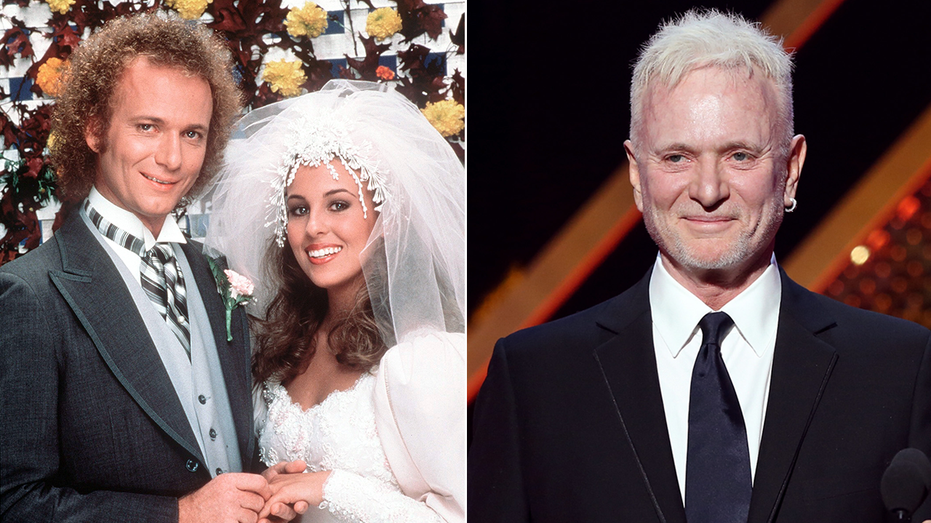
Geary entered that world as Luke Spencer in 1978, at a time when General Hospital was struggling in the ratings. The show’s reinvention—spy plots, mobsters, international intrigue—was important, but the emotional core was Luke and Laura, an unlikely “supercouple” whose 1981 wedding drew an estimated 30 million viewers in the U.S. alone, numbers that rivaled major primetime events. Cameos from megastars like Elizabeth Taylor weren’t just fan service; they were validation that daytime TV had become part of the cultural center, not the margins.
Crucially, Luke wasn’t written—or played—as a traditional soap hero. He was a deeply flawed, sometimes unlikeable figure with a violent, traumatic past. The character’s most controversial storyline—his rape of Laura, later reframed as a twisted romance—has been heavily criticized in retrospect, and rightly so. But the very fact that millions of viewers invested in a character that dark, and stayed with him through attempts at redemption, was a radical experiment in mass-market storytelling.
Geary’s eight Daytime Emmys were a recognition not only of a performance, but of the way daytime drama proved it could handle complex human contradictions at scale. That’s the lineage that connects Luke Spencer to later antiheroes across cable and streaming, even if that influence is rarely acknowledged explicitly.
What This Really Means: The End of a Certain Kind of TV Intimacy
Geary’s career also marks the beginning and the end of a specific relationship between TV and its audience. Daytime soaps were built on intimacy and continuity: five days a week, fifty weeks a year, for decades. For many viewers, Luke and Laura weren’t just characters; they were fixtures of daily life, aging and changing alongside the audience.
That continuity shaped an unusual kind of fame. Geary was a household name without being a tabloid fixture. He could walk away from Hollywood, move to Amsterdam, pursue photography and a quieter life, and still remain iconic for millions. In a content environment now dominated by short-run seasons, binge-drops and algorithms, it’s hard to imagine another actor living inside a single role, off and on, for nearly 40 years and retaining that level of attachment.
His choice to base himself in the Netherlands, away from the Hollywood machinery, also underscores an under-discussed reality: the emotional and psychological toll of carrying a cultural juggernaut on your back for decades. In interviews over the years, Geary often expressed ambivalence about Luke’s fame—grateful but wary of being trapped. That tension between artistic ambition and audience expectation is now a standard part of prestige-TV discourse, but Geary was navigating it long before those conversations had a vocabulary.
Expert Perspectives: Soap Operas as Cultural Laboratories
Media scholars have long argued that daytime TV has been underestimated as a site of cultural experimentation.
Dr. Elana Levine, a professor of media, cinema, and digital studies, has written extensively about soaps as “quietly radical” spaces: “Daytime dramas were often first to test controversial storylines around gender, sexuality, trauma and morality, precisely because they were assumed to be disposable. That invisibility created room for risk.”
Luke Spencer fits that pattern. Through him, General Hospital explored alcoholism, mental health struggles, intergenerational trauma, mob violence, and the possibility—and limits—of redemption. Geary’s performance pushed against the genre’s tendency to flatten characters into heroes and villains, offering instead a man shaped by damage, ego, guilt and love.
Television critic Matt Zoller Seitz has often noted that the modern “golden age” of TV didn’t spring from nowhere: “The long-arc storytelling hailed in shows like The Sopranos or Breaking Bad was field-tested for decades in soaps. If you think about it, a character like Luke Spencer is really a proto–Walter White—a person the audience knows intimately, whose worst acts they’re forced to confront and make sense of over years.”
Geary’s work also intersected with changing ideas around masculinity. In the 1980s, male leads in daytime were typically either straight-arrow good guys or cardboard villains. Luke was neither. He was romantic but unreliable, violent yet vulnerable, charming and manipulative. That ambiguity—played honestly rather than glossed over—foreshadowed the flawed male leads that would dominate TV drama in the 2000s.
Data & Evidence: The Scale of an Underestimated Legacy
- Luke and Laura’s 1981 wedding drew around 30 million viewers in the U.S., still the highest-rated episode in American soap opera history.
- At its 1980s peak, General Hospital averaged roughly 14–15 million daily viewers, numbers that most modern primetime shows—and virtually all streaming series—can’t touch.
- Geary’s eight Daytime Emmys for Outstanding Lead Actor remain a record, underscoring how consistently peers recognized his craft in a genre often dismissed by critics.
- Since the mid-1990s, the number of daytime network soaps has fallen from more than a dozen to just a handful. The generation that grew up with Luke and Laura is watching their TV world disappear in real time.
What Mainstream Coverage Is Missing
Most tributes will highlight Geary’s Emmys, the iconic wedding, and nostalgic fan memories. Several critical dimensions are likely to be downplayed:
- The unresolved reckoning with the Luke/Laura rape storyline. For years, the show and much of the audience reframed a rape as the origin of a great romance—an attitude reflective of the era but deeply troubling now. Geary himself later acknowledged the complexity and discomfort. His passing is an occasion to examine how TV helped normalize harmful narratives about consent, and how long it took to course-correct.
- His late-life openness about his personal life. The obituary mention of his husband, Claudio Gama, is striking in context. For much of Geary’s career, daytime leading men were presumed straight and tightly managed by publicity machines. The fact that mainstream coverage now names his husband without fanfare illustrates both how much has changed for LGBTQ visibility and how many actors of his generation spent decades constrained by homophobic industry norms.
- The economic and cultural devaluation of women’s media. Soaps were historically coded as “for women,” and thus dismissed by critics and executives. Geary’s towering performance happened in a genre routinely treated as lesser, even as it churned out some of TV’s most dedicated audiences and sophisticated narrative arcs.
Looking Ahead: What Geary’s Death Signals for Television
Geary’s passing is more than a personal loss for fans; it’s a checkpoint in television’s ongoing transformation.
1. The end of the mega-soap archetype.
There are still soaps on air, but the cultural ecosystem that made Luke possible—mass, scheduled viewing; limited channel choices; multi-decade loyalty—barely exists. Future “Luke Spencers” are more likely to appear in limited series or multi-season cable dramas, with far less time to evolve in front of the audience.
2. A template for streaming’s next moves.
Ironically, the streaming era is quietly rediscovering what soaps did well: serialized, character-driven, emotionally dense storytelling that keeps viewers coming back. As platforms search for stickier content, the soap model—long arcs, large ensemble casts, high emotional stakes—may be due for a rebrand, if not a revival. Geary’s career is a reminder that “lowbrow” forms can be artistically rich and commercially durable.
3. A reckoning with how we treat “genre” work.
There is a growing critical movement to reassess and archive soap history before it disappears into private vaults and lost tapes. Geary’s death may accelerate efforts to preserve daytime television as part of the serious cultural record, not just nostalgic ephemera.
4. A shifting conversation about legacy.
For newer generations encountering Luke Spencer mostly through clips and commentary, his storylines will be filtered through contemporary views on consent, gender violence and representation. Geary’s legacy will likely be read as both groundbreaking and deeply problematic—a duality that reflects television’s own messy evolution.
The Bottom Line: An Antihero Ahead of His Time
Anthony Geary was more than an eight-time Emmy winner or the male half of a supercouple. He helped invent a character type—damaged, charismatic, morally ambiguous—that would later be celebrated in “serious” television. He did it in a medium written off as disposable, for an audience that critics often ignored, under a schedule that would break most performers.
His death in Amsterdam, far from the studio lots where he became famous, is its own kind of epilogue: a reminder that the people who embody our cultural obsessions often choose to live—and die—outside the stories we write for them. As tributes pour in, the most honest way to honor Geary is to take daytime television seriously: to recognize its craft, confront its harms, and see in Luke Spencer not just nostalgia, but the DNA of modern television drama.
Topics
Editor's Comments
What strikes me most about Anthony Geary’s death is how it exposes a blind spot in our cultural memory. We are quick to credit cable and streaming for inventing the complex TV antihero, while ignoring that daytime soaps were experimenting with this territory decades earlier. Luke Spencer is a deeply uncomfortable test case: a character who pushed the boundaries of nuance and moral ambiguity, but also sat at the center of a storyline that trivialized sexual violence. That duality mirrors television’s own evolution—technically sophisticated, emotionally ambitious, but often ethically behind the curve. As we mourn Geary, there’s a risk of smoothing over that complexity in favor of uncomplicated nostalgia. The harder, more valuable work is to hold both truths at once: that he was a remarkable actor who expanded what was possible in a maligned genre, and that some of the narratives he embodied did real cultural harm. Honoring his legacy should include an honest accounting of both.
Like this article? Share it with your friends!
If you find this article interesting, feel free to share it with your friends!
Thank you for your support! Sharing is the greatest encouragement for us.