Peter Greene’s Quiet Power: What the Death of a ‘Pulp Fiction’ Villain Reveals About Hollywood’s Invisible Backbone

Sarah Johnson
December 16, 2025
Brief
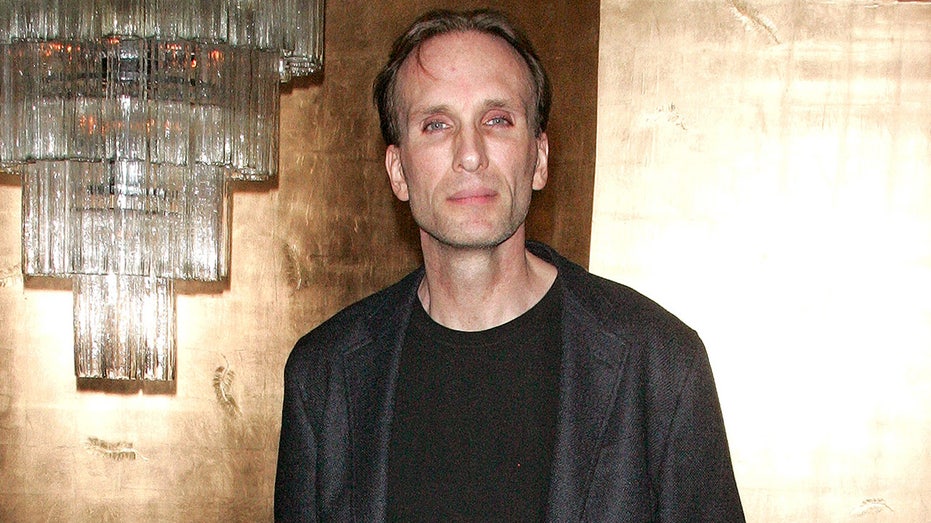
Peter Greene’s death at 60 is more than a celebrity obituary. It exposes how Hollywood relies on overlooked character actors, and reveals a late-career pivot toward political storytelling most viewers never saw.
Peter Greene’s Death and the Vanishing Art of the Hollywood Character Actor
Peter Greene’s death at 60 isn’t just the loss of a familiar face from Pulp Fiction and The Mask. It’s a reminder that the backbone of modern film and television—the working character actor—remains profoundly undervalued, even as their work shapes our collective memory of pop culture.
Greene’s career traces the arc of independent cinema in the 1990s, the rise of high-concept studio blockbusters, and the current, more precarious era of streaming and short-term gigs. His death in a Manhattan apartment, still working, still hustling, underscores how fragile even a “successful” acting career can be—and how Hollywood’s ecosystem depends on artists whose names most people don’t know, but whose presence they never forget.
The Bigger Picture: From Indie Grit to Cult Villainy
To understand why Peter Greene mattered, you have to start before Pulp Fiction.
Greene emerged from the early-1990s independent film wave, a moment when American cinema was hungry for realism, ambiguity, and flawed, working-class antiheroes. His breakout turns in Laws of Gravity (1992) and Clean, Shaven (1993) fit that era perfectly: low-budget, emotionally raw, and psychologically unsettling. These were films made for small audiences but big conversations, and Greene stood out because he brought something increasingly rare on screen—genuine volatility and vulnerability bound together.
Then 1994 happened. Quentin Tarantino’s Pulp Fiction and the Jim Carrey vehicle The Mask didn’t just make money; they reshaped the template for what studio films could look like. In both, Greene played something close to archetypal evil, but his villains weren’t cartoon cutouts. In Pulp Fiction, his sadistic Maynard is on screen for only a handful of minutes, but those minutes permanently altered how audiences remembered the film. In The Mask, as mob enforcer Dorian Tyrell, he gave weight and menace to what could have been a throwaway role opposite Carrey’s elastic comedy.
That’s the story of a lot of character actors: they don’t get the poster, but they own your memory of a scene.
What This Really Means: The Invisible Labor Behind Hollywood’s Iconic Moments
Greene’s nearly 100 acting credits draw a line through three decades of American entertainment—from indie dramas to prestige crime thrillers (The Usual Suspects), studio action-comedies (Blue Streak), and gritty urban narratives (Training Day). Yet his name never reached the brand-level recognition of the stars he shared the frame with.
This raises a broader issue: modern Hollywood is built on a two-tier visibility system.
- Tier one: bankable leads—names that can open a movie or attract a streaming deal.
- Tier two: the working actors, often typecast, who bring credibility, tension, and emotional texture. They are replaceable on paper, irreplaceable on screen.
Greene was emblematic of that second tier. He was often cast as the villain, the unstable presence, the man whose arrival meant things were about to go very wrong. That casting pattern tells us as much about Hollywood as it does about Greene. Industry economics and narrative habits reward a kind of shorthand: once an actor proves they can embody menace or vulnerability, casting directors repeatedly reach for them to signal that feeling instantly.
But there’s a cost. Typecasting offers steady work, yet it limits range and recognition. Audiences might say, “Oh, that guy,” but never learn the name behind the performance. That anonymity has economic consequences: fewer above-the-line deals, less residual leverage, limited branding opportunities, and more financial precarity as actors age.
Beyond the Credits: A Character Actor Pivoting to Storyteller
One of the most revealing details in the reporting is what Greene was working on at the end of his life: a documentary titled From the American People: The Withdrawal of USAID, which he was producing and narrating alongside Jason Alexander and Kathleen Turner.
This is not a vanity project in the typical Hollywood sense. USAID—the U.S. Agency for International Development—sits at the intersection of humanitarian policy, soft power, and global development. A documentary on its withdrawal suggests a deeply political and globally conscious concern: what happens when an already fragile international development infrastructure is scaled back or pulled out?
Greene’s pivot into documentary work signals a pattern we’re seeing more often: mid-career or late-career actors using their reputations and voices to move into socially engaged storytelling. It’s a way to reclaim agency over the kinds of stories they tell, especially for actors who were slotted into narrow roles for decades.
In that sense, Greene’s career arc reflects a broader shift. As streaming platforms explode the demand for content but compress pay scales, many working actors are looking for more control by producing, writing, or narrating documentaries and independent projects. Their on-screen visibility may decrease, but their creative influence often grows.
Expert Perspectives: The Character Actor as Cultural Infrastructure
Film scholars and industry veterans have long argued that character actors are the glue of visual storytelling.
Dr. Sharon Willis, a professor of film and media studies, has described character actors as “the cultural infrastructure of cinema—rarely acknowledged, always load-bearing.” Greene fits this description almost perfectly: he was never the marquee, but the tone of a scene often hinged on his presence.
Walter Chaw, a respected film critic known for his writing on 1990s cinema, has often highlighted how actors like Greene, Michael Rooker, or Luis Guzmán became “emotional signposts” in genre films. Their appearance told the audience something instantly: whether to feel dread, comfort, or suspicion.
Casting director Debra Zane has noted in interviews that actors with Greene’s energy are “hard to find and harder to replace” because they must be credible enough to anchor the story’s danger without overshadowing the star. It’s a paradoxical requirement: unforgettable but not dominant, vivid yet structurally subordinate.
Economically, entertainment labor analysts like Dr. Michael Thom at USC have documented how mid-level performers face increased financial pressure in the streaming era. Contract structures have de-emphasized back-end residuals, particularly in TV and streaming, shrinking the long-term value of the kind of steady, mid-profile work Greene built his life on.
Data & Evidence: The Precarity of a “Solid” Acting Career
A few larger industry data points help place Greene’s career and death in context:
- Income inequality in Hollywood: SAG-AFTRA has estimated that a relatively small percentage of actors make a living wage solely from acting. Many recognizable faces still rely on side jobs, residuals, and sporadic gigs. The median acting income is far below public perception.
- Streaming’s downward pressure on residuals: Multiple studies and union analyses after the 2023 Hollywood strikes highlighted how the shift to streaming reduced residual income that once helped character actors survive between roles.
- Aging and casting: Research on casting patterns shows a steep drop in available roles once actors, especially men outside the “leading man” archetype, cross into their late 50s and 60s, unless they are already stars. Character actors often feel this decline first and most acutely.
Greene was still working—his recent credit on Dope Thief shows that. But the fact that he remained in hustle mode into his 60s aligns with a broader trend: the idea of “making it” in Hollywood is increasingly binary. You either become a brand, or you remain in endless motion.
Grief, Mythmaking, and Who We Choose to Remember
The details of Greene’s death—Christmas music playing nonstop, neighbors concerned, a wellness check—carry a poignancy that invites narrative projection. It’s tempting to romanticize this as a noir ending for a man who so often played darkness. But that would be a disservice both to him and to the reality of how many artists live and die in relative isolation.
The media cycle will likely give Greene a brief burst of attention, emphasizing his most notorious scenes and then moving on. That fleeting recognition underscores a larger cultural pattern: we mourn publicly when a famous star dies, but the steady, working artists whose faces populated our adolescence and early adulthood often receive a paragraph or two—and then vanish from the conversation.
Yet culturally, it’s often the character actors who make films rewatchable. They are the reason a movie feels like a world, not just a showcase for a lead. When one dies, we’re losing not just a performer, but one of the threads that connects eras of cinema together.
Looking Ahead: What Greene’s Story Tells Us About the Future of Acting
Peter Greene’s death doesn’t change the industry on its own—but it highlights several trends that will shape the next decade of screen work:
- The fight for sustainable careers: Unions have begun pushing harder for residual protections and minimums that reflect the realities of streaming. Character actors stand to gain—or lose—the most from how these battles resolve.
- Typecasting and algorithmic casting: As streaming platforms rely more on data-driven casting and risk-averse commissioning, actors known for specific roles may find themselves even more pigeonholed. Greene’s career foreshadowed that dynamic: once you’re “the villain,” the system trains itself to see nothing else.
- More actors as creators: Greene’s documentary project points to a growing survival strategy: actors using their reputational capital to move behind the camera, produce documentaries, and tell politically or socially charged stories, rather than waiting for the next casting call.
- Memory and media literacy: The way we talk about careers like Greene’s—reduced to a couple of villain roles—shapes public understanding of what it means to work in Hollywood. There’s a need for more nuanced coverage that looks at the full body of work and the economic conditions underlying it.
The Bottom Line
Peter Greene was not a household name, but he was a household presence. His death marks the loss of someone who defined key moments in some of the most influential films of the 1990s and beyond, while never receiving the recognition that such influence suggests.
His life traces a familiar but under-examined story: an actor from modest beginnings rides a wave of indie cinema into mainstream cult status, spends decades embodying one of Hollywood’s most durable archetypes—the villain—and then, in quieter ways, begins to reclaim his voice as a storyteller of global political realities.
To eulogize Peter Greene properly is to acknowledge that Hollywood’s greatest illusions of glamour rest on the labor of people like him: working artists whose names don’t trend, but whose performances are stitched into how we remember entire eras of film.
Key Insights
- Peter Greene’s career illustrates how character actors serve as the structural backbone of film and television while remaining economically and culturally under-recognized.
- His work in 1990s independent cinema and cult classics like Pulp Fiction and The Mask reflects a pivotal era when gritty realism intersected with high-concept studio filmmaking.
- Greene’s late-career pivot to producing and narrating a documentary on USAID highlights how mid-level actors increasingly seek creative control and political engagement amid unstable industry economics.
- The conditions of his career—steady work, limited name recognition, typecasting—mirror broader trends in Hollywood’s treatment of non-star performers, especially in the streaming era.
FAQ
Why was Peter Greene so memorable despite relatively little screen time in major films?
Greene had a rare ability to compress menace, vulnerability, and unpredictability into very short appearances. In films like Pulp Fiction, his screen time is brief, but he anchors one of the most shocking and disturbing sequences, altering the film’s emotional landscape. Casting directors repeatedly turned to him because he could instantly signal danger without needing extensive backstory. That combination—strong presence, high emotional impact, and efficient storytelling—made him unforgettable even in small roles.
What does Greene’s career tell us about the economic reality for working actors?
Greene’s nearly 100 credits and longevity might suggest financial security, but industry data and union analyses show that even consistently working actors often face economic precarity. Residuals have weakened in the streaming era, and typecast character actors rarely receive the premium contracts or back-end deals reserved for stars. Greene’s career is emblematic of a class of performers whose faces are widely recognized but whose earnings often fluctuate significantly, pushing many to diversify into producing, teaching, voice work, or other side jobs.
Why is Greene’s documentary work on USAID significant?
The documentary From the American People: The Withdrawal of USAID signals a substantive, politically engaged turn in Greene’s career. USAID is central to U.S. foreign aid and soft-power projection; its withdrawal from certain regions has direct consequences for global health, education, and stability. By focusing on this subject, Greene aligned himself with a growing group of actors using their platforms to illuminate complex policy issues rather than simply fronting entertainment projects. It suggests he was actively seeking roles as a storyteller and advocate, not just a performer for hire.
How does Peter Greene’s legacy fit into the broader history of 1990s cinema?
Greene’s filmography is a map of 1990s and early 2000s cinematic shifts: the indie boom (Laws of Gravity, Clean, Shaven), postmodern crime ensembles (Pulp Fiction, The Usual Suspects), and slick studio crime thrillers (Training Day). He occupies the space between the video-store era of cult discovery and the current algorithm-driven recommendation world. For many viewers, discovering Greene meant discovering a whole branch of darker, riskier storytelling that defined that decade’s cinematic identity.
Why do character actors like Greene often receive limited recognition in death compared to major stars?
Media coverage tends to prioritize name recognition and box-office metrics. Character actors, no matter how integral to a film’s impact, are often framed as supporting details in narratives about bigger names. This reflects both commercial incentives and a public understanding of celebrity that equates fame with headline space. The result is that when actors like Greene die, their obituaries focus on one or two iconic roles rather than the structural importance of their body of work. Changing that pattern requires reframing how we talk about creative labor—recognizing that cinematic history is built as much by faces we “sort of” know as the icons we can name instantly.
Expert Perspectives
Dr. Sharon Willis, Professor of Film and Media Studies: “Actors like Peter Greene don’t just fill out a cast list—they define a film’s moral temperature. Their presence tells you how dangerous, absurd, or fragile the world of the movie really is.”
Walter Chaw, Film Critic: “If you want to understand the 1990s, don’t just look at the marquee stars. Look at the guys like Peter Greene. They’re the ones who carried the era’s anxieties on their faces.”
Debra Zane, Casting Director: “The industry is always searching for a Peter Greene—somebody who walks into a room and changes the air. You can’t teach that. You either have it or you don’t.”
Related Topics
- The economics of character acting in the streaming era
- The legacy of 1990s independent cinema
- Hollywood typecasting and its long-term impact on careers
- Actors as political and documentary storytellers
Topics
Editor's Comments
What strikes me about Peter Greene’s death is how perfectly it encapsulates a blind spot in how we talk about culture and labor. We lavish attention on stars as if they alone define eras of cinema, while the people who actually make those worlds believable remain interchangeable in public memory. Greene was never a celebrity in the conventional sense, yet his face and energy anchored some of the most influential films of the 1990s. That gap—between impact and recognition—isn’t an accident; it’s baked into Hollywood’s hierarchy and mirrored in how media covers death. I’m also intrigued by his turn to a USAID documentary. It hints at a quieter, more politically attuned chapter we were just beginning to see. The uncomfortable question is: how many other working artists are out there right now, carrying our cultural memory on their backs, whose stories we’ll only partially reconstruct after they’re gone? If anything, Greene’s passing should push us to treat the term “supporting actor” as an economic label, not an artistic one.
Like this article? Share it with your friends!
If you find this article interesting, feel free to share it with your friends!
Thank you for your support! Sharing is the greatest encouragement for us.