Beyond Epstein: What the Clintons’ 2026 Depositions Reveal About Power, Precedent, and Political Warfare

Sarah Johnson
December 16, 2025
Brief
James Comer’s push to force Bill and Hillary Clinton into Epstein-related depositions is about much more than scheduling. This analysis explores the power struggle, historical precedents, and long-term implications.
Why the Clintons’ Epstein Depositions Matter Far Beyond 2026
On the surface, the latest clash between House Oversight Chair James Comer and the Clintons looks like just another partisan skirmish: subpoenas, scheduling fights, and threats of contempt. But beneath the procedural drama is a deeper story about how Congress weaponizes scandal, how the Epstein saga continues to reshape elite accountability, and how norms around post-presidential life are quietly being rewritten.
What’s unfolding is not simply about what Bill and Hillary Clinton knew about Jeffrey Epstein. It’s about who gets to control the narrative of political corruption, how far Congress will go to drag former leaders back into the arena, and whether the U.S. political system is capable of investigating elite misconduct without turning it into a proxy war for 2024–2028 politics.
The Bigger Picture: Epstein as a Political Rorschach Test
Jeffrey Epstein’s story has become a uniquely powerful symbol because it sits at the intersection of sex trafficking, elite impunity, and intelligence-adjacent intrigue. Since his 2019 arrest and subsequent death in federal custody, his name has become shorthand for a belief that powerful men can evade consequences while ordinary people cannot.
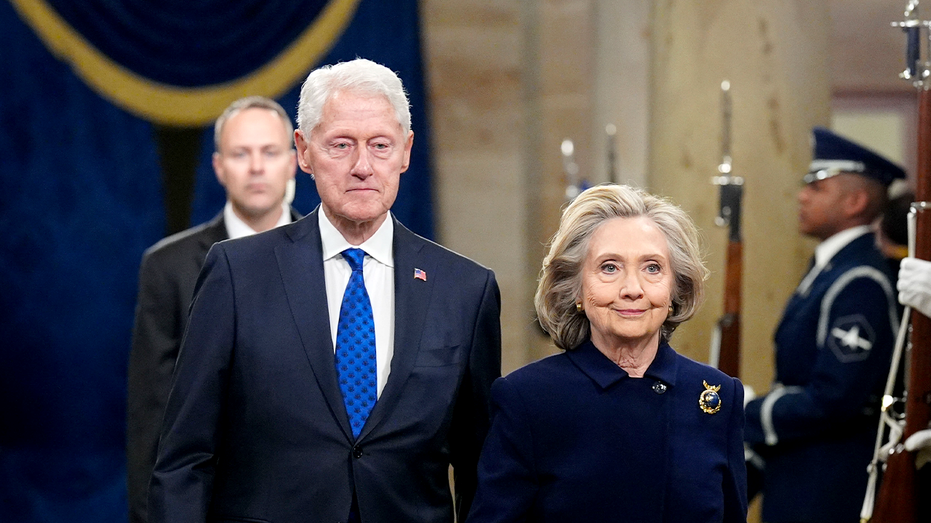
Bill Clinton’s documented connections to Epstein are real, if limited in scope and timeline: multiple flights on Epstein’s plane in the early 2000s, a well‑publicized 2002 Africa trip tied to Clinton Foundation work, visits by Epstein to the Clinton White House in the 1990s, and social encounters in New York and elsewhere. Hillary Clinton, as a former First Lady, senator, and secretary of state, is indirectly tethered to that network even where her personal contacts appear far thinner.
At the same time, Donald Trump’s name appears repeatedly in Epstein’s orbit as well — in social photographs, social circles at Mar‑a‑Lago and in New York, and in Epstein’s own boastful emails about advising a Russian diplomat on Trump. The bipartisan nature of Epstein’s high‑powered network has made him a uniquely potent but also uniquely risky political cudgel.
That’s why Comer's insistence on in‑person depositions from both Clintons is so politically loaded. It serves three overlapping purposes:
- It keeps the Clinton–Epstein connection in headlines long after the main judicial processes have ended.
- It reframes a broader elite abuse scandal as primarily a Democratic-adjacent story, despite the cross‑party nature of Epstein’s relationships.
- It tests how far Congress can reach back into the lives of former presidents and cabinet officials who are no longer in power but still symbolically central to partisan identity.
Congressional Power, Contempt, and the New Normal
Comer’s threat of “immediate contempt” if the Clintons do not sit for depositions on January 13–14, 2026, fits a broader pattern: contempt of Congress has become less a rare institutional last resort and more a recurring political tool.
Historically, contempt citations were uncommon and often resolved quietly. But since the early 2000s we’ve seen an escalation:
- 2008: The House held former Bush officials Harriet Miers and Josh Bolten in contempt over the U.S. attorney firings.
- 2012: The House held Attorney General Eric Holder in contempt over the “Fast and Furious” scandal.
- 2022: Former Trump advisers Steve Bannon and Peter Navarro were referred for contempt for defying Jan. 6 subpoenas, with Bannon ultimately convicted.
By positioning the Clintons as potential contempt targets, Comer is pushing into uncharted territory: threatening a former president and former secretary of state with formal sanction in a context that is at least as political as it is investigative. Even if contempt is never actually voted or enforced, the threat itself acts as a form of pressure and public spectacle.
The decision to deny the Clintons the option of written testimony—while allowing that accommodation for others allegedly lacking “relevant information” or having “serious health issues”—serves a dual purpose. It signals that the committee considers them central witnesses, and it forecloses a path that would reduce the visual drama of a possible Capitol Hill appearance.
What This Really Means: Re‑Litigating the 1990s and 2016 by Other Means
The Epstein probe into the Clintons is not occurring in a vacuum. It sits atop decades of unresolved political battles around Bill Clinton’s personal conduct, Hillary Clinton’s political ambitions, and the broader question of whether the Democratic establishment has ever fully reckoned with its own #MeToo vulnerabilities.
For many Republicans, the Epstein angle allows them to re‑surface long‑standing criticisms of the Clintons’ ethics without re‑arguing Whitewater, the Monica Lewinsky scandal, or the private email server controversy. It creates a new frame: not just bad judgment, but proximity to a convicted sex offender who preyed on minors.
For many Democrats, the danger is that the party is forced to defend the Clintons in ways that undercut its moral authority on gender, power, and abuse. Even if there is no evidence of criminal wrongdoing by either Clinton related to Epstein, the optics of close social ties to him in the 1990s and early 2000s are increasingly toxic in a post‑#MeToo environment.
In this sense, the depositions are about more than what actually happened on any given flight or at any given event. They are about whether a previous era’s norms—where powerful men mingled freely with questionable figures and were rarely challenged—can be retroactively judged by today’s standards. They also test whether the public will accept “no wrongdoing found” as a legitimate endpoint, or whether mere association with Epstein is now politically disqualifying.
Data & Evidence: What We Actually Know About the Clinton–Epstein Nexus
Despite intense speculation, the factual record on the Clintons and Epstein is more limited than online narratives suggest:
- Flight logs show Bill Clinton taking around two dozen flights connected to Epstein’s aircraft in the early 2000s, though some involve repositioning flights rather than trips to Epstein’s residences.
- There is no credible public evidence placing Bill Clinton at Epstein’s private island during illicit activity, despite widespread claims on social media.
- Hillary Clinton’s documented direct interactions with Epstein or Ghislaine Maxwell are far fewer and less detailed, centering mainly on overlapping social circles and donor networks.
- Multiple accusers have implicated powerful men in Epstein’s orbit, but none has credibly alleged that either Clinton personally engaged in criminal activity.
Those facts, however, cut both ways. For defenders, they support the argument that the Clintons were adjacent to Epstein rather than complicit. For critics, they reinforce a perception that the system fails to fully investigate the powerful, especially when the timeline overlaps with high‑stakes elections or diplomatic sensitivities.
Expert Perspectives: Institutional Risks and Political Payoffs
Legal and political experts are increasingly worried that Congress is blurring the line between legitimate oversight and permanent opposition research.
As constitutional law scholar Laurence Tribe has warned in similar contexts, congressional subpoena power “is strongest when tied to clearly articulated legislative purposes and weakest when it appears aimed at delegitimizing political opponents rather than informing future lawmaking.” Applying that lens here, the key question is: what specific legislative reforms flow from grilling the Clintons in 2026 about Epstein?
Anti‑corruption advocates, meanwhile, see potential value if the investigation broadens. If handled rigorously, testimony from high‑profile figures could illuminate how social and financial networks enabled Epstein to move seamlessly between philanthropy, politics, and predation. That could inform new disclosure rules, tighter vetting for presidential foundations, or stricter standards for donor access to former presidents and senior officials.
But that outcome depends on whether the committee’s work is structured to produce policy recommendations or primarily soundbites.
What Mainstream Coverage Often Misses
Most day‑to‑day reporting has focused on the tactical moves—dates, letters, legal posturing. Several deeper dynamics tend to be overlooked:
- Post‑Presidential Accountability Precedent: For most of U.S. history, former presidents were rarely pulled into congressional investigations about private associations. The normalization of such demands will affect how future presidents structure their post‑office lives, foundations, and speaking engagements.
- Donor Network Scrutiny: Epstein’s role as a donor and social broker points to a larger vulnerability: the lack of systematic oversight of who gains proximity to former officials through philanthropy and fundraising. The Clintons’ foundation model—the blending of charity, global networking, and political legacies—makes them a natural focal point, but the issue is broader.
- Bipartisan Risk Management: Epstein’s contacts spanned both parties, business magnates, and foreign elites. A narrowly Clinton‑focused narrative may satisfy partisan goals but leave the underlying system of unaccountable elite networking largely intact.
Looking Ahead: What to Watch Between Now and January 2026
Several inflection points will determine whether this becomes a substantive reckoning or a performative showdown:
- Legal Strategy: The Clintons could challenge the subpoenas in court, argue over scope, or negotiate parameters of questioning. Any such fight will test judicial tolerance for long‑reach, high‑profile congressional inquiries into former officeholders.
- Scope of the Probe: If the committee signals that it will examine Epstein’s ties across the political spectrum—and not only Democratic figures—it will have greater credibility, though less partisan utility.
- Public Fatigue vs. Outrage: Voters have lived through decades of Clinton investigations. Whether this new chapter resonates will depend on whether new, concrete information emerges or whether the story feels like a rehash framed through the Epstein lens.
- Policy Output: The presence (or absence) of proposed reforms—on trafficking, donor transparency, or post‑presidential conduct—will be the clearest indicator of whether this is about governance or optics.
The Bottom Line
The fight over the Clintons’ depositions is less about revisiting old social ties and more about setting future rules. It raises uncomfortable questions about how comfortable Americans are with their leaders moving in opaque, wealthy networks, and whether Congress can police those networks without turning oversight into a partisan weapon.
If this investigation widens into a serious examination of how Epstein exploited elite access, it could help close systemic gaps that allowed him to operate for so long. If it remains narrowly targeted and theatrically charged, it risks reinforcing public cynicism: the belief that the powerful are questioned not to uncover truth, but to score points.
Topics
Editor's Comments
One uncomfortable truth rarely acknowledged in coverage of the Clinton–Epstein story is how much of it hinges on what we don’t know—and may never know—about elite social networks. Much of the public outrage rests on a reasonable intuition: predatory figures like Epstein don’t gain sustained proximity to presidents, princes, and billionaires without those networks being structurally permissive, if not actively supportive. Yet focusing primarily on the Clintons risks reinforcing a narrow morality play, as if swapping out one or two powerful individuals would fix a system that rewards money, secrecy, and access. A more contrarian way to look at this is to ask: what if the political class actually prefers episodic, personality‑driven scandals because they distract from institutional reforms that would constrain everyone’s freedom of movement—stricter donor rules, tighter vetting, stronger trafficking enforcement that reaches into corporate and political circles? Until an Epstein‑related investigation credibly threatens those systemic interests across party lines, we should assume we are still in the realm of selective accountability rather than structural change.
Like this article? Share it with your friends!
If you find this article interesting, feel free to share it with your friends!
Thank you for your support! Sharing is the greatest encouragement for us.