Beyond the Insults: What John Kennedy vs. Jasmine Crockett Reveals About the Future of Texas and the Senate

Sarah Johnson
December 15, 2025
Brief
John Kennedy’s mockery of Jasmine Crockett’s Texas Senate bid exposes deeper battles over Texas’s political future, racialized electability, and how social-media-fueled candidates reshape Senate strategy nationwide.
Insults, Identity, and the Future of Texas Politics: What John Kennedy’s Attack on Jasmine Crockett Really Signals
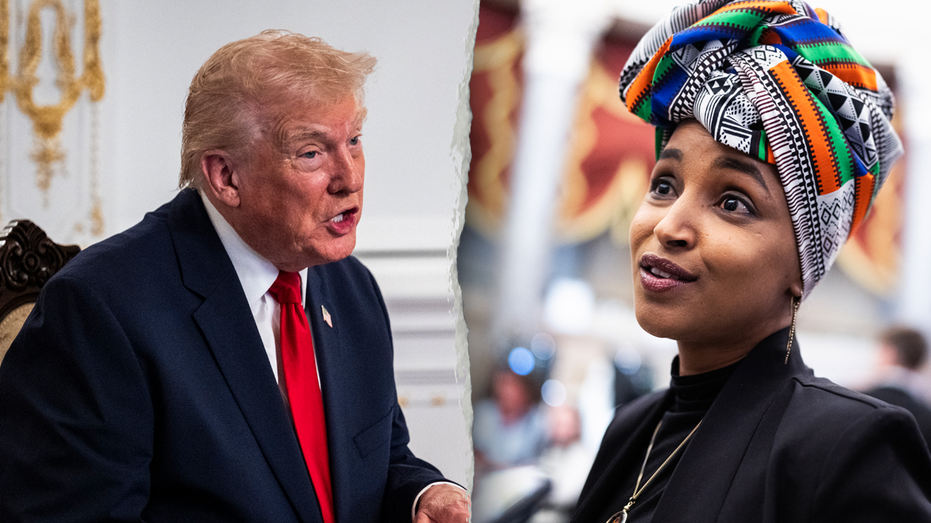
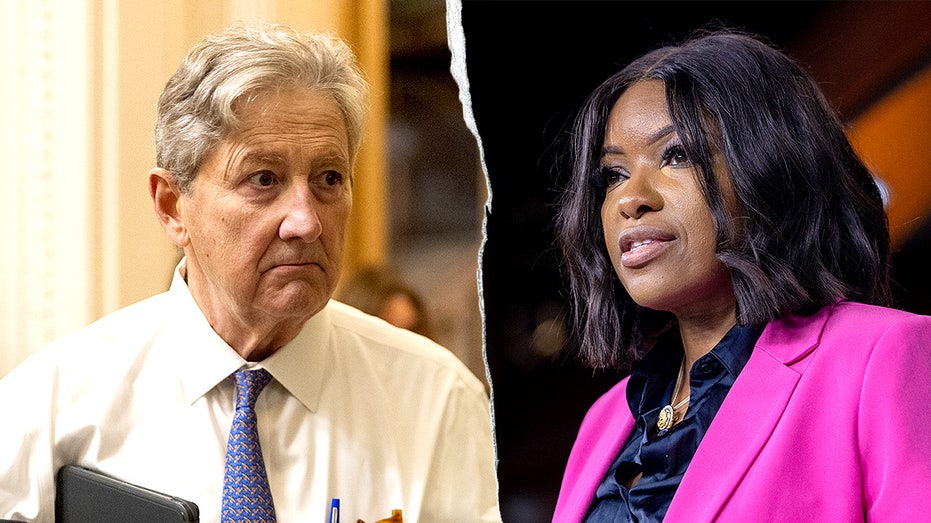
Sen. John Kennedy’s dismissal of Rep. Jasmine Crockett’s Texas Senate bid as “dumb” and driven by “voices in her head” isn’t just another rude soundbite in an already toxic political climate. It’s a stress test of three converging dynamics: the transformation of Texas from Republican stronghold to long-term battleground, the rise of social-media-driven political branding, and the way race and gender shape who gets treated as serious in American politics.
Understanding this moment requires looking past the personal feud and into the structural forces underneath it—Texas’s shifting electorate, the national parties’ strategic anxieties, the economics of outrage media, and the Democratic Party’s recurring debate over whether to prioritize viral charisma or pragmatic electability.
Texas Is Changing, but Not (Yet) How Democrats Want
To grasp why Kennedy feels so confident mocking Crockett’s chances, you have to look at Texas’s political trajectory over the past two decades.
- In 2004, George W. Bush won Texas by 23 points.
- By 2012, Mitt Romney’s margin was down to about 16 points.
- In 2018, Democrat Beto O’Rourke came within roughly 2.5 points of unseating Sen. Ted Cruz.
- In 2020, Donald Trump still carried Texas, but by a reduced margin of around 5.5–6 points.
The pattern is clear: Texas is trending more competitive, but Republicans still win statewide consistently. No Democrat has won a Texas statewide office since the 1990s. From Kennedy’s vantage point, the state is fundamentally Republican until proven otherwise—and a polarizing progressive like Crockett is the easiest foil to reinforce that narrative.
At the same time, the underlying demographics are moving in Democrats’ direction: a growing urban and suburban population, a younger electorate, and a large Latino community. But these shifts don’t automatically translate into Democratic victories. Hispanic and Latino voters in Texas are more ideologically diverse than national narratives suggest, with significant pockets of cultural conservatism and economic pragmatism, particularly in South Texas and exurban areas.
This is where Kennedy’s attack intersects with Crockett’s own vulnerabilities. Her past comments about Hispanic Trump voters having a “slave mentality,” which she later walked back, feed directly into GOP efforts to portray Democrats as condescending toward working-class and minority conservatives. Kennedy doesn’t need to persuade every voter; he only needs Crockett to look like she doesn’t understand or respect a significant slice of the Texas electorate.
Why Kennedy Chose Mockery, Not Policy
Kennedy’s insult—“the voices in her head are not real”—isn’t just crude; it’s strategic. It operates on several levels:
- Delegitimizing her candidacy: Framing her run as inherently irrational signals to donors, party strategists, and media that she’s not a serious threat.
- Gendered and racial undertones: Historically, Black women in politics are often caricatured as emotional, unstable, or extreme when they challenge power structures. Kennedy’s phrasing taps into that stereotype without saying it explicitly.
- Feeding the media ecosystem: Outrage clips perform well online. A sharp insult guarantees coverage, which helps Kennedy maintain his own brand as a plain-spoken conservative firebrand.
Notice what Kennedy isn’t doing: he’s not engaging Crockett’s core critique that Trump-era Republicans have prioritized tax cuts for the wealthy while threatening Social Security and Medicare. Instead, he calls her “wrong on every single issue” without elaboration, then pivots back to ridicule. That’s a tell. If Republicans thought Crockett’s economic message genuinely resonated with older or working-class Texans, they’d be more inclined to rebut it point by point rather than treat it as a punchline.
Jasmine Crockett as a Symbol of the Democrats’ Strategic Split
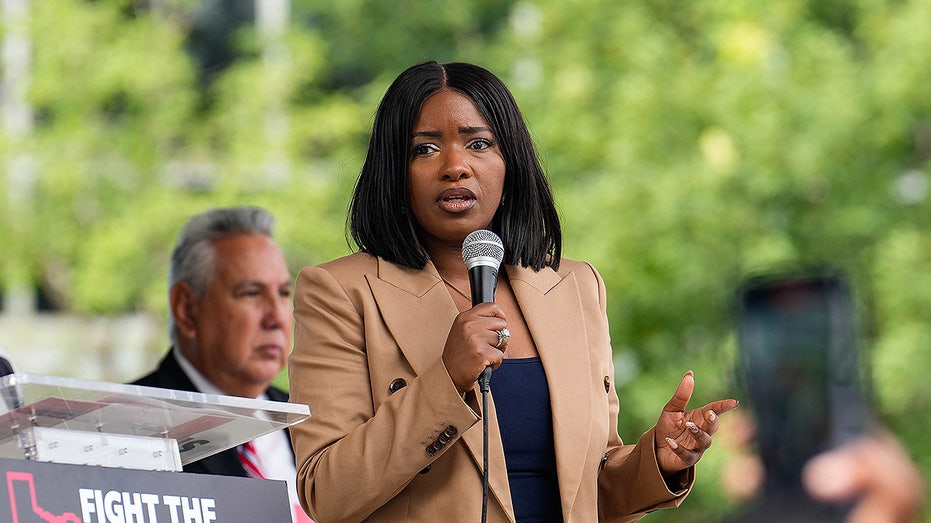
Crockett’s campaign rollout—leaning into Trump’s personal insults and positioning herself as a fighter who’s “done” with inaction—isn’t just about policy; it’s about attitude and identity. Supporters call her “a rising star,” and that label says as much about the modern Democratic Party as it does about Crockett herself.
Democrats are increasingly torn between two models of candidate:
- The viral warrior: Media-savvy, unapologetically progressive, thrives on social media and cable segments, often becomes a national figure quickly. Crockett fits this mold.
- The quiet coalition-builder: Moderately framed, often former local officials or business leaders, less flashy but sometimes more palatable in swing or red states. Former Rep. Colin Allred’s earlier Senate run embodied this lane.
The fact that Allred exited the race just before Crockett’s announcement suggests internal strategic recalibration within Texas Democrats—whether coordinated or not. House Democrats reportedly have concerns about her statewide viability, underscoring the tension between national excitement and local arithmetic.
Crockett’s campaign ad featuring Trump’s insults is an inversion of the traditional vulnerability. Instead of ignoring or softening personal attacks, she weaponizes them, betting that Democratic primary voters—and younger, plugged-in voters in particular—reward a candidate who stands up and hits back publicly.
The Underreported Story: How This Affects the Senate, Not Just Texas
It’s easy to treat this as just a Texas story, but the national stakes are high. The U.S. Senate majority has been decided by razor-thin margins in recent cycles. Parties increasingly think in terms of map-wide strategy, not isolated contests.
A strong, well-funded Democratic Senate candidate in Texas could force Republicans to spend money defending what should be a safe seat, diverting resources from more vulnerable races in states like Wisconsin, Nevada, or Pennsylvania. Conversely, a candidate Republicans believe they can easily define and defeat allows the GOP to conserve resources and focus elsewhere.
That’s one reason Kennedy feels compelled to weigh in on a race in another state. His early mockery functions as preemptive framing: Crockett shouldn’t be seen as an emerging star whose momentum could galvanize Democratic donors nationwide; she should be viewed as a fringe figure whose defeat is inevitable.
Expert Perspectives: Identity, Electability, and the Cost of Dismissing Black Women Candidates
Political scientists and strategists have been warning for years about the particular scrutiny Black women candidates face.
Dr. Christina Greer, political scientist at Fordham University, has frequently noted that Black women are often “the backbone of the Democratic Party’s voter base but rarely treated as the default choice for top-of-ticket races.” Crockett’s candidacy tests whether that dynamic is changing or whether the old skepticism remains entrenched.
Dr. Hakeem Jefferson, a Stanford political scientist, has argued that candidates like Crockett “embody both the promise and challenge of a multiracial democracy: they speak to constituencies that are often unseen but must still navigate a political culture that punishes them for being both assertive and Black.” Kennedy’s rhetoric exemplifies that punishment—framing assertiveness as irrationality.
Strategists, too, see broader implications. A veteran Southern Democratic operative I spoke with recently summed up the dilemma this way: “You can’t build long-term power in the South by perpetually sidelining your most passionate, diverse leaders. But you also can’t ignore the very real constraints of a statewide electorate that’s still center-right. Crockett is where those two realities collide.”
Data and Evidence: What Voters Actually Say They Want
Crockett’s message focuses heavily on economic grievances: Social Security, Medicare, and tax policy. That’s not an accident. Polling consistently shows:
- Broad bipartisan support for protecting Social Security and Medicare, especially among older and rural voters.
- Strong public skepticism toward tax cuts that primarily benefit high-income households and corporations.
- Growing anxiety about cost of living, health care affordability, and retirement security.
In theory, that’s fertile ground for a Democrat running in a red-leaning state—if they can persuade culturally conservative or swing voters that they’re focused more on kitchen-table economics than national ideological battles.
The challenge for Crockett is that her personal brand and media coverage often center on confrontation, ethics reform, and Trump-related clashes. Those are galvanizing issues for Democratic voters, but they can overshadow the bread-and-butter economic agenda that might make her more competitive with independents and disaffected Republicans.
What’s Being Overlooked: The Ethics Message and the Courts
One of Crockett’s key policy calls—pushing the Senate to impose ethical guidelines on the Supreme Court—fits within a much larger shift in American politics: the growing centrality of the judiciary as a campaign issue.
In the past, judicial ethics and court reform were niche topics. That changed with the end of Roe v. Wade, high-profile ethics controversies involving Supreme Court justices, and a sense among many voters that the courts are increasingly political. Crockett’s move to link her campaign to ethics oversight of the Court is an attempt to own that terrain.
Republicans like Kennedy see danger here. If Democrats successfully frame the courts as a captured, ethically compromised institution serving elite interests, it could become a powerful mobilizing tool, especially among younger and more progressive voters who are already skeptical of traditional institutions. Calling her “wrong on every single issue” is partly a way to avoid giving legitimacy to that line of critique.
Looking Ahead: What to Watch Beyond the Insults
Several questions will determine whether this becomes a footnote or a major inflection point in Texas politics:
- Primary dynamics: Can Crockett consolidate the Democratic base against rivals like James Talarico, or will internal doubts about her statewide viability splinter support?
- Suburban and Latino voters: Does she adjust her message to address swingy suburban districts around Dallas, Houston, Austin, and San Antonio, and can she repair any damage with Hispanic voters after her earlier comments?
- Fundraising and national attention: Do grassroots donors and national progressive groups treat her as a priority, or does Texas remain a second-tier target behind more immediately flippable states?
- Republican overreach: If GOP figures continue to attack her with dismissive or coded language, does that backfire by energizing turnout among voters who see those attacks as disrespectful or bigoted?
The Bottom Line
Kennedy’s mockery of Jasmine Crockett is less about one candidate and more about who is allowed to be seen as credible in American politics—and what kinds of campaigns the parties are willing to risk in a rapidly changing South.
Texas is not yet the purple prize Democrats dream of, but it’s no longer the complacent red fortress Republicans remember. Crockett’s run, win or lose, will help answer a defining question for the next decade: can unapologetically progressive, media-savvy Black women not only shape the narrative, but actually win in states long dominated by the right?
The answer won’t come from Kennedy’s insults or Crockett’s clapbacks alone. It will come from whether voters, especially those in the political middle, see her campaign as a statement—or as a plausible path to a different kind of representation and economic policy for Texas.
Topics
Editor's Comments
One underexplored angle in this story is the degree to which both parties are locked into an incentives structure that rewards performance over persuasion. Kennedy’s insult isn’t designed to win over undecided Texans; it’s tailored to a national conservative audience that consumes politics as entertainment and wants its champions to humiliate opponents. Crockett’s launch video, built around Trump’s insults, similarly reflects an economy of attention in which virality is often a prerequisite for viability. The risk for Democrats is that in states like Texas, a strategy optimized for clicks may not be optimized for the complex coalition-building needed to win statewide. Yet there is also danger for Republicans in overrelying on mockery: if insults start to read as bullying, they can inadvertently humanize their targets and mobilize sympathetic voters. The real question isn’t whether the rhetoric is harsh—it’s whether either side can convert spectacle into durable shifts in who shows up to vote.
Like this article? Share it with your friends!
If you find this article interesting, feel free to share it with your friends!
Thank you for your support! Sharing is the greatest encouragement for us.