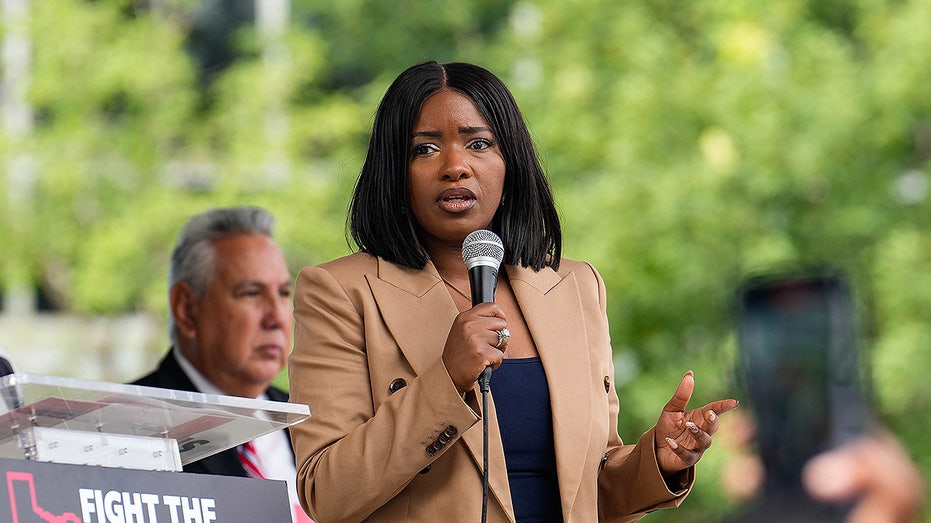
Beyond the Headlines: What Jasmine Crockett’s Financial Controversy Reveals About Progressive Politics in Texas

Sarah Johnson
December 3, 2025
Brief
An in-depth analysis of Rep. Jasmine Crockett's financial contradictions reveals broader challenges for progressive politicians balancing personal wealth, fiscal accountability, and political messaging in conservative Texas.
Opening Analysis
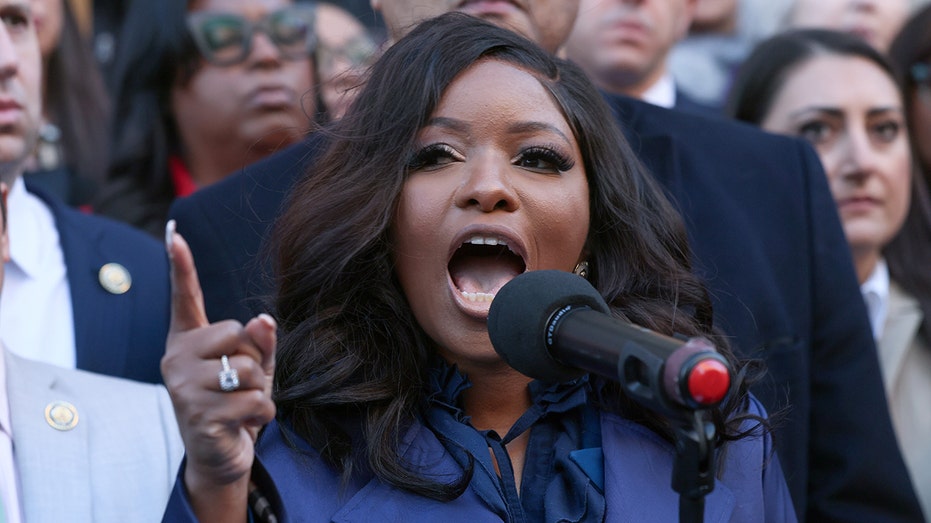
The unfolding story of Rep. Jasmine Crockett, a rising progressive figure contemplating a U.S. Senate bid in Texas, offers a striking illustration of the complexities and contradictions now reverberating within American left-wing politics. At its surface, this controversy—centered on an unpaid lien for over $3,000 on a luxury Dallas condominium juxtaposed with campaign expenditures exceeding $75,000 on high-end hotels, limousine services, and security—may appear to be a mere financial misstep or personal failing. Yet, it encapsulates deeper tensions: the optics of progressive politicians navigating wealth and privilege while championing populist economic justice; the party’s internal struggles over messaging and leadership in conservative strongholds like Texas; and the increasing scrutiny on political figures’ personal and fiscal accountability.
Understanding the historical context and broader implications helps decode why this story resonates far beyond Dallas or a single elected official, signaling challenges for the Democratic Party’s identity and electoral strategy amid shifting political landscapes.
The Bigger Picture
Jasmine Crockett’s trajectory as a leftward firebrand within the Democratic Party ties into a national trend where younger, more progressive politicians have risen rapidly by energizing base voters wary of establishment politics. Since the 2010s, fueled by Occupy Wall Street and later the Bernie Sanders campaigns, the Democratic Party’s left flank has pushed harder on economic inequality, criminal justice reform, and systemic change. Texas, long a conservative bastion, has become a contentious battleground with demographic shifts and urbanization intensifying partisan competition.
This contest plays out against the backdrop of growing socioeconomic stratification in metropolitan areas such as Dallas, where luxury condos worth hundreds of thousands of dollars coexist uneasily with pockets of entrenched poverty. Progressive politicians like Crockett are often caught navigating this gap—expected to champion working-class interests while sometimes inhabiting affluent personal spaces or engaging in lavish campaign spending.
Moreover, the internal dynamics of Texas politics complicate matters. The Democratic Party’s effort to challenge entrenched Republicans such as Sen. John Cornyn requires a candidate who can simultaneously appeal to the progressive base without alienating moderates or being undermined by conservative narratives focusing on fiscal irresponsibility or hypocrisy.
What This Really Means
The juxtaposition of Crockett’s unpaid condo lien against her heavy spending on luxury campaign items illuminates several underlying tensions. First, it raises questions about personal financial management and ethical stewardship of campaign funds. Even a modest unpaid HOA fee grabs attention in an era where politicians’ financial transparency is fiercely debated and often weaponized.
Second, the spending spree—particularly on high-end hotels, limo services, and security—strikes at the heart of progressive critiques regarding elitism and disconnect from everyday constituents. This dichotomy fuels narratives used by political opponents to paint progressives as out of touch or hypocritical, potentially undermining Crockett’s Senate aspirations and the Democratic Party’s push to expand influence in Texas.
Third, the story surfaces deeper ideological contradictions, such as Crockett spending nearly $50,000 on security while publicly supporting police defunding. It spotlights the difficulty many progressives face balancing radical policy stances with practical considerations for personal and staff safety, especially under the heightened threats that public figures endure.
Lastly, broader questions about media framing emerge. The intense focus on financial minutiae can distract from substantive policy debates. However, these optics undeniably impact voter perceptions and campaign viability, illustrating how personal narratives increasingly intertwine with political fortunes.
Expert Perspectives
- Dr. Lisa Garcia, Political Scientist, University of Texas at Austin: "Crockett's situation is a microcosm of the challenges facing the new progressive movement. They must juggle authentic grassroots commitments with the realities of political fundraising and campaigning, which often demands access to capital and resources that can appear inconsistent with their rhetoric."
- Andrew Reynolds, Campaign Finance Analyst, Democracy Watch: "Campaign expenditures on luxury services are legal but risky. They raise concerns about prioritization of resources, especially when contrasted with unpaid debts. Such discrepancies can erode donor trust and fuel opposition attacks."
- Michelle Thompson, Sociologist specializing in Urban Inequality: "The contradiction of living in luxury amidst structural inequalities can alienate voters who feel their struggles are ignored. Politicians must navigate these class dynamics carefully to maintain credibility."
Data & Evidence
Examining campaign finance reports reveals multiple expenditures exceeding $2,000 on hotels such as the Ritz-Carlton and West Hollywood Edition, and limousine services in cities spanning Martha's Vineyard to Chicago. Total luxury-related campaign spending since January exceeds $25,000. Security expenses approximated $50,000 in the same period, significant sums for a House member representing a district rather than statewide office.
Comparatively, a typical average HOA fee in Dallas ranges from $150 to $400 monthly, making the $3,000 unpaid lien correspond to about a year’s fees, a notable but not enormous personal debt relative to campaign scale.
Texas’ demographic shifts show increased urban affluence but persistent income inequality, with median household incomes in Dallas about $55,000 versus high-end condo prices upwards of $300,000—highlighting stark wealth gradients within Crockett’s district.
Looking Ahead
The repercussions for Crockett’s potential Senate campaign could be significant. Opponents and media will likely continue to scrutinize and amplify these financial issues, potentially overshadowing policy platforms. This undermines her ability to build a broad coalition necessary to unseat a Republican incumbent in a traditionally conservative state.
More broadly, Democratic candidates nationwide will face intensified examination of their personal finances and campaign spending as progressive politics gains visibility but also attracts skepticism. The tension between authentic grassroots appeal and the realities of modern political campaigning will remain a balancing act requiring strategic transparency and messaging.
Advocates within the progressive movement may push for campaign finance reforms and greater accountability to avoid similar pitfalls, while also emphasizing policy substance to counteract negative optics.
The Bottom Line
Jasmine Crockett’s unpaid condo lien combined with extravagant campaign spending exposes a multifaceted dilemma for progressive politicians operating at the intersection of wealth, politics, and public expectation. It highlights the increasingly scrutinized personal behavior of public figures, the precarious balancing act of progressive politics in conservative regions, and the critical importance of financial transparency. As she probes a Senate run, these material contradictions will shape voter perceptions and influence her campaign's feasibility. Beyond one politician, the episode serves as a bellwether for the Democratic Party’s navigating identity, strategy, and authenticity in an era marked by heightened public skepticism and partisan polarization.
Topics
Editor's Comments
This case illuminates an ongoing dilemma facing politicians emerging from progressive movements: how to reconcile personal conduct and campaign practices with high-minded policy goals. The juxtaposition between Crockett's unpaid lien and lavish spending embodies a broader narrative about the challenge of maintaining both ethical integrity and electoral competitiveness. It raises important questions about the standards to which emerging leaders are held and the potential double standards applied when left-wing candidates adopt establishment-style campaign behaviors. Additionally, it invites reflection on how media coverage interprets financial missteps—are they a genuine measure of candidate unsuitability, or distractions from substantive political discourse? The coming months will be telling not only for Crockett’s career but also for the evolution of progressive politics in deeply conservative states.
Like this article? Share it with your friends!
If you find this article interesting, feel free to share it with your friends!
Thank you for your support! Sharing is the greatest encouragement for us.