Beyond the Hero Story: What the Sydney Hanukkah Attack Reveals About Security, Identity, and Everyday Courage

Sarah Johnson
December 14, 2025
Brief
A Muslim bystander disarming a gunman at a Hanukkah event in Sydney is more than a hero story. It exposes deep shifts in security, radicalization, and Muslim–Jewish relations in Australia.
What the Sydney Hanukkah Attack Reveals About Everyday Heroism, Polarization, and the Future of Community Security
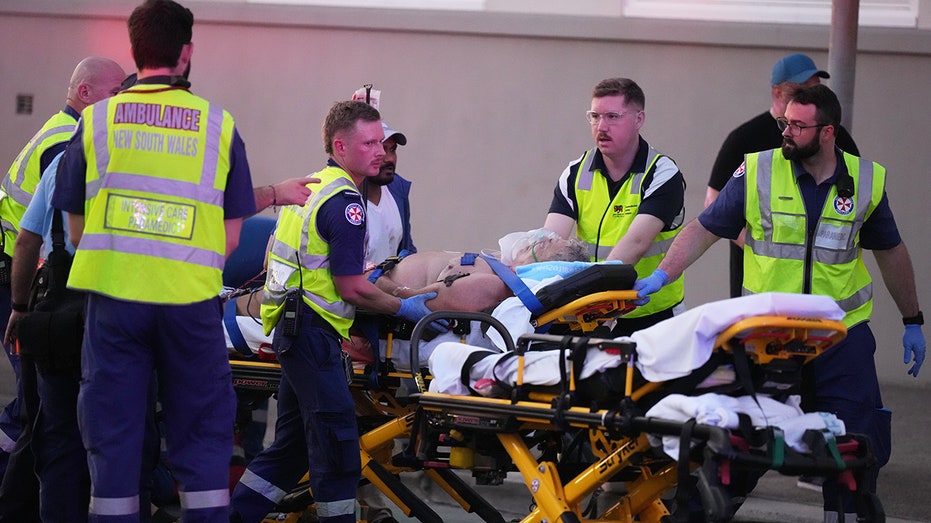
When a 43-year-old Muslim man named Ahmed al‑Ahmad tackled and disarmed a gunman attacking Jews at a Hanukkah celebration on Sydney’s Bondi Beach, the footage went viral as a story of individual courage. But beneath the powerful human drama lies a much bigger story about rising communal violence, the fragility of social trust, and how societies respond when ordinary people are forced into extraordinary roles.
This wasn’t just a shocking act of terrorism. It was a stress test of Australia’s multicultural fabric, its security assumptions, and the narratives—both toxic and hopeful—that shape how communities see one another.
A Muslim Man Saves Jews on Hanukkah: Why This Moment Matters
The fact that the bystander who intervened was Muslim, and that the victims were Jewish, is not incidental—it goes to the heart of why this story has resonated globally. At a time when the Israel–Hamas war has fueled soaring antisemitism and Islamophobia worldwide, this incident cuts across the prevailing narrative of inevitable intercommunal hostility.
Initially, Israel’s Prime Minister Benjamin Netanyahu publicly praised the rescuer as a Jew, only later acknowledging that he was Muslim and saluting his bravery. That correction is symbolically important: it reveals how deeply identity frames our expectations—but also how reality can force those frames to stretch or crack.
When Chris Minns, the premier of New South Wales, called Ahmed “a genuine hero” whose actions likely saved “many, many” lives, he wasn’t simply praising a single act of courage. He was implicitly defending a core pillar of Australian civic identity: the idea that in moments of crisis, shared humanity can trump ethnic or religious divisions.
How We Got Here: Australia’s Shifting Security and Identity Landscape
To understand the deeper significance of this attack, you have to place it within several overlapping histories:
1. Australia’s record on mass violence and terrorism
- Port Arthur (1996): The massacre of 35 people in Tasmania led to sweeping gun reforms—national buy-back schemes, tighter licensing, and restrictions on semi-automatic weapons—that are still held up globally as a model. Since then, mass shootings in Australia have been rare by international standards.
- Islamist-inspired attacks: Australia has still faced terrorism, from the 2014 Sydney Lindt Café siege to the 2017 Melbourne Bourke Street attack. Authorities have foiled multiple plots, particularly linked to ISIS-inspired networks in the mid-2010s.
- Racist and extremist violence: The Christchurch mosque attacks in neighboring New Zealand in 2019, carried out by an Australian-born white supremacist, exposed a parallel threat: transnational far-right extremism incubating online.
This latest attack—explicitly targeting Jews during a religious celebration—fits within a broader global pattern of attacks on minorities at symbolic moments: synagogues in Pittsburgh and Halle, mosques in Christchurch, churches in Sri Lanka. The intent is not only to kill but to terrorize entire communities and fracture social cohesion.
2. The rise of security concerns in Jewish communities
Jewish communities across Western democracies have spent years investing in security measures: guards at synagogues, CCTV, controlled entry, and liaison with police and intelligence agencies. Those measures are now shifting from “extraordinary precautions” to a grim new normal.
In Australia, Jewish leaders have long warned about the convergence of online radicalization, imported Middle East tensions, and local extremist networks. Israeli officials criticizing Canberra for missing “countless warning signs” reflect a broader frustration: that Western governments consistently underestimate the speed at which incitement can turn into violence.
3. Multiculturalism under pressure
Australia’s multicultural model has often been celebrated, but it’s also under strain. Heated protests over the Israel–Hamas conflict, rising antisemitic incidents, and spikes in anti-Muslim sentiment have challenged the idea that diversity automatically equals harmony.
In that context, a Muslim man risking his life to save Jewish strangers isn’t just a feel-good anecdote—it’s a counter-narrative to the idea that communities are locked into inevitable conflict. It demonstrates that identities are complex and that values like courage and solidarity can cut across religious lines.
What This Really Tells Us About Security, Radicalization, and Civic Duty
1. Everyday heroism as a symptom of systemic gaps
When bystanders become the last line of defense, it’s both inspiring and worrying. Heroic action by civilians often emerges where institutional protection has broken down or proved insufficient.
Security experts have long emphasized the “run, hide, fight” doctrine in active shooter situations, acknowledging that in the critical first minutes, police often aren’t there yet. But relying on untrained civilians to physically confront armed attackers is not a viable strategy—it’s a sign that we’re failing to adequately prevent attacks upstream.
Ahmed’s intervention may have saved numerous lives, but it also underscores the uncomfortable question: how did two armed attackers reach a Jewish Hanukkah event on one of the most monitored beaches in the country?
2. The politics of heroism and identity
The speed with which Ahmed was labeled a “hero” reflects a genuine outpouring of gratitude—but it also reveals how societies negotiate identity after traumatic events.
- Instrumentalization risk: Some will try to use Ahmed’s Muslim identity to argue that Muslim communities bear no responsibility for tackling extremism. Others will weaponize the attack itself to stigmatize Muslims as a whole, brushing aside the fact that a Muslim man took bullets to protect Jews.
- Tokenization risk: There’s also a danger of turning Ahmed into a symbolic exception—“the good Muslim”—instead of engaging seriously with the nuanced reality of diverse Muslim communities, many of whom are also targets of extremism.
How political leaders, media, and community organizations frame Ahmed’s heroism in the coming weeks will either deepen stereotypes or help dismantle them.
3. Radicalization isn’t just an online problem
While details about the shooters are still emerging, the pattern of targeted attacks against Jewish events abroad gives us clues. In case after case, attackers have been influenced by a toxic blend of:
- Online propaganda and conspiracy theories
- Local grievances and perceived injustices
- Identity crises and a search for meaning or belonging
- Echo chambers—both online and offline—that normalize violence
Authorities often focus on digital platforms as vectors of radicalization, but physical spaces—certain religious or political circles, fringe student groups, informal networks—can be equally influential. Attacks like this should prompt a hard look at how Australia is monitoring and disrupting both jihadist and antisemitic networks, as well as violent far-right ecosystems that may amplify or exploit such violence.
Expert Perspectives: Security, Psychology, and Social Cohesion
Security and extremism experts see this event as a microcosm of several converging trends.
Dr. Greg Barton, a prominent Australian terrorism analyst, has previously argued that Australia is “not immune” to global shifts in extremism, warning that international conflicts “act as accelerants on existing local grievances.” An attack on a visibly Jewish event during Hanukkah, at a globally iconic location like Bondi, fits that pattern of symbolic target selection.
From a social psychology perspective, Professor Arie Kruglanski’s work on radicalization emphasizes the “quest for significance”—the idea that people join extremist movements to feel meaningful. The gunmen in Sydney may have sought that sense of significance through violence; Ahmed, by contrast, found it in self-sacrifice and protection of strangers.
That contrast matters: it suggests that the underlying human drive for meaning can be channeled either into destruction or defense. Policy responses that focus purely on detection and punishment miss that deeper motivational layer.
Data Points: The Broader Trend of Targeted Communal Violence
While figures vary by country, several trends are clear across Western democracies since the early 2010s:
- Attacks on religious sites are rising. In the United States, the FBI has tracked a surge in antisemitic hate crimes, and similar increases have been reported by Jewish organizations in Europe and Australia.
- Online incitement translates into real-world risk. Studies by the Institute for Strategic Dialogue and others show that spikes in online hate against Jews and Muslims often correlate with real-world incidents.
- Community self-protection is becoming normalized. In some European cities, Jewish institutions have installed fortification-level security measures. Muslim communities, especially after attacks like Christchurch, have followed suit.
Australia, while comparatively safer than many countries, is not insulated from these dynamics. The Bondi attack will likely accelerate security upgrades not just in Jewish spaces, but at all visibly identifiable minority gatherings.
What Comes Next: Policy, Community Relations, and the Narrative Battle
1. Policy and security responses
Expect several immediate and medium-term responses:
- Security audits of religious and cultural events: Police and intelligence services will reassess risk levels for public religious gatherings, especially those linked to Jewish, Muslim, and other minority communities.
- Increased funding for community security: Jewish organizations are likely to push for more government support for guards, infrastructure, and intelligence sharing—mirroring programs in the UK and US.
- Debates over surveillance and civil liberties: As calls grow for “never again” measures, civil liberties advocates will challenge any moves that disproportionately target certain communities.
2. A stress test for Muslim–Jewish relations
What happens in the days and weeks after the attack may matter as much as the attack itself.
- Joint public statements by Muslim and Jewish leaders, explicitly highlighting Ahmed’s actions, could help inoculate against attempts to pit communities against each other.
- Silent tension—where each community retreats into its own trauma narratives—would allow extremists of all kinds to fill the vacuum.
There is an opportunity here for a rare kind of bridge-building: not rooted in abstract dialogue, but in a shared story of a Muslim Australian who risked his life to save Jewish Australians on a religious holiday.
3. The narrative struggle online
How this story spreads on social media will shape public perceptions:
- Far-right accounts may downplay Ahmed’s identity or frame the attack as proof that “multiculturalism has failed.”
- Extremist Islamist networks may ignore the fact that a Muslim defended Jews—or, worse, attempt to vilify him as a “traitor.”
- Moderate voices across communities have an opening to amplify a counter-message: that solidarity is possible even amid geopolitical conflict.
The Bottom Line
The Bondi Hanukkah attack is not just a story about a bystander who became a hero. It is a story about the kind of society Australia wants to be under pressure.
Ahmed al‑Ahmad’s actions show that courage and moral clarity can cut through the fog of identity politics and geopolitical resentment. But heroism should not be a substitute for prevention. If governments respond by merely praising bravery without confronting the deeper currents of radicalization, communal insecurity, and polarization, similar tragedies will remain likely.
The real test will be whether policymakers, community leaders, and the public use this moment to strengthen inclusive security, deepen trust between communities, and resist the easy narratives of inevitable conflict. Because while one Muslim man saving Jews on Hanukkah doesn’t erase the realities of antisemitism or Islamophobia, it does offer a powerful reminder: we are not doomed to the worst versions of ourselves.
Topics
Editor's Comments
One uncomfortable but necessary question is whether governments and media will allow this story to complicate their existing narratives, or quietly file it away as an anomaly. It is convenient, for many political actors, to frame Muslim–Jewish relations purely through the lens of imported conflict from the Middle East, with neatly opposing sides. Ahmed’s intervention disrupts that simplicity: it forces us to confront the fact that individuals don’t map cleanly onto geopolitical blocs. Yet there’s a risk that his heroism will be treated as merely symbolic, while policy debates revert to familiar grooves—more security funding here, tougher rhetoric there—without grappling with deeper drivers like alienation, online echo chambers, and the erosion of shared civic identity. The real challenge is to translate this moment into sustained investment in social cohesion, not just in hard security. Otherwise, we will keep praising heroes while failing to ask why we keep needing them.
Like this article? Share it with your friends!
If you find this article interesting, feel free to share it with your friends!
Thank you for your support! Sharing is the greatest encouragement for us.