
Beyond the Travel Alert: What the Thailand–Cambodia Border Fighting Really Reveals

Sarah Johnson
December 18, 2025
Brief
The U.S. alert on Thailand–Cambodia border travel is more than a holiday warning. It reveals unresolved colonial-era disputes, vulnerable tourism economies, and shifting great-power dynamics in Southeast Asia.
Thailand–Cambodia Border Tensions: What a ‘Tourist Alert’ Really Reveals About a Fragile Region
The U.S. security alert for Americans traveling near the Thailand–Cambodia border sounds like a narrow holiday-season advisory. It isn’t. It’s a window into how old territorial ghosts, great‑power competition, and tourism‑dependent economies are colliding in one of Southeast Asia’s most fragile fault lines.
Why this story matters
The warning to avoid travel within 50 km of the border is not just about keeping tourists away from gunfire. It exposes three deeper realities:
- Historical border disputes in mainland Southeast Asia are far from settled and can reignite quickly.
- Tourism-reliant economies like Thailand (and increasingly Cambodia) are now directly exposed to geopolitical shocks.
- U.S. crisis signaling in Asia is being tested in an environment where Washington is no longer the only external power with leverage; China looms large in the background.
How did we get here? A long border, old maps, and unfinished history
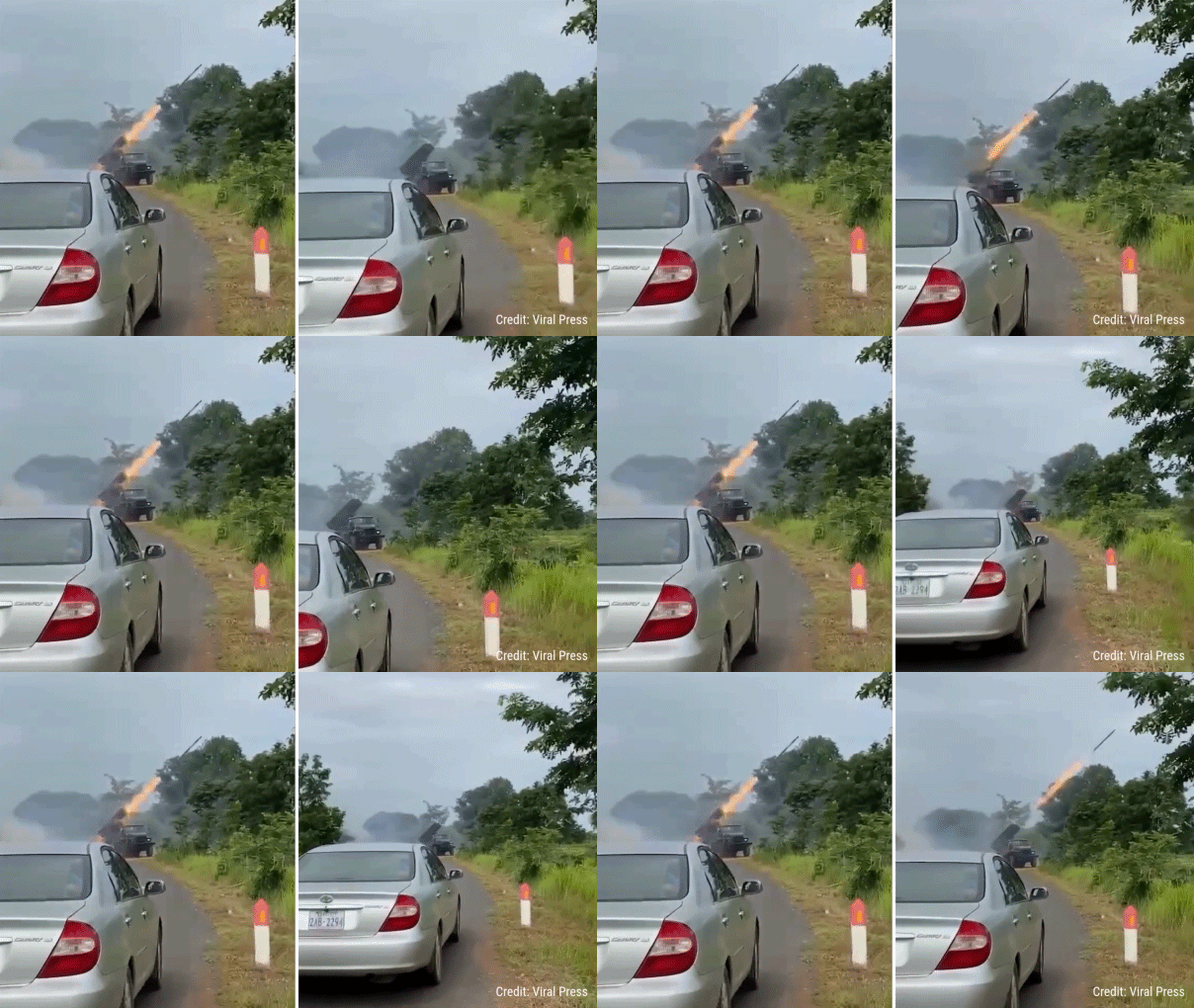
The current spike in violence—deadly clashes since early December, following an October ceasefire negotiated by Donald Trump—has roots far deeper than this year’s skirmishes. The Thailand–Cambodia border has long been shaped by three overlapping legacies:
1. French colonial cartography and competing narratives
Most of the modern border was defined by French colonial maps drawn in the late 19th and early 20th centuries, when France administered Cambodia as part of French Indochina. These maps are not just technical documents; they anchor competing national stories:
- Cambodia treats the French-era maps as internationally recognized legal baselines, pointing to treaties and the 1962 International Court of Justice (ICJ) ruling in its favor over the Preah Vihear temple.
- Thailand argues some maps are inaccurate, unfair, or were never properly accepted, framing them as colonial impositions that cost Thailand historical territory.
That unresolved tension is precisely why the article notes that “modern-day disputes have centered on French colonial-era border maps, which Thailand denies.” The maps have become political tools, not just geographic references.
2. The Preah Vihear precedent: Legal victory, political resentment
In 1962, the ICJ awarded Cambodia sovereignty over the Preah Vihear temple, a 900‑year‑old Khmer sanctuary perched on a cliff along the border. Thailand accepted the ruling on paper, but resentment simmered. Between 2008 and 2011, the area saw repeated clashes, artillery exchanges, and civilian evacuations as nationalist politics flared in both countries.
This history matters now because it shows a pattern: border disputes are periodically “resolved” in courts or through ceasefires, only to be reopened when domestic political incentives shift. The latest fighting is part of that cyclical dynamic—an unfinished dispute reactivated by new triggers.
3. Domestic politics as accelerant
Border crises rarely emerge in a political vacuum. In both Thailand and Cambodia, leaders have historically used nationalist rhetoric about the border to shore up support at home:
- Thai leaders, particularly during periods of military influence or weak civilian governments, have leaned on nationalist sentiment to deflect from economic or political pressure.
- Cambodian leadership, especially under strongman-style rule, has periodically highlighted external threats to unify the population and marginalize domestic critics.
The recent sequence—July fighting, an October ceasefire, land mine incidents, and now renewed hostilities—fits that pattern. The border dispute is as much a barometer of internal politics as it is a question of lines on a map.
What the U.S. alert really signals
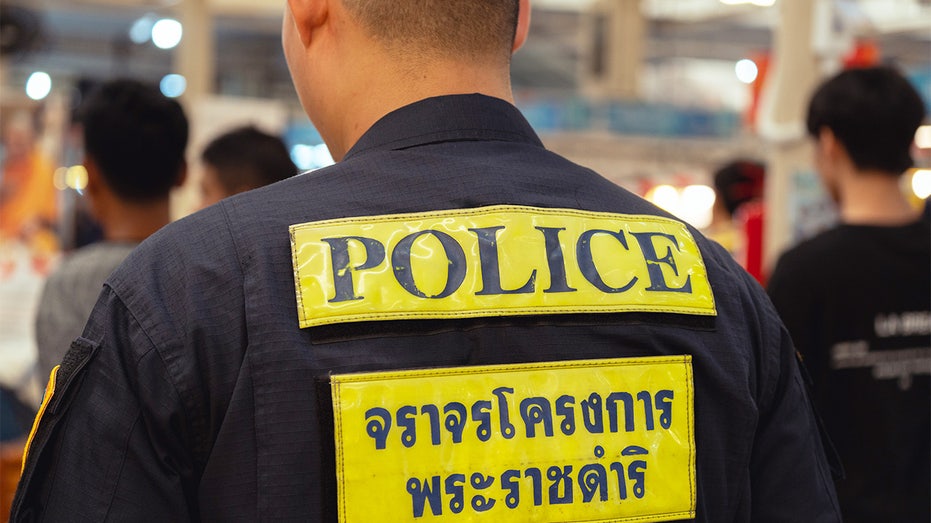
The U.S. Embassy’s language—“active hostilities,” “unpredictable security situation,” “limited ability to provide emergency services”—is calibrated. Washington is doing several things at once:
Risk management and liability control
First, this is classic consular risk management. When conditions deteriorate along a border, embassies issue alerts to preempt crises involving their citizens. The explicit 50 km exclusion zone reflects a desire to remove ambiguity. If Americans ignore the warning, U.S. officials can credibly say they were warned, reducing political backlash should something go wrong.
Subtle pressure on Bangkok and Phnom Penh
Tourism is one of Thailand’s economic lifelines. From January 1 to September 30, the country hosted over 24 million international visitors, and it is actively pushing to return to—and eventually surpass—its pre‑pandemic peak of nearly 40 million annual tourists.
When the United States tells its citizens to avoid a large swath of territory, it sends an indirect message to Thai authorities: volatility has economic costs. That can create pressure to stabilize the situation, rein in local commanders, or resume diplomatic engagement.
Signaling in a crowded geopolitical theater
In the wider context of U.S.–China competition, a conflict between two U.S.-aligned Southeast Asian states is awkward. Thailand is a longstanding U.S. treaty ally; Cambodia has pivoted closer to China, but still engages with Washington. The travel alert allows the U.S. to demonstrate concern for stability without taking sides publicly or intervening directly—especially when a prior ceasefire was already associated with a high‑profile U.S. political figure (Trump).
Tourism, TV prestige, and the illusion of safety
The news story draws a straight line from the HBO series White Lotus to rising interest in Thailand’s beaches and rainforests. That detail is more than a lifestyle flourish. It illustrates how pop culture can overwrite risk in the public imagination.
Thailand has long marketed itself as a safe, welcoming gateway to Southeast Asia, even as neighboring Cambodia, Laos, and Myanmar carried reputations for instability. A new generation of travelers, inspired by curated streaming‑era imagery, often treat the region as a seamless playground—Bangkok, Siem Reap, islands, border runs—without fully grasping that they are crossing sensitive, militarized boundaries.
When a security alert suddenly redraws the map, it’s a reminder that tourism and security are tightly intertwined. A border town like Aranyaprathet (Thailand) and Poipet (Cambodia) isn’t just a shopping and casino route—it’s also a militarized space where historical grievances and modern smuggling networks converge.
Economic and humanitarian fallout: Beyond the tourist bubble
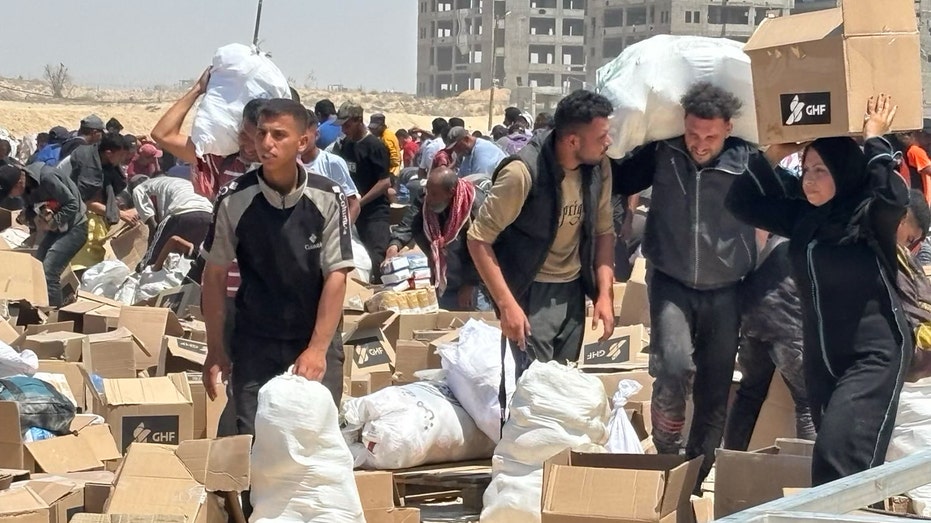
While global headlines focus on tourists, the most acute impact is on people who live and work along the border. According to the report, more than half a million people have already been displaced. That figure is significant against the population profiles of both countries and suggests:
- Large-scale disruption of cross‑border trade routes that small merchants depend on.
- Pressure on local authorities to manage refugees and internally displaced people, often with limited resources.
- Increased risk of land mine incidents, as people are pushed into contested or poorly mapped areas.
For Thailand, the cumulative effect could be a double‑hit: local economic disruption in border regions and a broader perception risk for tourism. For Cambodia, whose economy also leans on tourism and low‑cost manufacturing, instability near one of its major gateways (Poipet) complicates its efforts to attract investment and visitors beyond Angkor Wat.
What’s being overlooked
Several aspects of this crisis are undercovered in basic reporting:
1. The land mine legacy
The article briefly mentions Thai soldiers injured by land mines in contested areas. That’s a symptom of a deeper problem: parts of the Thailand–Cambodia border remain contaminated by mines laid during previous conflicts, including the Khmer Rouge era and subsequent fighting.
Despite years of demining efforts, clearance is incomplete, and renewed tensions risk both new mine deployment and accidental encounters in uncleared zones. Civilians and soldiers alike will bear that cost long after headlines fade.
2. The Trump-brokered ceasefire as a political artifact
An October ceasefire negotiated by Donald Trump is an unusual detail in Southeast Asian diplomacy. It suggests at least three things:
- Regional actors are willing to leverage high‑profile Western figures, even outside formal office, to gain attention or political capital.
- Ceasefires attached to individual personalities rather than institutional processes are structurally fragile; once the spotlight moves on, enforcement becomes harder.
- If the ceasefire is now visibly fraying, parties may conclude that external mediation—especially personalized mediation—offers weak guarantees.
That fragility is underappreciated: future crisis mediation efforts could be hampered if local leaders see little long‑term payoff in deals branded with foreign political figures.
3. China’s quiet shadow
Though China is not mentioned in the basic reporting, it is an unavoidable part of the strategic backdrop. Beijing has deepened its relationship with Cambodia, including infrastructure projects and military cooperation, while maintaining significant economic ties with Thailand.
A prolonged border conflict could create opportunities for China to act as a mediator—or, conversely, to leverage its influence by quietly backing one side’s diplomatic position. For the U.S., every instability flashpoint in Southeast Asia is now also a stage for great‑power signaling, even when the immediate issue is ostensibly local.
What to watch next
Several indicators will determine whether this crisis deepens or stabilizes:
- Military posture: Are troop deployments and artillery positions near major crossings increasing or pulling back?
- Domestic rhetoric: Do leaders in Bangkok and Phnom Penh use conciliatory language, or double down on nationalist claims tied to the border?
- Third‑party involvement: Does ASEAN step in with mediation? Do external powers (U.S., China, or others) offer or press for talks?
- Tourism flows: Do travel advisories spread beyond the U.S. to other major tourist‑sending countries? Does Thailand adjust its marketing or quietly redirect visitors away from border zones?
The bottom line
The U.S. alert is less about one dangerous border zone and more about a region where historical disputes, fragile ceasefires, and tourism‑driven economies coexist uneasily. For travelers, this is a reminder that “Instagrammable” destinations may sit on top of unresolved conflicts. For policymakers, it’s a warning that neglecting dormant territorial disputes in Southeast Asia carries real risks—humanitarian, economic, and geopolitical.
Expert perspectives
To understand the deeper implications, it’s useful to draw on regional specialists and conflict analysts.
On historical cartography and political risk:
“Colonial-era maps in Southeast Asia are not neutral documents; they’re political landmines. Every time a government feels cornered domestically, revisiting border lines becomes an easy way to rally support. What we’re seeing on the Thailand–Cambodia frontier is that unresolved history is still doing damage in the present.”
On tourism and security interdependence:
“Thailand’s economy is structurally tied to tourism in a way that few non‑oil sectors can match. That makes the country especially vulnerable to perception shocks. A localized border skirmish can have outsize impacts if it is interpreted as a broader security risk, particularly when amplified by travel advisories from major Western governments.”
On great‑power competition in the background:
“Every regional conflict now unfolds under the shadow of U.S.–China competition. Neither Washington nor Beijing wants open conflict between partners, but both are watching for leverage. If ASEAN mechanisms don’t step up, external powers will be tempted to fill the gap—on their own terms.”
Looking ahead: Risks and opportunities
If there is a silver lining, it lies in the potential for this crisis to force overdue conversations:
- Renewed efforts at comprehensive demarcation of the Thailand–Cambodia border using joint commissions, satellite mapping, and clear legal frameworks.
- Accelerated demining and humanitarian support for affected communities along the frontier.
- Stronger regional crisis‑management mechanisms within ASEAN, which has often struggled to move beyond consensus‑driven statements.
- A more realistic integration of security risk into how tourism is marketed and managed in Southeast Asia.
Whether those opportunities are seized—or whether this becomes another cycle of flare‑up, ceasefire, and forgetfulness—will shape the region’s stability for years to come.
Topics
Editor's Comments
One underexplored dimension of this story is how climate and resource pressures may intersect with legacy border disputes. While the current reporting emphasizes historical maps and nationalist politics, the frontier between Thailand and Cambodia is also a zone of changing land use—agricultural expansion, logging, and infrastructure projects that can alter local power balances and raise the stakes of territorial control. As water stress and environmental degradation intensify across mainland Southeast Asia, contested borders that once seemed marginal may gain strategic importance for access to arable land, forest resources, or cross-border transport corridors. That raises uncomfortable questions: are existing mechanisms for demarcation and joint resource management robust enough for a hotter, more crowded, and more competitive region? If not, we may see a future in which territorial disputes are not just about historic grievance, but about very immediate questions of survival and economic advantage. Policymakers who treat incidents like this as isolated flare-ups risk missing that longer arc.
Like this article? Share it with your friends!
If you find this article interesting, feel free to share it with your friends!
Thank you for your support! Sharing is the greatest encouragement for us.