Beyond the Gossip: What Celebrity Longevity and Cancel Culture Reveal About Our Moral Moment

Sarah Johnson
December 14, 2025
Brief
Beneath the Dick Van Dyke, Mila Kunis, and Julia Roberts headlines lies a deeper story about how celebrity culture is reshaping our views on aging, shame, death, and personal responsibility.
Celebrity Longevity, Cancel Culture, and the New Morality of Fame
Behind this seemingly light entertainment roundup — Dick Van Dyke’s longevity, Mila Kunis’ HOA drama, Pamela Anderson’s romantic rumors, Julia Roberts and Sean Penn on cancel culture, Martha Stewart’s end-of-life plan — is a quiet but powerful story about how fame, aging, shame, and death are being renegotiated in real time.
What looks like a scattershot newsletter is actually a snapshot of a culture trying to answer three big questions:
- How do we grow old — and die — in a society that worships youth and visibility?
- What replaces traditional moral structures in the age of social media outrage and cancel culture?
- Can celebrity still function as a guide for living, or is it now just content?
From Studio System Myths to Wellness Algorithms
Hollywood has always sold more than entertainment; it sells models of how to live. In the studio-era mid-20th century, the industry carefully curated images: stars rarely discussed their vices, marital troubles, or mortality. Longevity was implied, not dissected. Dick Van Dyke was simply the ageless performer; his habits were invisible behind the studio facade.
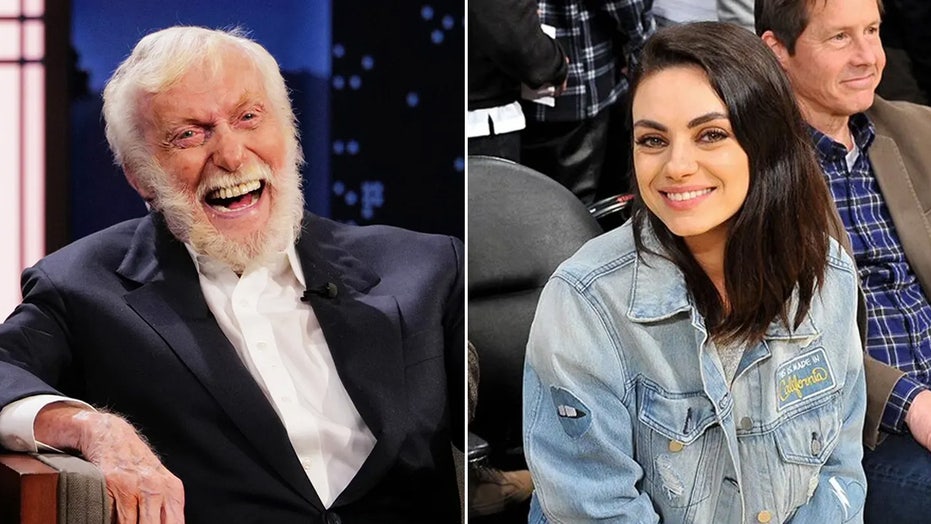
Fast forward to today: a 99-year-old Van Dyke publicly credits giving up two bad habits for his near-century life; Jewel’s bikini photos prompt questions about a “youth serum”; Martha Stewart openly discusses an unconventional end-of-life plan; Ed Burns describes a “two-week rule” for marital resilience. These aren’t just celebrity anecdotes — they’re lifestyle case studies in a marketplace where personal choices are content, and content is a form of soft moral instruction.
This marks a profound shift from the old myth-making system to a data-and-algorithm driven wellness culture. The public used to infer behavior from carefully staged publicity. Now, personal habits and relationships are explicitly packaged as “rules,” “secrets,” and “plans,” often framed as actionable for the audience: live longer, save your marriage, navigate conflict, manage your image.
Why Longevity Stories Hit So Hard Right Now
Van Dyke at 99; Martha Stewart planning death; multiple deaths at age 60 (Raul Malo, Wenne Alton Davis); the fascination with ageless bodies like Jewel’s — all of this is landing in a post-pandemic culture with heightened anxiety about health, aging, and the unpredictability of life.
Life expectancy in the United States has fallen in recent years, driven partly by COVID-19, drug overdoses, and chronic disease. The CDC reported that U.S. life expectancy dropped to about 76.4 years in 2021 before partially rebounding. Against that backdrop, a 99-year-old entertainer who can still dance on camera becomes a kind of secular miracle — and a counter-narrative to national decline statistics.
We subconsciously ask: if he can make it to nearly 100, what did he do that the rest of us didn’t? This is where the framing around “ditching two bad habits” matters. It reinforces a deeply American idea: health and longevity are mostly a matter of personal choices, not structural factors. But that’s incomplete at best.
Public health data consistently shows that longevity is heavily shaped by social determinants: income, access to healthcare, safe environments, education, and stress levels. An entertainer who came of age in mid-century Hollywood had access to resources, rest periods, and support structures most Americans never see. Yet the story is presented as if the key variable is individual discipline.
The overlooked angle: celebrity longevity narratives can subtly shift responsibility for health outcomes away from policy and toward individual virtue — reinforcing the idea that if you’re sick or die early, you simply didn’t make the right “lifetime choices.”
Cancel Culture, Shame, and the Search for a New Moral Operating System
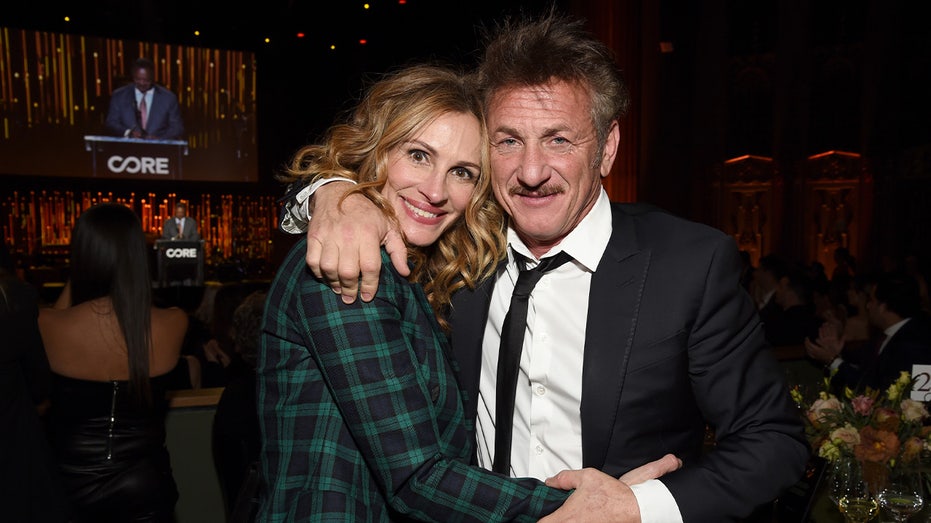
Julia Roberts and Sean Penn weighing in on cancel culture, suggesting shame is “underrated,” taps into a long-running debate: what replaces formal institutions of moral authority when trust in politics, religion, and media is low?
Historically, shame was enforced locally — family, church, neighborhood, workplace. The consequences were heavy but bounded. Today, shame is global, instantaneous, and often permanent, mediated by social platforms that profit from outrage. “Cancel culture” is essentially crowdsourced moral policing in a world where older institutions no longer function as credible arbiters.
Roberts and Penn aren’t just talking about online pile-ons; they’re gesturing toward a public confusion over the difference between:
- Accountability (consequences proportional to harm, with a path to change), and
- Exile (permanent social death for missteps, with no way back).
When they say shame is “underrated,” it can be read two ways:
- As a critique of a culture that has become so wary of moral judgment that we tolerate too much harmful behavior.
- As a veiled pushback against what some see as performative, competitive outrage, where the goal is not rehabilitation but spectacle.
The important nuance mainstream coverage often misses: celebrities are themselves both targets and beneficiaries of this system. Public contrition tours, carefully staged apologies, and strategic retreats are now part of brand management. The moral debate about shame is also a tactical conversation about reputation survival in an unstable media ecosystem.
HOAs, Neighbor Complaints, and the Micro-Politics of Control
Mila Kunis complaining that neighbors send HOA complaints “all day long” while she serves as head of the homeowners association might sound like fluff, but it points to a persistent theme: how ordinary governance increasingly resembles social media dynamics.
Homeowners associations are hyper-local power structures where rules, aesthetics, and shared resources are negotiated — or weaponized. Sociologists often describe HOAs as micro-governments: they levy fines, enforce codes, and shape daily life far more intimately than distant city councils. Disputes can look trivial (fence heights, paint colors, noise) but they often mask deeper anxieties about status, control, and belonging.
Kunis’ framing — neighbors “have no gratitude” — highlights how quickly governance turns into moral judgment. Instead of a neutral process to resolve conflicts, it becomes a test of loyalty, respect, and appreciation. That mirrors online culture, where disagreement is often read as ingratitude or betrayal.
What’s overlooked here is how celebrity status complicates the power dynamic: a famous head of an HOA changes who feels comfortable complaining, how issues are escalated, and how quickly they become content. It’s a real-world example of something we see everywhere: the line between civic participation and performance is eroding.
Marriage “Rules” and the Productivity Culture of Relationships
Ed Burns crediting a “two-week rule” with Christy Turlington for their strong 22-year marriage is another instance of a growing media genre: relationship hacks. The marriage isn’t just a private commitment; it’s a case study with a headline-friendly formula.
In an era where marriage rates have declined and divorce remains common, celebrity couples that last become symbolic proof that stability is still possible. But notice the language: rule, formula, hack. This pulls intimate emotional work into the broader logic of productivity culture — if you just apply the right system, you can optimize your marriage like your calendar or your workout.
Psychologists increasingly warn that translating complex relational dynamics into simple rules can be both helpful and misleading. On one hand, rituals (like not going more than two weeks without alone time) reinforce connection. On the other, turning relationships into “systems” can create performance pressure: if your marriage fails, you’re implicitly blamed for not following the right script.
Again, the structural dimension is minimized. Long-term relationships are deeply affected by economic precarity, work schedules, childcare burdens, and social isolation. But media narratives tend to magnify personal technique and downplay context — especially when packaged through celebrity lives that are insulated from many everyday pressures.
Sex, Rumors, and the Persistent Objectification of Aging Women
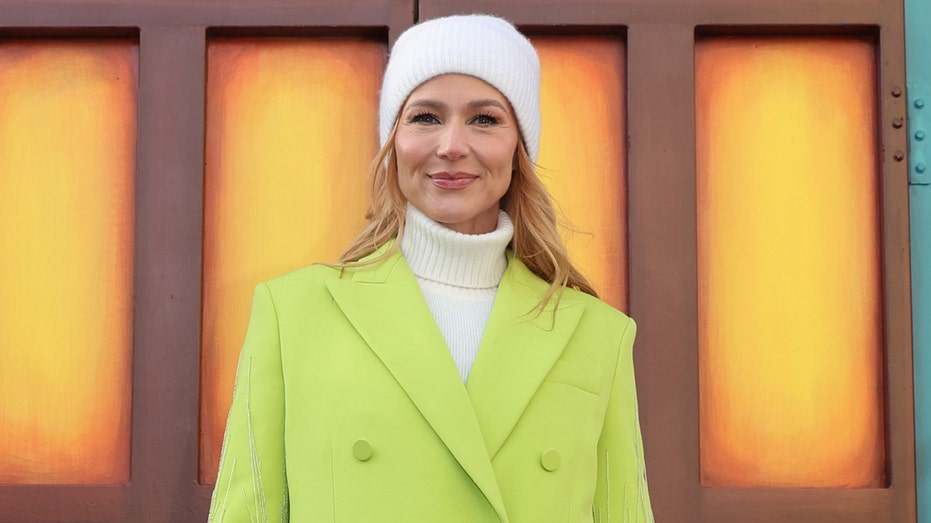
Pamela Anderson addressing longstanding rumors about her relationship with Liam Neeson, and Jewel’s bikini images triggering speculation about a “youth serum,” both highlight the enduring commodification of women’s bodies and romantic histories — especially as they age.
Even when coverage seems celebratory (“stunning bikini snaps,” “age-defying beauty”), the underlying logic is harsh: visibility for older women in entertainment is still often conditional on looking younger than their age or being romantically linked to another famous man. The rumor itself becomes a kind of currency, keeping the woman culturally relevant.
Anderson’s choice to directly address rumors is significant. It’s an assertion of narrative control in a system that has profited for decades from speculating about her partners, body, and choices — often in ways that erased her agency. Her intervention fits a broader pattern of women in entertainment revisiting and rewriting their own stories (think of recent reevaluations of Britney Spears, Janet Jackson, or Monica Lewinsky).
What mainstream entertainment snippets rarely ask: who benefits from keeping women’s personal lives in a perpetual rumor economy, and what does that do to how ordinary women experience aging, sexuality, and self-worth?
Death, Accidents, and the Unequal Shock of Mortality
The deaths of country singer Raul Malo at 60 and “Marvelous Mrs. Maisel” actress Wenne Alton Davis at 60 after being hit by a car in New York City introduce a jarring contrast to the longevity and “youth serum” narratives in the same newsletter. Some lives are cut short by random tragedy or illness regardless of lifestyle, wealth, or virtue.
This juxtaposition — extreme longevity, ageless bodies, unconventional death plans, sudden accidental deaths — encapsulates our contemporary cognitive dissonance around mortality. We are bombarded with advice suggesting we can control our aging process, even as news cycles regularly remind us how fragile and arbitrary life can be.
Crucially, coverage tends to individualize tragedy. A person “hit by a car in NYC” is framed as an incident, not part of broader structural realities: pedestrian safety, urban design, traffic enforcement, and infrastructure investment. The reader is invited to feel sadness, not necessarily to consider policy.
This is one of the defining features of celebrity-focused news: it personalizes systemic issues until they become emotional, consumable, but politically inert.
Entertainment Newsletters as Soft Power
Viewed as a whole, this newsletter operates as more than escapism. It subtly advances a set of cultural messages:
- Longevity and relationship success are mainly products of personal choice and discipline.
- Shame is both dangerous and necessary, but the terms of its use are shaped by fame and platform power.
- Women’s value, even in later life, is tied tightly to beauty, desirability, and romantic intrigue.
- Tragedy is to be consumed, not politicized.
That doesn’t mean the content is malicious; much of it is likely produced under immense time pressure to feed an endlessly scrolling attention economy. But its cumulative effect matters. Regular exposure to these narratives shapes how audiences think about responsibility, aging, relationships, and justice — often in ways that tilt away from collective solutions and toward individualized self-management.
What to Watch Going Forward
Several trends are worth tracking as this kind of coverage evolves:
- Normalization of public death planning: Martha Stewart talking openly about her end-of-life plan echoes a small but growing movement toward “death positivity” and advance planning. If mainstream celebrity culture continues to normalize this, it could reduce stigma and encourage practical conversations — or, conversely, turn death into yet another space for lifestyle branding.
- Backlash and refinement of cancel culture: As high-profile figures continue to critique and recalibrate ideas around shame and accountability, we may see more structured frameworks for apology and return — PR-driven, but potentially influential in workplaces, schools, and communities.
- More explicit monetization of aging: As more older celebrities are foregrounded, expect an explosion of longevity products, cosmetic interventions, and “healthy aging” programs marketed under the guise of sharing their “secrets.” The risk is that structural inequalities in health will be further obscured behind paywalled wellness regimes.
- Local governance as content: Stories like Kunis’ HOA role preview a future where school boards, city councils, and neighborhood fights increasingly bleed into the entertainment ecosystem, turning genuine civic issues into spectator sports.
The Bottom Line
This entertainment newsletter isn’t just providing celebrity updates; it’s quietly outlining a moral universe where individual choices reign supreme, aging is a problem to be hacked, shame is both feared and weaponized, and death is either sensationalized or domesticated. Understanding that subtext is essential if we want to see how pop culture coverage shapes our beliefs about what we owe ourselves — and each other — far beyond the red carpet.
Topics
Editor's Comments
What strikes me most about this newsletter is the way it quietly re-centers individual virtue at the exact moment when structural crises are impossible to ignore. Life expectancy is under pressure, economic precarity is widespread, and trust in institutions is collapsing — yet the dominant solutions on offer are: ditch your bad habits, adopt a marriage rule, perfect your body, manage your neighbors better. Even debates over cancel culture are framed as personal feelings about shame rather than systemic questions about who gets protected, who gets punished, and by what process. I don’t think this is a coordinated agenda so much as an emergent logic of an attention economy that prefers stories with clear protagonists and neat moral arcs. But the effect is political whether intended or not. When we absorb a steady stream of narratives that attribute success and failure primarily to private choices, we become less likely to demand public solutions, even as inequality widens. The task, then, isn’t to reject entertainment coverage outright, but to learn to read it as a map of the values we’re being nudged to accept — and to notice what’s consistently left off the page.
Like this article? Share it with your friends!
If you find this article interesting, feel free to share it with your friends!
Thank you for your support! Sharing is the greatest encouragement for us.