Beyond the Feel-Good Story: What Gunnar Peterson’s Daughter’s Cancer Battle Exposes About Care, Class, and Community

Sarah Johnson
December 14, 2025
Brief
Celebrity trainer Gunnar Peterson’s daughter beat leukemia with community and top-tier care. This analysis unpacks what her story reveals about inequality, social media, networks, and modern pediatric cancer.
What Gunnar Peterson’s Story Reveals About America’s Quiet Care Crisis—and Its Hidden Strength
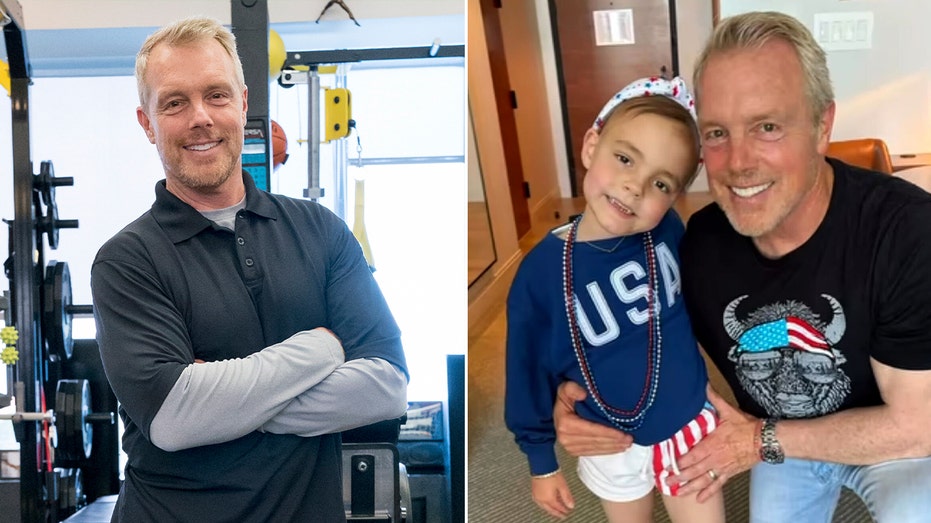
On the surface, celebrity trainer Gunnar Peterson’s account of his 5-year-old daughter Monroe’s leukemia battle reads like a familiar human-interest story: a terrifying diagnosis, world-class care, community support, remission. Beneath that narrative is a far more complicated picture of how modern medicine, social media, privilege, and community collide when a child gets cancer—and what that says about the state of care in America.
Monroe’s journey is not just about one family’s resilience. It’s a case study in how outcomes for sick children increasingly depend on three factors that rarely appear in headlines: access to top-tier institutions, the power of personal networks amplified by celebrity, and the invisible labor of caregivers—often mothers—who navigate a system that is both advanced and fragmented.
A Very 2020s Story: Cancer, Community, and the Social Media Lifeline
Peterson’s decision to announce his daughter’s acute myeloid leukemia (AML) diagnosis to more than 400,000 social media followers marks a turning point in how families leverage public visibility in private crises. Historically, childhood cancer advocacy moved through charities, support groups, and hospital foundations. Today, it also moves through Instagram posts and viral videos.
That public disclosure did at least three things at once:
- Mobilized a wide support network: People “on the bubble” of his life—acquaintances, distant contacts, even strangers—suddenly became part of his care ecosystem.
- Unlocked expert access: Heads of pediatric oncology from institutions in Texas, New York, and California reached out directly. This is not a typical experience for most families.
- Turned a private ordeal into a public narrative: Monroe’s story now functions as both personal coping and public awareness, blurring the line between family diary and health advocacy.
We are watching a new pattern take shape: for those with public platforms, the internet is no longer just a space to share updates; it is an informal triage system and resource engine, capable of connecting families with expertise, emotional support, and sometimes funding.
The Bigger Picture: Childhood Cancer in Context
Acute myeloid leukemia is one of the more aggressive childhood blood cancers. While less common than acute lymphoblastic leukemia (ALL), AML is more complex to treat and historically has had poorer outcomes. According to the American Cancer Society, AML accounts for roughly 15–20% of childhood leukemias. Over the past few decades, survival rates for pediatric leukemia have improved dramatically, thanks to advances in chemotherapy protocols, supportive care, and bone marrow transplant techniques.
But that progress is unevenly distributed. A child treated at a major academic medical center like Vanderbilt University Medical Center—where Monroe received care—has access to specialized pediatric oncology teams, cutting-edge trials, and multidisciplinary support. Children in rural areas or under-resourced regions may face delayed diagnoses, limited specialist access, and fewer trial options.
This is why Peterson’s emphasis on Vanderbilt’s role is crucial. It illustrates a sobering reality: in the U.S., your ZIP code remains a major predictor of your health outcome, even for something as catastrophic and supposedly non-negotiable as childhood cancer.
Networks as Medicine: When Community Becomes an Informal Health System
Peterson repeatedly returns to one theme: the “terrific network” that surrounded his family. It’s not glamor; it’s infrastructure. What he’s describing is the informal but powerful health support system that fills in the gaps left by formal healthcare.
That network functioned in at least four ways:
- Information access: Friends and contacts “tapped their contacts,” connecting the family to leading pediatric oncologists across multiple states. For rare and high-stakes conditions, those second opinions can be lifesaving—or simply sanity-preserving.
- Emotional buffering: Offers of help from people across the country mitigate the intense isolation families often feel during months-long hospitalizations.
- Logistical support: Although not all details are public, stories like this often involve help with childcare for siblings, meals, transportation, and navigating complex medical bureaucracy.
- Legitimizing alternative approaches: The presence of a research nurse and nurse practitioner like Susan Johnson working with Monroe’s mother on gut biome and complementary strategies shows how networks can bridge traditional and integrative care.
For many families, this “network effect” is the difference between barely surviving the experience and being able to actively steer it. For those without such networks, the system can feel incomprehensibly cold and opaque.
The Unpaid Chief Medical Officer: A Mother’s Hidden Labor
When Peterson says, “Don’t mess with Mama Bear,” he’s also describing a now-common phenomenon in complex care: a parent—often the mother—effectively becomes the child’s unpaid chief medical officer.
Monroe’s mother, Janet, is portrayed as doing what many caregivers quietly do:
- Researching conventional and alternative therapies
- Coordinating with clinical staff and specialized practitioners
- Monitoring side effects and advocating for adjustments
- Managing nutrition, gut health, and long-term recovery planning
This is not simply parental instinct; it is labor—cognitive, emotional, logistical. Studies have shown that caregivers of pediatric cancer patients experience high levels of anxiety, depression, and financial strain. Yet their work remains largely invisible in policy discussions about healthcare delivery.
Peterson’s praise for hospital staff—“Those people have a special place”—and his admiration for his wife coexist for a reason: modern medicine increasingly depends on a partnership model in which families are expected to manage an enormous cognitive load, even as they’re emotionally overwhelmed.
The Alternative Medicine Question: Gut Biomes, Red Light, and the Edges of Evidence
Two elements in Peterson’s account stand out: the focus on gut health with a research nurse/nurse practitioner, and the use of Solbasium red-light therapy for recovery and general wellness.
This reflects a broader trend: families are no longer content to rely solely on chemo protocols; they want to optimize the body’s resilience. The gut microbiome has emerged as a serious area of research. Studies in major journals have linked gut composition to chemotherapy tolerance, infection risk, and even treatment response. Vanderbilt and other academic centers increasingly incorporate nutrition and microbiome-informed care.
Red-light therapy is more ambiguous. While there is some early evidence that certain wavelengths of light can aid wound healing and reduce inflammation, the science is far from conclusive for broad wellness claims. What’s striking is less the specific modality and more what it represents: a desire to regain control over a body that has been aggressively medicalized.
Families like the Petersons live in the tension between cutting-edge evidence-based medicine and emerging or commercialized wellness trends. The best-case scenario is supervised, integrative care—where alternative approaches don’t conflict with or delay proven treatments, but instead support recovery and quality of life. The worst case is unproven therapies displacing or undermining effective care. In Monroe’s case, there’s no sign of the latter—but the dynamic is worth watching as more high-profile figures publicly promote adjunct therapies.
The Role of Memory and Trauma: When the Child Forgets, the Parents Don’t
One of the most quietly revealing moments in Peterson’s account is his reflection on Monroe’s memory. Hospital staff tell him she likely won’t remember much of what happened at age four. He’s incredulous: “How do you not remember what you just went through?”
Psychologically, this is consistent with what pediatric trauma experts see. Young children often retain fragmented or implicit memories—sensations, emotional patterns—rather than coherent narratives. Parents, however, carry vivid, explicit memories of every procedure, fever spike, and terrifying conversation. The asymmetry can be bittersweet: the child is spared much of the conscious burden, while the adults carry it for life.
Peterson’s comment—“We’ll remember it, but they said she probably won’t… We’ll take it. The body heals and the mind heals too”—captures the emotional economy of pediatric illness. Parents accept the ongoing psychological cost as the price of their child’s future normalcy. What’s often missing is long-term mental health support for those parents once the crisis subsides.
What This Story Reveals About Inequality
There is an uncomfortable, but necessary, layer to this story: it showcases how privilege shapes the trajectory of a medical crisis.
Peterson is a well-known trainer with a national profile, industry contacts, and the means to live in a city with a major academic medical center. When he posts about his daughter’s diagnosis, the response includes direct outreach from top pediatric oncologists in multiple states. That kind of access is invaluable—and deeply uncommon.
For many families, the experience looks very different:
- No immediate access to leading institutions
- No public platform to rally support or attract specialist attention
- Greater financial fragility—lost wages, travel costs, medical bills
- Limited time and resources to research complementary approaches
Peterson’s insistence that “you are not alone” and that people will step up is both true and incomplete. Communities often do rally. But structural inequities—insurance coverage gaps, distance from major centers, language barriers, immigration status—mean that not all families are in a position to receive or act on that support.
That’s not a reason to dismiss his story; it’s a reason to interrogate it. Stories like Monroe’s should be read not just as inspiration, but as a spotlight on what’s possible when the system and social capital align—and why policy needs to narrow the gap for those who lack those advantages.
Looking Ahead: The Long Tail of Childhood Cancer
Monroe is in remission. That word carries enormous relief—but in pediatric oncology, it’s the beginning of a long chapter, not the end of the book.
Children treated for AML face potential late effects, including:
- Cardiac, endocrine, and fertility issues from chemotherapy
- Secondary cancers, though rare, later in life
- Cognitive or learning challenges, especially if there was central nervous system involvement
As survival rates rise, survivorship care becomes a central challenge: How do we support children like Monroe not just to live, but to thrive as teens and adults? This is where communities, schools, mental health services, and primary care must work together—another place where families with strong networks and resources tend to fare better.
Peterson’s use of training techniques, attention to inflammation and recovery, and focus on making his daughter a “thriving kindergartner” are instinctively aligned with this long-term view. But nationally, pediatric survivorship programs remain underfunded and unevenly distributed.
The Bottom Line
Monroe Peterson’s remission is a profoundly human victory. It is also a mirror, reflecting both the best of what American medicine and community can do—and the gaps that persist for those without platform, proximity, or privilege.
Behind every story like this are bigger questions: Who gets access to top-tier care? Who has the bandwidth to become a full-time advocate? How do we ensure that the kind of network that “saved” one family becomes less a matter of luck or celebrity and more a matter of policy and design?
Until then, stories like this one should be read not just as proof that “there are a lot of good people in the world,” but as a call to build systems robust enough that families don’t have to rely on extraordinary networks to get through an already unbearable journey.
Topics
Editor's Comments
What stands out most in this story is not just the effectiveness of modern pediatric oncology, but the extent to which it still rests on informal, unequal scaffolding. We see an elite medical center performing at a high level, but we also see a social media post acting as a de facto signal flare to the medical establishment, drawing in heads of oncology from across the country. That duality—world-class formal care supplemented by ad hoc, network-driven support—should make policymakers uneasy. If access to extra expertise or reassurance depends on how many followers your parent has, that’s a structural problem, not just a heartwarming detail. At the same time, the story underscores how essential caregivers are to making the system function, from researching options to integrating alternative approaches. Any serious reform of pediatric cancer care has to address both pieces: leveling access to high-quality institutions and building explicit, funded support for the unpaid labor of parents who are currently treated as invisible extensions of the healthcare workforce.
Like this article? Share it with your friends!
If you find this article interesting, feel free to share it with your friends!
Thank you for your support! Sharing is the greatest encouragement for us.