Harvard’s Data Breach Shows How Vulnerable Elite Universities Have Become

Sarah Johnson
December 7, 2025
Brief
Harvard’s latest phone-phishing breach exposes deeper structural weaknesses in elite university cybersecurity, donor data governance, and sector-wide risk—raising high-stakes questions for alumni, regulators, and institutional leadership.
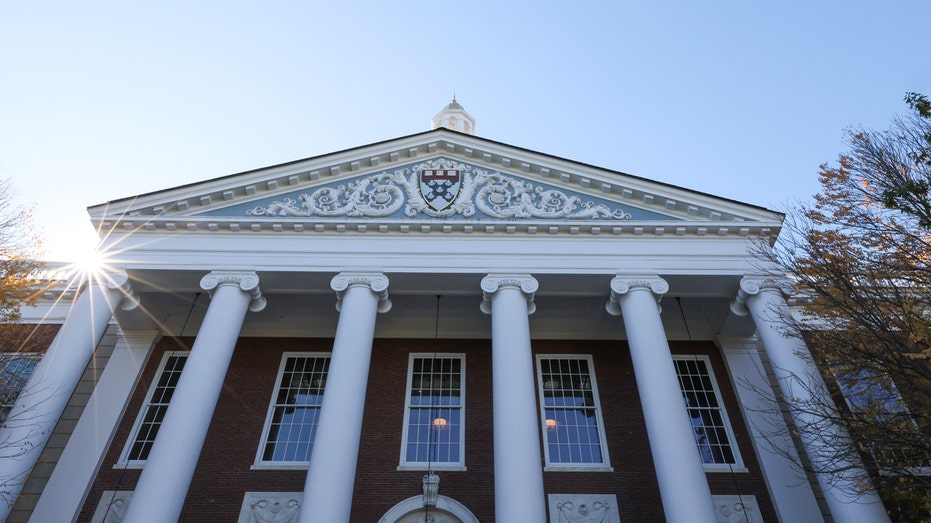
Harvard’s Phone-Phishing Breach Exposes a Much Bigger Crisis in Higher Education Cybersecurity
Harvard’s latest data breach is not really a story about one university getting duped by a phone scam. It’s a case study in how the financial and reputational engines of elite higher education now run on data — and how poorly protected that data is, even at the most prestigious institutions on the planet.
When a single phone-based phishing call can unlock a fundraising database at a university that raises more than $1 billion a year, the problem isn’t just user error. It’s structural. It tells us that elite universities are still treating cybersecurity as a compliance checklist and a cost center, while attackers see them as long‑term, high‑value targets in a global data economy.
How We Got Here: Universities as Data Empires, Not Just Schools
To understand why the Harvard breach matters, it helps to see how the role of universities has changed over the last 30 years.
Since the 1990s, major universities have quietly become data empires. They collect and store:
- Decades of alumni contact details, career histories, and wealth indicators
- Donation histories and giving capacity scores used to target high-net-worth donors
- Financial aid and payment records
- Applicant data including test scores, essays, demographic details, and in some cases immigration status
- Research data, often tied to government contracts, health records, or proprietary corporate partnerships
The modern “advancement” or “development” office is essentially a sophisticated CRM and analytics operation attached to a university brand. The databases that fuel these offices are immensely valuable — not just for philanthropy, but for anyone looking to build detailed profiles of affluent, influential individuals.
Historically, these systems grew organically. A donor database here, an alumni mailing list there, a legacy ERP system for fundraising layered on top of a student information system built in the 1990s. Security was an afterthought, and governance was fragmented across departments and vendors.
The result is what cybersecurity professionals call a soft middle: a perimeter with some modern protections, but sprawling internal access, legacy applications, and staff who often have broad permissions by default. In that environment, social engineering — especially by phone — becomes the cheapest way in.
Why a Phone Call Still Works in 2025
The fact that this breach began with phone phishing is not an embarrassing anachronism; it’s an illustration of where attackers think organizations are most vulnerable.
Most universities have invested in email filters, basic phishing simulations, and web gateways. But voice remains a weak link:
- Verification culture is weak. Staff are conditioned to be helpful, especially when a caller claims to be an internal colleague or IT support.
- Caller ID spoofing is trivial. Attackers can mimic internal numbers or trusted vendors using cheap tools.
- Voice channels are often outside formal security controls. There’s no spam filter on a phone line, and call-recording or scripted verification processes are rare outside high‑security industries like banking.
In other words, the attack technique isn’t sophisticated — but it’s precisely tuned to the social and institutional dynamics of academia, where collegial trust often substitutes for strict identity verification.
This also explains why we’re seeing a cluster of nearly identical breaches across Harvard, Princeton, Penn, and Columbia, often hitting the same types of systems: development and alumni databases. Once attackers map one institution’s internal processes and exploitable scripts (for example, what an IT password reset call sounds like), they can reuse that playbook across similar universities.
What’s Really at Stake: Long-Term Donor Profiling and Trust
The initial reporting focuses on exposed contact details and donation histories. That sounds mundane compared to stolen Social Security numbers or medical records. But for attackers who think strategically, this is gold.
Advancement databases typically contain:
- Preferred contact channels and personal emails for high‑value donors
- Giving patterns over decades, including timing and typical amounts
- Notes from development officers about personal interests, family relationships, and capacity assessments
- Employer information and board or corporate affiliations
Combine that with other data from previous leaks — bank info, LinkedIn profiles, breached corporate email accounts — and you get an extraordinarily precise blueprint for targeted fraud and social engineering, including:
- Convincing spear‑phishing emails that mimic a university fundraiser or a capital campaign
- Fake invoices or wire instructions for large pledged gifts
- Impersonation of donors in political or charitable giving contexts
- Extortion attempts based on sensitive or private notes in donor profiles (for example, family situations, business troubles)
There’s also a less discussed risk: the erosion of institutional trust. Philanthropy at elite universities depends heavily on a belief that the institution is stable, competent, and protective of its community. Persistent breaches chip away at that narrative, especially for donors who are already skeptical about university governance or politics.
This Isn’t Just a Tech Problem — It’s a Governance Failure
The Harvard incident fits a broader pattern: universities are structurally misaligned when it comes to cybersecurity.
- Decentralized IT and fragmented accountability. Many campuses operate like loose federations of schools, centers, and departments, each with its own systems and vendors. Security standards vary widely.
- Budget politics. Money flows more easily to visible academic and capital projects than to “invisible” security upgrades, staff training, and modern identity management systems.
- Legacy culture. Long‑tenured staff and faculty often resist changes that restrict access or add friction, such as strict least‑privilege access or frequent authentication checks.
- Board oversight gaps. University boards scrutinize endowment performance and admissions controversies far more aggressively than cyber risk, which is still treated as an IT issue, not an existential one.
The repeated pattern of breaches in the Ivy League suggests that what’s missing is not awareness, but enforcement: binding minimum security standards for critical systems like development databases, backed by board-level oversight and real consequences for noncompliance.
Why the Ivy League Cluster Matters Beyond Campus Walls
It’s tempting to see this as an Ivy League problem affecting a rarefied slice of society. That misses three broader implications.
- Elite universities are key nodes in political and economic networks. Their alumni and donors include CEOs, cabinet officials, judges, major investors, and tech founders. Detailed records of their contact info, giving patterns, and relationships are useful not just to cybercriminals, but potentially to state-backed actors interested in influence operations and profiling.
- Universities manage sensitive research and government contracts. Even if this specific breach targeted fundraising systems, it exposes weaknesses that could be exploited to pivot toward more sensitive environments, including defense-related research, public health datasets, and AI labs.
- Higher education is a template for other sectors. Hospitals, cultural institutions, NGOs, and foundations often share the same decentralized structures and legacy systems. What happens in the Ivy League is a preview of where attacks will scale next.
What Experts See That Headlines Don’t
Cybersecurity experts have been warning for years that higher education is an ideal target precisely because of its openness and complexity. The recent Harvard incident crystallizes several long‑running concerns.
First, the reliance on user training as a primary defense is insufficient. Even highly trained staff can be fooled by sophisticated social engineering, especially over the phone. Without strong technical controls — like strict role-based access, just‑in‑time credentials, and robust verification workflows for any access changes — a single mistake can still lead to systemic compromise.
Second, the pattern of breaches across multiple Ivy League schools suggests attackers are doing what corporations do: sector mapping. Once they understand the common vendors (for example, CRM platforms, alumni management systems, or ERP software) and internal practices of one institution, they can generalize that knowledge across a whole subsector of targets. Recent reports of broader campaigns hitting Oracle and other enterprise systems fit this model.
Third, this moves the conversation from “Are we compliant?” to “Are we resilient?” Universities can pass audits and still be easy prey if they haven’t rethought identity, access, and incident response around the assumption that breaches will happen.
What Needs to Change Inside Universities
If Harvard and its peers want to avoid becoming perennial breach headlines, several shifts are overdue:
- Treat development data as critical infrastructure. Donor and alumni systems should be secured with the same rigor as research networks and financial systems, including segmentation, multi-factor authentication by default, and continuous monitoring.
- Zero-trust principles, not perimeter thinking. Access to sensitive systems should be tightly scoped, time‑limited, and continuously verified, regardless of whether the user is “inside” the network.
- Formalize phone and voice security protocols. Any access changes, password resets, or system actions triggered by phone must require independent verification channels (for example, callbacks to published internal numbers, secondary approvals via secure apps, or ticketing systems).
- Board-level cyber risk committees. Governing boards should receive regular, independent reporting on cyber posture, including audits of high‑value systems, not just aggregated metrics and training completion rates.
- Shared sector defenses. The Ivy League and other consortia should treat this as a collective security problem — sharing IOCs (indicators of compromise), social engineering scripts, and attack patterns in near real time, not months later.
What This Means for Alumni, Donors, and Students
For individuals whose data may have been exposed, the immediate risk is less about a one‑off identity theft and more about long‑tail, targeted exploitation. Over the next months and years, people connected to these universities may see:
- Highly personalized phishing that references past donations, campaigns, or events
- Scams impersonating university staff seeking updated payment info or pledge confirmations
- Attempts to exploit relationships between donors and other organizations they support
The defensive measures being recommended to consumers — strong, unique passwords; 2FA; identity monitoring; minimizing open data — are necessary, but they also reflect a troubling trend: the burden is shifting increasingly toward individuals to mitigate institutional failures.
At some point, regulators and policymakers may step in. Data breach notification requirements already exist, but they’re largely reactive and fragmented. The scale and concentration of personal and financial data in higher education raises the question of whether more stringent, sector-specific standards — akin to what banks and healthcare providers face — are overdue.
Looking Ahead: Will Universities Catch Up Before the Next Wave?
The Harvard breach is unlikely to be the last in this series. From the attackers’ perspective, the incentives are clear: elite universities offer rich data, relatively weak and fragmented defenses, and reputationally sensitive victims who may prefer quiet settlements and bare‑minimum disclosure.
What to watch in the coming months:
- Regulatory interest. Whether state attorneys general or federal agencies begin to probe sector-wide practices rather than isolated incidents.
- Litigation from affected donors or alumni. Class actions could force disclosure of security practices and drive reforms through legal pressure.
- Vendor scrutiny. If multiple breaches tie back to common CRM, ERP, or cloud providers, those vendors may face demands for stronger default security and transparent incident reporting.
- Governance changes. Watch for universities announcing new CISO roles with direct reporting to presidents or boards, and for multi-year cyber investment plans tied to measurable outcomes.
Ultimately, Harvard’s phone-phishing incident is less about a clever hacker and more about a system that hasn’t reconciled its 21st‑century data footprint with its 20th‑century governance model. Until that mismatch is addressed, no amount of consumer advice will be enough to compensate.
The Bottom Line
Harvard’s latest breach is a warning shot for the entire higher education sector. Elite universities have built immense, poorly defended reservoirs of personal and financial data that are now being systematically targeted. The attack method — a simple phone phishing call — highlights not just individual fallibility but institutional blind spots around identity verification, internal access, and board‑level oversight. Without a fundamental shift toward treating donor and alumni data as critical infrastructure, we should expect more breaches, more erosion of trust, and eventually, more aggressive regulatory and legal intervention.
Topics
Editor's Comments
What’s striking about the Harvard breach isn’t the novelty of the attack but how ordinary it is. A phone call, a moment of misplaced trust, and suddenly one of the world’s wealthiest universities is investigating unauthorized access to a core financial and relational asset. That ordinariness is precisely what should alarm us. For years, universities have argued that their unique culture of openness makes one‑size‑fits‑all security standards ill‑suited to academia. Yet the systems being compromised here aren’t open research datasets; they’re tightly held fundraising CRMs and alumni databases, run in ways that look remarkably similar across institutions. The contrarian question is whether higher education has used its cultural distinctiveness as a shield to avoid the kind of hard, expensive security decisions that banks and hospitals were forced to make a decade ago. If incidents like this one continue, the sector may lose the ability to set its own rules, as regulators step in with blunt, prescriptive mandates that reshape not only how universities secure data, but also how they govern themselves.
Like this article? Share it with your friends!
If you find this article interesting, feel free to share it with your friends!
Thank you for your support! Sharing is the greatest encouragement for us.