Beyond the Headlines: How the House Gender Care Bill Rewrites Parental Rights, Medical Authority, and Federal Power

Sarah Johnson
December 18, 2025
Brief
The House vote to criminalize gender care for minors is less about one bill and more about who controls family decisions, medical practice, and federal power in the next phase of the culture wars.
House Vote to Criminalize Gender Care for Minors Is Really About Who Controls Family, Medicine, and Federal Power
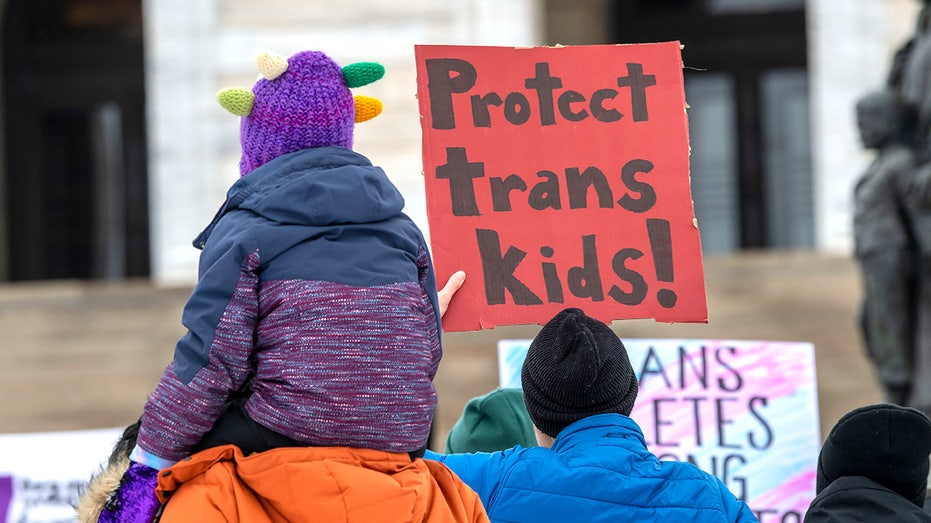
The House’s narrow vote to criminalize gender transition treatment for minors is less about one bill and more about three deeper fights: who decides what’s best for children, how far Congress can reach into medical practice, and whether trans health care becomes the next long-term culture war battlefield after abortion.
Behind the headlines about Rep. Marjorie Taylor Greene and social media outbursts is a structural shift: this is one of the clearest attempts yet to nationalize what had been a patchwork of state-level restrictions on gender-affirming care. Whether or not this bill ever becomes law, it resets the terms of the debate for years and signals where both parties think their political futures lie.
The bigger picture: from local medical decisions to national moral battleground
To see why this matters, it helps to remember how quickly this issue has moved from clinical guidelines to criminal statutes.
- Pre-2015: Gender-affirming care for minors existed but was rare, handled largely within specialty clinics following international guidelines (such as WPATH standards) and attracting little national attention.
- 2016–2019: Debates over transgender rights centered on bathrooms, school sports, and anti-discrimination protections, especially after the Obama administration extended Title IX interpretations to gender identity.
- 2020–2022: Conservative legislators began filing bills to restrict puberty blockers, cross-sex hormones, and surgeries for minors. Arkansas passed the first such law in 2021; Texas pursued criminal investigations of parents under child-abuse frameworks.
- 2023–2024: By mid-2024, more than 20 states had enacted some form of restriction on gender-affirming care for minors. Court rulings were mixed, with some appellate courts upholding bans and others striking them down.
The House bill is the next escalation: it doesn’t just ban certain treatments; it seeks to criminalize them at the federal level. That repositions the issue from a state-level regulatory question to a national moral line, akin to earlier fights over abortion, obscenity, and same-sex marriage.
It also comes in the wake of the Supreme Court’s 2022 decision overturning Roe v. Wade, which sent abortion policy back to the states but simultaneously energized both sides to find new federal footholds. Many conservative strategists now talk openly about building a broader federal “child protection” framework that includes gender care, pornography regulation, and school curriculum battles. This bill fits squarely into that strategy.
What this really means: three overlapping battles
1. The redefinition of parental rights
Both supporters and opponents of the bill claim to be defending parents—but they mean very different things by that.
- Supporters’ frame: They argue the state must step in to prevent what they see as irreversible harm to children, even if parents consent. Greene’s language—“No more permanent harm… Congress must protect America’s children”—positions the bill as a form of state intervention against misguided parents and doctors.
- Opponents’ frame: Groups like the ACLU argue that the state is overriding parents who have carefully considered medical advice and chosen what they believe is necessary care for their child. From this perspective, the bill is a direct assault on family autonomy and medical decision-making.
Historically, U.S. law has allowed government to intervene against parents in limited circumstances—severe neglect, physical abuse, refusal of lifesaving treatments. The core dispute here is whether gender-affirming care falls into that category of “harm” or into the category of contested but legitimate medical practice.
This isn’t just a transgender issue. If Congress successfully criminalizes one class of widely endorsed medical treatments based on ideology, it sets a precedent that could later be invoked in fights over vaccines, reproductive technologies, end-of-life care, or even mental-health treatments for minors.
2. Medicine on trial: evidence vs. politics
The bill collapses a complex body of medical practice into a single crime category. That’s one reason medical societies are alarmed: they see a legislative body redefining standard of care.
Major medical organizations in the U.S.—including the American Academy of Pediatrics, the American Medical Association, and the American Psychological Association—have generally supported access to gender-affirming care for adolescents under strict clinical guidelines, emphasizing:
- Care is staged: Social transition first; puberty blockers at early puberty in some cases; cross-sex hormones in later adolescence; surgeries are rare for minors and typically limited to specific procedures.
- Individual assessment: Repeated evaluations over months or years, not single-visit decisions.
At the same time, critics—some of them clinicians and researchers—argue that evidence for long-term benefits is limited, that European health systems are tightening criteria, and that detransition cases are undercounted or dismissed.
That complexity is almost entirely absent from the bill’s framing, which treats puberty blockers, hormones, and surgeries as a single “experiment” to be banned outright. That’s politically effective but scientifically imprecise.
3. Federal power vs. constitutional limits
The public fight between Greene and Rep. Chip Roy exposes a deeper fault line inside the Republican coalition. Roy’s concern wasn’t about whether to restrict care, but about how to do it without stretching federal power beyond traditional constitutional boundaries.
Greene wants her bill to criminalize “ALL pediatric gender affirming care… NOT just those receiving federal funds.” That implies an expansive reading of federal authority, most likely via the Commerce Clause—the same clause conservatives have long criticized when used to justify broad federal regulation in other contexts.
Roy’s aborted amendment, which sought to tighten the bill’s jurisdictional hook, was an attempt to keep the legislation within a narrower conception of federal criminal authority. His warning—“the constitution matters & we should not bastardize it to use ‘interstate commerce’ to empower federal authorities”—was not just technical; it was about preserving a conservative legal philosophy that could be undermined by this kind of bill.
His decision to withdraw the amendment “to avoid any confusion about how united Republicans are” underscores a recurring pattern: constitutional scruples often yield to the politics of unity on high-salience culture war issues. But that trade-off will matter in court if a version of this bill ever becomes law.
Data and overlooked dimensions
How many youth are affected?
Precise numbers vary, but several trends stand out:
- CDC survey data show a rising share of teens identifying as transgender or gender diverse over the last decade, though estimates still hover in the low single digits of the youth population.
- In most studies, only a subset of trans-identified youth receive puberty blockers or cross-sex hormones; a smaller subset seek any surgical intervention.
- European clinics have reported sharp increases in referrals since around 2010, a trend mirrored in U.S. specialty centers.
Even if the absolute numbers are modest, the symbolic weight is large: this debate is standing in for broader anxieties about shifting norms on gender, sexuality, and the role of expertise.
The criminalization turn
Another under-discussed shift is the move from regulation to criminal sanctions. Many earlier state laws focused on professional licensure or civil enforcement. The House bill, by contrast, aims squarely at criminal liability—potentially for doctors, parents, or others depending on the final language and enforcement approach.
That’s a meaningful escalation. Criminal law carries higher stigma, harsher penalties, and a chilling effect that often extends well beyond the targeted practice. Providers may exit pediatric practice altogether rather than navigate the legal risk; families may avoid even seeking mental-health assessments for gender distress.
Expert perspectives
Legal, medical, and political experts see this bill as a convergence of long-running trends rather than an isolated event.
On constitutional risk: Conservative and liberal scholars alike note that a maximalist federal ban would face serious challenges under doctrines that traditionally reserve medical practice regulation to the states.
On political strategy: Electoral strategists view the bill as part of a broader attempt to solidify a “parents’ rights” brand ahead of future elections, even though polling on specific proposals—especially those involving criminal penalties—tends to be more divided and fluid than headline slogans suggest.
On medicine’s future: Health policy analysts warn that if Congress starts criminalizing categories of care based on ideological disputes, it could destabilize the relationship between federal law and clinical guidelines across multiple domains.
Looking ahead: what to watch
- Senate dynamics: The bill faces long odds in its current form in the Senate. But even a failed push can shape future negotiation baselines or be repackaged into narrower federal measures (for example, tying restrictions to federal funding streams).
- Court rulings on state bans: As appellate courts split on the constitutionality of state-level bans, the Supreme Court may eventually be forced to clarify whether and how the Constitution protects—or allows restrictions on—gender-affirming care for minors. That will influence what any federal law can credibly look like.
- Shifts in medical guidelines: European health systems in Sweden, Finland, and the U.K. have tightened youth gender-care protocols, emphasizing psychosocial support and more restrictive criteria. If major U.S. medical bodies revise their positions in the coming years, it could alter the political and legal landscape.
- Broadening of the “child protection” agenda: Expect continued efforts to connect gender care to other issues—school curricula, online content, mental-health services—under a unified rhetorical banner. The outcome of this bill will feed into that strategic calculus.
The bottom line
The House’s passage of a bill to criminalize gender transition treatment for minors is less a final word on policy than an opening salvo in a new phase of the culture wars. It tests how far Congress is willing to go in overriding parents and doctors, how much constitutional restraint conservatives are willing to trade for short-term wins, and whether medical practice can remain primarily evidence-guided in an era of deep political polarization.
Even if this particular bill dies in the Senate, the terrain has shifted. Federal criminal law is now firmly on the table in fights over youth gender care, and that precedent will echo far beyond this issue.
Topics
Editor's Comments
One element that deserves more public scrutiny is how quickly the conversation has jumped from questions about clinical best practices to calls for federal criminal law. Most controversies in medicine—think about debates over ADHD diagnoses, antidepressant use in teens, or experimental cancer therapies—are mediated through professional bodies, insurance policies, and malpractice litigation. Here, lawmakers are reaching almost immediately for the bluntest instrument available. That choice is revealing. It suggests the goal is not just to tighten standards of care or reduce potential overuse, but to morally stigmatize an entire category of treatment. Even people who are deeply skeptical of gender-affirming care should ask whether they want Congress setting this kind of precedent. Once the door is open to criminalizing contested medical practices, it can be walked through by future majorities with very different priorities. The immediate target may be treatments you oppose; the next one might be therapies you or your family rely on.
Like this article? Share it with your friends!
If you find this article interesting, feel free to share it with your friends!
Thank you for your support! Sharing is the greatest encouragement for us.