Ime Udoka vs. the Whistle: What the Rockets–Nuggets Controversy Reveals About the NBA’s Referee Problem

Sarah Johnson
December 16, 2025
Brief
Ime Udoka’s explosive criticism of referees after the Rockets’ OT loss to Denver exposes a deeper NBA issue: eroding trust in officiating, superstar bias perceptions, and the league’s struggle to balance transparency and credibility.
Ime Udoka’s Officiating Rant Isn’t Just Frustration — It’s a Window Into the NBA’s Referee Credibility Crisis
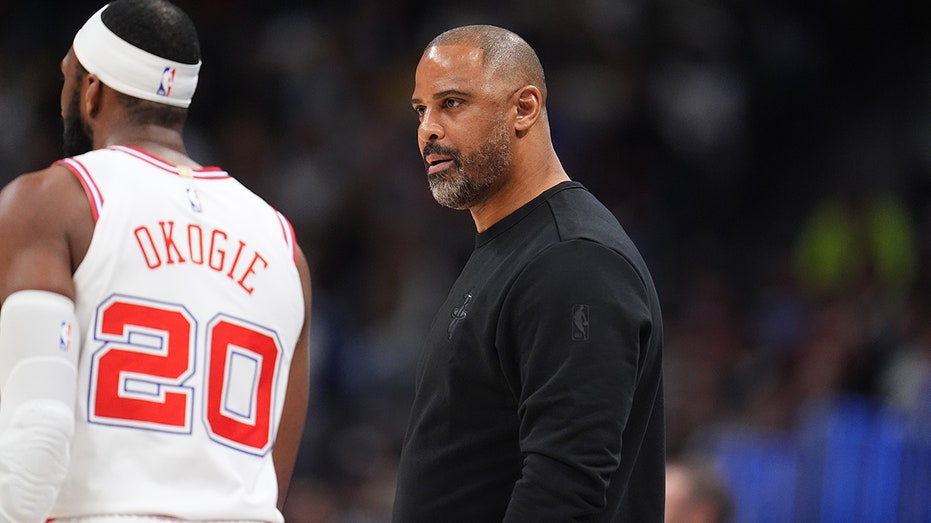
Houston Rockets head coach Ime Udoka did more than vent after an overtime loss to the Denver Nuggets. His pointed claim that two officials had “no business being out there” and that the crew chief was “starstruck” crystallizes a larger, simmering problem for the NBA: a growing perception that officiating lacks consistency, transparency, and immunity from superstar influence.
On paper, this is one regular-season game decided in overtime. In reality, it’s another data point in a league-long narrative—where coaches, players, and increasingly fans believe the product on the floor is too often shaped by whistles they don’t trust, especially in crunch time and especially around superstars like Nikola Jokic and Jamal Murray.
The bigger picture: A long history of tension between coaches and referees
Public criticism of referees is as old as professional basketball, but it’s changed in tone and stakes over the last two decades.
- Post-Tim Donaghy era: Since the 2007 betting scandal involving referee Tim Donaghy, the NBA has invested heavily in officiating integrity systems—data analysis, betting monitoring, and internal reviews. The league is fiercely protective of the idea that games are clean. Yet integrity isn’t only about corruption; it’s about credibility and consistency. That’s where current frustrations live.
- Rise of the Last Two Minute Report (L2M): In 2015, the NBA began releasing public assessments of calls and non-calls in the final two minutes of close games. Intended as transparency, it often doubles as a weekly reminder that errors do occur—and that outcomes are sometimes affected. These reports have, paradoxically, both increased trust in the process and amplified anger when games swing on missed calls.
- Superstar-era optics: Since the Jordan years and through Kobe, LeBron, and now Jokic/Doncic/Embiid, the league has battled the perception of a “superstar whistle.” Statistical studies are mixed on whether stars get more calls, but the perception among coaches and fans is unmistakable: in big moments, big names get marginal calls.
Udoka, a former player and now a head coach known for defensive discipline, is tapping into that history. When he accuses the crew chief of acting “starstruck,” he’s essentially alleging a form of unconscious bias that the NBA has never fully quelled: that refs call games differently when MVPs and contenders are involved.
What this really means: Beyond one ‘ticky tack’ whistle
Udoka’s comments centered on an off-ball foul on Amen Thompson that gave Jamal Murray free throws to tie the game at the end of regulation. He labeled it “ticky tack,” and tied it to a broader pattern of what he called “a poorly officiated game.”
Embedded in that critique are several deeper issues:
1. The impossible standard of late-game calls
Coaches often say, “Don’t call anything late you wouldn’t call early.” The reality is the opposite: late in games, officials are under pressure both to not decide the game with a marginal call and to not ignore clear infractions. The result is a kind of officiating paradox:
- Fans demand consistency across 48 minutes.
- Teams expect refs to adjust to context—time, score, and stakes.
An off-ball foul that’s technically correct but rarely called in that exact moment becomes incendiary. If the NBA’s L2M report later says the call was correct, that won’t change the feeling in Houston that the game was decided by a whistle, not by play.
2. Statistical parity doesn’t equal perceived fairness
The raw numbers from this game look relatively balanced: Houston was called for 25 fouls, Denver for 28. Free throws: Nuggets 33, Rockets 26. Both Jokic and Jonas Valanciunas fouled out. On the box score, you can argue parity.
But coaches and players don’t experience officiating as a box score; they experience it as timing and context:
- Which fouls come on key possessions?
- Who is in foul trouble and when?
- Are “freedom of movement” or off-ball calls enforced evenly on both ends?
- Do stars get the benefit of marginal contact while role players do not?
That’s why Udoka can rail against what he sees as a poor game even though the aggregate stats look relatively even. To him, the critical whistles disproportionately benefited Denver’s stars in the most important moments.
3. The ‘starstruck’ accusation cuts at the NBA’s core narrative
Calling a crew chief “starstruck” is more than heat-of-the-moment venting. It implies a hierarchy of treatment that the league insists does not exist. The NBA sells two things simultaneously:
- Star-driven entertainment: Marketing centered on Jokic, Murray, Durant, and other superstars.
- Competitive integrity: The idea that any team, on any night, can win under a fair whistle.
When a coach says out loud that the referees appeared awed by the home team’s stars, he challenges the second pillar directly. That doesn’t mean he’s right; it means the accusation is dangerous for the league’s brand because it echoes what many skeptical fans already believe.
Data and trends: Are complaints increasing—or just louder?
Over the past decade, several trends have converged to magnify officiating controversies:
- More cameras, more angles: High-definition broadcasts, alternate camera feeds, and social media clips mean every close call is dissected at frame-by-frame speed. Errors that once disappeared into the flow of the game now go viral within minutes.
- Betting and fantasy integration: Legalized sports betting in the U.S. has pulled officiating under an even brighter spotlight. A single call in the final seconds can swing millions in wagers and alter player props, adding more emotional (and financial) weight to whistle-related controversies.
- Coach and player empowerment on social media: While Udoka spoke from a podium, many players and coaches now amplify their frustration directly on X, Instagram, and podcasts. That keeps officiating criticism in the discourse long after the final buzzer.
League-level data shows that foul calls per game have generally declined compared to the early 2000s, even as scoring has increased. The NBA has emphasized freedom of movement and reduced certain types of contact, but also tried to cut down on non-basketball moves designed to draw fouls. The complexity of these rule points makes consistency even harder to achieve, especially for newer officials—precisely the type Udoka appears to be targeting when he says some refs have “no business being out there.”
Expert perspectives: Officiating as a human systems problem
Sports law and analytics experts tend to frame NBA officiating as a human system with structural constraints, not as a simple matter of individual competence.
Dr. Ben Taylor, a basketball analytics researcher, has noted in prior work that even perfectly trained officials will miss calls due to angles, line-of-sight issues, and real-time processing limits. The NBA’s response—replay, coaches’ challenges, and L2M reports—has helped correct some errors but also increased the visibility of mistakes.
Long-time coaches and former players add another layer: they argue that the NBA’s constant rule tweaks and “points of emphasis” create a moving target. One year hand-checking is cracked down on; another year freedom of movement dominates; then the league claps back against players “hunting” fouls. Each pivot demands adjustment from players, coaches, and officials, and magnifies frustration when a game seems to turn on a close interpretation of a rule that itself has recently shifted.
Why this matters for the Rockets in particular
For a young team like the Rockets, these moments carry strategic and psychological weight:
- Developing a defensive identity: Houston, under Udoka, is trying to transform from a freewheeling, rebuilding roster into a disciplined, defense-first group. If players feel that physicality is penalized inconsistently, buy-in to that identity can erode.
- Learning how to close: Close, high-stakes games against contenders like Denver are teaching moments. But when the narrative becomes “the refs cost us,” there’s a risk that young players focus more on officiating than on execution—like late-game shot selection (Sengun’s contested 24-foot three with 4.9 seconds left) or late-game fouling strategy.
- Public tone-setting by the coach: Udoka’s harsh public stance can be read two ways: as calculated advocacy for his team (trying to influence future whistles) or as emotional venting that might cost him a fine and set an us-vs-them tone. Either way, it signals to his locker room that he believes they’re not getting a fair whistle against elite teams.
Implications for the NBA: Transparency vs. trust
The league will almost certainly fine Udoka for directly impugning the integrity and competence of specific officials—calling them starstruck and suggesting they should not be working at this level crosses clear lines in the NBA rulebook.
But the underlying issue remains: how does the NBA maintain or rebuild trust in officiating when:
- Transparency (like L2M reports) publicly documents mistakes;
- Superstars drive the league’s economics and narrative;
- Betting and intense online scrutiny magnify every missed or marginal call;
- Coaches feel empowered, and sometimes incentivized, to criticize referees to protect their team’s perceived interests.
In recent years, the NBA has experimented with:
- Expanding the use of replay and the coach’s challenge;
- Upgrading ref evaluation and training programs, including G League development pathways;
- Direct communication with teams and coaches about missed calls and evolving points of emphasis.
Yet none of these measures fully solve the emotional gap between what the data might say (“the game was called fairly on aggregate”) and what teams feel when a single whistle changes their season trajectory—or their progress in building a winning culture.
Looking ahead: What to watch for after Udoka’s comments
Several storylines emerge from this incident that matter beyond one box score:
- League discipline and messaging: The size and wording of any fine levied against Udoka will signal how aggressively the NBA is willing to push back against “starstruck” narratives and public questioning of referee competence.
- Future Rockets whistles: Fairly or not, fans will watch the next few Rockets games closely: do they get more borderline calls as a result of Udoka’s public pressure, or do officials respond with an even stricter enforcement to assert authority?
- Potential rule or protocol tweaks: As tight late-game fouls like Thompson’s become flashpoints, expect renewed debate over:
- whether off-ball contact in final seconds should be officiated differently;
- whether certain situations should be automatically reviewable;
- how much discretion referees should have to “swallow the whistle” versus enforcing rules literally.
- Broader public perception of the Nuggets’ wins: For a reigning champion and MVP-led team, recurring chatter about favorable whistles can subtly undercut how their success is viewed by rival fan bases.
The bottom line
Ime Udoka’s furious postgame comments are not just about one “ticky tack” call. They reflect a broader, structural tension at the heart of modern NBA basketball: a league trying to be both a star-powered entertainment product and a rigorously fair competitive environment, officiated in real time by human beings under enormous scrutiny.
The Rockets will move on, the Nuggets will bank another big win, and the box score will show a relatively even distribution of fouls. But the perception battle over officiating—who gets calls, when, and why—will remain, especially in games where superstars, playoff implications, and razor-thin margins collide.
Topics
Editor's Comments
What’s striking here isn’t just Ime Udoka’s frustration—it’s the specific charge that the crew chief was “starstruck.” That’s a loaded word in a league that markets itself around its biggest names. For years, the NBA has tried to thread a needle: lean into superstar narratives for ratings while insisting that, whistle to whistle, all players are treated equally. Udoka’s comment goes directly at that tension and will resonate with every small-market or rebuilding team that believes it’s playing against both the opponent and the league’s economic incentives. The deeper question is whether increased transparency—Last Two Minute Reports, detailed grading systems, public rule explanations—actually builds trust or simply gives critics more ammunition. If fans see repeated admissions of late-game errors without visible consequences or improvements, transparency turns into a weekly highlight reel of officiating failures. Until the league finds a way to connect its internal accountability mechanisms to external perception, each high-profile complaint from a coach like Udoka will feel less like an outburst and more like a symptom of a larger trust deficit.
Like this article? Share it with your friends!
If you find this article interesting, feel free to share it with your friends!
Thank you for your support! Sharing is the greatest encouragement for us.