
More Than a Shove: What the Dre’Mont Jones–Joe Burrow Dustup Reveals About the Modern NFL

Sarah Johnson
December 15, 2025
Brief
Dre’Mont Jones’ shove and mocking of Joe Burrow is more than trash talk. It exposes the NFL’s deep tension between quarterback protection, defensive identity, taunting rules, and the league’s modern business model.
Joe Burrow, Dre’Mont Jones, and the NFL’s New Culture War: Toughness, Taunting, and the Quarterback Protection Backlash
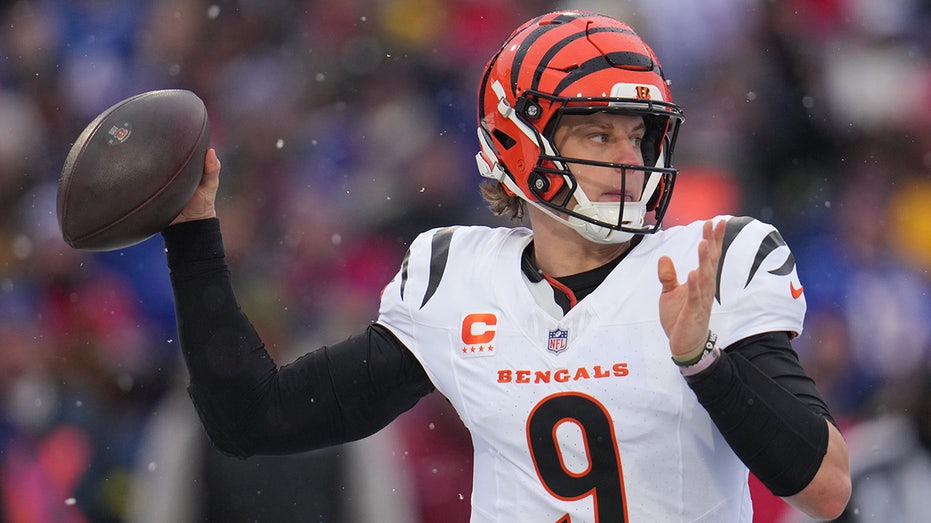
Baltimore Ravens lineman Dre’Mont Jones shoving Joe Burrow, then mocking Bengals players with a crying gesture, may look like a tiny mid-game dustup. It isn’t. It’s a snapshot of a league caught in a cultural and competitive tug-of-war: how far can defenders go in an era built around protecting quarterbacks and selling offensive fireworks—and what does “toughness” even mean in the modern NFL?
This moment matters less for the 15-yard flag that wasn’t thrown, and more for what it reveals about evolving norms: defenders feeling handcuffed by rules, quarterbacks increasingly empowered to lobby officials, and a league trying to protect its stars without alienating the players asked to hit them.
From Gladiator Football to Quarterback Protection Economy
To understand why a post-play shove on a franchise quarterback becomes national news, you have to go back two decades. The modern NFL product is built on three pillars: health, offense, and television ratings. Quarterbacks sit at the center of all three.
- Rule evolution: Since the mid-2000s, the league has steadily expanded protections for quarterbacks: no hits to the head, no low hits (the “Brady rule” after Tom Brady’s 2008 ACL injury), stricter roughing the passer standards, and tighter enforcement of late hits out of bounds.
- Business calculus: League executives and broadcast partners know: stars drive ratings. A 2023 analysis of national TV windows showed that games featuring top quarterbacks like Patrick Mahomes, Joe Burrow, and Lamar Jackson consistently outrated matchups without elite QBs by several ratings points.
- Health and optics: After the concussion crisis exploded into the public sphere around 2012, the NFL repositioned itself as safety-conscious. Protecting quarterbacks became the visible symbol of a “safer league,” even if linemen and special teamers still absorb massive collisions.
Within that environment, defenders increasingly feel that the game has tilted against them. A borderline shove on a scrambler like Burrow after he’s released the ball is no longer just football—it’s a potential game-changing penalty, a potential fine, and a flashpoint for debates over whether defense is being legislated out of the sport.
Why This Play Touched a Nerve
On this specific play, Burrow rolled right, threw the ball away, and his momentum carried him toward the sideline. Jones followed and gave him a shove that sent the quarterback to the turf. Burrow looked immediately for a flag. Bengals linemen confronted Jones. Jones responded with a crying motion, directly mocking the idea that Burrow—or the Bengals—had legitimate grounds to complain.
Strip away the tribalism of fandom and you’re left with a core tension:
- From Burrow’s perspective: He is a franchise quarterback with a significant injury history, including a torn ACL in 2020 and calf issues that derailed another season. Every late hit is a potential career-altering moment. He knows the rules are designed to protect him, and he’s using the tools available—body language, lobbying, and drawing attention from officials.
- From Jones’ perspective: He is a mid-season acquisition fighting for a role on one of the league’s most physical defenses. His job description is simple: pursue, hit, and disrupt. To him, the hit is part of finishing the play, and the reaction from Burrow and the Bengals is emblematic of what many defenders see as a “softening” of the league.
That crying gesture is not just trash talk—it’s a direct commentary on the entire quarterback protection regime. Jones is essentially saying: “This is still football. Stop looking for help from the refs.”
The Ravens, the Bengals, and a Division Built on Edge
The fact that this happened in a Ravens–Bengals game is not incidental. The AFC North has long marketed itself as the last bastion of old-school, punishing football: Ravens–Steelers, Bengals–Browns, weather games, and trench wars.
- Ravens identity: From Ray Lewis and Ed Reed to today’s units, Baltimore has embraced a defensive identity built on physicality and intimidation. Adding Jones mid-season fits a longstanding pattern of plugging in disruptive linemen to keep that culture alive.
- Bengals identity shift: Cincinnati, historically overlooked, transformed into an offensive power behind Burrow. They’ve moved from being the team that had to survive everyone else’s physicality to one that must protect its own star asset.
- High stakes context: With playoff implications on the line, the margin for error is tiny. Any borderline hit on Burrow risks not just injury but a key penalty that could swing a critical game. That amplifies every contact and every reaction.
In that divisional context, Jones’ mocking gesture is also a message: the Ravens will not dilute their identity just because the league has shifted toward offense.
Taunting, Mental Warfare, and the NFL’s Image Management
The incident also drops squarely into the league’s uneasy relationship with taunting. Since 2021, the NFL has emphasized cracking down on taunting to promote “sportsmanship” and avoid viral moments that depict players as out of control.
But players see psychological warfare as a legitimate part of competition. The crying gesture toward the Bengals linemen—after taking Burrow to the ground—is classic mental chess: baiting opponents into overreacting, potentially drawing flags, or throwing them off their game.
We’ve seen this before:
- Defenders clapping in receivers’ faces after pass breakups.
- “Too small” gestures after beating a mismatch.
- Mocking celebrations, from dances to rocking-the-baby or the now-iconic “crying” motion used across sports to label an opponent as soft or whiny.
The league’s problem is that this is the kind of content that drives social media engagement—even as it runs counter to the sanitized image the NFL says it wants. The end result is a muddled standard: some taunting is tolerated, some is not, and players are left guessing where the line is.
What’s Being Overlooked: Role Players, Reputation, and Risk
Most coverage focuses on Burrow and whether he should or shouldn’t have gotten a flag. What gets missed is what this moment means for a player like Dre’Mont Jones.
- Career stakes: Jones is not a household name. He’s a rotational lineman with 6 sacks over 14 games this season, trying to stick in a system and earn his next contract. His margin for error—on the field and in how referees perceive him—is much smaller than that of a star.
- Reputation effects: Incidents like this can brand a defender as “borderline,” consciously or not, in the minds of officials and league offices. That can influence how future close calls are interpreted.
- Locker room currency: Inside a Ravens locker room that prizes edge and attitude, standing up to a star quarterback, then refusing to apologize for it, can elevate Jones’ status among teammates and coaches.
The league conversation centers on quarterback safety; the players’ conversation often centers on job security, identity, and respect.
Data, Discipline, and the Perception Gap
Over the last several seasons, roughing the passer and unnecessary roughness calls have climbed, particularly on high-visibility quarterbacks. While exact 2025 numbers aren’t fully compiled, league trends offer context:
- Between 2018 and 2023, roughing the passer penalties fluctuated but stayed elevated compared to the early 2010s, with several seasons surpassing 100 such flags.
- Fines for illegal hits, especially those involving quarterbacks and defenseless receivers, have risen both in frequency and dollar amount.
- At the same time, defensive players and coaches have repeatedly criticized what they see as “impossible” standards for tackling form at full speed.
This has created a perception gap:
- Fans of offensive teams see nearly every borderline contact as unacceptable, especially when it involves their franchise quarterback.
- Defensive players see split-second football actions being retroactively judged in slow motion, with their livelihoods at stake.
The Burrow–Jones clash is one more log on that fire. When Burrow looks for the flag and Jones mocks him, they’re not just arguing about one hit—they’re standing on opposite sides of a structural debate about what football is supposed to be in 2025.
Looking Ahead: What to Watch Beyond This One Shove
Several threads from this moment will matter as the season and coming years unfold:
- How referees treat mobile quarterbacks: Players like Burrow, who extend plays and roll out, routinely blur the line between runner and passer. Expect continued controversy over when they are “fair game” for contact and when they must be fully protected.
- Taunting enforcement consistency: As more of the game’s discourse moves through viral clips, the league will face pressure to either consistently penalize gestures like Jones’ crying motion—or tacitly accept that psychological gamesmanship is part of the product.
- Defensive identity vs. safety initiatives: Teams like the Ravens, Steelers, and 49ers will continue to push the envelope on physicality. The league’s ability to manage that without neutering what makes those teams compelling will be a recurring storyline.
- Burrow’s long-term calculus: With each hit, each near-miss, the conversation around how aggressively Cincinnati must invest in protection—and perhaps adjust play calling to reduce exposure—will intensify. Franchise quarterbacks are no longer just players; they are billion-dollar assets.
The Bottom Line
On the surface, Dre’Mont Jones shoving Joe Burrow and mocking the Bengals is a small, almost routine moment in a long NFL season. Underneath, it’s a microcosm of the league’s central tension: a business model built around protecting quarterbacks colliding with a culture that still glorifies violent, emotional, and psychological dominance.
As rules, finances, and public expectations continue to evolve, these moments will only grow more symbolic. Every shove, every gesture, every look to the official is part of a larger negotiation over what kind of sport the NFL wants to be—and how much of its old identity it’s willing to sacrifice in the name of safety and star preservation.
Topics
Editor's Comments
What’s striking about this moment isn’t the shove, which would have barely registered a decade ago, but how much meaning we now attach to it. That’s a direct result of the NFL’s strategic pivot: quarterbacks are no longer just players; they are crucial intellectual property, underpinning media deals, fantasy engagement, and global marketing. In that context, Burrow’s instinct to immediately seek a flag isn’t weakness—it’s rational behavior in a system that rewards protected assets. Conversely, Dre’Mont Jones’ mocking response reflects another rational calculation: on a physical defense like Baltimore’s, showing you won’t apologize for aggressive play builds capital with coaches and teammates. What deserves more scrutiny is how this dynamic quietly reshapes football’s risk distribution. Peripheral defenders absorb the discipline—flags, fines, reputational hits—while the league reaps the benefit of a safer, more offense-driven spectacle. The real question is whether the NFL can sustain this asymmetry without fundamentally alienating the very players tasked with making its product compelling.
Like this article? Share it with your friends!
If you find this article interesting, feel free to share it with your friends!
Thank you for your support! Sharing is the greatest encouragement for us.