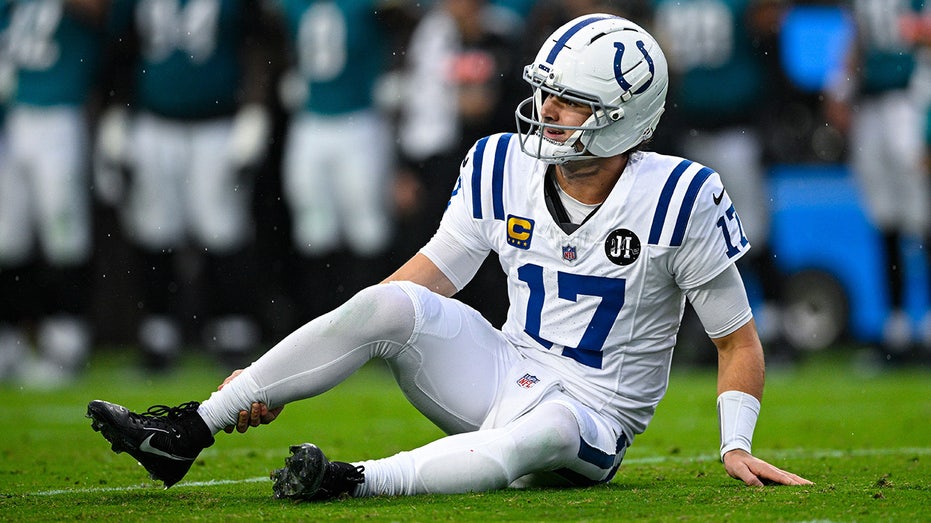

Philip Rivers at 44: What His Unprecedented Comeback Exposes About Today’s NFL

Sarah Johnson
December 15, 2025
Brief
Philip Rivers’ 44-year-old comeback is more than a nostalgic NFL story. It exposes quarterback scarcity, tests the limits of longevity, and blurs the line between coach and player in today’s league.
Philip Rivers’ 44-Year-Old Comeback: What It Really Reveals About the Modern NFL
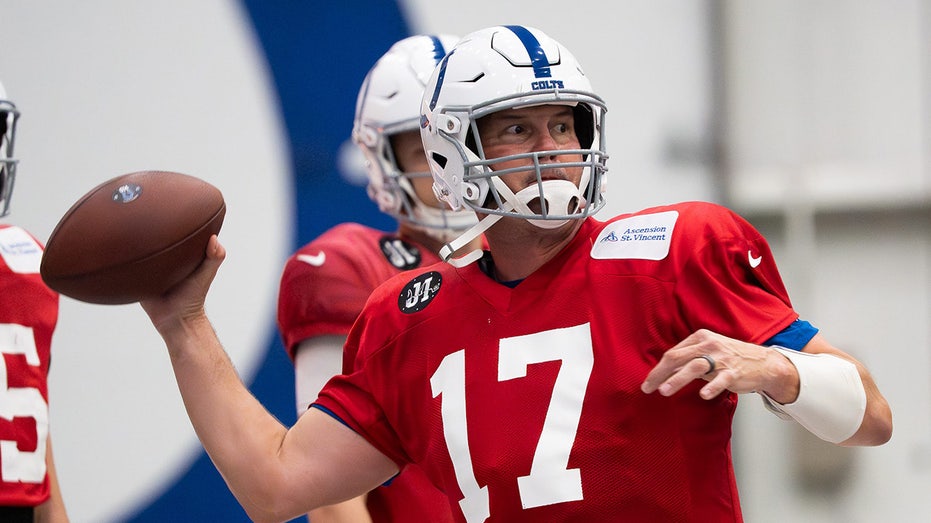
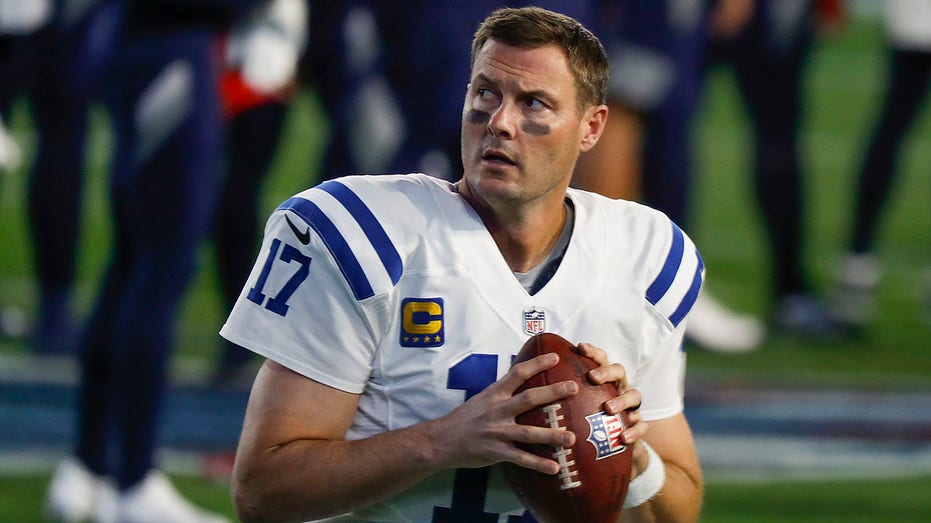
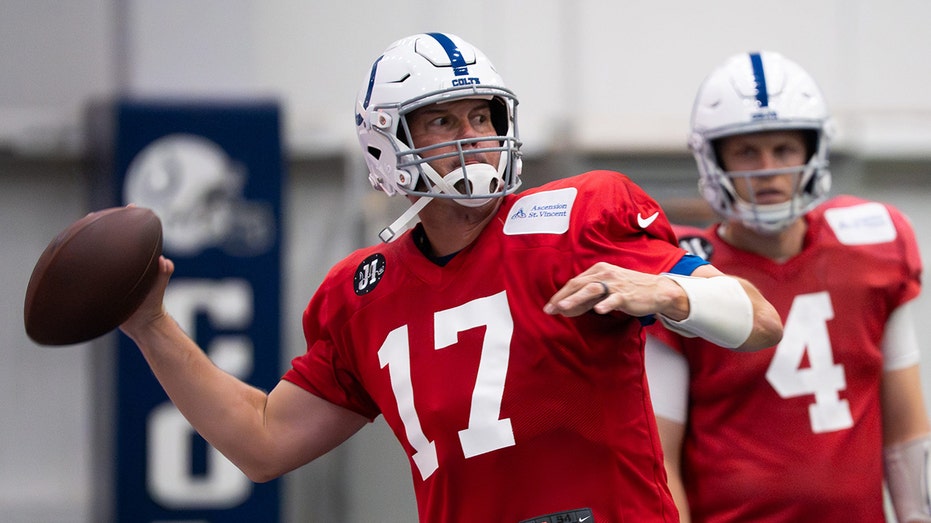
Philip Rivers jogging out of the tunnel in a Colts uniform at age 44 is more than a feel‑good comeback story. It’s a stress test of the modern NFL: its quarterback economy, its evolving science of longevity, the league’s desperate search for stability under center, and the increasingly blurred line between retirement and return.
Rivers isn’t just any veteran being dragged out of semi-retirement. He’s a borderline Hall of Famer who has been out of the league for nearly five seasons, has been a full‑time high school coach and family patriarch, and is now stepping back into one of the most physically and mentally demanding jobs in American sports. That combination makes his return historically rare—and revealing.
The bigger picture: A league built around quarterback scarcity
To understand why Rivers is back, you have to start with the structural reality of today’s NFL: there are not 32 truly starting-caliber quarterbacks on the planet, yet there are 32 franchises whose entire business models depend on having one.
When Colts starter Daniel Jones tore his Achilles in Week 1, Indianapolis faced a brutal calculus:
- They have a talented roster built to win now.
- The trade market for quarterbacks mid-season is thin and expensive.
- Throwing a raw rookie like Riley Leonard into the fire could stunt his development.
Enter Rivers, who already knows the organization, the city, and a version of the offensive structure from his 2020 stint with the Colts. Even if the current scheme has evolved, his mental processing, protection calls, and experience with similar systems dramatically reduce the learning curve.
Historically, late‑career quarterback returns tend to happen only when all three conditions align:
- A contender (or hopeful contender) loses a starter—think the Jets’ frantic calls after Aaron Rodgers’ 2023 injury.
- A veteran with proven baseline performance is available—someone a locker room will immediately respect.
- The team believes the veteran can be “good enough” quickly, even if he’s not a long-term answer.
Rivers checks all three boxes—and his willingness to say yes tells us as much about him as it does about the league.
Rivers’ return in historical context: This isn’t Favre or Brady
At first glance, Rivers’ comeback gets thrown into the same bucket as Brett Favre’s retire‑unretire saga or Tom Brady’s age‑defying late-career run. But look closer and it’s arguably more extreme in two key ways.
- Time away from the league.
Favre and Brady never missed seasons entirely; they transitioned seamlessly from one year to the next. Rivers last played an NFL snap in the 2020 season. Nearly five full seasons away from live NFL action at quarterback—while coaching high school—is almost unprecedented for someone returning as a starter. - Life stage.
Rivers isn’t just older; he’s structurally in a different phase of life. He’s a head coach, a father of ten, and now a grandfather. The fact that his oldest child is older than some of his new teammates underscores how far he’s traveled from the typical NFL lifestyle.
The closest historical parallel may actually be George Blanda, who played into his late 40s in the 1960s and ’70s as both a kicker and occasional quarterback. But the game Blanda returned to then bears little resemblance to the speed, complexity, and physical demands of today’s NFL.
The durability outlier: 224 straight starts as a predictor—and a warning
Rivers’ legendary ironman streak—224 consecutive regular-season starts between 2006 and 2020—is central to why a team like the Colts trusts him now. It tells two stories at once.
First, the positive story: Rivers has long been a master of self‑preservation in a violent sport. He’s never been built like Cam Newton, never moved like Lamar Jackson, and never had Brady’s pristine pocket protection. Yet he stayed on the field by:
- Getting the ball out quickly and anticipating pressure
- Understanding protections at a near-coaching level
- Avoiding the kinds of off‑platform, high‑exposure hits that finished other careers
That same efficiency and mental processing is what the Colts are betting on now. They don’t need Rivers to be peak 2010 Chargers Rivers; they need him to be faster, smarter, and more decisive than the average backup.
But there’s a second, more uncomfortable story: Rivers is the guy who played an AFC Championship game on a torn ACL and meniscus, then started Week 1 the following season. That decision made him a folk hero—but it also reflects a league culture that normalizes extreme risk to long-term health.
At 44, that risk profile changes dramatically. Reacting a fraction of a second slower behind an offensive line that isn’t perfect can turn a routine hit into something catastrophic. The ironman myth that once elevated Rivers could now be the very thing that endangers him if he feels compelled to “prove” he’s still that guy.
Family, faith, and identity: Why this comeback actually makes sense for Rivers
On paper, nothing about this makes sense: a successful high school coach with a 43–15 record, ten children, and a grandchild coming back to a job that guarantees pain and offers no long-term security. But Rivers has spent his entire life building one identity: quarterback.
From ball boy in his father’s huddles, to late‑converting high school linebacker, to All‑State passer, to NC State star, to 17-year NFL veteran—his life narrative has always been intertwined with football, family, and faith. Coaching at St. Michael Catholic allowed him to continue that narrative, but at a different altitude.
What’s happening now is less a radical pivot and more an extension of that same identity:
- Coaching mind on the field: Rivers has spent years teaching protections, coverages, and reads to teenagers. Coming back, he’ll essentially be a player‑coach in the huddle—a quasi‑extension of the offensive coordinator.
- Family culture of big commitments: Both he and his wife come from families of nine children; they built a huge family of their own. That pattern speaks to comfort with long-term, high‑demand responsibilities. A half-season NFL sprint may feel, in relative terms, like a manageable sacrifice.
- Legacy lens: Rivers has always been on the edge of the Hall of Fame conversation: big numbers, no Super Bowl. A strong late‑career chapter—even without a ring—could reframe his legacy from “compiler” to “stabilizing winner teams turned to in crisis.”
What this really means for the Colts’ locker room
Rivers is walking into a uniquely layered locker room dynamic.
- Rookies who grew up watching him: Players like Riley Leonard and JT Tuimoloau were in elementary school when Rivers was battling the Patriots in the 2007 AFC Championship. For them, he’s part quarterback, part living NFL history.
- A coaching staff getting a partner, not just a player: Rivers’ recent experience as a head coach means he understands program‑building, not just scheme. Expect him to be deeply involved in film breakdowns, protections, and sideline adjustments in ways most mid‑season signings simply can’t be.
- Succession pressure for younger QBs: Leonard and other young passers now get a front‑row masterclass—but also one more barrier between them and the field. How the staff communicates timelines and expectations will determine whether Rivers’ presence becomes a bridge or a roadblock in their development.
Expert perspectives: Longevity, risk, and the changing quarterback model
Sports performance experts have long pointed out that quarterback is the one NFL position where age and experience can compensate for declining physical tools—up to a point.
As Dr. Michael Joyner, a Mayo Clinic physiologist who has written extensively about aging athletes, has noted in similar cases:
“Reaction time, decision-making speed, and pattern recognition can improve or at least hold steady into the 40s, especially in complex sports roles. The problem is that in football, the environment around the quarterback is getting faster even as he’s getting older.”
Former quarterbacks see it similarly, but with a more visceral edge. Many have praised Rivers’ mind and toughness, but privately worry about the punishment.
Data & evidence: What history says about QBs over 40
Only a small handful of quarterbacks have meaningfully contributed at 40+:
- Tom Brady (ages 40–44): 5 straight 4,000+ yard seasons, 2 Super Bowl wins.
- Drew Brees (40–41): Still highly efficient, but arm strength and durability issues appeared in his final years.
- Brett Favre (40): One elite season in Minnesota (33 TD, 7 INT) before the physical drop‑off became obvious.
The common thread: these players never left the league. Their bodies, timing, and football rhythms were maintained season by season.
Rivers’ statistical profile at his last stop with the Colts in 2020 suggests he still had high-level baseline competence:
- 4,169 passing yards, 24 TDs, 11 INTs
- Completion rate just under 69%
- Led Colts to an 11–5 record and a narrow playoff loss in Buffalo
The question now is not whether he once could play, but whether after five seasons away he can re‑enter at something close to that level without a long runway.
What’s being overlooked: The ripple effects on coaching and development
Most coverage frames Rivers’ return as a narrow question of “Can he still play?” The more interesting question may be: “What does this move signal about how teams value developmental time versus stability?”
By bringing in Rivers rather than committing fully to a rookie, the Colts are making a statement about the modern NFL timeline:
- There is less patience than ever for multi-year development projects. Roster windows are short; coaching staff turnover is high; owners want immediate relevance.
- Veteran competence is being valued over high-variance youth. A 44‑year‑old with a high floor can be more attractive than a 22‑year‑old with both a lower floor and uncertain ceiling, especially mid-season.
- The coaching pipeline is changing. Rivers represents a growing trend of former NFL QBs moving directly into coaching at the high school/college level and then back into the league with a more holistic understanding of scheme and pedagogy.
Looking ahead: Best‑case, worst‑case, and what to watch
Best‑case scenario: Rivers doesn’t need to be elite; he needs to be stable. If he can:
- Run the offense efficiently
- Protect the football
- Mentor Leonard and the younger offensive core
- Keep the Colts in playoff contention until Jones returns (if the injury timeline allows) or until the franchise transitions to its long‑term plan
—then his comeback becomes a success story, even if it lasts only a season.
Worst‑case scenario: The timing is off, the hits are heavy, and the physical gap after five years away proves too big to bridge. In that case, the Colts risk not only losing games but putting a beloved figure in a position where the final football memories of him are of struggle, not resilience.
What to watch on the field:
- How quickly the Colts lean into quick‑game concepts and heavy protection packages
- Whether Rivers’ arm strength holds up on out routes and deep crossers
- How often he’s willing to throw the ball away versus forcing plays—an older QB’s survival instinct
- Sideline interactions: Is he functioning as an extra coach with young players?
The bottom line
Philip Rivers’ comeback at 44 is not just an eccentric footnote to a long career. It’s a window into a league where quarterback scarcity is forcing teams into unconventional solutions, where the science of aging and performance is still being tested in real time, and where the line between coach and player is growing thinner for the most cerebral position in sports.
If it works, Rivers’ return could become a template: teams calling not just ex‑players, but ex‑players‑turned‑coaches with deep system knowledge and leadership skills. If it fails, it will still serve as a cautionary tale about the limits of nostalgia and toughness in a league that never slows down, even when its quarterbacks do.
Topics
Editor's Comments
What stands out about Rivers’ return is how much it exposes the NFL’s structural dependence on a small pool of competent quarterbacks. For years, teams have tried to solve this scarcity by reaching in the draft, cycling through cheap veterans, or overpaying mid-tier starters. The Colts turning to a 44-year-old high school coach is, in one sense, just the latest iteration of that desperation. But it also points to a path the league hasn’t fully explored: tapping into the growing ecosystem of ex-players who become serious coaches at lower levels. Rivers arrives not just as a former Pro Bowler but as someone who has spent years teaching the game daily. If he’s even moderately successful, owners and general managers may start asking a different question in future crises: not just which retired quarterback is in shape, but which ones have been sharpening their minds and communication skills on the sideline. The risk, of course, is that this blurs the line between nostalgia and strategy—and front offices aren’t always great at knowing the difference.
Like this article? Share it with your friends!
If you find this article interesting, feel free to share it with your friends!
Thank you for your support! Sharing is the greatest encouragement for us.